2010 ➤ Duran no turkey: here’s the Bacofoil video, plus two tracks premiered at East Village Radio

♫ View Nick Egan’s studio video of
All You Need Is Now in HD

All You Need Is Now, Duran Duran, video, Nick Egan,John Taylor, Simon Le Bon
❚ UNVEILED TODAY: the Nick Egan directed video for All You Need Is Now, the new single by 80s supergroup Duran Duran — which was available worldwide on iTunes from Dec 8. The nine-track digital album of the same name, produced by Mark Ronson is the band’s 13th in a studio. Ronson has called it the “imaginary follow-up to Rio that never was”. An expanded LP with additional original tracks will be released in March 2011 in various formats.

Duran Duran, Mediterranea❏ Update AYN debuts at No 6 on Billboard’s Alternative Albums Chart Jan 5. DD will be the featured artist on VH1’s Top 20 Spin on Jan 30.

❏ Here’s the new Duran track Mediterranea at beach-bum tempo, streamed live from East Village Radio on Dec 10:

It’s on the EP From Mediterranea With Love, an iTunes release in Europe, here premiered on the bumbling Mark Ronson’s show at East Village Radio, NYC, when Le Bon and Rhodes had a battle to get a word in edgeways. Whatever his gifts in a recording studio, the music producer is fudge as a broadcaster. Also, it’s not for him to tell us his own production is “amazing”, durr! Ronson, stick to the day job and leave the criticism to the big beasts who can tell a hawk from a handsaw. As it happens, the new tune proves to be classic DD.

❏ Another premiere streamed from East Village Radio — why this new album track is called The Man who Stole a Leopard (feat Kelis) is finally revealed by ITN newscaster Nina Hossein:

Nick Rhodes, Duran Duran , All You Need Is Now

No regrets: Nick Rhodes in the AYN video

➢ Read Crispin Kott’s 9/10-star review of the Duran album from Pop Matters

➢ Nick Rhodes is the man from Duran — Evening Standard interview Dec 9, 2010 … Is Rhodes at all embarrassed by his 18-year-old self? “Not even slightly. When we were teenagers, the world was pretty grey. You want something more exciting — to travel, to see what’s out there.”

FRONT PAGE

1980 ➤ How Duran Duran’s road to stardom began in the Studio 54 of Birmingham

Duran Duran, Berrow Brothers, Rum Runner, New Romantics,Nick Egan,video, All You Need Is Now

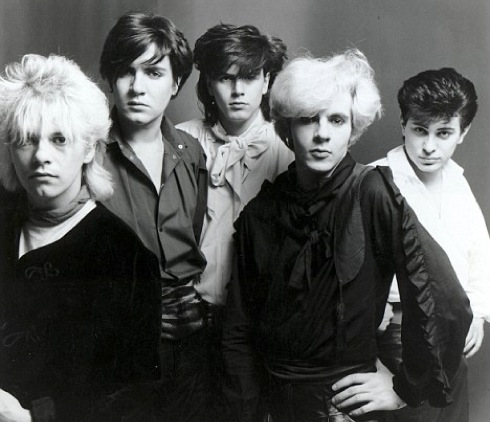
Duran Duran as full-on Romantics: Betty Page thought only co-founder Nick Rhodes (second right) passed the bouffant test convincingly

❚ ON OR ABOUT THIS DAY IN 1980 (MAYBE) some say Duran Duran signed their contract with EMI. The band seem mysteriously unable to remember when, so guesses might run from Dec 9 because Andy Taylor recalls the news of John Lennon’s death ruining his breakfast in London, and possibly Dec 22, date of a celebratory gig at Birmingham’s Cedar Club. However, the first official book, Their Story by Kasper de Graaf, places the signing firmly at 5 January 1981. According to co-manager Paul Berrow, the contract paid out a £28,000 advance (£90,000 in today’s money).

As the house band of the New Romantics in Britain’s second city, Birmingham, they were styled locally by Kahn & Bell, photographed by Paul Edmond, and managed by Paul and Michael Berrow, owners of the glitzy Rum Runner nightclub on Broad Street.

The Berrows had inherited the family business from their influential bookmaker father who had opened the club in the Swinging 60s and the sickly odours of Brut and Estee Lauder still lingered. Inspired directly by a visit to New York’s Studio 54, the brothers refurbished the Rum Runner in 1979 with state-of-the-art mirror-tiled walls and zigzags of neon. They then introduced a playlist heavily flavoured with Moroder-style imports and the American club-funk championed by the Nile Rodgers band Chic, whose string of chart hits was restoring credibility to disco music following the ridicule inflicted by the low-rent movie Saturday Night Fever. But how to become the Studio 54 of the Midlands?

Enter a band called Duran Duran in January 1980, armed with a four-song demo recorded at Bob Lamb’s studio which included Rio as a work in progress. The DD line-up were offered the club as daytime rehearsal space and jobs by night, including deejaying for Nick Rhodes. Roger Taylor recalls that the brothers “were looking for a band that was a cross between Gino Soccio, Genesis and Chic” — all the more curious that they made many attempts to contact Steve New to recruit the Rich Kids guitarist into the band, but they heard nothing from him.

Duran Duran, Meolody Maker, Andy Taylor

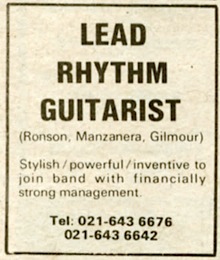
The Melody Maker ad that landed Andy Taylor in April 1980: unearthed by Duran fan Figital

Inevitably the lineup was rationalised and by the summer Andy had been recruited (“They were quite blatant,” Andy told Rolling Stone much later. “They said, ‘We’re posers. We want a good-looking poser band”). Then came Simon Le Bon as singer. According to him: “They had this thing about being between Chic and the Sex Pistols, but I thought they were more like in between Roxy Music and the Sex Pistols.” The band were searching for a musical direction.

Meanwhile as the rival nightclub Barbarella’s fell from favour, the Birmingham poser scene was reinventing itself in local bars around the peacock clothes designers Jane Kahn, Patti Bell and a veteran of Billy’s club in Soho, Martin Degville, who was commuting to London weekly to run a branch of his shop in Kensington Market. That summer the Rum Runner gave over Tuesdays to a Bowie/Roxy night. Sounds familiar? Enter journalist Betty Page and the rest is history.

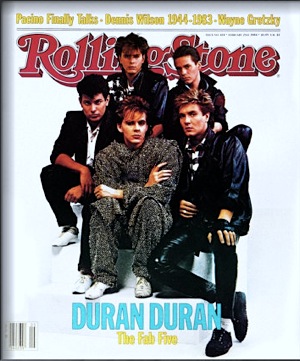
Within three years Duran Duran’s synth-pop had made The Fab Five one of the handful of British supergroups dominating the global stage. Duran can claim to have led the MTV-driven “Second British Invasion” of the United States from the autumn of 1981 with their raunchy and cinematic videos, and over 30 years enjoyed 21 singles in the Billboard Hot 100 and sales of 100m records.

BETTY PAGE OF SOUNDS RECALLS HOW SHE WAS
INVITED TO “DISCOVER” DURAN DURAN

Betty Page, Sounds, Beverley Glick

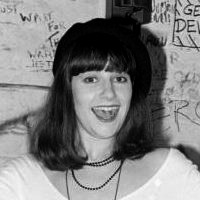
Betty Page in youthful bloom, more recently identified as Beverley Glick

In September 1980 in the pages of the music weekly, Sounds, Betty had slapped the label “New Romantics” on Spandau Ballet, house band of London’s Blitz club and then received a call from the hungry manager of this Brummie band called Duran Duran…

Paul Berrow was a smooth operator. ‘Come to the Rum Runner,’ he said of the club he co-owned with his brother Michael. ‘We’ve got a scene going on up here to put the Blitz to shame, and a band to go with it.’ Clever, I thought. He had singled me out to be the first journalist to write about his group. And they actually wanted to be called New Romantics! Nick was the most obviously New Romantic — a bouffant blond David Sylvian lookalike who sported extravagantly frilly shirts and shiny suits — but the style sat rather uncomfortably on the others.

The alarmingly pretty, floppy-fringed bassist John Taylor drew the line at satin shirts and a shoulder sash. ‘We were never meant to be bagged in with any elitist scene,’ said John, the pretty one. ‘The main chunk of our audience in Birmingham is those people,’ said Nick, the bouffant one, ‘but we’re not as tied to it as Spandau obviously are. When people come to see us we’d much sooner they dance and have a good time rather than dress up in the clothes and just stare… © Beverley Glick

➢ Read Betty Page’s retrospective survey of the New Romantics
– I Was There, originally published in Record Collector in 2004

ARCH-RIVAL MANAGER’S VERDICT ON DURAN

Years after both bands had achieved superstar status, Steve Dagger, the manager of Spandau Ballet, wrote this nugget summarising Duran Duran’s contribution to the 80s music scene. It was published in a partwork published by The Sunday Times in 1997 titled 1000 Makers of Music, which spanned all genres from classical to pop:

Rolling Stone, Duran Duran,Fab Five,Second British Invasion Duran were among a new group of artists who provided a glittering, sexy contrast to the prevailing dull corporate pop-punk of the 1970s. Taking their influence from the art-school underground of electronics/Ferry/Bowie, they came to prominence as the Birmingham ‘it’ band at the same time Spandau Ballet reigned over a similar scene in London. After an awkward but successful period as the Birmingham ‘answer to’, Duran metamorphosed in 1982 into a sleek, glamorous international entity with the seminal album Rio, having perfected a distinctive Duran sound fusing synths and guitar licks over post-disco rhythm. Inspired songs such as Hungry Like the Wolf were accompanied by cinematic videos, together creating an electric pop culture moment. After being derided for years, Britain had produced a group America could not ignore: Duran surfed in on the newly conceived MTV to conquer the States. They continue to make great British records and should recently have won a Novello for their lament to the 1980s, Ordinary World. [Key work: Is There Something I Should Know? (1983)]

❏ View this hilarious early video of white-faced New Romantics doing their wobbly dances to Duran Duran’s first single Planet Earth, performed at the Rum Runner in 1980 (now remastered in high quality). Note the hijacked Warren Street Jive in the official promo video sequences shot much later in a studio . . .

FRONT PAGE

2010 ➤ A feast of Bowie-ana served in waffeur-thin slices

David Bowie, review,Curious magazine, Any Day Now,Brian Ward,Arnold Corns,Man Who Sold The World,Mr Fish,Freddi Burretti, Ziggy Stardust,Yours or Mine,Malcolm Thomson

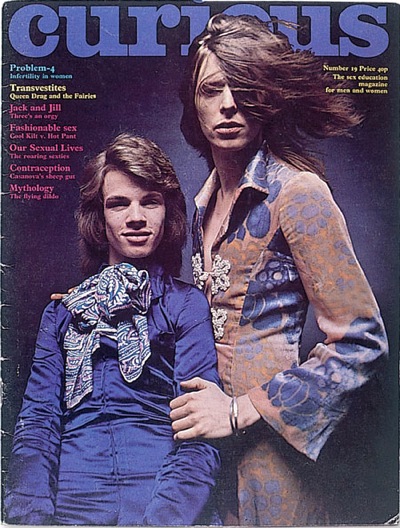
Candid cover for Curious magazine from 1971: Bowie spotted the dress designer Fred Burrett (aka Rudi Valentino) at the Kensington disco Yours or Mine wearing white spandex hot pants. He became a close friend Bowie determined would be “the next Mick Jagger” in a specially created band called The Arnold Corns. In the event, as Freddi Burretti he made Ziggy Stardust’s outfits from the first quilted jumpsuit onward… Bowie here drags up in the Mr Fish “man-dress” that appears on the sleeve for The Man Who Sold The World — one of many mementoes in Any Day Now, Kevin Cann’s new book about Bowie. Photographed © by Brian Ward

❚ DAVID BOWIE HAS BEEN THE SINGLE MOST INFLUENTIAL FORCE IN POPULAR MUSIC SINCE [Fill in the benchmark of your choice, eg:] Mozart/ Schubert/ Marie Lloyd/ Gershwin/ Little Richard/ Sondheim/ Spinal Tap. In which case, this Christmas there can be no better present for anybody with the slightest interest in the godlike creator of Ziggy Stardust than Kevin Cann’s new photobook Any Day Now, The London Years 1947-1974 (Adelita, £25).

It is impossible adequately to acknowledge the trainspotterish, yet deeply rewarding scope of this sheer labour of love that has amassed 850 pictures — friends, lovers, costumes, contracts, doodles, laundry bills, performances, candid snaps — on 336 pages. Why, it even has a backstage photo I’ve never seen of the day I met Bowie at the London Palladium when he sang Space Oddity for charity (and met the cult ukulele player Tiny Tim, going on to record one of his B-sides, Fill Your Heart, on Hunky Dory).

This book is a feast of Bowie-ana served up like La Grande Bouffe, in ever more tempting waffeur-thin slices. Cann is a veteran chronicler of the pop star’s work and here neither attempts a long-form biography, nor detracts from Nicholas Pegg’s much more musically appreciative survey, The Complete David Bowie, last updated in 2006. Any Day Now is more a chronology that feels as if it has an entry for every day in the star’s first three decades, running to 140,000 words (original interviews, press reports, eye-witness accounts), all diced and dispersed through the calendar. Contributions include a foreword by Kenneth Pitt, Bowie’s gifted manager 1967-1970.

Any Day Now, Kevin Cann, Adelita

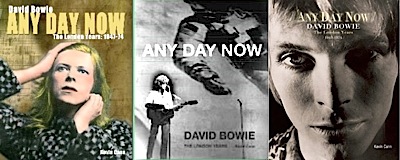
Early cover designs for Any Day Now, publicised during the past year. At centre, the Palladium performance of Space Oddity

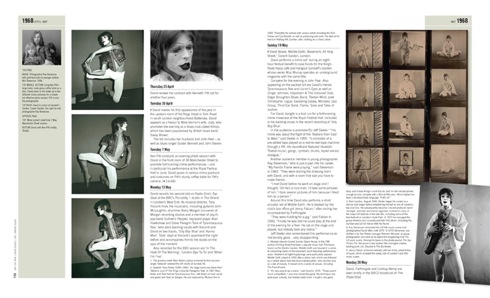
A typical spread [see below] might contain six images and as many short items, some of which are set in a font so small as to demand a magnifying glass for reading. An efficient index helps you to pick your topic and start panning for gold.

So for example, the “seminal” filmed version of Space Oddity, Bowie’s biggest hit, that has been exhumed then forgotten four times in the past 40 years, is finally accounted for in all its charmingly improvised glory. Since 2005, we have been able nonchalantly to click on YouTube to view this paradigm of all pop videos dating from before the word was invented. Yet originally it was a mere segment in a half-hour TV film about Bowie titled Love You Till Tuesday (LYTT) and directed by Malcolm Thomson.

While America was testing its first unmanned Apollo Lunar Module in 1968, the Space Oddity segment was of course inspired by that year’s visionary 70mm movie release, Stanley Kubrick’s 2001 A Space Odyssey. Cann’s chronology documents Thomson filming what Bowie evidently intended as a tongue-in-cheek spoof from its conception in Oct ’68 to wrap in Feb ’69. Bowie wrote the song itself, a forelorn meditation on love and fame, as his own love-life was falling apart and after viewing the Kubrick film “while stoned” (allegedly) that January, six months before the first Moon landing.

Ultimately in a studio in Greenwich, Bowie dons a barely-plausible zip-up silver space suit, blue visored helmet and Major Tom breast-plate while Samantha Bond and Suzanne Mercer as Barbarella-esque astro angels (more ’68 iconography), flaunting ludicrous blonde wigs and diaphanous gowns, simulate weightlessness among inflatable plastic furniture. It’s a modest little dig at Swinging 60s ephemera to set beside Barbarella, Blow-up and the incomparable Modesty Blaise.

Despite the single spending 14 weeks in the charts in 1969 and reaching No 5, Cann reports, TV networks showed “no interest” in the film, LYTT, containing this musical jewel, so it did not have its first public airing until 1972, on the BBC’s Old Grey Whistle Test. It then vanished until 1975 and the re-issue of Space Oddity when the clip was supplied as a promo to broadcasters, which doubtless helped the song’s progress to No 1 in the charts. Even then, the film clip did not receive a release until an album of same name, LYTT, came along in 1984. We then had an even longer wait until a DVD release in 2005 delivered the remastered version we enjoy today.

Not many people know this, 1 – In the same month, Feb 1969, Bowie auditioned for the hippy stage musical Hair! Twice! [Any Day Now, page 146]

Not many people know this, 2 – The book’s timeline ends in 1974 because Bowie left the UK on March 29 that year, aged 27, and has never resumed residency here since. Sob! Onboard the SS France bound for New York, the harmonica legend and Gershwin protege Larry Adler gives a recital. When the crew hear that Bowie is not going to do likewise while aboard and express their disappointment, Bowie gives them an impromptu performance in the canteen: 10 songs including Space Oddity. A few crew members took instruments and they played with him. What a jam session that must have been!

Any Day Now, Bowie, Kevin Cann,Kon-rads,Bowie

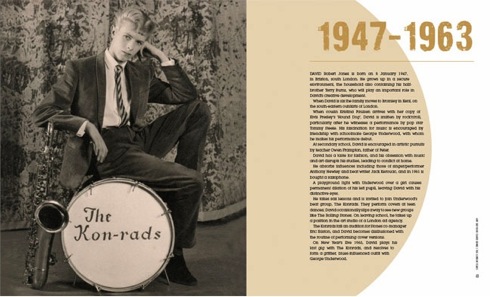
Spread from Any Day Now, the new book about Bowie’s formative years: here seen in his David Jones era when he formed his first band the Kon-rads at the age of 15

Melissa Alaverdy,Lindsay Kemp,Bowie , Any Day Now, Kevin Cann, Adelita

Another spread from Any Day Now, designed by Melissa Alaverdy: Bowie learning white-faced mime under Lindsay Kemp

Melissa Alaverdy , Any Day Now, Kevin Cann, Adelita,Bowie,Beatles

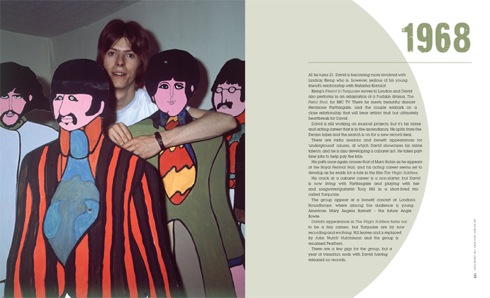
Another spread from Any Day Now, designed by Melissa Alaverdy: Bowie is seen here with Yellow Submarine-era Beatles

➢ Why there will never be another David Bowie — Caspar Llewellyn-Smith says Lady Gaga has got it wrong if she thinks the Thin White Duke’s brilliance comes down merely to striking a decent pose (from The Observer, Oct 10, 2010)

➢ Review in the Guardian: Two Bowie biographies shed new light on the career of pop’s greatest chameleon, but the man himself remains elusive

FRONT PAGE

➤ Whatta they like? Essex reality stars shake their vajazzles in the face of Hollywood

The Only Way is Essex, vajazzle,reality TV, soap opera,ITV2,
❚ IN THE SPACE OF TWO MONTHS The Only Way Is Essex has become “totally must-watch TV”, an addiction and an education for anybody who does not live in Essex. The huge county lies along the north bank of the Thames estuary, stretching from the east of London to the coast, and socially it might as well be another nation. “I compare Essex to LA — we live the same lifestyle, we’ve got as much money and got the same tans,” says hunky reality-star and club promoter Mark Wright, 23.

“The boobs may be fake” say the opening titles but the cast of 20-somethings are “real people” thrust into to this enhanced reality show that is the jaw-dropping hit of the season. They’ve given the English language new buzzwords spoken in their unique variant on Estuary English: “jel”, “vajazzle”, “shu’ up”, and “whatta we like?” Get up to speed with YouTube’s clips ahead of series two, plus the fight-back from authentic East-End Londoners.

The Only Way is Essex,Amy Childs, ITV2

Spot the essential assets: beautician Amy Childs in The Only Way Is Essex © itv.com

The 10-episode series was filmed mainly in the towns of Brentwood where the The Sugar Hut bar is located, Gants Hill, Chigwell, Buckhurst Hill, and The Manor House nightclub in Woodford Bridge. It was shot only days before being broadcast, presumably so cast members had little chance to object to the odd scene where they might have felt like prize twerps. Unsurprisingly, ITV2 has received plenty of complaints for the show’s “negative representation of Essex”. Surprisingly, the first series was such minority cult viewing on ITV2 between Oct 10 and Nov 10 that its biggest single audience was only 1.2m viewers.

The Only Way Is Essex, Jessica Wright, Lydia Bright,Essexmas,nativity, New magazine

Essexmas: Jessica Wright and Lydia Bright in a nativity scene shot for © New! magazine

The tabloid press was unusually slow in conceding that the show made compelling viewing. Series two faces one mighty hurdle that may well stymie the innocent charm of the original format — key members of the cast are being snapped up by pushy big-hitting agents who will no doubt insist on contracts that guarantee more respec’ for the talent.

A Christmas special called The Only Way Is Essexmas to due air at 9pm on Christmas Eve.

❏ XMAS UPDATE — The paradox of such a calculated TV format is how quickly it backfires. The Christmas special was as joyless as the format is heartless. In the end, these non-professional, often tongue-tied actors are simply pushed from one pedestrian stunt to another daft costume party set-up, where they are humiliated on camera and in front of their friends as their relationships crumble and their social ineptitude is laid bare. The two or three fun boys and girls in the cast have been reduced to polyfilla between the slimebags whose mums and dads really ought to tell them what prats they are making of themselves. The pet “micro-pig” as Christmas present proved to be a cringemaking booby-trap, just like Arg’s party singalong, while the two-timing antics of lothario Mark and his female sidekicks were blatantly egged on by the TV professionals. The crude splicing to turn shots into scenes indicates how desperately short of plausible footage the producers are. The Essexmas special stank of shameless exploitation by all at Lime Pictures.

Sociological footnote

❏ ESSEX IS OF COURSE the county which has created almost every British subculture since World War 2, from Mods to Soulboys-and-girls to Vajazzlers ! Essex Man and Essex Girl are pejorative terms that have been colloquial currency for 30 years. Essex Man was rated as a serious political force in the 1979, 1983 and 1987 elections which put Margaret Thatcher in power and kept the Conservative Party there. The stereotypical Essex Girl can be heard before you see her coming, she wears white stiletto heels, peroxide blonde hair, an orange tan, and is famed for being free with her sexual favours. Essex Girl jokes reached mania levels in the 90s when the classic of its kind went like this. Q — What’s the difference between an Essex Girl and a supermarket trolley? A — A supermarket trolley has a mind of its own.

The Only Way Is Essex, Lola

Lola, the Essex girl group: Lauren, Jess, Amba & Linzi being groomed for pop success, though by the Christmas special Linzi had dropped out

➢ Tease trailer with best bits from The Only Way Is Essex remixed by Cassetteboy

➢ The Only Way Is Essex: Totally Vajazzled — Best of series one compilation is on the highly temperamental ITV player until Jan 6

➢ East London thumbs its nose at Essex

➢ Three new TOWIE video clips — view Mark, Arg, Kirk, Lauren Pope, Candy and Michael talking about Christmas

FRONT PAGE

1980 ➤ The Lennon we knew: unfulfilled talent with a genius for making friends the world over

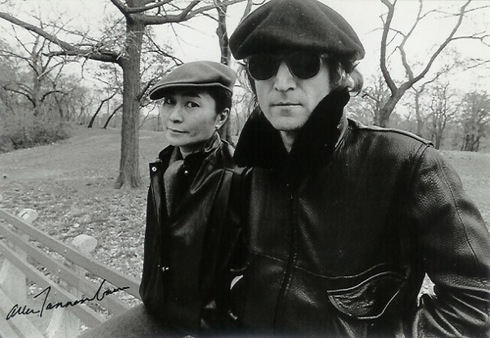
John Lennon, Yoko Ono, New York City, 1980,Allan Tannenbaum

The last pictures: Allan Tannenbaum photographed John Lennon and Yoko Ono throughout November 1980, the month before the murder. The couple were emerging from a self-imposed five-year seclusion to prepare for the release of Double Fantasy, Lennon’s final album

❚ ON THIS DAY IN 1980, ex-Beatle John Lennon, one the few gods in the international pantheon of pop, was shot dead in a New York City street, aged 40. Today it’s impossible to describe convincingly the impact of The Beatles throughout the exhilarating decade we call the Swinging 60s, when their songs themselves became barometers of change.
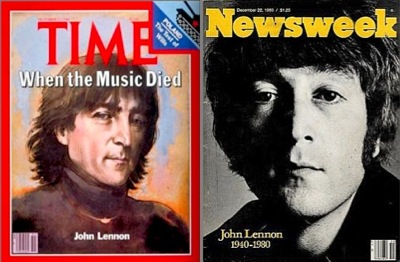
John Lennon death,Time magazine, Newsweek, 30th anniversary
Here is how music journalist and Beatles expert Paul Du Noyer encapsulated the contribution of the Lennon & McCartney partnership (1957-1970) in a mighty partwork published by The Sunday Times in 1997 titled 1000 Makers of Music:

“Whether measured in statistics or simply the love of the common people, the Beatles’ achievement looks unbeatable. And the engine of it all was the songwriting team of John Lennon and Paul McCartney. Before them, nobody dreamt that rock and roll would spawn enduring songs or that English rock could rule the world. Musically illiterate, the two Liverpool teenagers began by aping their American heroes and grew into writers of prolific originality. From the sunny simplicities of She Loves You, or A Hard Day’s Night, to the artful ingenuity of Penny Lane and Strawberry Fields Forever, they dazzled at every turn. Each was rocker and balladeer, lyricist and composer. They were a marriage of truth and beauty: Lennon soul-baring and verbally acrobatic (Norwegian Wood, I Am the Walrus); McCartney having the greater gift for melody (Yesterday, Hey Jude). Mostly they wrote alone, but raised one another’s game. Neither displayed the same consistency after the split [in 1970]. They lacked anyone with the nerve to say ‘Why don’t you change that bit?’ Their key work was A Day In the Life, 1967.”

➢ An index to Paul Du Noyer’s
published work on The Beatles

Today The Beatles hold the records for selling more albums in the United States than anybody else, and they head Billboard’s all-time top-selling Hot 100 list of singles artists, compiled in 2008. At home The Beatles have enjoyed more number one albums in the UK charts than anyone.

In the 60s, the mass media we know had scarcely left the starting line. This was a simpler era when any globally successful pop group was a novelty. When Beatlemania burst, it was a bombshell. The Fab Four, as the band were dubbed, found themselves writing many new rules in the celebrity game which fan worship then transmuted into the cultural phenomenon called Beatlemania — hordes of girls who stalked, pounced and screamed in frenzy — all accurately parodied in Dick Lester’s effervescent films, Help! and A Hard Day’s Night, based on the Beatles’ sudden worldwide fame. It also resulted in a deranged fan shooting his hero Lennon dead.

Beatlemania 1965, LHR

Typical Beatlemania: the band fly out from Heathrow bound for Austria and public vantage points are abrim with fans. Picture from Getty

Such sway did The Beatles hold, that their Merseyside cheek inspired provincial British pop groups not only to dare take on the unimaginative impresarios of the London entertainment mafia for whom blandness was the key to an act’s success, but then to take on the world showbiz mafia dominated by America, where within corporate frameworks artistic spontaneity might actively be indulged. The Beatles’ music — like the self-expressiveness of rock and roll — had a passion that chimed with the forces of grassroots social change, of liberation, emancipation, the debunking of authority figures, and the reform of cobwebbed institutions such as government, church and unions, all of which had been under attack by the stormtroopers of the satire movement since its dawn in 1960 with Beyond the Fringe.

The early Beatles hits captured the essential “sunny simplicities” of pop, though these acquired darker overtones as the decade matured and the increasingly “affluent society” of the West drew criticism from the New Left. By 1968, the daftness of the hippy dream saw The Beatles setting up Apple Corps. In 25-year-old Paul McCartney’s words this was to be “a business with a social and cultural environment where everyone gets a decent share of the profits. I suppose it’ll be like a sort of Western Communism”. Whateva.
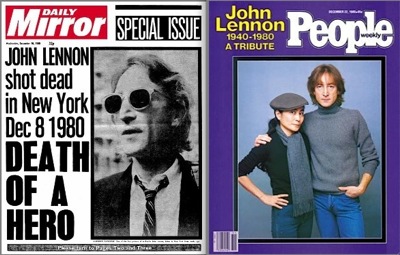
John Lennon death, Daily Mirror, people magazine, 30th anniversary
One secret to The Beatles becoming fab was being born in the port city of Liverpool, which had long bred its own resilient sense of humour. The band empathised with the working-class values of their community in ways the few young bloods in London’s middle-aged mainstream media found refreshing. Their heritage also included Liverpool’s role as the “New York of Europe” and home to Britain’s oldest Black African community. Little Richard and Berry Gordy’s Motown were in their blood, and The Beatles maintained the noble trade between Britain and North America which has seen each enhance and export the other’s music in a continuing chain of call-and-response since World War 2.

The songwriting partnership of Lennon & McCartney was unique, as also was their distinct vocal style absorbed from heroes such as Ben E King, and they transformed popular music utterly, never to be equalled. In his most infamous article, The Times’s music critic William Mann concluded in 1963: “They have brought a distinctive and exhilarating flavour into a genre of music that was in danger of ceasing to be music at all.” [See more, below]

Lennon’s own undoubted greatness was co-dependent on McCartney. Moreover, it becomes impossible to estimate the loss to music caused by his early death, when many people feel that, despite his wit and intelligence, his shortcomings hindered him from fully realising his true potential. This was the unsentimental verdict of journalist Maureen Cleave — who had known The Beatles since writing the first significant piece about them — as expressed in her frank and moving obituary for The Observer magazine in December 1980.

Beatles, life magazine, tribute
My other Evening Standard colleague who knew Lennon well during the Beatles’ later years is Ray Connolly, Liverpudlian author of many illuminating articles on Lennon. Connolly was due to meet him the day after he was shot. (“The last phone call I made before going to bed was to the Lennons’ apartment in New York to tell them that I would be in New York at lunchtime the following day.”) He agrees the Beatle was no saint, but he was “someone who wrote and played rock and roll music better than virtually anyone else”. In addition: “When he died millions of people mourned the loss of a friend. His real genius was in his ability to communicate. He was to perfection a creature of his times.”

In his instant paperback published by Fontana within two months of Lennon’s shooting, Connolly writes:
“[The American composer] Aaron Copland once said that when future generations wanted to capture the spirit of the 60s all they would have to do was to play Beatle records. That’s true, but I would go further. Future historians will find that understanding of the 60s and the 70s widened immeasurably by focusing on the life of John Lennon. From Liverpool war baby to killer’s victim just across the road from Central Park, Lennon’s every interest told a story of the times. The widespread grief at his death was compared with the mourning which followed the assassination of President Kennedy [in 1963]. No one should have been surprised, though many were.”

One of the reasons was that “Lennon chose the role of anti-hero for much of his life, casting off the trappings of glamour, throwing aside the shell of lovable immortality. John Lennon would never have made a politician. Political heroes are pragmatists. That is their job. John Lennon had no time for pragmatism. He was outspoken about everything and everybody, and then bore the consequences for his outrageousness.”
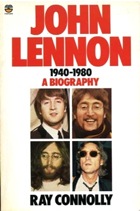
Ray Connolly, John Lennon biography, Fontana— Extracted from John Lennon 1940-1980, a biography by Ray Connolly (Fontana 1981). For many more interviews with all the Beatles, visit Connolly’s website and archive that includes Lennon: The Lost Interviews in which the journalist claims that “arguably one of Lennon’s most inspired acts was his deliberate destruction of The Beatles in 1969”. Connolly’s latest novel The Sandman arose from his years writing about rock music, not least about John Lennon and the Beatles, and is now available on Kindle

HARMONIC ORIGINALITY AND RICHNESS
UNKNOWN TODAY

In 1000 Makers of Music critic Ian MacDonald summarised the contribution of the Beatles as a band:
“As expressive of England in the 1960s as the music of Benjamin Britten in the 1950s, The Beatles made some of the world’s best music during their decade (1960-1970)… from the infectious melodies of their early beat-group years, through the LSD adventure of their central period (Revolver, 1966, and their key work Sgt Pepper’s Lonely Hearts Club Band, 1967). Each member of this Liverpool foursome made a vital contribution to a sound that blended boldness of melody and rhythm with a harmonic originality and richness of detail unknown in today’s pop… The Beatles redefined pop, revolutionised studio recording and completely dominated the culture of the 1960s. Their influence remains omnipresent.”
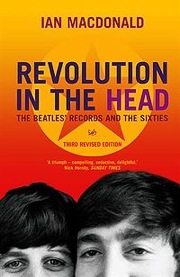
Ian MacDonald, Revolution in the Head, Lennon death, 30th anniversary— Ian MacDonald was the author of the monumental song-by-song analysis, Revolution in the Head: The Beatles Records and the Sixties (Pimlico).

His real name was Ian MacCormick and the book is worth consulting also for his essay Fabled Foursome, Disappearing Decade, on the social effects of the 1960s.

FOOTNOTES TO HISTORY

Richard Williams’s obituary for Ian MacDonald (1948-2003) in the Guardian noted: “Probably no other critic — not even the late William Mann of The Times, with his famous mention of pandiatonic clusters — contributed more to an enlightened enjoyment of the work of The Beatles than Ian MacDonald, who has died aged 54. In his book Revolution In The Head, first published in 1994, MacDonald carefully anatomised every record The Beatles made, drawing attention to broad themes, particular examples of inspiration and moments of human frailty alike. What could have been a dry task instead produced a volume so engagingly readable, so fresh in its perceptions and so enjoyable to argue with that, in an already overcrowded field, it became an immediate hit.”

Sample William Mann’s legendary and hilarious critique of Beatles technique from 1963:
“… One gets the impression that they think simultaneously of harmony and melody, so firmly are the major tonic sevenths and ninths built into their tunes, and the flat submediant key switches, so natural is the Aeolian cadence at the end of Not A Second Time (the chord progression which ends Mahler’s Song of the Earth) … Those submediant switches from C major into A flat major, and to a lesser extent mediant ones (eg, the octave ascent in the famous I Want To Hold Your Hand) are a trademark of Lennon-McCartney songs … The other trademark of their compositions is a firm and purposeful bass line with a musical life of its own; how Lennon and McCartney divide their creative responsibilites I have yet to discover, but it is perhaps significant that Paul is the bass guitarist of the group.”

➢ Extracted from What Songs The Beatles Sang
by William Mann, music critic of The Times

➢ William Mann’s monumental review of the Sgt Pepper album in 1967: The Beatles revive hopes of progress in pop music

FRESH INSIGHTS INTO BOY AND MAN

Over the past year Lennon’s life has twice been intelligently dramatised. In Nowhere Boy, visual artist Sam Taylor-Wood made her film debut directing several exceptional acting perfomances in an emotionally convincing evocation of Lennon’s adolescence during the austere 1950s, based on a novel by Lennon’s sister. For BBC television, Edmund Coulthard directed Lennon Naked, an unsentimentally credible account of Lennon’s confronting the desperate emotional crossroad that caused him to destroy the Beatles and abandon his wife and son for Yoko Ono.

DISILLUSIONED LENNON ON SELLING OUT

“When we played straight rock, there was nobody to touch us in Britain. As soon as we made it [as The Beatles], the edges were knocked off us, and Brian put us in suits. But we sold out. The music was dead before we even went on the theatre tour of Britain [Feb-June 1963, supporting other acts such as Roy Orbison]. We had to reduce an hour or two of playing to 20 minutes and go on and repeat the same 20 minutes every night. The Beatles’ music died there. As musicians we killed ourselves then.”

➢ John Lennon speaking in The New York Years
— this week’s BBC Radio 2 documentary by Susan Sarandon

Lennon’s Aunt Mimi Smith on his music
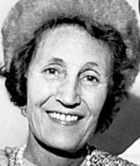
Aunt Mimi Smith, John Lennon“He used to drive me mad with his guitar playing, and I’ll always remember telling him, ‘The guitar’s all right for a hobby, John, but it won’t earn you any money’.”
➢ View the complete 1981 video interview
with Aunt Mimi

➢ 20 most underrated John Lennon tracks in NME Dec 14, 2010
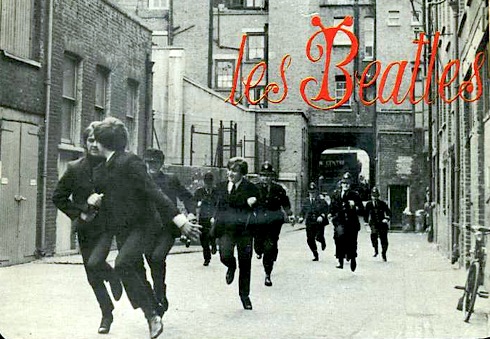
Beatlemania, Hard Day's Night,

Beatlemania: the band on the run from fans and police in Dick Lester’s 1964 film A Hard Day’s Night

FRONT PAGE