1981 ➤ The day Duran’s fortunes really took flight

❚ HAPPY 30th ANNIVERSARY to Planet Earth. On March 5, 1981, Duran Duran made their first appearance on the nationwide TV show Top of the Pops, a vital consequence of their debut single hitting the UK Top 40. Along with Spandau Ballet and Visage, Duran were the third British band to confirm the gathering force of the New Romantic movement, and TV’s pop flagship was to showcase a rush of new bands as springtime blossomed. Duran’s strongly contemporary electronic style is attributed to producer Colin Thurston, who had co-engineered David Bowie’s “Heroes”, and on his death in 2007 John Taylor paid tribute to Thurston as “a major catalyst for the 80s sound” which he was to reinforce on the band’s first album. “Without Colin’s depth of vision, we would never have become the band we became.”

Duran Duran, Simon Le Bon, Rum Runner, 1980, New Romantics,Planet Earth, video

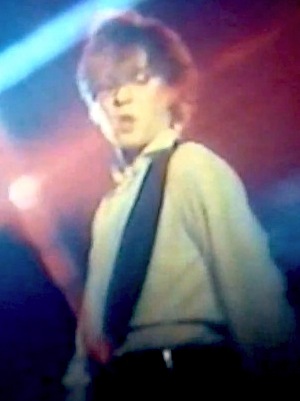
Simon Le Bon: live on video at the Rum Runner in 1980

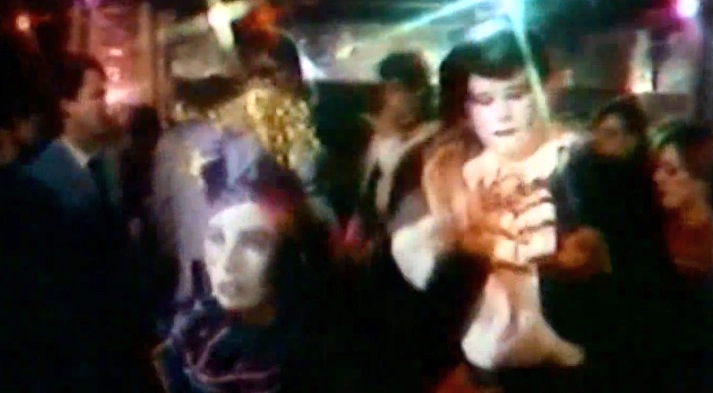
In the Planet Earth video mix above we see original footage of DD performing in 1980 at the Rum Runner, home of Birmingham’s then underground New Romantic scene.

The futuristic and stylish official video, shot later in a studio by director Russell Mulcahy, has been spliced in, all overdubbed with the audio track recorded at EMI’s Manchester Square studio with lyrics refreshed opportunistically to include the line Like some New Romantic looking for the TV sound (available as the Manchester Square Demo on the debut Duran Duran album remastered in 2010). One of Duran’s earliest songs, Late Bar, completed the B-side of the single released on Feb 2, 1981. An alternative arrangement of Planet Earth was also released on a 12-inch extended remix as what DD called a “night version” for the dancefloor. The single spent 14 weeks in the chart, peaking at No 12 in late March.

Among comments at YouTube, Jeremy Thirlby, musician and school friend of Nick Rhodes, points out that the dancers we see during the filming at the club were “drafted in actors” because for some reason “most regulars were excluded”! Unknown to everyone at Birmingham’s Rum Runner the very week when Duran were being filmed in July 1980, London’s ITV station was to air its 20th Century Box documentary about the Blitz club house band, Spandau Ballet. Bang! This was the starting gun that signalled the record-industry race to sign up the first of the New Romantic bands.

New Romantics, Duran Duran, Rum Runner, video, 1980, Planet Earth

New Romantics in full fig at the Rum Runner in July 1980: note the tell-tale moves in the Planet Earth video, such as the Ballet sway at 1:20, crucial handpasses at 2:18 and Pierrot’s wonky head at 3:06

FRONT PAGE

➤ The Kid’s in pink so he’s ready for the funk

Kid Creole, Coconuts, Shaka Zulu, London

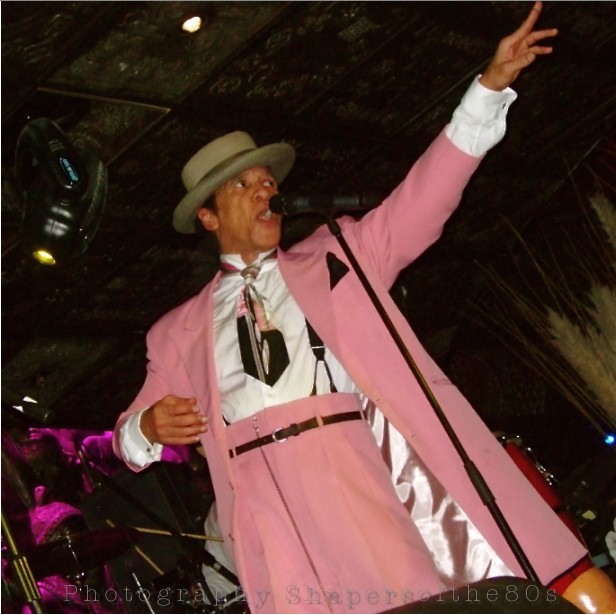
In the pink: Kid Creole onstage at Shaka Zulu in London last night. © Shapersofthe80s

❚ “WHEN YOU SEE ME IN PINK, I’m ready for the funk.” Only one man can say that and keep a straight face while sporting a salmon-pink zoot-suit with its trousers right up to here, drape jacket right down to there, plus a slightly crazy hat. Bronx-born August Darnell aka Kid Creole is the next best thing to Fred Astaire in the immaculate performance stakes and despite his 60 years he was cutting as fine a figure as ever in London town last night with his blonde playmates the Coconuts, while his two yards of fine silver keychain flashed its own morse code in time with the wearer’s dance steps. His eight-piece band didn’t fluff a note during an hour-long finger-snappity set of the Kid’s turbo-charged trademark mix of latin, calypso, disco, swing, jazz and R&B dance rhythms.

[Come back for more after breakfast]

Kid Creole, Coconuts, Shaka Zulu, London

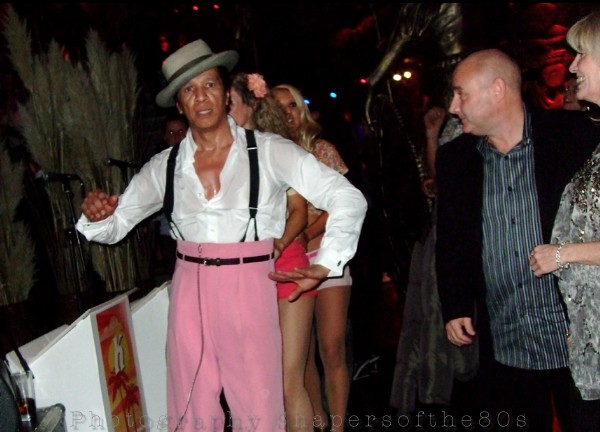
Leading the conga: Kid and his Coconuts wend their way through Shaka Zulu. © Shapersofthe80s

FRONT PAGE

➤ Index of posts for February

People’s Palace, Valentine Ball, New Romantics, Astoria Finsbury Park

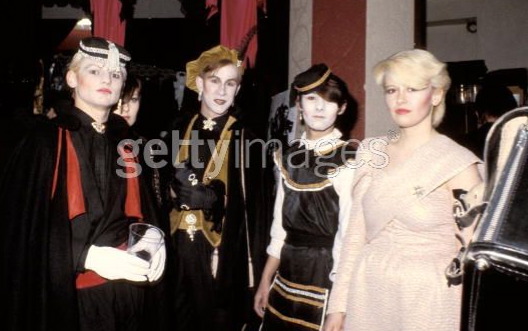
Frills, tassels and hats: Arrivals at the New Romantics ball, 1981. Photographed © by Caroline Greville-Morris

➢ 1981, New Romantics have their day — rearranging the deck-chairs at the posers’ ball

➢ 1944, “Go to work, Slim” — Lauren Bacall offers a musical treat for Valentine’s Day

➢ Guardian makes Shapersofthe80s an internet pick of the week

➢ 1961, No wonder The Beatles changed the shape of music after 456 sessions practising in public

Beatles, Hamburg, Astrid Kirchherr, Stuart Sutcliffe

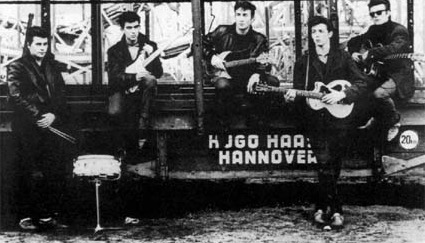
The Beatles’ beat look, 1960: honed in Hamburg by photographer Astrid Kirchherr who took this picture when guitarist Stuart Sutcliffe was in the lineup

➢ The Kemp Brothers cook up a mystical morsel

➢ EMI chief confirms record company sale highly likely

➢ Rivals sniffy about Murdoch’s Daily — more an iPad magazine than a newspaper

➢ 1981, Birth of Duran’s Planet Earth — when other people’s faith put the Brummies into the charts

Duran Duran, New Romantics

Duran Duran in 1980: Birmingham’s fluffiest New Romantics

FRONT PAGE

1981 ➤ New Romantics have their day — rearranging the deck-chairs at the posers’ ball

People’s Palace, Valentine Ball, New Romantics

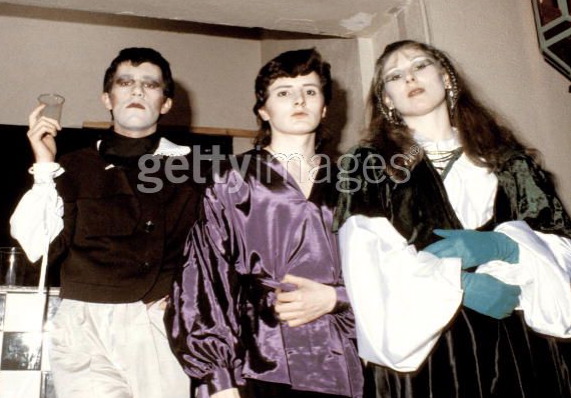
Valentine ball, 1981: last gasp for the New Romantics. Photographed © by Caroline Greville-Morris

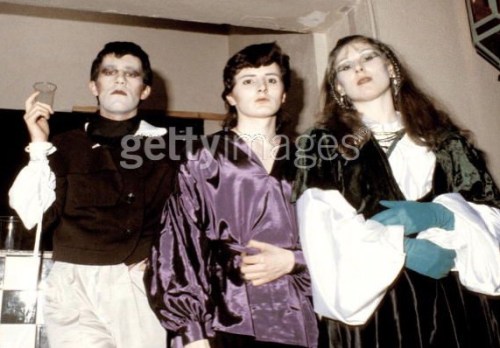
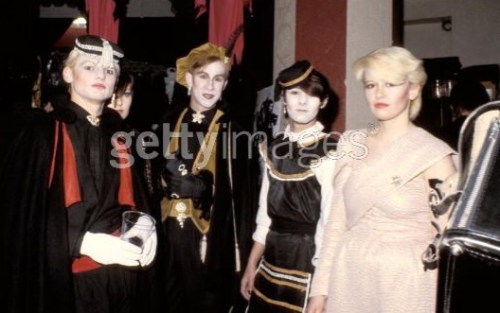
❚ VALENTINE’S DAY 1981 was not so much the Woodstock of the New Romantics movement, but more akin to a Scouts and Guides jamboree in a giant ornamental wigwam in north London. Instead of boasting proficiency in camping and camouflage, a few hundred suburban Romantics fluffed up their frills and plastered on the Pan Stik to parade their skills in masquerade and maquillage. The “People of Romance”, as the tickets described them, paid £3.50 for a long evening starting at 5pm. They were expected to hold their own as stars alongside the cult’s budding bands at a venue renamed for a day The People’s Palace.

Astoria Finsbury Park, church, cinema, London

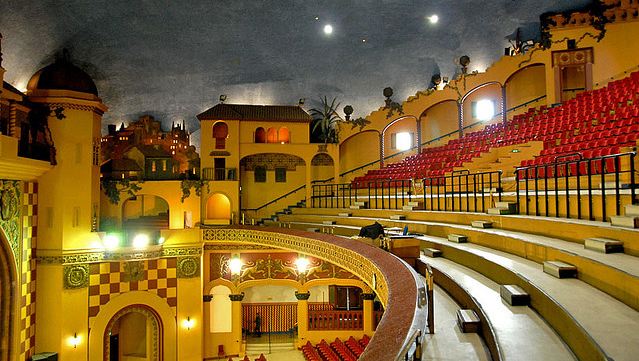
Andalusian fantasy: balcony view of the 1930 Astoria Finsbury Park, now restored. Photographed 2008 © hjuk/Flickr

An auditorium in Finsbury Park made the perfect backdrop. When it opened in 1930, the Astoria was one of Europe’s flagship cinemas seating 3,000 people. Its gloriously kitsch interior architecture depicted an Andalusian village whose rooftops and twisted barley-sugar pillars climbed towards a horizon and the starlit indigo ceiling way above balcony level. For a decade from 1971 the theatre had become a live rock venue, hippily renamed the Rainbow, where finally the stalls had been deprived of seats in favour of dancing audiences. Later the very year it hosted the People’s Palace, the place was to fall into disuse for a decade and a half, before being rescued and restored by a Pentecostal church.
People’s Palace, Valentine Ball, New Romantics, Steve Strange

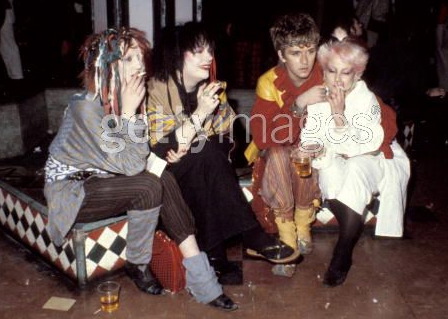
Steve Strange at the People’s Palace, 1981: plus loyal acolytes Myra, Judi and Mandy. In a fleeting fashion show, Judi showed six outfits which along with others for Strange’s videos helped shape the New Romantics silhouette. Photographed © by Caroline Greville-Morris

Thirty years ago today, posses of over-the-top Romantics incongruously wandered its vast auditorium and bars and cavernous Moorish lobby in search of photo opportunities. It seemed at times as if photographers outnumbered the cast. Richard Young, king of London’s celebrity snapperazzi, had arranged two sheets to create an impromptu studio where he was immortalising the generation who relished calling themselves posers, garbed from top to toe in bejewelled, befeathered lace and velvet and ridiculous hats.
People’s Palace, Valentine Ball, New Romantics

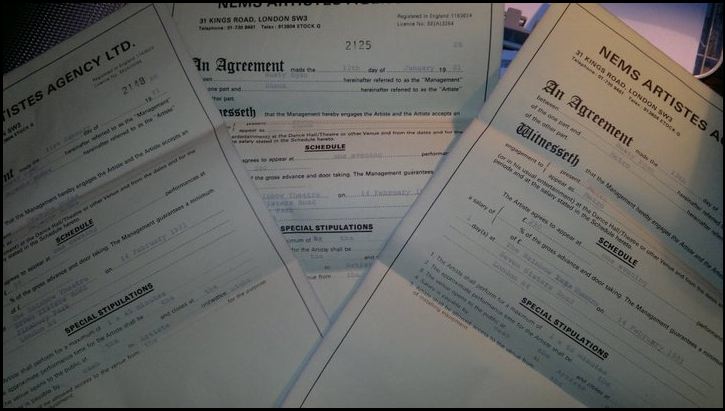
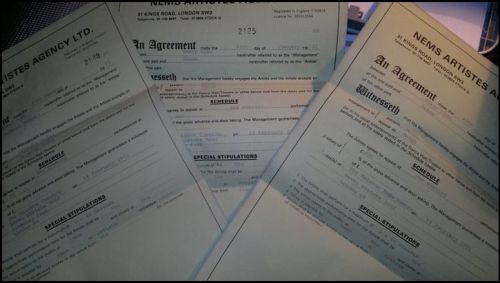
Performance contracts for the People’s Palace, 1981: Shock were paid £500, Metro £250 and Depeche Mode £50. Source: Rusty Egan archive

The soundtrack throughout was the latest electronic pop, spun on Rusty Egan’s turntables as well as played live onstage. On this Saturday Ultravox were arriving at No 2 in the singles chart with Vienna, and here at The People’s Palace they were topping a bill booked by the event’s promoters, Egan and Steve Strange, to capture the zeitgeist, even as the duo planned their next clubbing venture following the closure of their Blitz nights.

Much as Midge Ure protested about his band qualifying as New Romantics, in February ’81 any band toting synths ticked the box. Among supporting acts the then unknown Depeche Mode opened the live sets for a handsome fee of £50 in their first major performance off the clubbing circuit, one week before releasing their debut electro-single Dreaming of Me.
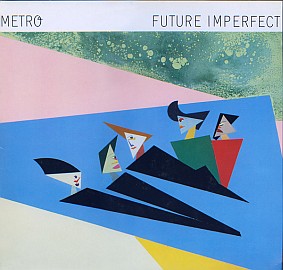
Metro band, pop, Future Imperfect, record sleevesPeter Godwin revived the new-wave band-name Metro, surfing in on the strength of their 1980 album Future Imperfect, followed by the dance troupe Shock, dressed by Birmingham’s Kahn and Bell, as exponents of the robotic dance-style across Britain’s clubland where their single Angel Face was a dancefloor hit.

Steve Strange had hoped to stage a splashy fashion show too, though according to Judi Frankland — who had featured with her outfits in Bowie’s Ashes to Ashes video the previous summer and is visible second from right in the masthead for Shapersofthe80s — “The other designers pulled out at the last minute and as I was still under Steve’s spell he made me carry on and do a ‘show’ alone with a mere six outfits. When he pulled me onto the stage, ohhh that still makes me cringe! However the one good thing I got out of it was being on the same stage as my faves, still to this day, Depeche Mode. I keep bumping into lovely Dave Gahan every few years in the most unexpected places.”

Meanwhile most of the original Blitz Kids — who had animated the Bowie credo that behind a mask you can be anyone you wish — wouldn’t be seen dead at The People’s Palace. In the wake of chart success by Spandau Ballet and Visage, they were competing in a calculated dash towards fame and fortune in clubland, glossy mags and the music biz, whose singles charts by the summer of 1981 welcomed Landscape, Depeche Mode, Soft Cell, The Human League, OMD, Level42, Duran Duran, Heaven 17, Altered Images and Imagination.

Like Midge, we can argue ad finitum whether these acts all technically counted as the New Romantics bandwagon, but they did play dance music, not rock — which defines the reformation that fundamentally vanquished rock to change the sound of the 80s charts — and all benefited from the momentum, as ABC’s Martin Fry later acknowledged. Most of them would, however, set about shaking off the hollow Romantics label in favour of their own musical tastes as soon it had served its purpose. For the moment, like the Titanic heading unwittingly towards its iceberg, the preening Lord Foppingtons and Lady Buxoms at the Rainbow were unaware that theirs was the last real gasp of The Cult That Had Gone Too Far. By Valentine’s Day 1982, there were so many new fashion factions that they would never have turned up for the same ball.
People’s Palace, Valentine Ball, New Romantics, Astoria Finsbury Park

Frills, tassels and hats: Arrivals at the New Romantics ball, 1981. Photographed © by Caroline Greville-Morris

FRONT PAGE

1944 ➤ “Go to work, Slim” — Lauren Bacall offers a musical treat for Valentine’s Day

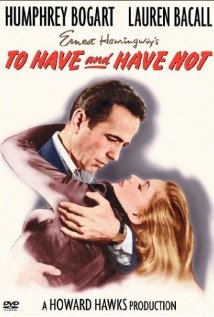
❚LAUREN BACALL WAS 19 AND GORGEOUS when she was introduced to tough guy Humphrey Bogart on the set of the war movie Passage to Marseille in 1944. Within the year she was making her Hollywood debut opposite the star in the much under-rated gem, To Have and Have Not. This too was a war movie and it made an overnight star of Bacall. It also brought her love, even though Bogie was 45. Within another year he was divorced and remarried to Bacall. They were separated only by Bogie’s early death in 1957.

Fashion editor Diana Vreeland had discovered Bacall’s photogenic qualities and turned her into one of the hot models in Harper’s Bazaar. Today Bacall still exudes the sensuality we see in her first screen role of Marie “Slim” Browning, the sassy adventuress who sings in the bar where Bogart as Harry “Steve” Morgan hangs out. Her opening line in that silky voice “Does anyone here have a match?” set the screen ablaze. But it was the song in the video clip above, How Little We Know, that announced a star is born. As a Hollywood epithet, Bacall became simply “The Look”.

Bogart, Bacall, To have and Have NotMade during the second world war and wonderfully crafted by director Howard Hawks, this loose adaptation of Ernest Hemingway’s novel is a sensitive morality tale. It centres on Morgan as a hard-boiled American with a past he seeks to forget by captaining a sports-fishing boat on the Caribbean island of Martinique. For the duration of the war this overseas region of France, and an integral part of the Republic, is under Vichy control.

The couple’s real-life romance is electric, and caught on-screen for all to see. It is beautifully nuanced in the playful pet names the pair adopt for each other, when “Slim” as a resistance sympathiser persuades “Steve” to compromise his neutrality and help transport a fugitive on the run from the Nazis.

♫ Maybe you’re meant to be mine.
Maybe I’m only meant to stay in your arms a while
(As others have done) ♫

The clip above has the fine pianist Hoagy Carmichael as Cricket accompanying “Slim” as she sizzles her way through How Little We Know. The film’s music contributes toward a piece of pure entertainment which grows with every viewing. It contains some of the best lines of its day — almost in the Casablanca league — including these:

➢ You know how to whistle, don’t you, Steve?

FRONT PAGE