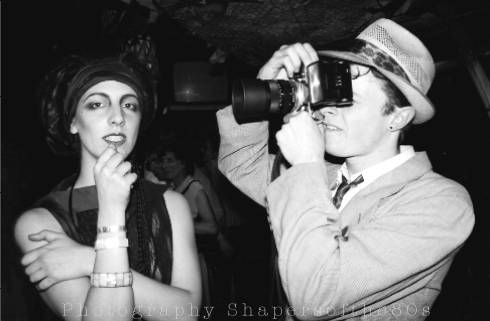
Graham Smith gets Spandau Ballet in his sights during the filming for their Chant No 1 video at Le Beat Route in July 1981: his then girlfriend fashion designer Michele Clapton sizes up the Shapersofthe80s camera technique, and it’s true that Smithy did walk away with more pix in focus than we managed
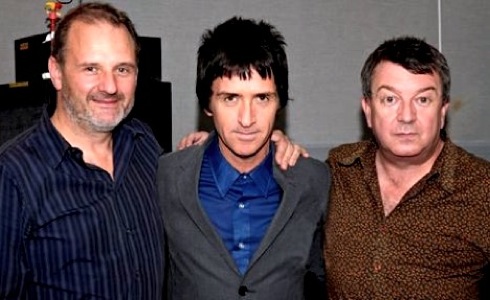
❚ THREE FROM A SELECT PLATOON of musketeers who hustled and toughed their way through the vile swamp of the 1970s, then through the gilded portals of the 80s, met up in a BBC radio studio today to reminisce about their larks as teenagers in London. They were plugging a new book titled We Can Be Heroes, the most inspirational of David Bowie’s songlines, so we’re already talking outsiders, groomed by 1976’s punk ethos of do-it-yourself whose fashion statement had been expressed through the medium of trousers.
➢ Hear today’s discussion about
We Can Be Heroes with Elms, Smith and Sullivan
at BBC London 94.9 (starts at 30 mins in)
Their coffee-table book looks set to be the definitive account of 80s clubbing, told through previously unseen photographs and anecdotes from fellow musketeers who propelled the Blitz Club bandwagon and transformed British music, fashion, nightlife and much of the media. They are the very pioneering spirits Shapersofthe80s has tried to document and honour on this website, but where your reporter was always the observer looking in, the 100 or more boys and girls contributing to this new book were themselves the workers of the miracles in 1980. They are more entitled to tell the tale than the pompous writers of pop-cultural history who were never there as witnesses (one “author” plagiarised my own coverage of the 80s ruthlessly, reportage and analysis, without giving one word of credit). As a breed, they have chronicled the dawn of the 80s dismally. What they always miss is the ribald fun of staying up all night. We Can Be Heroes might just get this chapter of British history right, for once.
After the post-punk wave of electronic, industrial and synth-pop had redefined the scope of a new soundtrack for UK youth through Billy’s, The Blitz and select clubs up North, Chris Sullivan, Graham Smith and Robert Elms determined to nudge musical tastes in a more hummable direction. They created a fork in the branch of clubbing’s evolutionary tree by developing the then novel notion of one-nighters with three successive ventures during 1980, at St Moritz, Hell and Le Kilt. (Remember, long before Time Out had nightlife listings pages, London offered only one hip club-night per week.) At these three the dance rhythms were drawn from prewar musicals, rockabilly, Latin and funk, and sartorial styles shifted swiftly and dramatically from futurist to Hollywood romance. Bobbing in the wake of art-school theories about deconstruction, their clubnights were in themselves a fightback against the top-down dictates of middle-aged moguls in fashion, music and media. Just like Alexei Sayle and the “alternative” comedians making their reputations live at The Comic Strip in 1980, fury was addressed to the marketing of trendiness itself.
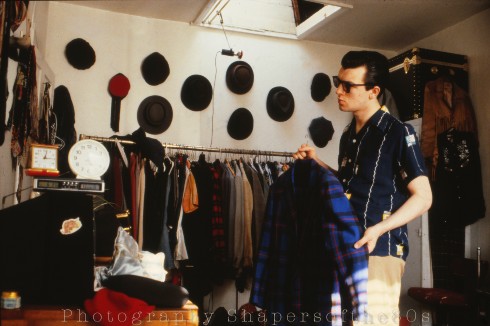
At home in Kentish Town Chris Sullivan chooses the right zootsuit for today’s mood: his wardrobe is legendary, his taste impeccable, and his influence immeasurable. Shapersofthe80s shot this for his first Evening Standard interview in June 1981
❚ I ALWAYS SAID THEY’D DO WELL, especially that Chris Sullivan, oh yes. I said it when this imposing and pointedly stylish Welshman first shook my hand in Rumours, Covent Garden’s trendiest bar in 1980, and made some tart remark about the lowlifers who produced the newspaper sticking out of my pocket, the Evening Standard, until I mentioned I was one of them, when he very kindly decided to discount me personally because I’d been sharp enough to find my way into the same bar as him, so, welcome, and he’d have a Carlsberg thanks very much (all lagers being equally bland and boring then, not having yet matured into status drinks).
It was all a wind-up. He’d been told exactly what I did for a living, and I thought, he’ll go far. And waddayaknow? One day he’d be a cossack, then he’d be Maurice Chevalier, then he was reinventing the zootsuit while doing fashion at St Martin’s. Next day he was singing and dancing into the pop charts in Blue Rondo à la Turk — the daftest seven-piece “bunch of nutters” (his words) Britain had seen since Edmundo Ros. Suddenly, and for the next two decades, he was hosting the Wag as the hippest club in the land that played the hippest black music. As he said on the radio today: “Since when would somebody put a 22-year-old working-class bloke like me in charge of one of the biggest West End nightclubs? We were all kids. We went out and had a go. Empowerment is what’s important about this story.” In the past he has expressed great satisfaction at denying entry to the Wag for the smugger elements in the rock press — those “white middle-class punks who couldn’t dance and hated black music” and destroyed the prospects for his band Blue Rondo.
Ultimately Sullivan became a journalist, much in demand across all sectors of the press, while remaining a leading club deejay. It’s an understatement to call him a character. Elms today acknowledged that, as much as anyone in the country, Sullivan “was at the forefront of all of this”. Frankly, I’m happy to acknowledge him as the Number One shaper of the subcultural 80s in the UK, principally for his energy, his impeccable taste and a million-and-one nuanced responses to the society around him — plus one of the longest and most influential of contact books. Best of all: he also laughs a lot.
❚ THAT BOB ELMS WAS ANOTHER ONE you didn’t want to shut up. It wasn’t a criticism to call him a motormouth because most of what he said was hugely entertaining as we stood at one of the rare bars with a 1am drinks licence in those days, usually accompanied by a couple of other movers and shapers evaluating the ever-evolving hairstyles and footwear in a club (“No, it’s not just a white sock. It’s a sock with a Mod legacy.”) Britain’s subcultural heritage and all associated musical soundtracks were the adrenaline that drove him to trace roots, analyse trends and formulate preposterous ideas about The Next Big Thing, just like a journalist, or indeed the LSE politics graduate he became.
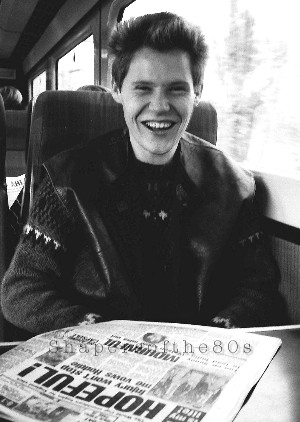
Robert Elms on the train to Glasgow and his future: We were heading for Blue Rondo’s Scottish gigs on the day their first single Me and Mr Sanchez was released, Nov 6, 1981. He’s sporting the haircut that won him the audition to front TV yoof shows. © Shapersofthe80s
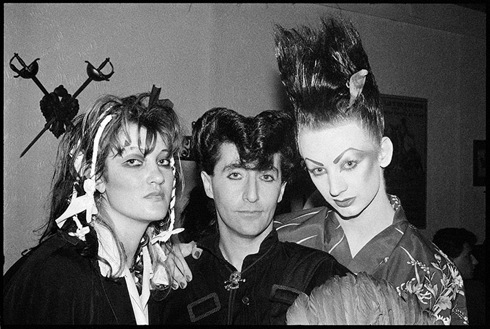
He’ll go far, I thought, he’ll be the next Benny Green (look him up!). And you know what? Two minutes later he was all over the coolest magazine ever, The Face, chronicling the exceedingly noisy and high-visibility youth movement known as the New Romantics, whilst adjusting his own natty garb to suit and, yes, throwing out a catchy name for a pop group, Spandau Ballet, which legend says the pals had conjured from graffiti glimpsed on their journey of discovery to Berlin in 1979.
It was definitely his wacky brushcut that got him in front of TV cameras as one of the first cockney-sparra presenters on the street-cred yoof shows that 80s media churned out in response to the revolution that came surging up from the dance underground. As somebody never short of an opinion, he too was always up there among the top shapers of his age, so it was an effortless morph from style arbiter to author and travel writer Robert Elms, who landed the plummest job in local radio 20 long years ago at the BBC’s London station, and only yesterday was also being one of Radio 4’s “own correspondents” reporting the last bullfight in Barcelona.
As predicted, Elms has inevitably grown into a dead ringer for man-of-the- people, the late lamented Benny Green, jazz-lover, raconteur for his dandy tribe, talking head on Stop the Week/Loose Ends and all-round good egg.
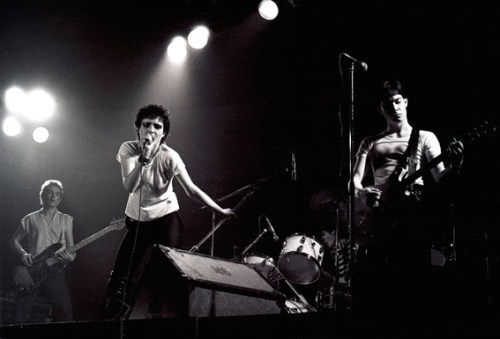
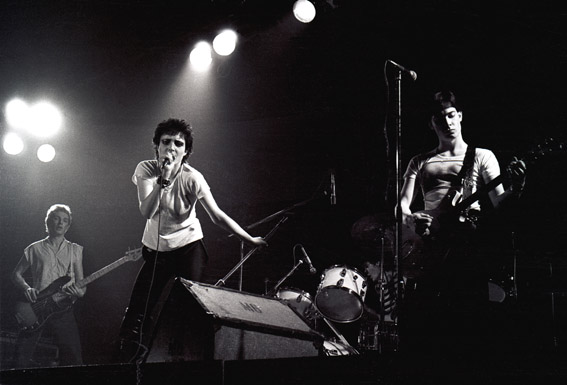
Siouxsie and the Banshees, photographed in 1977 by Graham Smith, from his book We Can Be Heroes. Souxsie was an original member of the Bromley Contingent that led Graham and his mates into the clubs of Soho
❚ THEN THERE’S THE QUIET ONE with the cheery smile. That Graham Smith, nice lad (before the third pint). (Only kidding, Graham. Still nice even after the 16th.) Always carried a camera. Funnily enough he carried the same state-of-the-art Olympus OM2 SLR as me, and we were both trying to get the hang of Ilford’s HP5, a superduper fast new B&W film that was so sensitive it meant you could shoot in nightclubs without a flash, well, in theory. You did tend to end up with a lot of blurry images, but the trouble was if you used a flash you just got a frame full of bright ghouls for faces and it was years before I dared ask the paparazzo Richard Young for the secret of shooting nightclubbers with flash from about 3 feet without bleaching them into ghosts. (Answer: stop right down to f22 and push the film in the developer — crucial advice in 1980 and totally without meaning to today’s digital snapper.) One of the reasons most of our pix are in B&W was because there was no colour film in 1980 that didn’t require equatorial amounts of sunlight, so shooting nightlife was a black art.
When I met him Smithy was already designing the publicity and taking the artful first band snaps of Spandau Ballet, so when his minimalist record sleeves counted as coursework and won him a first-class degree from Camberwell, I thought, he’ll go far. He then did the same for our clubbing friend Sade, the fashion designer who became a global icon as a singer, and in time he won awards as a magazine art director.
He and his lovely wife Lorraine met on a dancefloor and still have the hots for the arcane dance moves of Northern Soul. So it’s more than apt that today he’s the prime mover behind this coffee-table book packed with 500 of the immaculate, usually in-focus pix from his youth, most of which have lain in a dusty old box unseen by anybody since they were shot. What he’s bravely done over the past two years is interrogate dozens of the other clubbing musketeers, mentalists and Blitz Kids for their first-hand versions of how the 80s shaped their lives, and turned dozens of them into popstars and household names with their hands on the levers of power.
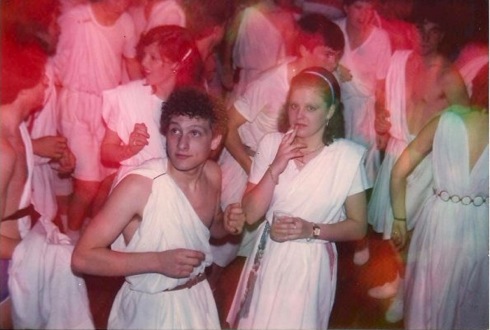
1979 toga party at the Papillon, Brighton: these were the soul boys and soul girls who made the British dance scene spin. Photograph by Paul Clark at Facebook
❚ ELMS HAS KNOWN SMITH since he was 11 and Sullivan since 16. All are now family men and feeling 50, hence the need to spill the beans before they forget. Despite my own efforts (sob!) writing a nightlife column in The Face, and later with Shapersofthe80s online, Smithy doesn’t think his generation’s teenage achievements have been adequately reported as a slice of social history. He’s thinking of that fabulous book on the 60s Mods. In all honesty, he’s right. In late 1980 I walked into both Omnibus and Proteus with a proposal for a tome about the nightlife revolution titled “Heroes For the 80s”, evidently too ahead of the curve for them to take a risk with this newcomer, who was then rightly miffed only months later to see The Book With No Name emerge from one of their in-house teams! Ouch. Since then, I have told the 80s creation myth in outline many times — most fully though even so with necessary shortcuts in The birth of the New Romantics for the Observer Music Monthly — and we have had a handful of individual biographies, the most gripping being by Midge Ure and Gary Kemp (and the most horrific by Boy George). But the saga of 80s clubland really belongs to the teenage dance fiends and soul fans who had amassed in the 70s and set sprung maple floors a-bouncing across the nation.
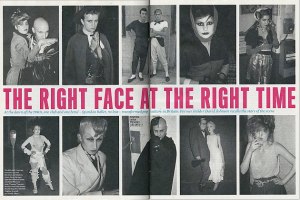
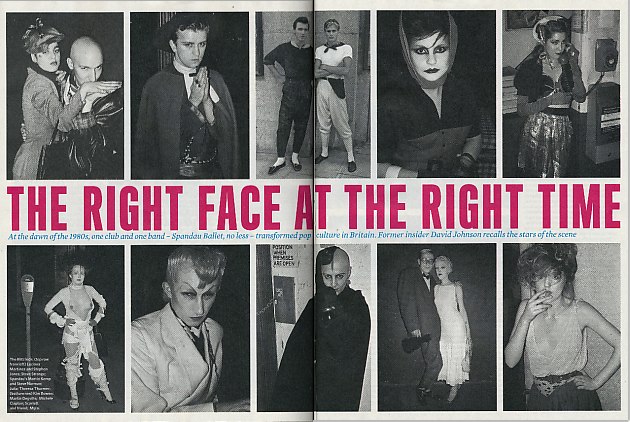
Birth of the New Romantics — The Observer Music Monthly, Oct 4, 2009. Pictures © by Derek Ridgers
Historians and rock journalists from middle-class backgrounds by and large don’t have a clue why social mobility is an impossible dream among what’s traditionally called the working class. In today’s interview Sullivan reminded us that the trio behind We Can Be Heroes all came from working-class homes (except that Smith’s dad had a fish-n-chip shop, thus strictly speaking he was in trade and already upwardly mobile). Essentially, he said, self-empowerment (yonks before the word had become a politically correct buzzword) was a liberating force in an era when expressing yourself and being creative was actively discouraged by your elders as being “above your station”. For each pal in this trio, punk had rattled the cage guarding that convention. That’s why Smith’s starting point in his book is 1976, the year punk stamped its Doc Martened foot and kick-started his photographic reflexes.
In one of our first conversations way back when, Elms’s interpretation was that, against the black cloud of recession and unemployment rising to 3 million, his generation were shrewdly turning what were once regarded as hobbies into livelihoods. My own analogy has always been that their nightclubs were effectively well-organised factory floors and job centres. Everyone who came to dance could, if they had the wit, shimmy out into the daylight with the promise of work on a “Variety Of Projects”. It was the Blitz Kids who invented the phrase and its acronym as a verb, to VOP, and vopping is what made the 80s belong to the young — and especially to the “Common People” immortalised by Jarvis Cocker. They staged a social and industrial revolution the elders and the mainstream decision-makers could not ignore in the opening years of the decade, no doubt about it. The last-minute shift in the remit of Channel 4 when it launched in 1982 was clear proof.
We Can Be Heroes gives the voppers their turn to be heard. Their fruity language and their rough-house antics are going to appall the unsuspecting middle-class reader, ha-ha-ha.
❏ Shapersofthe80s will be following through with more of their clubland adventures soon…
THEY’D LIKE YOUR CASH NOW
❏ The digital age means that short-run, quality books such as We Can Be Heroes can be published to high production standards if enough funds are raised in advance. So when you visit Graham Smith’s publisher Unbound.co.uk, you will be invited to pay now for a book that will not be printed at all unless a break-even target is reached. It’s an innovative sales pitch, it’s very 21st century, and as of today they need another 988 pledges upfront, within the next 42 days if the book is to be out for Christmas. For a basic £30 you will receive a beautifully cloth-bound 325-page hard-back printed on substantial paper — plus your name listed as a Supporter in the first edition. You can pay more for further treats. The company Unbound was founded this year by three dynamic young men with considerable experience of traditional publishing, QI writers John Mitchinson and John Pollard, and Crap Towns author Dan Kieran. Their own track records have encouraged Britain’s leading publishing house of Faber & Faber to offer support by running on titles which prove successful through Unbound first editions.
❏ Three popstars created by the Blitz Club scene have endorsed the book by writing their own forewords in it: Boy George, Steve Strange and Gary Kemp of Spandau Ballet. Robert Elms has written an intro, while the main text is by Chris Sullivan. Graham has sweated blood to secure the voxpops.
➢ November catch-up: links to media coverage of We Can Be Heroes
➢ Videos of Robert Elms and Chris Sullivan telling their “Ribald tales of excess”
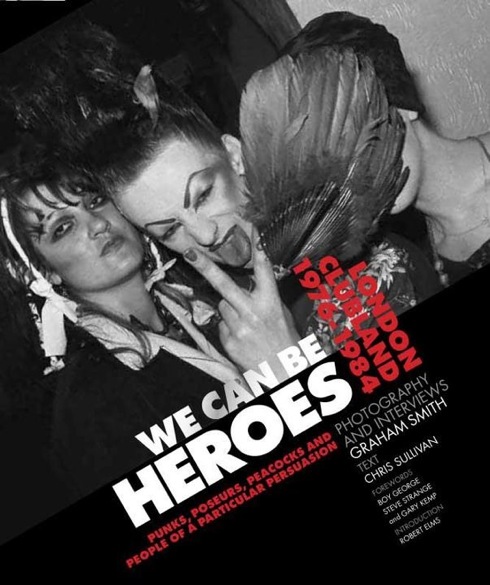
Latest cover for Graham Smith’s history of clubland featuring Clare with the Hair and George O’Dowd before he became Boy
FRONT PAGE

 We hear a brisk clip of Moz’s vocals on Nowhere Fast from the Meat is Murder album, “remastered” by Johnny and the respected engineer Frank Arkwright who painstakingly located all the original half-inch tapes. Johnny prefers to say: “Restored is probably more appropriate. I didn’t add anything. Remastering sounds mysterious, but actually I was taking all the ‘nonsense’ off the original records. I knew we sounded better than that.”



 ➢➢ Shapers of the 80s ➣➣