Category Archives: Media

➤ “Too posh for pop” — Grandpa Waterman condemns two decades of musicmakers

posh pop ,Florence Welch, Lily Allen, UK pop charts

Posh pop totty: Florence Welch and Lily Allen. Photos by Dave Hogan/Getty, and Icon/Rex

❚ HALF OF ALL PEOPLE WHO know who Pete Waterman is regard him as a genius. Or they did, until today’s outburst on BBC radio when he wrote off two decades of pop music. “It’s never been worse,” he harrumphed over breakfast on R4’s Today show, hinting at some insidious infection. His detractors have always condemned him as the schlock-meister who bulldozed the freshness of early 80s pop into oblivion by churning out some of the crassest tunes of the decade.

Waterman’s personal claim is to have created 22 UK number one singles, but the former apprentice electrician and club deejay is best-known as the founder of SAW, the Stock Aitken Waterman songwriting and production hit factory that put 100 singles into the UK top 40 chart and sold 40m records in a formulaic mix of Hi-NRG and Eurobeat (think Rick Astley, Jason Donovan, Hazell Dean, Mel & Kim, not forgetting Kylie). Immediately before impresario Simon Cowell stepped fully formed from the egg, Waterman left no less of an imprint on the British music scene through a strategy that skilfully avoided overestimating public taste.

➢ Hear the extended Waterman interview:
“It’s a totally different industry today — it’s all about job protection. It’s not what music is about”

What detonated 64-year-old, father-of-four Waterman this morning was the Today show. For no obvious reason it exhumed a survey from last month’s issue of The Word music magazine which had generated newspaper headlines in December by calculating that 60 per cent of current chart pop and rock acts must be middle class because they went to what we Brits paradoxically term “public” schools (meaning posh fee-paying private schools), compared with 20 per cent ten years ago. On average, fewer than a tenth of Brits attend fee-paying schools.

Examples cited were Lily Allen who boarded at Bedales, Grammy nominee Florence Welch from Alleyn’s School, the Nu-Folkies Mumford & Sons from King’s College School, and the not exactly current Coldplay’s Chris Martin from Sherborne, and Radiohead all ex-Abingdon.

Pete Waterman, Today programme,posh pop, The Word,

Pete Waterman: “pop has become snobbish”. Photograph © by Andrew Crowley

Bah humbug. Light blue touchpaper and off Pete goes, whizz-bang. “This has been a gripe I’ve had for over 20 years, and particularly right now. It’s never been worse,” he blasted.

“The major companies dominate and they see a CV and if you haven’t got 96 O-levels you ain’t getting a job. When all the A&R people wear Jack Wills clothes [slogan: Fabulously British clothes for the university crowd”] it tells you where they’re going. It’s become snobbish. It’s become a snobbish culture.”

Click through to the iPlayer to hear Pete in full spate on Today today. What he’s lamenting really is an end to John Lennon’s Working Class Hero who made British pop great in the swinging 60s — because he’d known what it was to live a hard life. “You’ve got to have lived the life to have sung the life.” Despite his honorary doctorate in music from University College Chester, Dr Waterman OBE concludes: “There’s no university in the world, ever, that has given you a degree in a hit record.”

➢ Read Has pop become posh? — Today reporter Tom Bateman at BBC News online

➢ How pop went posh — Will Hodgkinson front-paged the topic on the arts section of The Times, August 13, 2010 … Adds the ex-Rugby Horrors to the list of public-school suspects, along with Foals (Abingdon). “One of the reasons all these bands are emerging is because public schools have such great facilities,” says old Etonian Tom Bridgewater, MD at Loose Music. The Times tenuously lists the “Top schools of rock” as Abingdon (Radiohead), Bedales (Patrick Wolf), Eton (James Blunt), Marlborough (Chris de Burgh — Is he the latest Marlborough can offer?), Westminster (Mika), plus the free state-funded city college, The Brit School in Croydon (Amy Winehouse).

FOOTNOTE TO HISTORY

❚ Pete Waterman made one of the most inspirational guests on Desert Island Discs in 1995 by expressing real erudition about his industry and popular culture. In a model lesson that was worthy of the Open University, he explained how pop music worked. And he identified the three best groups in music history who defined the essence of pop: The Beatles, The Beach Boys and, unexpectedly but rightly, Abba.
FRONT PAGE

1981 ➤ The day they sold The Times, both Timeses

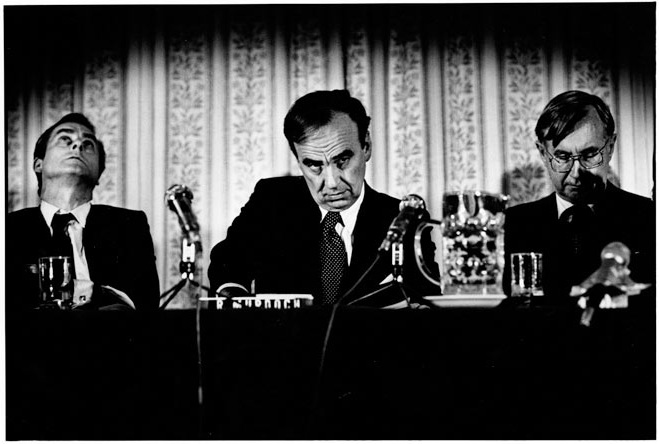
❚ ON THIS DAY 30 YEARS AGO… “Australian newspaper tycoon Rupert Murdoch has agreed to buy The Times and Sunday Times newspapers. But the deal will only go ahead if Mr Murdoch can reach a deal with the print unions within the next three weeks over the introduction of new technology. Mr Murdoch will be expected to meet a number of conditions aimed at preserving the editorial integrity of the papers.”

➢ Read Murdoch bids to take over Times
— On This Day at BBC online

Rupert Murdoch, 1981,Harold Evans, Sunday Times, William Rees-Mogg, The Times

In media circles this was the “sale of the century”, and it is captured here in what the photographer Sally Soames calls her “best shot” … Rupert Murdoch announcing his purchase of Times Newspapers on Jan 22, 1981, to a press conference at the Portman hotel. He is flanked by Harold Evans, editor of The Sunday Times, and William Rees-Mogg, editor of The Times. © Sally Soames

This picture of two doomed gazelles at the feet of the tiger is the one photographer Sally Soames last year nominated as her Best Shot ever. I had the pleasure of working with her shortly before her retirement and a print of this historic photo adorns my bathroom wall. Sally’s back catalogue has been a who’s who of political and artistic giants since her first assignment for The Observer in 1963. She works exclusively in black and white and her photographs are instantly recognisable for the richness and depth of her blacks. She told The Guardian last year:

“I WAS WORKING FOR THE SUNDAY TIMES IN 1981, and there was a rumour that Rupert Murdoch was buying the paper, along with The Times. I was sent to a packed press conference given by Murdoch and the two editors. When the purchase was announced, I knew it was the end of The Sunday Times. My newspaper was going down the tubes. I had tears pouring down my face as I worked.

“As always, I went down the front. I was the littlest, always “the girl”. The three of them sat down, and it was everybody’s first sight of Murdoch. I had brought three cameras, one of them with a wide-angle lens. Everyone started shooting Murdoch – except me. I photographed all three: Harold Evans, the Sunday Times editor, on the left; William Rees-Mogg, the Times editor, on the right. They all had name plates, and I knew I had to get Murdoch’s in there, to identify him. I had to tell the story: two papers were going to change completely…”

➢ Update 2019: Read “fearless” Sally Soames’s
obituary at The Guardian

Universal Daily Register, 1785, newspapers, The Times

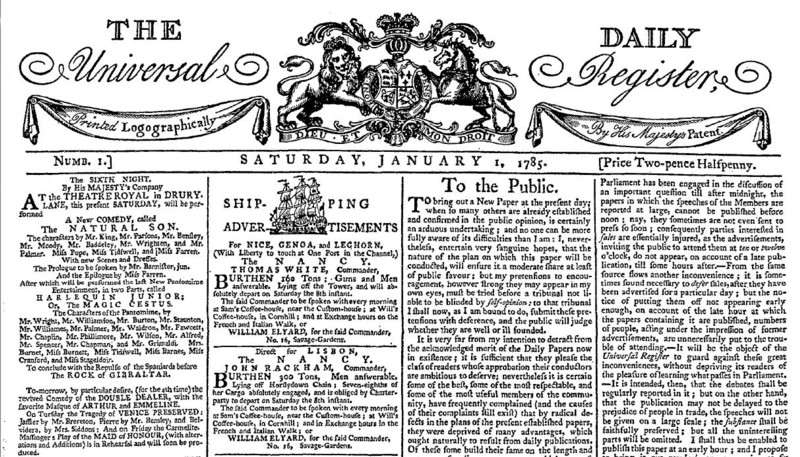
First issue of the Universal Daily Register in 1785, later to become The Times

❚ THE ROMANCE OF THE BRITISH PRESS has always derived from its being simultaneously glorious and wretched, from its earliest days when kings would jail upstart editors to the decade of continual strife throughout British industry, the 1970s. So powerful were the trade unions that, as former Times editor Simon Jenkins wrote in his 1979 book Newspapers, The Power and the Money: “Action taken… has brought one paper after another to the brink of financial ruin.” Mind you, rich proprietors also made pretty ineffectual managers. One of the more enlightened was the Canadian Roy Thomson, who flexed his muscle by shutting down for a whole year both of the world-renowned newspapers he owned and published in London — The Times (founded 1785, and 200 years later broadening its appeal from its historic role as the “Top People’s paper”) and The Sunday Times (founded 1821, which under Harry Evans had set benchmarks with its hugely influential investigative journalism). In 1980 the papers ran up a £15m loss (equivalent to £50m today) and by then Thomson had reached the end of his tether, so put them up for sale.

Those were the days when ten nationally distributed daily newspapers and nine Sundays averaged 13m paid-for sales every day of the week (serving a UK population of 56m). Seven millionaire contenders sprang into the marketplace to bid for the two Timeses, yet Harry Evans thought none was worthy to own the world’s most prestigious titles. His book Good Times Bad Times is the rippingmost yarn about real newspaper life — “Who were these seven dwarves, I asked a staff meeting, to seek the hand of Snow White?” It was the Australian wot won it. The deal led to 563 redundancies.

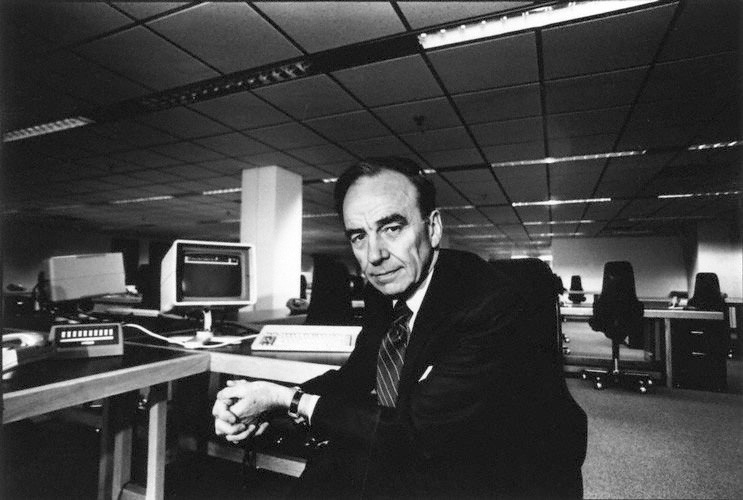
 Rupert Murdoch

Rupert Murdoch in his computerised offices and printing plant newly built at Wapping, 1986 © by Sally Soames, National Portrait Gallery collection

FRONT PAGE

2011 ➤ Life? Tough? At the Blitz reunion, Rusty delivers a message to today’s 20-year-olds


❚ HERE’S THE ITEM FROM London Tonight, ITV’s six o’clock news magazine, reporting on the Return to the Blitz party hosted on Saturday by Steve Strange, Rusty Egan and Rose Turner on the site of the original Blitz club in Covent Garden. [Choose 360p for better quality video.] They’re celebrating the launch of their official website The Blitz Club and a load of moist-eyed old New Romantics from 1979 find themselves mingling with a sprinkling of floral Neo Romantics from 2011 who seem to have been let out of Shoreditch for a reality check. Featuring King of the Posers Steve Strange, Krautrock’s biggest fan, the deejay Rusty Egan and Spandau’s Martin Kemp (kept in hand by the wife, Shirlie) — you wouldn’t have been at all surprised to see Michael Aspel appear with his big red TIYL book.

London Tonight’s intrepid entertainment correspondent Lucrezia Millarini dives into the scrum and Shapersofthe80s has topped and tailed her report — all content © itv.com … More pictures and report to follow soon…

FRONT PAGE

2011 ➤ The unknown Mr Big behind London’s landmark nightspot makes his return to the Blitz

Return to the Blitz, Eve Ferret, Mike Brown, Blitz club, Steve Strange

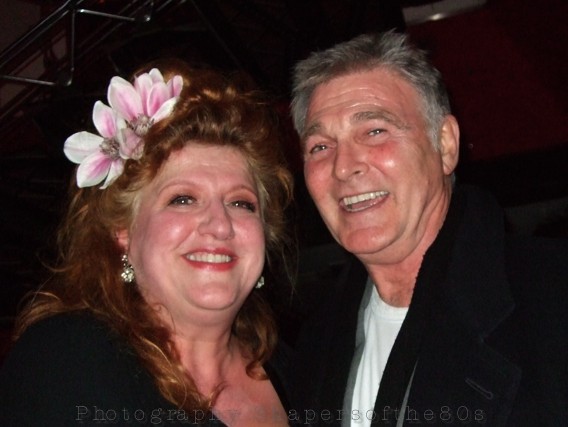
Reunited last night after 30 years: the reclusive founder of the Blitz wine bar, Mike Brown, and the cabaret singer Eve Ferret who first tasted stardom there. (Photograph © by Shapersofthe80s)

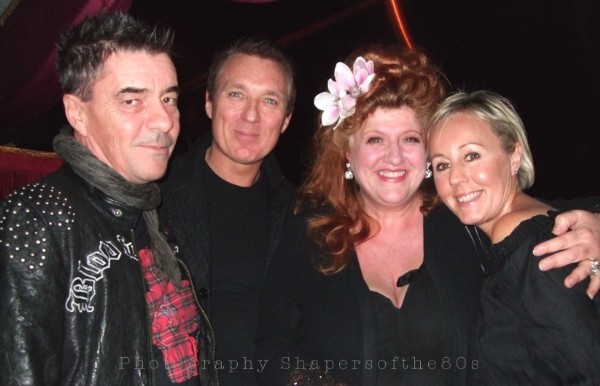
❚ BIGGEST SURPRISE AT LAST NIGHT’S Return to The Blitz party, thrown by Steve Strange, Rusty Egan and Rose Turner, was the arrival from Spain of the brains behind the original bar that became the crucible for New Romantic nightlife back in 1979. International man of mystery Mike Brown has always been described by those who worked for him in the late 70s as very private, and indeed he must be the only person among us to generate nil Google results. Nobody was more thrilled to see him for the first time in 30 years than actress and singer Eve Ferret, who made good in cabaret at the Blitz. It was almost a This Is Your Life moment as the pair lingered fondly in each other’s arms.

Biddie & Eve, James Biddlecombe, Blitz club

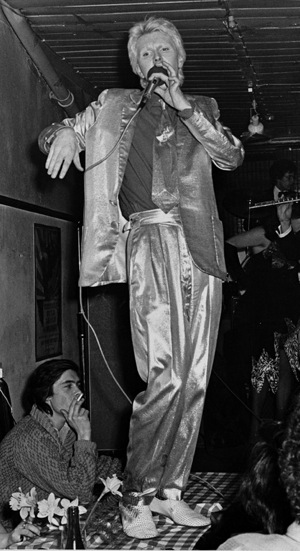
One-man cabaret: Biddie on-table at the Blitz wine bar in 1977

It was Brown who had the shrewd idea of buying the four-storey Victorian house at No 4 Great Queen Street in 1976 and opening a wine bar there. “I felt like a change from the recruitment business which I was running,” he said last night. “And I’d been watching a World War Two movie about Churchill which gave me the idea for a Blitz theme.

“I remember it was black and white and showed Londoners down in the Underground shelters whilst the bombs were dropping. More than the actual horror of the damage that was being inflicted, it was the way Londoners banded together that lingers. I remember thinking that I lived on the fourth floor of an old building divided into six flats yet I didn’t know any of the occupants.”

Mike ran his main business in nearby Lincoln’s Inn Fields, and his soft spot for nostalgia was well known to the Blitz staff — barmaid Sally Marks says she imagined he would have been a fighter pilot in another life. Hence the Blitz’s utilitarian wartime decor: bare floorboards, green and cream paintwork, red-gingham tablecloths, hanging enamel lampshades, which were never dusted. Famously the walls were lined with portraits of Churchill and WW2 posters in the declamatory graphics of the period: “Careless talk costs lives” and so on.

Blitz club, Mick Hurd, Richard Jones, Eve Ferret, Brendan Connolly , Sally Marks

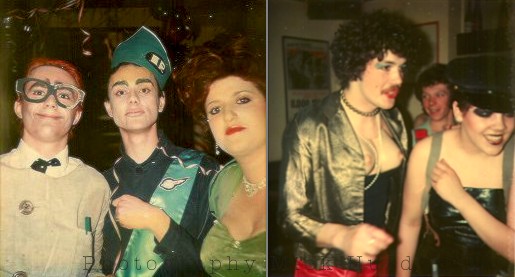
Dressing up for the Blitz wine bar’s Come as your Wildest Dream party, 1977: Mick Hurd, Richard Jones as Thunderbirds heroes, with Eve Ferret… and, right, manager Brendan Connolly with barmaid Sally Marks. (Polaroids © by Mick Hurd)

Mike said: “I am a great lover of traditional pie-and-mash and decided that the food theme would be along the lines of bangers-and-mash. The menus looked like old wartime ration books and we had our own wine labels made up.”

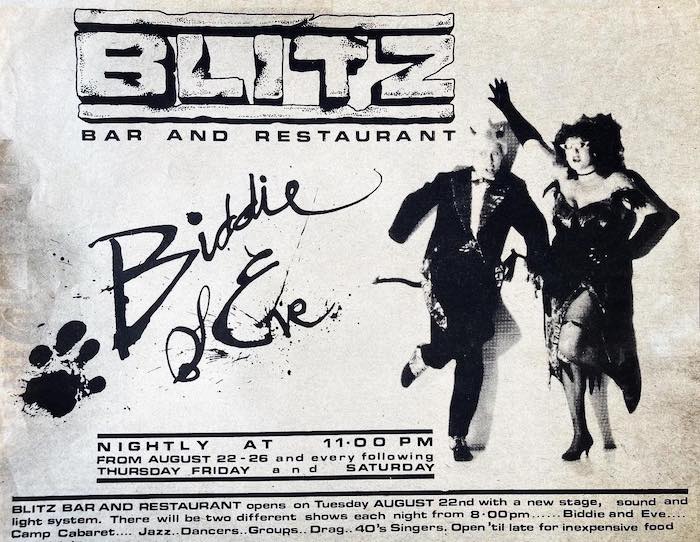
Despite having the Irish charmer Brendan Connolly as manager, and the dashing Peruvian Mario Testino behind the bar (as well as Sally, Ian Harington, Mike Roskams, Mick Hurd, Roy Brentnall, Paul Frecker and many, many others), the Blitz with its gorblimey menu wasn’t frankly much of a success. As the oil crisis squeezed western economies in the austere 70s, so London nightspots started resorting to cabaret to attract custom. Coinciding with a menu upgrade, the first performers to make their name at the Blitz were the song-and-dance duo Biddie & Eve.

Slim, camp and Bowie-esque James “Biddie” Biddlecombe started at the Blitz singing solo, accompanied by pianist Richard Jones (later an opera director). Along came buxom redheaded Eve Ferret whose laughter could shake a cocktail. Their riotous partnership was inevitable. Biddie recalls: “Initially we would perform in the middle of the floor three nights a week. By 1978 we’d grown so busy they decided to build us a stage.” Sally says that one night when Island Records boss Chris Blackwell turned up with Bob Marley, the godfather of reggae was persuaded to get up and do a number.

Biddie & Eve, Eve Ferret, James Biddlecombe, Blitz club, London, 1970s

The 1978 relaunch, now with a stage: flyer for Biddie & Eve’s regular thrice-weekly cabaret

With Brendan’s encouragement, Biddie-life-and-soul helped establish a reputation for themed costume events with titles such as Come as Your Wildest Dream, or Stars of Film and TV, so the Blitz rapidly attracted, in the language of the time, an “up for it” party crowd, which included the likes of Tim Rice and Janet Street-Porter from the swank media haunt Zanzibar along the street. Then in February 1979, in walked Steve Strange and his competitive brand of teen cabaret on Tuesdays and the rest is New Romantic history.

The Blitz bar closed when Mike sold the building in 1981 “because after five years I’d had enough”, by which time Strange & Egan had upscaled their ambitions to Club For Heroes over on Baker Street. And Mike went back to recruitment. He said: “It is very humbling to know that there is still such interest in the Blitz Kids. They were a great bunch and it was a very exciting time.”

Shirlie Holliman,Eve Ferret,John Keeble, Martin Kemp, Blitz club

Spandau delegation at Return to the Blitz 2011: John Keeble, Martin Kemp and Shirlie Holliman catch up with Eve Ferret, second right. (Photograph © by Shapersofthe80s)

➢ Rusty Egan’s set list for Return To The Blitz
reunion party, 15 Jan 2011

FRONT PAGE

➤ F-A-B! Thunderbirds stamps are go!

Gerry Anderson ,Supermarionation,Thunderbirds, Captain Scarlet, Royal Mail, stamps

Half a century of Supermarionation: Gerry Anderson, Captain Scarlet and Thunderbird 2

❚ TODAY THE ROYAL MAIL (AND THE TIMES’S FRONT PAGE) honour 50 years of Supermarionation by 1960s puppetmaster Gerry Anderson with a set of “lenticular” postage stamps that appear to move — no strings attached. When tilted, the stamps create the illusion of movement to show the launch of the four main Thunderbirds vehicles, along with Captain Scarlet, Stingray and other Anderson shows. Each frame has been drawn by Gerry Embleton, illustrator of 1960s comic TV Century 21, and these are Royal Mail’s first motion stamps to be printed with microlenticular technology.

Stingray, Gerry Anderson

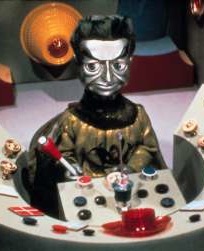
Stingray’s evil Masterspy: looks like Rains, talks like Lorre

F-A-B: The Genius of Gerry Anderson is the full title of the stamp issue and Gerry Anderson MBE, 81, who lives in Henley, says he feels “incredibly proud”. The stamps feature characters who first arrived on TV screens in the 1960s, beginning with Mike Mercury and Professor Beaker in Supercar, 1961. The scifi space adventure Fireball XL5, piloted by Colonel Steve Zodiac and Robert the robot, followed in 1962 and Stingray in 1964.

The idea for the Thunderbirds international rescue organisation was inspired by a real-life mining disaster and Lew Grade’s ATV backed the first series in 1964 which made stars out of Lady Penelope, her pink Roller and her chauffeur Parker. Captain Scarlet and the Mysterons followed in 1967, and Joe 90 in 1968. All enjoyed revival as TV cults during the 80s and in the 90s the children’s show Blue Peter was showing audiences how to build their own Tracy Island. Anderson also wrote and delivered a treatment for a James Bond movie, elements of which eventually informed The Spy Who Loved Me, 1997.

➢ See the full F-A-B set of stamps at Royal Mail

➢ ASK BRAINS HOW LENTICULATION WORKS

Thunderbirds, Gerry Anderson, stamps, Royal Mail, Brains

FRONT PAGE