Tag Archives: New Romantics

1978 ➤ Midge stakes his claim as the weathervane of synth-pop who helped shape the British New Wave

Rusty Egan, Steve Strange, Midge Ure, Visage, synth-pop, new wave, electro-pop, Rocking the Blitz,BBC

Visage Mk 1: Egan, Strange and Ure in 1978 searching for sounds and styles

❚ “I’LL NEVER FORGET FIRST TIME I SAW a synthesiser on Tomorrow’s World. For the first time I saw the possibility to create sounds that had only existed in my head. I’d had no chance of getting my hands on one because they were size of house or at least the cost of one. But then cheaper Japanese synths came on the market, so I bought one. It changed my life because I could make music in a small home studio. The possibilities for young musicians like myself seemed endless.”

This was Midge Ure enthusing during Rocking the Blitz Club (audio at YouTube), another remarkably well-informed BBC Radio 4 documentary on our favourite scene that went out this morning. It was also remarkable for handing over the commentary to Ure, who — despite having earned an OBE for being half the brains behind Band Aid’s smash hit for charity in 1984, and being a founder member of Visage and the voice of Ultravox’s directional chart hit Vienna — is not among the first rank of mythologists programme-makers wheel out to explain the Blitz phenomenon.

This R4 slice of the 80s gave us a refreshingly different take on the familiar fables recycled by the usual suspects, but mediated in this show by Midge’s deeply un-London Lanarkshire lilt. He’s more than qualified to stake his claim to have shaped the music of the Blitz Kids, though he’s reluctant to be described as one of them, being a good four years older, and having had fingers in more pop pies than most on the post-punk scene. Even as the word punk was given the heave-ho in favour of the term “new wave”, Ure was probably the first active player of a synth among any of his clubbing pals, having bought his first, the polyphonic CS-50, at cost direct from Yamaha in the summer of ’78.

His was an obsession shared by fellow Rich Kid, the drummer Rusty Egan, and it led the way to a whole new British dancefloor sound. Ure felt synths “embodied a kind of nostalgia for the future”.
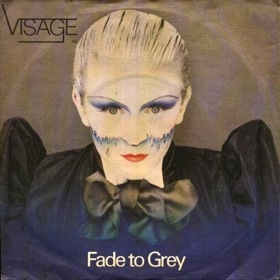
Visage, Fade to Grey,He says: “Rusty and his friend Steve Strange realised our crowd needed somewhere to try out our styles and listen to Euro synth bands like Kraftwerk, Dusseldorf and Telex, whose cutting edge sounds seemed to represent the future.” In almost no time the tribal forces of fashion had granted their wish. Rusty’s deejaying at Billy’s in Soho was augmented by Strange vetting the door to ensure an extreme clubbing attitude, then as 1979 dawned their band of outlandishly dressed clubbing heroes descended on the Blitz.

In his straight-from-the-hip autobiography, If I Was, Midge Ure makes the bold claim: “I had this idea to make music to play in the club. We had to invent our own musical style because our points of reference were very limited — after Kraftwerk, Yello and early Bowie we ran out of influences.” His own taste was for the very textured sounds of the synth built round classic songs, which intuitively caught a mood, unarticulated at that time, for a return to melody. And yet …

“A synth is just a software program and it has a very specific sound — a cold European soulless sound that drummers couldn’t emulate. Only a machine could do this,” he says with eagerness appropriate to a new-wave innovator. “Everybody aspired to be a robot — we didn’t want any human element in there at all, so people sang in a very robotic way. It was not going to sound like Jimi Hendrix. It was going to sound like a watered down version of Kraftwerk.”

❚ MIDGE IS THE ONLY PERSON AMONG THE NEW ROMANTICS to go on record and acknowledge the role of Gary Numan, an otherwise dread name who was perceived as an aloof and unclubbable loner. He definitely never signed in at the Blitz. Yet as 1979 unfolded Numan’s dystopian sci-fi synth sound sidestepped the Blitz Kids to reach No 1 in the UK charts, twice: in May with Are Friends Electric? and in September with Cars. They were blatantly commercial records and that wasn’t how Blitz Kids defined cool.

But Ure recognised Numan had broken down barriers of disapproval within the old guard of the music biz. He was being a great spur. Ure dreamed up the name Visage for his new band who knocked out a demo covering the classic In The Year 2525, with Egan on drums and the eye-catching Strange posing away as vocalist after a few lessons from Ure. Despite music industry scepticism, it won them a deal with Radar Records, the attention of producer Martin Rushent who had an office above the Blitz, and helped rope in Magazine members Dave Formula, John McGeoch and Barry Adamson, and Ultravox keyboardist Billy Currie. A single called Tar was released that September. It didn’t chart, but did clinch them a bigger deal with Polydor in 1980.

Midge Ure, Vienna, Ultravox

The day job: in 1979 Midge Ure (moustachioed) resurrected the name of Ultravox along with (l-r) Warren Cann, Chris Cross and Billy Currie. © Getty

Ure says: “Visage was never really a proper band, just a group of our favourite musicians who we brought together to make experimental music for the Blitz club. Because they were all signed to other labels we chose Steve Strange as our frontman because he looked the part.” This worked well enough. Even while Ure and Currie part-timed with the seven-man studio-only Visage line-up, while steering Ultravox along similar synth-pop lines, Visage put out two successful albums, and a handful of chart singles (the most enduring being Fade to Grey in November 1980). What laid the pathfinding flares for the movement were some uber-stylish art-videos — the first starred Blitz coat-check girl Julia Fodor before she became the fabulous princess and deejay — which disseminated the OTT New Romantic ethos for fans to emulate.

Ure scored the significant double of taking Ultravox’s majestic Vienna to No 2 a month later and for four weeks, then seeing it win Single of the Year at the 1981 Brit Awards. It was produced by the German Conny Plank with an evocatively romantic landmark video stunningly directed by Russell Mulcahy who was creating a whole visual vocabulary for the then novel music video. Ure can take full credit as lead singer and guitarist for breathing a subtle blend of Roxy Music’s style and krautrock clarity into Ultravox and building them into a credible vanguard for the electronic New Wave.

Reflecting back in the R4 doc, Ure says: “There’s no doubt the early 80s was a golden age of music made by real popstars who created themselves. It was more than just padded shoulders and asymmetrical haircuts. It was a pivotal moment in our cultural history when new tech mixed with new ideas to create something really good. All in the pressure cooker environment that was the Blitz club.”
FRONT PAGE

2010 ➤ Uh-oh, A2A is back and we’re about to be Quattroed in HD!

Richard Hammond, Hamster, Philip Glenister, Audi Quattro, 1983, Ashes to Ashes

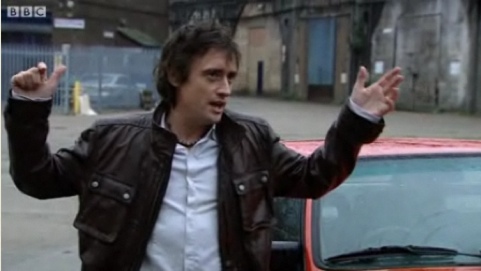
Hunt to Hammond: “You seriously think I would let a man who looks like a gerbil drive my car?” © BBC

➢➢ See the Hamster run away with the car

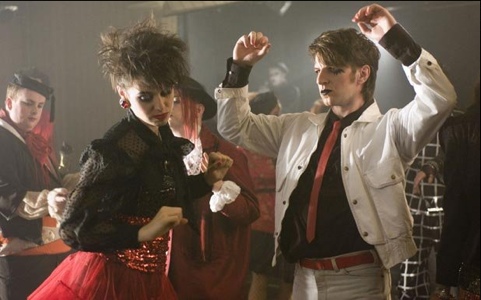
❚ MICHAEL PARKINSON’S “FAVOURITE COP DRAMA” is the one where a car is the star – the turbo-charged 4WD Audi Quattro – and both returned on Good Friday for a third and final eight-week series. Ashes to Ashes, originally set in 1981 and named after the Bowie track that epitomised the New Romantic ethos, divided TV audiences between those who found it ludicrously off-piste and others who loved reliving an era they probably hadn’t lived through. Some of us couldn’t forgive episode two in which Rupert Graves takes Keeley Hawes on a hot date to a tragic slo-mo recreation of the Blitz club in which everybody is too old by half and too lacking in pizazz to have got past Steve Strange’s door police. Worst of all, not one of them can dance the dance.

The show’s saving grace was a soundtrack souped up with hits from Duran, Spandau, OMD, ABC, Human League and many more. Series three is set in 1983 so cross your fingers for some Karma Chameleon, Thriller, Relax, Rebel Run, Rip It Up, Oblivious, Temptation and Who’s That Girl? OK, well, episode 1 delivered Eddy Grant, New Order and Eurythmics, which count for something.

Ashes to Ashes, 2008, Blitz club

Not the Blitz, 2008: Ashes to Ashes recreates the legendary 80s venue where not one clubber can dance the dance. © BBC

FRONT PAGE

2010 ➤ Feast of remixes on new ‘Very Best’ of Visage album

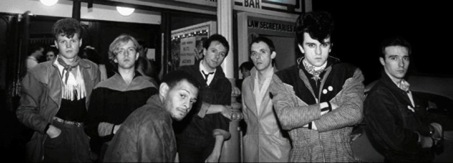
Visage 1980 outside the Blitz: Rusty Egan, John McGeoch, Barry Adamson, Dave Formula, Billy Currie, Steve Strange, Midge Ure. Picture © by Sheila Rock

❚ MARCO PIRRONI, GARY KEMP AND BROADCASTER GARY CROWLEY were among the 80s faces who turned out for last night’s launch of a new CD compilation, The Face: The Very Best of Visage which goes on sale March 8. It contains 15 Visage tracks including new 2010 remixes of classic New Romantic dance anthems. To celebrate the 30th anniversary of their first chart hit from 1980, Fade to Grey, there are no less than four versions onboard (one by Michael Gray of The Weekend and Borderline, and another by Ministry of Sound deejay Lee Mortimer), plus remixes of Mind of a Toy, The Anvil, and a 12-inch dance mix of the single Visage.

Fronting their “Evening of sublime 80s self-indulgence” club-night in Chelsea were two 80s clubbing wizards Chris Sullivan and Rusty Egan (read more) who was the drummer with Visage and the Rich Kids.

Supercool in ’78: Egan, Strange and Ure establish Visage

Egan also became a deejay because he hated those flash guys who talked incessantly over the music in discos. He wanted to pioneer a new kind of synth-driven British electro-diskow and sought inspiration in Germany from the likes of Kraftwerk and avantgarde producer Konrad “Conny” Plank. In 1979, the Blitz club-night in London became his sounding board and it went on to inspire a vast slipstream of new British bands who changed the sound of the charts during the early 80s.

Along with Egan, Visage’s founding members in 1978 were the Blitz greeter Steve Strange, and musical polymath Midge Ure, who simultaneously became the lead singer with Ultravox in April 1979. Echoes of their pioneering electropop resonate in the charts today through acts such as Lady Gaga, La Roux, Little Boots and MGMT.

➢➢ Steve Strange celebrates the launch of The Face album at London’s Green Carnation on March 19

➢➢ Read about the fashion show Steve Strange and Rusty Egan took to Paris in 1982

FRONT PAGE

1978 ➤ To the edge and back with the lovely Julia

❚ PRINCESS JULIA IS A NATIONAL TREASURE. After three decades, she remains one of the UK’s coolest dance deejays, music editor at i-D and co-runs The P.i.X fanzine. She is as beautiful and immaculately attired as she was in the Swinging 80s. In those days Julia Fodor turned heads as the star sales assistant in PX, Helen Robinson’s inspirational New Romantic clothes shop in Covent Garden.

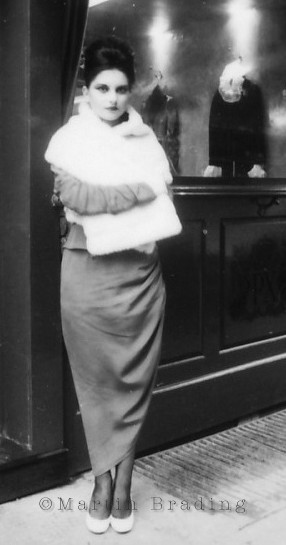
Nouvelle vague, Feb 1980: Julia outside PX, designer Helen Robinson’s home of New Romantic fashion. Photographed © by Martin Brading

Stunningly coiffed in a beehive hairdo, she could have stepped out of a French nouvelle vague movie – until she opened her mouth. “’Ello dahhlin’,” she greeted you, in broad Eliza Doolittle Cockney.

Once Steve Strange had put Julia in the cloakroom at the Blitz in 1979, her unique style ensured her a place at the centre of all the press coverage the club provoked, as well as in the Visage video for Fade to Grey. As one of the few true Blitz Kids, Julia never ventured into public without her Look.

This month, Julia began a photo-blog called The World of Princess Julia to record her nightlife activities in London and abroad – for her deejay residency at Queen in Paris, she has enjoyed being delivered to work by cross-Channel helicopter. Her first blog post introduces us to her life of what some might call notoriety. Here’s a taste, in Julia’s own words…

A lot of tinsel, that’s London, we love
our veneer, we love our sleaze

❚ I’M EIGHTEEN, ’78, [Covent Garden is] still boarded up ready for gentrification, coming down soon though. I work in a shop – PX. There’s a rehearsal space downstairs, band music bleeds up, Chrissie’s down there with her Pretenders, she tells me all about it. One day Michael Jackson came by, another time some local kids locked us in for a laugh, it was Cameron McVey and his mates.

I had a “look” then, one of many. I hobbled around in tight, tight skirts and high, high heels from Seditionaries. I took speed and learnt to smoke. I had a good beehive. What’s his name, Paul [Smith] from up north moved into Floral Street, Paul Howie and Lynne Franks had jumpers in Long Acre. There was nothing else round there then shop wise.

We had Bowie on, we played Kraftwerk, we kept a lookout for new music, new makeup, the future, futuristic. Dance moves, soul static robot. Berlin, film-noir. London ’79, cross-dressing melting vista of possibilities. No money, poverty breeds creativity, that’s what they say. Nevertheless perhaps it’s true, especially in London where people seem to gravitate towards seeking out an identity more vital than the one they’ve left behind. I did the same, left north London and headed uptown, central, on the Piccadilly line. London’s built on ley-lines, heard someone say that somewhere, I think it’s true because there’s certain energy here in London…

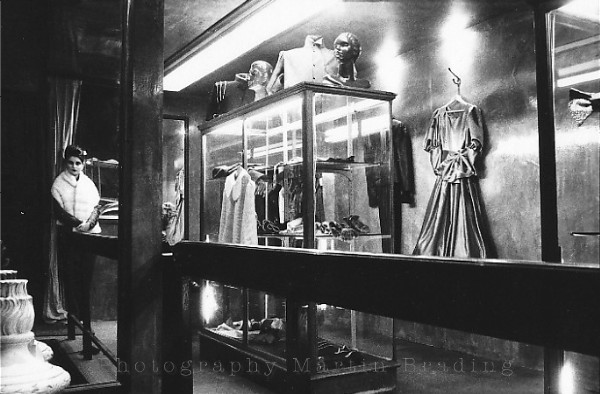
PX moves into Endell Street in Feb 1980: New Romantic satin gowns, Fauntleroy collars – and Julia. Photographed © by Martin Brading

FRONT PAGE

2010 ➤ ‘Missing Link’ Kids roar back to life

Rich Kids, rich memories: Gary Kemp joins Glen Matlock, left, with Midge Ure and Steve New to the right. Rusty Egan on drums is masked by the bright lights. Ropy mobile picture © by Shapersofthe80s

Rich Kids, rich memories: Gary Kemp joins Glen Matlock, left, with Midge Ure and Steve New to the right. Rusty Egan on drums is masked by the bright lights. Ropy mobile pic © by Shapersofthe80s

❚ RICH KIDS ARE USUALLY WRITTEN OFF as “a short-lived, much-hyped rock band from London”, founded in 1977 by songwriter and bassist Glen Matlock, after he quit The Sex Pistols more enamoured with 60s sounds than 70s. Indeed the Kids were a one-hit wonder with only one eponymous single ever making the lower reaches of the charts, for five weeks in 1978. Yet with hindsight, they are today dubbed by the cognoscenti such as Spandau Ballet songwriter Gary Kemp and his band’s manager Steve Dagger as the “Missing Link” between punk and the New Romantics movement – an admission that was absolutely verboten in Spandau’s early days.

All of which made a one-off reunion gig at the Islington Academy last night, Jan 7, 2010, a curious footnote to history. For in the audience were some of the coolest clubbers from the 1970s scene, as enthusiastic as schoolboys, snapping away on their phonecams. Everybody, of course, was now hitting paunchy middle age, both onstage and off, and it took several numbers before the band got into its power-pop stride.

The occasion was poignant. Matlock and his mates were staging a charity benefit for fellow Kids guitarist Steve New who is fighting ill health. As in the old days, Midge Ure turned out on lead vocals with Rusty Egan on drums. Then for Ghosts of Princes in Towers, Spandau’s Kemp received a warm welcome by joining his iconic heroes wearing Romantic plaid trews and jamming on guitar. The other occasional Kids member, ex-Clash guitarist Mick Jones, supported last night’s bill in his noisy incarnation as Carbon/Silicon with fellow punk Tony James.

Rich Kids 1978

Tell-tale signs: Rich Kids began pushing pop in new directions in 1978, first with their name and their lyrics, reinforced with colourful 60s-style clothes and moptop haircuts – just look at Rusty’s barnet

So what was the missing link during the post-punk vacuum? The tell-tale signs are all over the early photos of Rich Kids and especially in their very Mod-flavoured 1978 debut on Top of the Pops that epitomised power pop, viewable in this video. The ex-Pistol Matlock favoured melody, the glam popster Ure favoured electronics while both revered the Small Faces as gods from the 1960s. In Mojo magazine last month, Ure said: “What Glen did back then by asking me to come and join the band was incredibly brave. He could have chosen any cool, punky young guitarist-singer in London – I mean, there were thousands of them. Instead he chose this teenybop, bubble-gum type guy, therefore making things incredibly difficult for himself… I suppose the Rich Kids were the Humble Pie of our day: not The Herd and Small Faces, but the Pistols and Slik – you couldn’t get anything more opposite.”

Marching Men: Rich Kids’ single, 1978

At last night’s gig, fashionista Graham K Smith, formerly of New Sounds New Styles, drew a stark contrast between the look flouted by the Kids and the black-or-black prescribed by the punk fashion police. “The Rich Kids were fops. They were absolutely going against the dour sartorial styles of the time. Their hair was long, shaggy, grown-out pudding bowls. Matlock was in velvet jackets and baggy, piratical shirts (at least two years before Vivienne’s seminal pirate collection). Midge was in pink and red towelling nursery garb, and the immaculate Steve New was pushing the boundaries in pink leopardskin-print drainpipes, with his updated take on 1974’s mohair jumper vibe. In retrospect, the Kids are the link between early 70s glam, and the full-on fop explosion of the early 80s.”

It’s the fortunes of the Kids’ shifting yet highly talented personnel and their projects which make them significant. As writer Simon Mills “from Smash Hits” (launched 1978) said last night: “Can you name all the bands Midge Ure has been in?” From Slik in 1974 onwards, this Scottish weathervane has graced more than half a dozen, see here. As a DJ Egan of course pioneered the electrosynth dance sounds that were to transform UK clubbing, splitting with the guitar-led Rich Kids to form the synth-led group Visage in 1978 with Ure and Steve Strange, who quickly established himself as the popinjay of New Romance. It was Ure’s vocals that eventually established one of the seminal sounds of the 80s with the band Ultravox, who also set a benchmark for pop videos by shooting on celluloid to achieve a cinematic effect, notably with Vienna in 1981.

Last night, after breaking a few sticks on his drumkit, Egan had the last word: “I’ll be glad to get back to deejaying.”

➢➢ Click here to watch Ghosts of Princes in Towers
➢➢ Click here to watch the concert finale
➢➢ Click here for Phil Singleton’s full review and masses of pix

Rich Kids 2010

Last bow: Rich Kids and friends at the Academy. Mobile pic © by Graham K Smith

FRONT PAGE