A handful of key books this year have added to our estimations of that much demonised decade, the 1980s, and to our understanding of its cultural shifts. Shapersofthe80s has of course always drawn a distinction between the youthful creativity of the earlier Swinging 80s, and the ethos that finally took hold in Britain and earned the name of “Thatcherism”
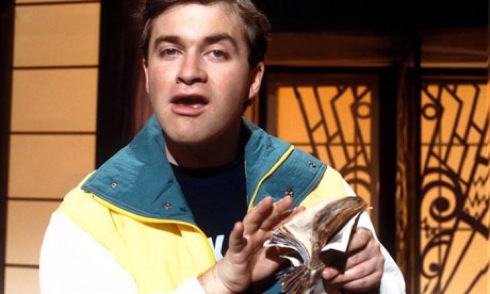
Emblem of the 80s: Harry Enfield’s yob character, Loadsamoney. © Rex features
➢ Rejoice, Rejoice!: Britain in the 1980s,
by Alwyn W Turner (Aurum Press, 426 pages)
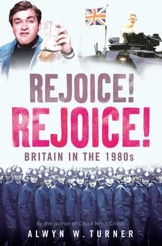 ❏ A SHARP AND WITTY ANALYSIS of the 80s came this year from cultural historian, Alwyn Turner. Its savage title Rejoice! Rejoice! echoes the triumphal cry that burst from the lips of prime-minister-turned-warrior-queen Margaret Thatcher in 1982 when victory was declared over Argentina in the Falklands War (910 dead, 1,965 casualties). Reviewing the book in The Sunday Times, Dominic Sandbrook wrote: “One of the pleasures of Alwyn Turner’s breathless romp through the 1980s is that it overflows with unusual juxtapositions and surprising insights. Who knew, for example, that not only Alan McGee’s Creation Records but the bawdy magazine Viz were set up with money from Thatcher’s Enterprise Allowance Scheme, dismissed at the time as a feeble attempt to disguise the horrors of mass unemployment?
“Where this book really shines is on the intersections between politics and popular culture… For Turner, the defining characteristic of the 1980s was its obsession with size: big money, big hair, big issues, big politics. But what also emerges from his account is the sheer, unashamed nastiness of public life during the Thatcher years. This was a time, after all, when Thatcher’s cheerleader [disc-jockey] Kenny Everett publicly joked about kicking [the elderly opposition leader] ‘Michael Foot’s stick away’, while thousands chanted ‘Ditch the bitch’ at anti-government demonstrations.
“It is a refreshing surprise, however, to read a book on the 1980s in which Thatcher, while naturally dominant, does not entirely drive out all other voices. As Turner admits, the Iron Lady cast a larger shadow over national life than any other prime minister since Churchill: the style magazine i-D, a quintessential product of the decade, called her ‘almost a fact of nature’. But the results of her revolution were mixed at best, and the irony is that in many ways her policies had the opposite effect from what she hoped.”
Turner is not alone in presenting Harry Enfield’s comic character Loadsamoney as the emblematic figurehead for Thatcherism, a swaggering slob waving a fistful of banknotes while yelling, “Look at my wad!”. In the Financial Times Francis Wheen follows through: “Even if many Britons eventually accepted [Thatcher’s] economic remedies, Turner infers in his history of the 1980s, Rejoice! Rejoice!, ‘culturally the country was unconvinced’. Ideals of enterprise were all very well but winning at all costs, with no thought for the loser and no care for the way one played the game, ‘seemed somehow wrong’. The British still sided with heroic failures and doomed underdogs such as the hopeless ski-jumper Eddie (the Eagle) Edwards.”
30-UP FOR A CLUBBING TREASURE
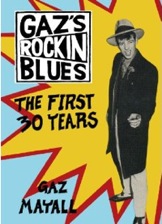
➢ Gaz’s Rockin’ Blues: The First 30 Years,
by Gaz Mayall (direct from Trolley, 280pp)
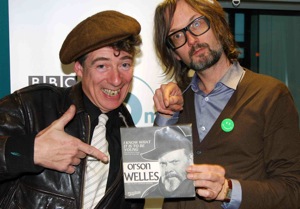
Gaz Mayall on 6Music: celebrating his 30th clubbing anniversary talking with Jarvis Cocker on The Sunday Service in October. © BBC
❏ GAZ MAYALL IS one of UK clubbing’s national treasures, and the paperback Gaz’s Rockin’ Blues is a nostalgic first-person collection of great club photos and comic-strip flyers that tell their own tale of London’s oldest continuous club-night, where Tracey Emin was once the cloakroom girl. The lad in the hat, who has kept his tiny nightspot jumping since July 3, 1980, supplies a brief but breathless string of anecdotes about live guests such as Prince Buster, Desmond Dekker and Joe Strummer. Gaz was one of the pathfinders who perfected the then brilliant notion of throwing a party every Thursday and playing his favourite rebel dance-tunes. As the 22-year-old Gaz told Shapersofthe80s that year: “People come here for good music”, which essentially meant his own heritage as a kid raised amid rock royalty and steeped in ska, reggae, rockabilly, rock and R’n’B.
 On his club’s 30th anniversary, Kate Hutchinson wrote in Time Out: “It’s still going strong: you’ll find throngs of people swinging to guest live bands and DJs every Thursday night at the Soho basement dive St Moritz. It’s also the kind of hangout that keeps new generations coming, so the crowd always stays fresh. Those who aren’t old enough to go yet can mingle with everyone else at Gaz’s sound-system at Notting Hill Carnival, where he’s been causing a roadblock since 1982, or at his stage at Glastonbury, which he has run for the past three years.”
SHUFFLING BETWEEN STRAVINSKY AND ARMSTRONG
➢ The Music Instinct : How Music Works and Why We Can’t Do Without It, by Philip Ball (Bodley Head, 464pp)
➢ Listen to This, by Alex Ross (Fourth Estate, 400pp)
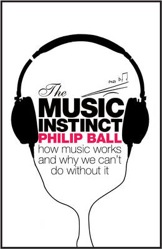 ❏ TWO IMPRESSIVE BOOKS THIS YEAR have dissected how music works its magic. They are not posited on the 80s at all, though they may well be emergent phenomena of our era of musical diversity. Critics heaped praise on Philip Ball’s The Music Instinct, an engaging survey by a popular science writer. Bee Wilson in The Sunday Times called it a “wonderful account of why music matters, why it wrenches our souls and satisfies our minds and sometimes drives us crazy”. In The Guardian Steven Poole praised Ball’s “deft analyses of the limitations of attributing ‘emotion’ to music, or considering it as a ‘language’ (Lévi-Strauss: if music is a language, it is an ‘untranslatable’ one)”. And the Amazon reviewer Steve Mansfield liked the author’s scope “by drawing his examples from across the spectrum of music, equally comfortable discussing and occasionally comparing music as diverse as J.S. Bach, John Coltrane, Eliza Carthy, gamelan orchestras, ragas, Schoenberg, and the Sex Pistols”.
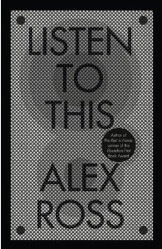 ❏ IN 2008 ALEX ROSS, music critic for The New Yorker, landed an unlikely bestseller with his gripping survey of 20th-century music, The Rest is Noise, plus a torrent of highbrow praise. This year he packages some choice essays under the title Listen To This, which David Smyth in the London Evening Standard said “ranges even more widely, making century-spanning, triple-jumping connections in the same way his shuffling iPod leaps from Stravinsky to Louis Armstrong. Coming from a background of listening to nothing but classical music in his teens and discovering rock’n’roll in adulthood, Ross can explain the brute appeal of, say, Radiohead’s Creep in a way that makes you feel your mind enlarging as you read”.
TWO WHO CHANGED THE CHARTS
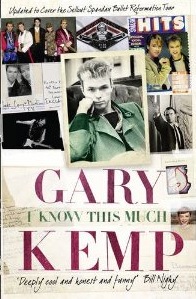
➢ I Know This Much: From Soho to Spandau,
by Gary Kemp (Fourth Estate, 320pp)
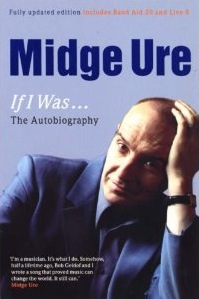
➢ If I Was, by Midge Ure with Robin Eggar
(Virgin Books, 288pp)
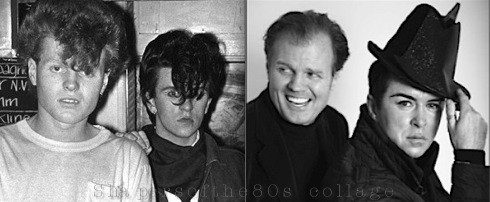
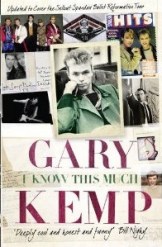 ❏ FOR A MUSICIAN, the music really tells the life story. It’s rare for many of them to try to flesh out the story in prose, let alone as autobiography. Two who starred centre stage in 1980 were Ultravox’s Midge Ure and Spandau Ballet’s Gary Kemp, and though their accounts of the early transformative years of the decade weren’t actually first published this year, their paperback reprints continue to act as intelligent correctives to the hyperbole that accompanies some of the 30th-anniversary air-punching.
Songwriter Gary Kemp surprised many when last year’s autobiography, I Know This Much, proved so eloquent, encouraging rock writer Paul Du Noyer
to claim that it “sets a new standard for rock memoirs”. One of Amazon’s top reviewers, Mr Steve Jansen, believed that Kemp’s perceptive memories of a London now transformed make a “a touching testament to spiritual growth”. He wrote: “Kemp is able to reflect with great poignancy on a young man’s journey into, and through the shining city of dreams. In Kemp’s case that city, metaphorically, but more often literally — and literary in its evocation — is unmistakably London, and the metropolis is ever present like a ghost, framing his actions and attitude.”
The prominent journalist Robert Sandall of The Sunday Times, who died in July, had made Kemp’s his book of the year: “A sharply observed account by a quintessential London musician. Kemp exudes confidence, candour and a keen appreciation of the capital’s club culture.” This year’s paperback edition brought the story up to date with a postscript on his band’s reunion.
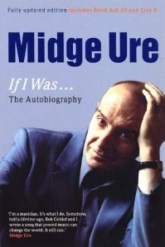 ❏ MIDGE URE IS THE OTHER eye-witness to the birth of Blitz culture, and his memoir, If I Was, hasn’t been out of print since published in 2004, and a revised edition is slated for next summer. Here, the musician tells with exceptional vigour a no-holds-barred story of his own journey from impoverished Glasgow childhood to new-wave superstar .
Amazon reviewer Lisby writes: “Ure writes fluidly and conversationally, imparting the kind of tactile detail that takes readers to the place and time of which he speaks. Ure is astonishingly honest, yet never vindictive. He is, in his prose, much as he is in his lyrics, a good person trying to be a better one while hoping the same for us all.” Another Amazon regular called thedouses adds: “Midge’s autobiography is a very well written, frank and honest book, which offers a fascinating insight into his own career and life but also other notable musical figures of the 80s and 90s music scenes in Britain, as well as providing background to the Band Aid and Live Aid events. He doesn’t use the opportunity to settle scores as so many of his contemporaries have done.”
Apart from being a busy wizard stirring the magic cauldron from which emerged many musical innovations in the 80s, Ure here establishes his central role in the production of Band Aid’s charity single, Do They Know It’s Christmas?, which led to Live Aid, the globally televised rock concert in 1985 which raised millions for famine relief.
NOT FORGETTING…
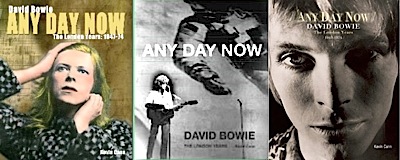
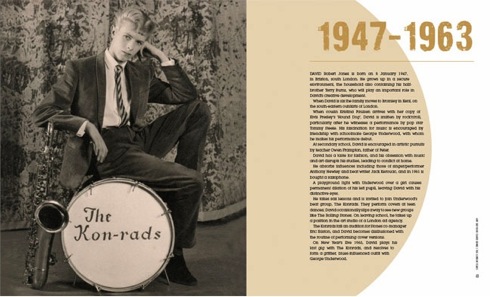
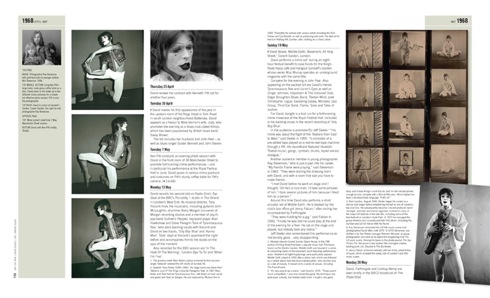
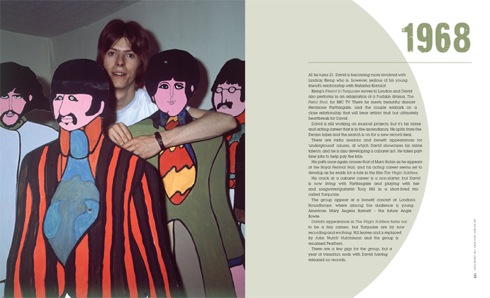
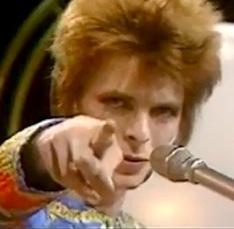
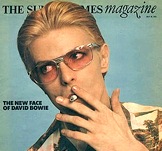 ➢ Any Day Now: David Bowie The London Years (1947-1974), by Kevin Cann (Adelita, 336 pages) was reviewed here on Dec 11. “Being a Bowie fan for almost 40 years I am flabbergasted. Many, many never before seen pictures” — Amazon reviewer Peter Gooren
FRONT PAGE


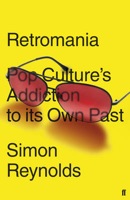 “Hyped as a radical reworking, Love was way more interesting to think about than to listen to (the album mostly just sounds off, similar to the way restored paintings look too bright and sharp). Love raised all kinds of questions about our compulsion to relive and reconsume pop history, about the ways we use digital technology to rearrange the past and create effects of novelty. And like Scorsese’s Dylan documentary No Direction Home, Love was yet more proof of the long shadow cast by the 60s, that decade where everything seemed brand-new and ever-changing. We’re unable to escape the era’s reproaches (why aren’t things moving as fast as they did back then?) even as the music’s adventurousness and innocence make it so tempting to revisit and replicate.”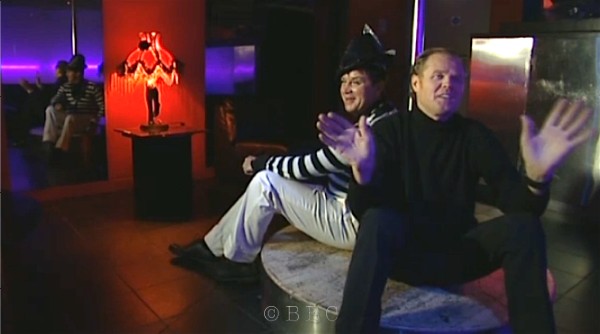












 ➢➢ Shapers of the 80s ➣➣