Tag Archives: Blitz Kids

2010 ➤ Three key men in Boy George’s life, but why has TV changed some of the names?

rel="nofollow"

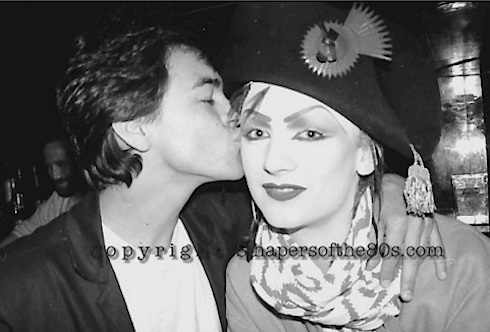
Romance blossoms: Drummer Jon Moss gives George a peck at Planets club in July 1981 way before Culture Club existed. Photographed © by Shapersofthe80s

OK boys and girls, fasten your seat belts. This Sunday sees another Boy George media event… and it’s gonna be a bumpy ride. The Beeb has turned the pop star’s teens ’n’ twenties into a TV bio-drama titled Worried About the Boy (BBC2, 9pm Sunday May 16). We get 90 minutes of foot-stamping, chair-throwing, cry-baby tantrums over his self-confessed “dysfunctional romances”, all of which were documented in his eye-wateringly frank 1995 autobiography Take It Like a Man, which has inevitably inspired Tony Basgallop’s script . . .
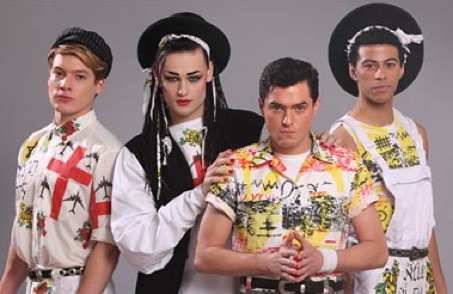
Culture Club, Worried About the Boy, BBC, TV, 2010

Culture Club 2010: recreated by Jonny Burt, Douglas Booth, Mathew Horne and Dean Fagan for the TV drama, Worried About the Boy. © BBC
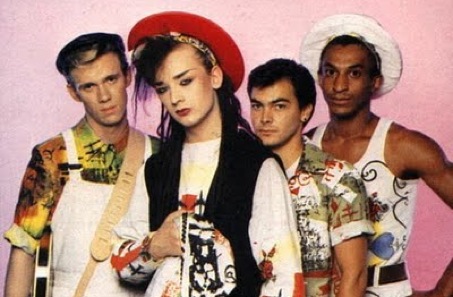
Culture Club, pop, 1982, Boy George

Culture Club IRL: Roy Hay, Boy George, Jon Moss and Mikey Craig in 1982

◼ NOBODY, NEITHER FRIEND NOR VIEWER, ESCAPES from Worried About the Boy without their heart and mind being put through the kitchen blender, though this biographical TV drama has been heavily sugared to make it palatable even for BBC2 audiences. Amusing acto-r-r-r chappies play George and his courtiers and, as a result of advertising for lookalikes to flesh out the cast – some lucky extra even plays The Hand of David Bowie – we see every one of you too who came within a gnat’s whisker of the Blitz Club in 1980. Three decades may have added a few pounds to those skinny Blitz Kids preserved in your Facebook albums, but nobody forgets how this London club proved to be the nightlife crucible where the decade’s new pop scene was forged, and where George was almost the last among the dozens there who put bands together.
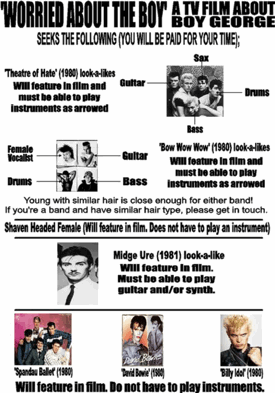
Worried About the Boy, 2010, BBC, drama,lookalikes

Lookalike call: “You will be paid”

In this Red Production for the BBC we see Mathew (Gavin & Stacey) Horne playing Culture Club drummer Jon Moss, Marc Warren from Hustle playing Blitz host Steve Strange like some Cruella de Vil (George likens him to Caligula), but the one who’ll steal all the Bafta awards is Royston Vasey’s Mark Gatiss as a dead-ringer for Malcolm McLaren. Gifted. A far-too-pretty newcomer called Douglas Booth plays George himself – but then G. O’Dowd is down in the credits as a programme consultant, so there’s the prettiness explained. As Mathew Horne told GMTV: “George helped out by providing clothes and [coughs] rectifying any inaccuracies.”

We enjoy plenty of comedic moments, yet the crucial line is delivered wearily by Jon Moss: “You’re a needy bastard, aren’t you!” The heroes in the sentimental plotline – petulant boy can’t get his life into gear – are not only his long-suffering boyfriend and colleague in the band, Jon, but as depicted onscreen George’s infinitely patient Dad, Jerry O’Dowd.

The early scenes offer a visual Who’s Who of the New Romantics and the director jollies things along with a comic-strip approach, using captioned freeze-frames to make sure we can tick off the celebs from 30 years ago. The essential dinginess of Covent Garden’s infamous Blitz Club, with its ambience of a steam-age railway station buffet, has been captured in Salford’s Racecourse Hotel in Greater Manchester. For anybody who lived through the real thing, this recreation of the 80s and the sheer electricity of the Blitz itself look hyper-realistic onscreen in HD, yet much of it feels somehow only half-realised, and seriously short on pizazz. “Dressing for the Blitz was real theatre,” the St Martin’s designer Fiona Dealey once observed about the New Romantic credo. “It wasn’t just another uniform.” At full-throttle the 24/7 Blitz Kids became living works of art and crackled with charisma you could have toasted crumpets on.
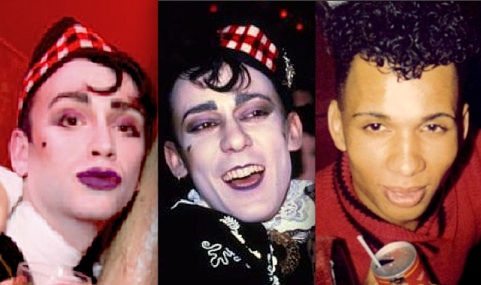
Stephen Linard, Blitz Kids, Andy Polaris, 1980, worried About the Boy, 2010, TV, Daniel Wallace

Blitz Kids: Daniel Wallace plays “Christopher” in Worried About the Boy (BBC), while being closely modelled on fashion designer Stephen Linard (picture, Derek Ridgers); Andy Polaris is airbrushed out of the TV drama after appearing in an early script. (Picture: Richard Law)

◼ OF COURSE THIS PLAY TELLS only one Blitz Kid’s tale. Your immediate reaction is: ah, well, this is a TV drama about, let’s face it, a very odd boy who dressed as a girl then called himself Boy and today still lives life as the Man in the L’Oréal Mask. In his 1995 book Take It Like a Man (TILAM for short), co-authored with journalist Spencer Bright, George wrote that as a teen “I felt like a freak… I was so paranoid, I never let anyone see me without my clothes or face on”. Yet on another page he claimed: “I craved normality.”
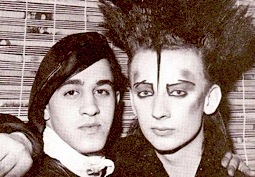
Blitz Kids, Boy George, Christos Tolera, 1979

Blitz Kids: Christos is another of George’s friends airbrushed out of the TV drama, Worried About the Boy

Before Culture Club finally saved his bacon at the age of 21, his mum said of working in the Blitz’s cloakroom “That’s not real work”, to which he complained that “Mum didn’t understand the disco celebrity concept”.

What is George’s problem? You don’t have to be Freud to guess. His book depicts his life as an epic shagathon and the TV play gives us a quick glimpse of one love story. And another. And a third. “I chased after those boys with trouble in their eyes,” George himself wrote, elaborating his sexual deeds in far more detail than we need. After publication, one of those boys, Theatre of Hate singer Kirk Brandon, took a “malicious falsehood” charge against George to the High Court where it failed, and Brandon was ordered to pay costs which subsequently meant declaring himself bankrupt and George forking out £600,000. This Sunday, sorry Kirk, but you’re going to have to brace yourself for some perfectly respectable snogging scenes which your actor performs on nationwide TV, not to mention being captioned to make sure we’ve checked your full name.
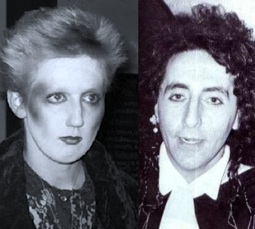
Blitz Kids, Myra, Philip Sallon, Boy George

Blitz Kids Myra and Philip Sallon: two more of Boy George’s circle airbrushed out of the TV drama, Worried About the Boy

Both book and play parade basketsful of dirty washing in public and some of George’s former pals will be grateful for having been air-brushed out of history. In this TV drama some names have been changed. The puzzle is that others have not. Kirk is Kirk, Jon is Jon… but Wilf becomes “Vernon”.

The past decade has produced a clutch of TV docs that reckoned the Blitz scene was full of “gender-benders” (the tabloids’ sanitised euphemism for gays and, worse, transvestites). In reality you’d be hardpressed to find any 100% trannies at the Blitz, not even George or his bitter-sweet sidekick Marilyn (a handsome boy called Peter Robinson who lived daily life as a Monroe doppelganger). Yes, the fashion was for New Romantic lads to wear mascara and frilly shirts and flouncy pants and even Big Tone Hadley makes jokes about wearing his grannie’s blouse onstage, but most Blitz boys didn’t actually wear girls’ clothes, at least not underneath. (Don’t ask me how I know; there are some things a man has ways of knowing.) Even the brief “men in skirts” era revolved round plaid kilts, not your actual skirts.

The truth is that for all the media-bending, the Blitz divided down the middle into a club of at least four or five halves where the screaming queens comprised but one of them. By mid-1980 when the Blitz standouts were clocking column inches as hot media celebs and record contracts began to look possible, at the earliest opportunity the straight factions broke away to establish distinctly less gay clubnights at Hell, Le Kilt and ultimately the legendary and exceedingly hetero Beat Route.
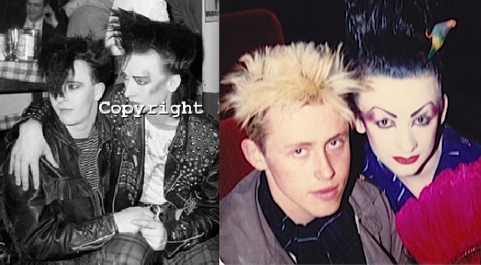
Boy George, Blitz Kids, London, 1980, 1981, Wilf, Kirk

Early pashes: George at the Blitz in March 1980 with Wilf, whose name has been changed for the 2010 TV play (photograph © by http://www.homersykes.com); right, with Kirk aboard a coach for a daytrip to Brighton in spring 1981 (photograph © by Richard Law)

Inevitably there was always overlap. What certainly caused confusion among both the gay boys and the envious girls was the nonchalant gender-bending by some straight boys, either just for the sake of adopting a trendy stance before the cameras in this burgeoning Pose Age, or to bait the girls (campness can present a very effective challenge to the fair sex), or simply because being what today’s dating websites dub “bi-curious” was, you know, “a phase they were going through”. So feistier females became fighting termagants in order to stake their claims on the goodlooking males. Never doubt, however, that hell hath no fury like a jealous queen.

◼ THIS IS WHERE GEORGE O’DOWD’S TRACK RECORD landed him in the poo. By his own account in TILAM, life was a shagathon, he was always “eager” for one-night stands and landed “a long line of boys who couldn’t make their minds up until they’d had a few beers”. The BBC drama dwells on three nice straight lads who fell for him – “Vernon”, Kirk and then Jon (pictured here on their first date). Today IRL (such a neat online term) they are all family men whose pasts seem fated to guarantee them no chance of a private life.
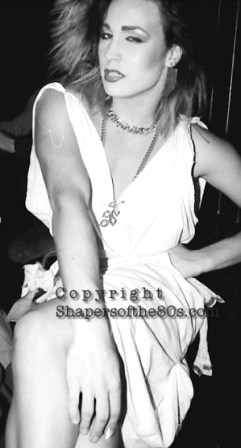
Blitz Kids, Marilyn, Peter Robinson, Planets club, London, 1981

Marilyn at Planets club, 1981: Peter Robinson lived his life as the Hollywood legend. Photographed © by Shapersofthe80s

Other onscreen characters have had their names changed possibly for fears of legal action, though probably out of sheer expedience and economy of casting. Actors play Rusty Egan and Marilyn under those names, but George’s immediate circle of friends has been creatively down-sized around the 1980 squat at No 19 Great Titchfield Street (an onscreen amalgamation of the four Soho squats the Blitz Kids liked to call homes).

An early version of the Worried script included Christos Tolera (expunged), Andy Polaris (expunged), and it had even changed Barry Brien’s pet rat to a guinea pig (both expunged)! The broadcast version sees Slag Sue and Myra seemingly merged into a punkette called Mo (guesswork, this), while Hilda is renamed Sarah and the tragic Mitsu becomes Dawn. The real offence against humanity is to have dispensed with two Blitz superstars, sarky Philip Sallon and witty Stephen Linard – the beacon of his year on the St Martin’s fashion course – and to see them combined into one sharp queen called Christopher. Both were (*are*) very possessive about their distinctive lines in banter which now tumble from one boy’s lips, even though he is dressed head to toe in one of Linard’s unique silhouettes, his renowned tartan Culloden outfit.

In fact, the script is mighty short on the acid oneliners that ricocheted between George’s bitchy friends, despite the talent assembled by Red Productions. The person who comes out worst is club host Steve Strange, depicted as a thoroughly nasty piece of work (which he wasn’t IRL), seated on a throne beckoning to his minions within the Blitz (pure fiction). This is naked point-scoring by George who was famously sacked by Strange for pilfering in the cloakroom. George used to rage with envy over Strange’s media appeal. “We resented his self-appointment as king of the weird,” George explained. His envy was impotent, however. At this stage George was, as Malcolm McLaren says in Worried, “notorious for doing nothing”.

Boy George, Blitz club, London , 1979

Reluctant cloakroom attendant, 1979: George took the job at the Blitz for the money, and was sacked by Steve Strange for pilfering

Sunday’s play ends in 1986, with George an international superstar, millionaire and heroin junkie, sacked by his band, bravely facing the future. Yet within a decade he’d returned to point-scoring, writing the book, TILAM, as payback for his downfall, in which he tears to shreds virtually all his friends, outing straight lovers and settling scores with venom.

Only last month in Midge Ure’s radio documentary, Rocking the Blitz, onetime i-D editor Dylan Jones reminded us that along with the energy and the fun, many young people became casualties of that decadent decade, as some perceive the 80s. “The New Romantic period for a lot of people was just extreme hedonism,” he says. “And as we know extreme hedonism only leads to one conclusion. A lot of people got off the track. I know at least five people who died of serious drug problems during that period.”
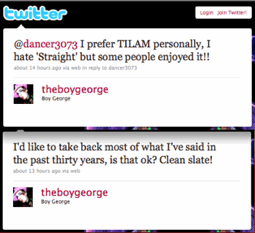
Boy George, Twitter, May 15, 2010

Boy George tweeting, May 15, 2010

Sudden fame, fabulous wealth and tragic fates are not unique to 80s popstars, as the long saga of rock ’n’ roll testifies.

George O’Dowd did indeed sail a flagship for hedonism yet today at the age of 48 he is alive and kicking and back on the road singing, despite his jailbird past. After watching Worried About the Boy, any viewers looking for the secret to his survival, could give the book a glance. Take It Like a Man is an I-don’t-believe-it horror story and runs to 500 pages. It is also a page-turner, so do plough on. Examine his life because amid the histrionics George has quite a few lessons to teach us.

Text © Shapersofthe80s.com


➢ ABOVE: ♫ The real Culture Club’s first appearance on Top of the Pops, 1982, which is recreated for the play, Worried About the Boy

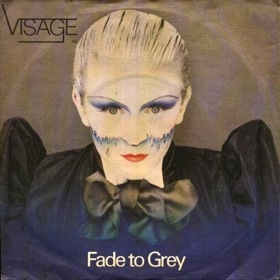
FRONT PAGE

1978 ➤ Midge stakes his claim as the weathervane of synth-pop who helped shape the British New Wave

Rusty Egan, Steve Strange, Midge Ure, Visage, synth-pop, new wave, electro-pop, Rocking the Blitz,BBC

Visage Mk 1: Egan, Strange and Ure in 1978 searching for sounds and styles

❚ “I’LL NEVER FORGET FIRST TIME I SAW a synthesiser on Tomorrow’s World. For the first time I saw the possibility to create sounds that had only existed in my head. I’d had no chance of getting my hands on one because they were size of house or at least the cost of one. But then cheaper Japanese synths came on the market, so I bought one. It changed my life because I could make music in a small home studio. The possibilities for young musicians like myself seemed endless.”

This was Midge Ure enthusing during Rocking the Blitz Club (audio at YouTube), another remarkably well-informed BBC Radio 4 documentary on our favourite scene that went out this morning. It was also remarkable for handing over the commentary to Ure, who — despite having earned an OBE for being half the brains behind Band Aid’s smash hit for charity in 1984, and being a founder member of Visage and the voice of Ultravox’s directional chart hit Vienna — is not among the first rank of mythologists programme-makers wheel out to explain the Blitz phenomenon.

This R4 slice of the 80s gave us a refreshingly different take on the familiar fables recycled by the usual suspects, but mediated in this show by Midge’s deeply un-London Lanarkshire lilt. He’s more than qualified to stake his claim to have shaped the music of the Blitz Kids, though he’s reluctant to be described as one of them, being a good four years older, and having had fingers in more pop pies than most on the post-punk scene. Even as the word punk was given the heave-ho in favour of the term “new wave”, Ure was probably the first active player of a synth among any of his clubbing pals, having bought his first, the polyphonic CS-50, at cost direct from Yamaha in the summer of ’78.

His was an obsession shared by fellow Rich Kid, the drummer Rusty Egan, and it led the way to a whole new British dancefloor sound. Ure felt synths “embodied a kind of nostalgia for the future”.

Visage, Fade to Grey,He says: “Rusty and his friend Steve Strange realised our crowd needed somewhere to try out our styles and listen to Euro synth bands like Kraftwerk, Dusseldorf and Telex, whose cutting edge sounds seemed to represent the future.” In almost no time the tribal forces of fashion had granted their wish. Rusty’s deejaying at Billy’s in Soho was augmented by Strange vetting the door to ensure an extreme clubbing attitude, then as 1979 dawned their band of outlandishly dressed clubbing heroes descended on the Blitz.

In his straight-from-the-hip autobiography, If I Was, Midge Ure makes the bold claim: “I had this idea to make music to play in the club. We had to invent our own musical style because our points of reference were very limited — after Kraftwerk, Yello and early Bowie we ran out of influences.” His own taste was for the very textured sounds of the synth built round classic songs, which intuitively caught a mood, unarticulated at that time, for a return to melody. And yet …

“A synth is just a software program and it has a very specific sound — a cold European soulless sound that drummers couldn’t emulate. Only a machine could do this,” he says with eagerness appropriate to a new-wave innovator. “Everybody aspired to be a robot — we didn’t want any human element in there at all, so people sang in a very robotic way. It was not going to sound like Jimi Hendrix. It was going to sound like a watered down version of Kraftwerk.”

❚ MIDGE IS THE ONLY PERSON AMONG THE NEW ROMANTICS to go on record and acknowledge the role of Gary Numan, an otherwise dread name who was perceived as an aloof and unclubbable loner. He definitely never signed in at the Blitz. Yet as 1979 unfolded Numan’s dystopian sci-fi synth sound sidestepped the Blitz Kids to reach No 1 in the UK charts, twice: in May with Are Friends Electric? and in September with Cars. They were blatantly commercial records and that wasn’t how Blitz Kids defined cool.

But Ure recognised Numan had broken down barriers of disapproval within the old guard of the music biz. He was being a great spur. Ure dreamed up the name Visage for his new band who knocked out a demo covering the classic In The Year 2525, with Egan on drums and the eye-catching Strange posing away as vocalist after a few lessons from Ure. Despite music industry scepticism, it won them a deal with Radar Records, the attention of producer Martin Rushent who had an office above the Blitz, and helped rope in Magazine members Dave Formula, John McGeoch and Barry Adamson, and Ultravox keyboardist Billy Currie. A single called Tar was released that September. It didn’t chart, but did clinch them a bigger deal with Polydor in 1980.

Midge Ure, Vienna, Ultravox

The day job: in 1979 Midge Ure (moustachioed) resurrected the name of Ultravox along with (l-r) Warren Cann, Chris Cross and Billy Currie. © Getty

Ure says: “Visage was never really a proper band, just a group of our favourite musicians who we brought together to make experimental music for the Blitz club. Because they were all signed to other labels we chose Steve Strange as our frontman because he looked the part.” This worked well enough. Even while Ure and Currie part-timed with the seven-man studio-only Visage line-up, while steering Ultravox along similar synth-pop lines, Visage put out two successful albums, and a handful of chart singles (the most enduring being Fade to Grey in November 1980). What laid the pathfinding flares for the movement were some uber-stylish art-videos — the first starred Blitz coat-check girl Julia Fodor before she became the fabulous princess and deejay — which disseminated the OTT New Romantic ethos for fans to emulate.

Ure scored the significant double of taking Ultravox’s majestic Vienna to No 2 a month later and for four weeks, then seeing it win Single of the Year at the 1981 Brit Awards. It was produced by the German Conny Plank with an evocatively romantic landmark video stunningly directed by Russell Mulcahy who was creating a whole visual vocabulary for the then novel music video. Ure can take full credit as lead singer and guitarist for breathing a subtle blend of Roxy Music’s style and krautrock clarity into Ultravox and building them into a credible vanguard for the electronic New Wave.

Reflecting back in the R4 doc, Ure says: “There’s no doubt the early 80s was a golden age of music made by real popstars who created themselves. It was more than just padded shoulders and asymmetrical haircuts. It was a pivotal moment in our cultural history when new tech mixed with new ideas to create something really good. All in the pressure cooker environment that was the Blitz club.”

FRONT PAGE

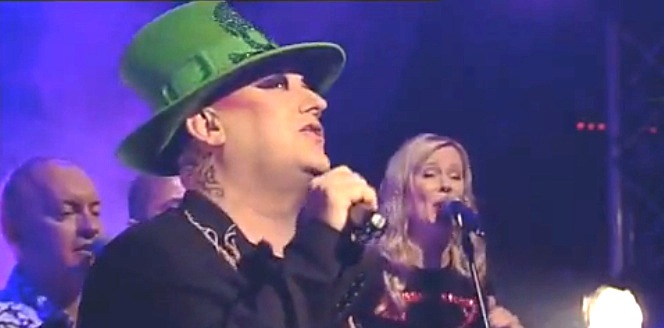
2010 ➤ Ex-jailbird George takes his first trancey steps on the path to sainthood

Boy George, 2010, Amazing Grace, Ana Lains

Breakfast outing: Boy George’s comeback on GMTV with Ana Lains, March 24, 2010

❚ THE SON OF A BOXING CLUB MANAGER, camp, skinny, loud-mouthed George O’Dowd was one of the most towering egos among the original Blitz Kids in the London of 1979. He famously worked as cloakroom attendant at the Blitz club where he has since happily admitted “rifling through pockets and handbags” while he was about it. His catchphrase was “Buy us a drink, then.” If you declined, or somebody otherwise offended him, he was likely to unleash all the vitriol his tongue could muster, on friend and foe alike. If they stood up to him and lashed back verbally, he occasionally awarded them an ounce of respect.

Because he was younger than many, he was virtually the last out of the Blitz stable to put together a band and win a recording contract in 1982. It was then a slow burn before Culture Club eventually hit No 1 with Do You Really Want to Hurt Me? in the UK and No 2 the next year in the US.

They soon became one of Britain’s international “pure-pop” supergroups with a blue-eyed reggae sound led by Boy George’s impressively soulful voice. The band won a Grammy in 1984. At his peak, George was Britain’s second most globally recognisable fashion icon after Princess Di. At home his unthreatening brand of androgyny had endeared him to mainstream audiences and he made himself every grannie’s favourite popstar with his line about liking “a nice cup of tea” in preference to sex. It was nevertheless a long time before he confirmed the obvious: that he was gay.

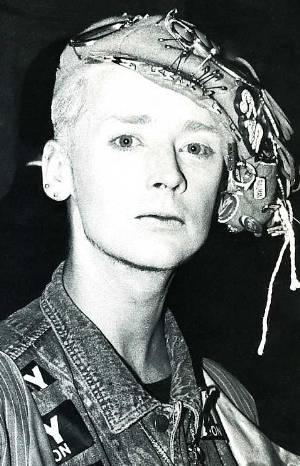
Boy George, 1987, Gabor Scott

“Junkie George”: Gabor Scott’s © 1987 photograph

The glory was all over effectively by the third album.

George was developing heroin addiction and his romance with drummer Jon Moss fell apart. Grim headlines recorded the deaths of two friends from drugs and before long the tabloids reckoned that “Junkie George” had eight weeks to live. Culture Club broke up in 1986 and the singer’s life swung between unedifying extremes as it pretty much went off the rails for the next 20 years.

These were defined substantially by his drug habits, precipitating repeated encounters with the law, a community service sentence sweeping the streets of Manhattan, and the non-release of many new recordings. He turned instead to deejaying. One small highlight came in 1995 at the ripe old age of 34 with publication of his, for many people, shockingly frank autobiography, Take It Like a Man. This week he admitted: “Nowadays I probably would have said less. The new me would not have gone as far as I did.”

His fortunes hit their lowest ebb last year when he was sentenced to 15 months in jail “for falsely imprisoning a male escort by handcuffing him to a wall and beating him with a metal chain,” as reported in The Guardian. “The judge told the 47-year-old former Culture Club front man, whose real name is George O’Dowd, he had left the escort ‘shocked, degraded and traumatised’ by the ordeal… Passing sentence… Judge David Radford said the singer’s offence was ‘so serious that only an immediate sentence of imprisonment can be justified’.” After four months, George was released on home detention curfew wearing an electronic tag.

None of which was recycled of course in this week’s principal TV interviews as he returned to the commercial pop spotlight with a new dancetrack, Amazing Grace, the first release by a new label, Decode Records. They have boosted George’s vocals with luminous support from Portuguese singer Ana Lains.

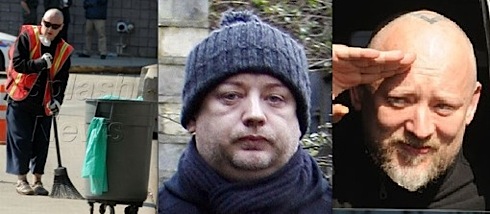
Boy George, 2006, 2009

ID parade: George on community service, New York 2006; before being jailed in Britain, 2009, and on the day of his release. Credits: Splash News, Pacific Coast News, Rex Features

In a cosy breakfast sofa chat for GMTV today, there were chill echoes of those other insouciant jailbirds, the former politicians Jeffrey Archer and Jonathan Aitken, when George showed little sign of remorse for the offences that landed him in jail. Neither did the airhead presenter Lorraine Kelly raise the issue. At least in his grilling by CNN viewers online somebody called Hillary asked: “What do you think the meaning of your life is?”

Later on Monday, George did allow one glimpse of reflection onscreen: “The biggest change for me in past two years was getting sober. I went into prison sober, with a completely clear head, in a very Zen frame of mind. I was a totally different person by the time I went to prison. It was a challenge. I discovered it was like being back at school.”

On the genesis of Amazing Grace, he said: “The song is about realising I have the best job in world. In my life there have been so many moments when I’ve been in amazing places and haven’t really been there because I’ve been arguing with someone. I’ve been at the Taj Mahal or the Grand Canyon having a row about something really petty. So what I try to do now is be present in everything I do, however mundane or however exciting… It’s also about searching for some sort of grace. It’s a spiritual song.”

There’s hope yet, then. Might we expect George, born into the Catholic Church, to follow the path of the saintly Aitken by discovering one god or another and some contrition? Let us all pray.

Boy George performs his comeback single, Amazing Grace, this morning on GMTV… and beforehand George talks about his future
At CNN on Monday George reflected on reinventing himself
before and after jail
Ladypat’s trippy video of Boy George’s Amazing Grace, featuring Ana Lains

++++++++++++

Boy George calls the press ‘sanctimonious’! What can a remorseless thug expect?

Nick Duerden in The Independent this April gets the measure of the man jailed for assault on a younger man: “One thing he didn’t do inside jail was ponder the crime that had landed him inside in the first place. ‘No I didn’t. Why? Was I supposed to?’ ”

Patrick Strudwick on the vile diminishing of Boy George’s crime (The Guardian last December): “We still cannot seem to take crimes of sex and violence against men seriously. The response of the authorities to female victims of rape and domestic violence is often lacking. The response of the public to male victims is one of disbelief, apathy and even humour.”

Which spurs us to reread Alan Franks’ very thorough interview from The Times last October: “What should he feel about the crime that got him jailed? Remorse, surely. Isn’t that what we want to hear before we too can move on from it? The good humour vanishes from his eyes and he says tartly: ‘I’m not going to talk about that.’ ”

FRONT PAGE

2010 ➤ Rusty decrees who’s in, who’s out and what’s up

Rusty Egan

Egan today: “slower and warmer”

On Feb 22, 2010 Rusty Egan – onetime Blitz club deejay and livewire promoter today – gave a long assessment of current trends to the website of Glasswerk, the new music promotors. Here’s one squib:

❚ “VISAGE STARTED AS A COLLECTION of my favourite musicians currently available to make music for me to play at the Blitz club. I had a sound in my head and heart and wanted to make people dance and think and to send them on a trip during the evening…

“I would love to create a Visage 2010. What would I need? Creativity in the writing and the performance of the vocal. If I were to compile a CD of amazing music from all genres and play it in a club it would be slower, warmer and melodic and the lyrics would have to have meaning… Imagine Massive Attack, Portishead and Beth Ditto on vocals and the clarity of Kraftwerk… plus Calvin Harris and Deadmau5 and Chris Lake remixes. These people have the soul and the right structure for me. Chase & Status, Pendulum have the excitement…”

FRONT PAGE

2010 ➤ Feast of remixes on new ‘Very Best’ of Visage album

Visage 1980 outside the Blitz: Rusty Egan, John McGeoch, Barry Adamson, Dave Formula, Billy Currie, Steve Strange, Midge Ure. Picture © by Sheila Rock

❚ MARCO PIRRONI, GARY KEMP AND BROADCASTER GARY CROWLEY were among the 80s faces who turned out for last night’s launch of a new CD compilation, The Face: The Very Best of Visage which goes on sale March 8. It contains 15 Visage tracks including new 2010 remixes of classic New Romantic dance anthems. To celebrate the 30th anniversary of their first chart hit from 1980, Fade to Grey, there are no less than four versions onboard (one by Michael Gray of The Weekend and Borderline, and another by Ministry of Sound deejay Lee Mortimer), plus remixes of Mind of a Toy, The Anvil, and a 12-inch dance mix of the single Visage.

Fronting their “Evening of sublime 80s self-indulgence” club-night in Chelsea were two 80s clubbing wizards Chris Sullivan and Rusty Egan (read more) who was the drummer with Visage and the Rich Kids.

Supercool in ’78: Egan, Strange and Ure establish Visage

Egan also became a deejay because he hated those flash guys who talked incessantly over the music in discos. He wanted to pioneer a new kind of synth-driven British electro-diskow and sought inspiration in Germany from the likes of Kraftwerk and avantgarde producer Konrad “Conny” Plank. In 1979, the Blitz club-night in London became his sounding board and it went on to inspire a vast slipstream of new British bands who changed the sound of the charts during the early 80s.

Along with Egan, Visage’s founding members in 1978 were the Blitz greeter Steve Strange, and musical polymath Midge Ure, who simultaneously became the lead singer with Ultravox in April 1979. Echoes of their pioneering electropop resonate in the charts today through acts such as Lady Gaga, La Roux, Little Boots and MGMT.

➢➢ Steve Strange celebrates the launch of The Face album at London’s Green Carnation on March 19

➢➢ Read about the fashion show Steve Strange and Rusty Egan took to Paris in 1982

FRONT PAGE