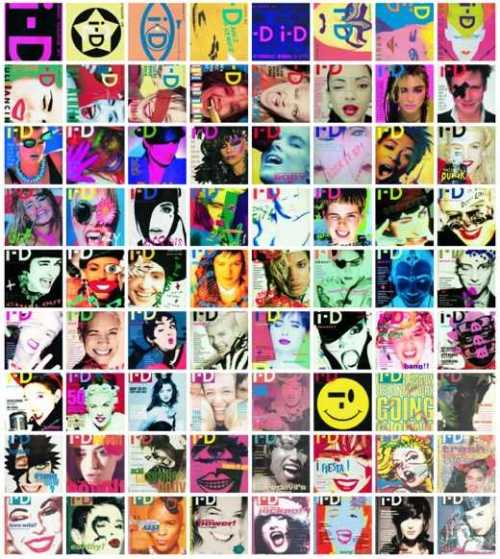
➤ A big wink to i-D on its 30th birthday

i-d magazine,covers,30th anniversary, Then Now Next

Launched August 1980: who’d have guessed that 72 covers and almost as many winkers later the magazine would have arrived at the end of its first decade?

❚ A MONTH AFTER i-D MAG’S LAUNCH in August 1980, cub-editor Perry Haines was bright-eyed and bushy-tailed, fresh from the St Martin’s fashion journalism course. Armed with such axioms as “Pitch and stitch dance hand in hand”, he was launching his club night at Gossip’s in Soho, calling it the i-D Sink or Swim night, admission £2.50. “We play 100mph dance music,” he said, meaning sounds like James White and the Blacks. “People are waiting for something to run with. They’re at the starting blocks.” Shapersofthe80s was there like a shot.

Launched as a quarterly in A4 fanzine format, economically printed in black-and-white and stapled, i-D was soon dubbed the UK “manual of style” for inventing the so-called straight-up more or less on the hoof: kids were photographed full-length, as and where they were found on the streets of Britain, then captioned down to the last thrift-shop nappy pin. Today editor-in-chief Terry Jones celebrates identity as the theme that has sustained his unique mag for three decades by turning the 30th birthday pre-fall issue of i-D over to the talented photographer Nick Knight, who was appointed an OBE in the most recent Queen’s birthday honours. It is one stunning run of superb black-and-white portraits of 200 people the mag believes are brainy, beautiful and downright gorgeous — from The xx, Phoebe Philo, Sir Paul Smith, Florence Welch to a rude Cerith Wyn Evans and a raunchy Vivienne Westwood, both enjoying their age disgracefully, plus three alternative cover stars epitomising this issue’s title of Then, Now and Next, Kate Moss, Naomi Campbell and Lady Gaga.

The key question is: How many of i-D’s 100 People of the 80s from Knight’s fifth anniversary shoot have made it into the 20-tens?! Uh-oh, only 12 found so far. Still counting.

Nick Knight, i-D 30th anniversary, Then Now Next

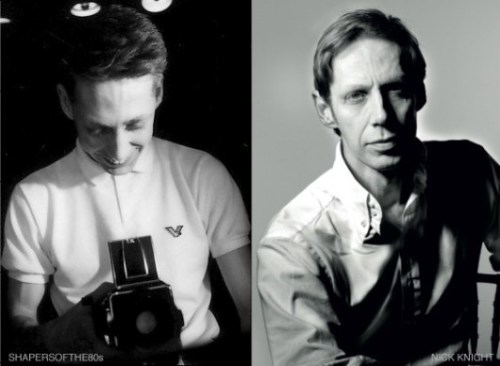
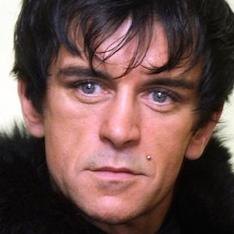
Nick Knight, then and now, separated by 25 years: captured by yours truly during his first shoot for i-D, titled People of the 80s, on the magazine’s fifth anniversary ... right, this year’s self-portrait as one of the world’s most innovative fashion photographers, taken for i-D’s 30th anniversary issue which he also art directs. Photographs © Shapersofthe80s and Nick Knight

FRONT PAGE

For one year only, £75m deal reunites Take That dormice with mega-millionaire Robbie Williams

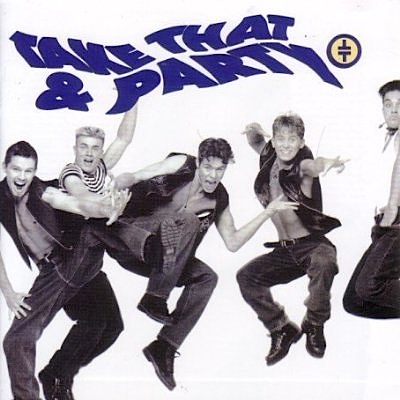
Take That and Party, Shame,Gary Barlow,£25m deal,Daily Mirror, 2010,Sunday Times Rich List, Nigel Martin Smith,Robbie Williams, reunions, Take That

First album: 1992, phew

❚ RUMOUR CONFIRMED & NOW UPDATED – Thank heavens they had nowt to do with the 80s, though what talent Take That possessed did define Britain’s archetypal squeaky-clean boyband of the 90s . . . Robbie Williams – the youngest of them at 36 – is of course the daddy financially, worth £80m at No 28 in The Sunday Times Rich List of Top 50 Musicians, 2010. Songwriter Gary Barlow, 39, languishes at No 48 on a mere £30m.

Thursday’s Daily Mirror was first to nail the potential rewards. It claimed that a new album, plus merchandise and 50-date tour next summer promoted by their pals at SJM will net £6m apiece for both Williams and Barlow as main songwriters, with £4.2m each to the three dormice, Mark Owen, 38, Jason Orange, 40, and Howard Donald, 42. So it’s trebles all round.

However, by Friday July 16, The Sun’s Bizarre editor Gordon Smart was upping the ante: “If you thought the boys were rich now, next Christmas is going to see them served up with a whole new level of wealth.”

The five men stand to make £15m each from an album deal, arena tour, royalties and other projects which have been lined up. Smart reported in detail: “A music industry expert explained how reformed Take That are set for a mega payday. The band will trouser £5m each from record sales, royalties, TV rights and endorsements – plus another £10m from their tour, which will reach out to a world record 3m people. He said: ‘One sold-out stadium will gross £2m for the band. Costs will swallow £1m per show, but after fifty dates the lads will be left with at least £50m.’ ”

Despite the smiles in pictures and news video this week, the group’s body language is stiff and unconvincing, especially in the sofa shots. Fans have been noting the cursory hugs and lack of eye contact. Orange looks conspicously sidelined. Upmarket papers have done little more than regurgitate the already well-worn publicity guff. Only the tabloids offer any inside info. Although a Sun headline on Thursday claimed Williams is “officially back for good”, there has been no such supporting claim in its extensive live online coverage. On July 16 Smart stated unequivocally: “There are no plans beyond this tour and album.”

THEY SAID IT

Orange on Williams’s departure “When Robbie left I didn’t feel that much. For whatever reason, Robbie and I didn’t get on that well in the band”
Owen on Williams’s departure “I didn’t really think about it that much. I just know that I had two weeks to learn how to rap”
Williams on Barlow’s songwriting “I remember genuinely thinking he’s a genuinely crap songwriter”
Barlow on the success of Williams’s 1997 single Angels “I’ve never laid in bed wishing I was Robbie Williams, but I guess I lay in bed wishing I had his career”

Williams this week described the reunion as like “coming home” from a solo career that has lurched between brilliance and despair. He was speaking at a studio in West London where the new Take That were finishing the as yet unnamed CD, their first full album since the release of Nobody Else in 1995.

First, Barlow and Williams will release a jointly written duet, appropriately called Shame. The video for this song has a Brokeback Mountain theme, according to The Sun. The pair have been inseparable recently, and it pokes fun at the close and cathartic relationship they are said to have rekindled.

All five singers have written songs for the album, due out in November and produced by Stuart Price who is admired for his work with Madonna and Kylie. It is the first time the group has worked together since Williams walked out amid acrimony 15 years ago and went on to launch a successful solo career. The remaining members disbanded a year later but reformed in 2005. Williams went into rehab three years ago battling with addiction. Owen has also admitted to struggling with alcoholism in the past.

Hit Man and Her, UK, TV shows,pop, discotheques,Pete Waterman, Michaela Strachan, Take That, Manchester

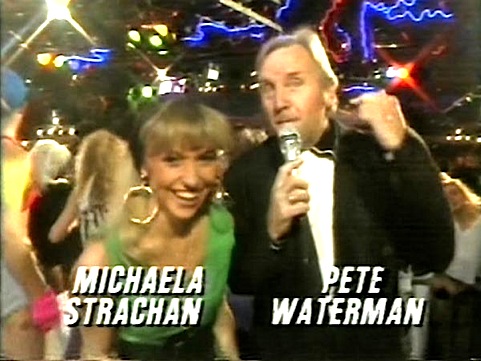
The Hit Man and Her: Michaela Strachan and Pete Waterman presented the Saturday night dance show on British TV 1988-1992. Picture © Granada TV

Manchester manager Nigel Martin Smith brought the lads together when most were in their late teens. He hoped to emulate the success of US boyband New Kids On The Block, but only when he added 16-year-old body-popping Robbie Williams from Stoke-on-Trent did the magic kick in.

During their five-year boyband career, Take That produced one of the decade’s bestselling albums in Everything Changes. Between them, Take That and Williams have sold more than 80m albums, played to more than 14.5m people live, won 19 Brit Awards and had 13 No1 albums, 17 No1 singles, eight MTV awards and five Ivor Novello awards.

Take That first sang live as a group 20 years ago on the cringemaking television show The Hit Man and Her which stands today as an authentic slice of provincial social history. Fronted by the now legendary record producer Pete Waterman (him) and TV presenter Michaela Strachan (her), the show was recorded on Saturdays at “a disco somewhere in the North of England” and broadcast early on Sunday mornings in the local Granada region, then again three hours later to the South-East where more liberal licensing laws meant clubbers got home that much later.

Over four years the show became compulsive viewing for its uninhibited antics by crowd members participating in dance-offs and other embarrassing party games. Resident dancers included a black exhibitionist called Clive who habitually wore little more than a blond wig – another was Jason Orange himself, a member of the Manchester-based crew, Street Machine.

➢➢ Take That’s second appearance on the Hit Man and Her in 1990 was this hideously uncoordinated effort at The Discothèque Royale in Manchester, performing Waiting Around which sounds as if it were written for the dreary Rick Astley, yet became the B-side for their first single, Do What U Like. Predictably, their first three singles went nowhere . . .

FRONT PAGE

2010 ➤ Kylie dazzles London with laser-love

➢➢ VIEW ♫ ♫ Get Outta My Way! – Ropey iPhone video of Kylie’s next single live at Heaven this morning, but a visual feast, jam-packed with energy:

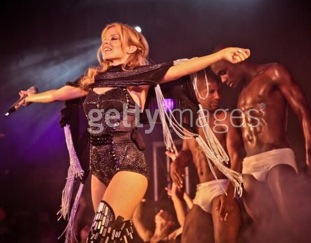
❚ AN EYE-POPPINGLY CREATIVE LASER SHOW capturing every colour of the rainbow was hurled towards a bouncing audience of Londoners in the early hours of this morning at Heaven. A euphoric Kylie Minogue was making a surprise 40-minute PA in the sweltering heat of high summer. This week she launched her 11th studio album in the UK, the dance-driven Aphrodite which marks her return to joyous pure-pop, and moves her on from the tragic events of adult life she calls her “dark period”.

Kylie Minogue, Heaven,London,live,All The Lovers

All The Lovers, live today: photograph © Christie Goodwin

According to host Jeremy Joseph, Aphrodite had gone straight to No 1 in the album chart – her fifth No 1 album – and he produced a multi-candled cake by way of congratulations. He also reminded us all that this was Kylie’s tenth appearance at London’s G-A-Y venue since its predecessor Bang! became the mainstream gay mega-clubnight that virtually launched Kylie’s British pop career in 1988. Since then the Australian-born singer has become the most successful female artist in the UK charts and the second richest British popstar from the 1980s.

Onstage from 1.35 this morning she performed six numbers in a clingy-and-swishy shredded gold Cinderella dress plus golden knuckle-duster, then three encores in a bewitching mirrored black top with thigh-high Puss-in-boots, climaxing with her erotic new single All The Lovers elegantly framed by five of her beefcake dancers and as many more females. Heaven had, perhaps foolishly, handed out whistles to everybody in the audience, so whether you could hear Kylie’s vocals above the non-stop barrage became slightly theoretical – a fact she accepted by just letting the audience get on with the verses as well as choruses to almost every number.

When asked in a recent interview with Popjustice if Aphrodite would make a good farewell album, 42-year-old Kylie responded: “I think so. It’s joyful. It’s like the jus of all the best bits of my musical career.” We also discover exactly what “a Kylie moment” is.

Kylie Minigue, Heaven, London ,Aphrodite, interview

Kylie’s own tweeted pix: backstage at G-A-Y with her female dancers, and with the monster teddy presented by Jeremy Joseph to mark her becoming an auntie for the third time

➢➢ VIEW ♫ ♫ Delectable rendering of All The Lovers – Kylie Minogue on the Jonathan Ross show, June 25, 2010 (spot Dawn Joseph and David Tench in support) – Oops, this has been removed from YouTube. Instead here’s her UK TV performance one month later with Alan Carr:

FRONT PAGE

2010 ➤ Cheers to Peter and Chris – two nice unassuming radio listeners (among the many*) who clinched the rescue of 6Music

* Added to the heading to reflect protests by Peter and Chris

What do we want? – We’d quite like our rather good 6Music station not to be axed by the BBC, please.
When do we want it? – After our jolly nice picnic and a couple of flutes of champagne, if that’s OK with you.

Save 6Music, 6Music, BBC, picnic, Claire Cant, Gillian Reynolds, Daily Telegraph,Tim Davie,Sir Michael Lyons ,Steve Hewlett,,

Militant picnickers: Save 6Music campaigners plot their strategy – somewhere amid the champagne drinkers Peter Crocker is lurking. Picture © Claire Cant

VICTORY FOLLOWS A VERY BRITISH KIND OF PROTEST

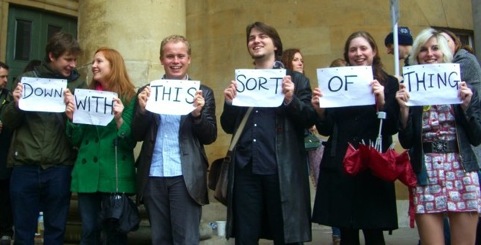
❚ TODAY IT WAS REVEALED TO RADIO 4’s AUDIENCE that the BBC decided not to axe its digital music station 6Music as the result of a thoroughly British campaign strategy hatched over a couple of drinks and the odd outdoor picnic. 6Music campaigners like to boast that a bunch of marketeers called the CoolBrands Council (yes, seriously!) have dubbed it the coolest radio station in the land – easier perhaps to think of it as “rhythms for thinking persons”. Since March some “quite lively” street protests have surrounded Broadcasting House in London where the more strident slogans included “More 6 please, we’re British” … “Lord Reith would be vexed” … “Down With This Sort of Thing” and “6 into 2 doesn’t go” (a reference to merging with mainstream Radio 2). But afterwards, heads were put together to come up with a seriously cunning plan.

Peter Crocker told the tale on today’s Feedback, the Radio 4 listener soapbox. He describes himself as a “video restorer and member of the Doctor Who Restoration Team”. Also a Belle and Sebastian fan, he is passionate about 6Music and became incandescent in March when he heard of the BBC management’s threat to shut it down in a strategic review of BBC services.

He wrote to Feedback and was invited onto the weekly programme in March when he declared: “As with Radio 3, 6Music is unique. We need a serious modern non-orchestral music station.” This kick-started a process which ended up with him having a breakfast meeting with the chairman of the BBC Trust Sir Michael Lyons, who was tasked with considering the management proposals.

Crocker modestly insists his role was minor and points out that many, many others were involved in the campaign to save 6Music. The Facebook protest group, for example, is the “modern equivalent of a village hall”, he says, and it attracted 180,000 supporters.
Save 6Music, 6Music, BBC, demonstration

Too, too British: Save 6Music demonstrators outside Broadcasting House

What he did do after turning up to a demo was to meet up for occasional drinks with some of the other committed protesters “in hostelries around west London”. Here he met Chris Wiper, a Pixies fan (according to his Facebook profile), who proposed conducting a survey of 6Music listeners and 655 responses from adults yielded one eye-opening claim. As Crocker reported today: “For every £1 the BBC spent on 6Music, the station generated £13 for the UK economy”!

From Wiper’s survey the purchasing activity of the station’s listeners was analysed by Matt Forman and Colin Hammond who showed that 58% of their music purchasing in the previous year had been influenced by 6Music, resulting in an average spend of £134 that year on albums and singles. In other words, when extrapolated against the one-million weekly audience reached by the station, this amounted to a significant contribution towards the music industry’s coffers. (Further modest mutterings have ensued from Wiper, too: “My contribution was a very small part.”)

6Music, age distribution, listeners, ILF, survey, BBC

6Music listener ages: Mean 32.2, median 31, according to online petition data commissioned by ILF

Hence the bending of the Trust chairman’s ear and a reversal this week of the decision to axe the station.

Hammond has since offered further insights: “Sir Michael Lyons said that the cultural value argument had to be made. Alan Yentob made a speech that stated that the BBC yardstick was £2 of economic activity for £1 of BBC spend. We had had already several conversations about how many CDs etc we had bought solely from 6, Chris Wiper had set up a Facebook group and then his website. At my hunch that there was something in this, Matt Foreman did the maths for the initial ILF submission which the Trust were most interested in and so we encouraged more people to come forward, which gave the great final survey number.”

Result – even BBC director-general Mark Thompson declared on April 20: “It’s become clear to me that the station is completely unique and has significant cultural worth.”

As a successful campaigner, cheer-leading substantially through the web, Crocker today offered four golden rules: (1) don’t shout into a vacuum; (2) research your subject; (3) stick to facts not personal opinion; (4) enlist teamwork by meeting up in real life.

Let’s be on guard for the next round, however. Announcing 6Music’s reprieve on the BBC News Channel last Monday, Sir Michael Lyons also said: “It [6 Music] has opened up a much bigger debate about the need, first, to sort out the greater distinctiveness about the very popular Radios 1 and 2 and to make sure they are more different from each other and different from what’s available in the commercial sector. And even more important, to actually develop a coherent strategy for digital radio, which the BBC can’t do in isolation. It needs to do (that) with government and the commercial sector.”

A can of worms is about to be opened in the radio marketplace. In her weekly column in the Daily Telegraph, Gillian Reynolds was later to conclude: “ ‘Stick to facts.’ Please remember that when the dreaded BBC Director of Audio and Music Tim Davie returns, fully strategised.” The Facebook group cannily reminds us of future trends. Listen to 6Music online, it urges, so the powers-that-be can measure how many are listening. “BBC6 was not designed to be linear.”

➢➢ Listen to today’s Feedback and read presenter Roger Bolton at the Radio 4 blog

➢➢ Independent Listeners Forum – Final Submission to the BBC Trust, May 22 – Search sidebar for ILF Evidence, then click Economic Value Update

➢➢ Gillian Reynolds in the Daily Telegraph, July 12 – “The present digital delay, I think, is more a failure of markets than management”

Save 6Music, campaign,6Music, BBC, demonstration,Steve Ransome

Thinking music persons: Save 6Music protestors show their strength outside Broadcasting House. Picture © Steve Ransome

FRONT PAGE

2010 ➤ Vince Clarke on how to make the perfect pop song

Here’s a smashing video interview with the co-founder of Depeche Mode at Motherboard.tv

Vince Clarke, Motherboard.tv, Maine, Depeche Mode, synthesisers

“Something from nothing”: Clarke’s term for the alchemy that makes music. Picture © VBS IPTV

❚ VINCE CLARKE IS A MAN SYNONYMOUS WITH SYNTH POP and a legend in the history of electronic music. He’s famous for founding three of the most popular and lasting musical acts of the 80s: Depeche Mode, Yazoo and Erasure. But his distinct sonic output depends upon another feat: he has spent the past 30 years amassing one of the world’s most impressive collections of rare, “holy grail” analogue synthesizers. In 2004, Clarke left England for the woods of Maine, on the Atlantic coast of the USA, where he constructed for these monolithic machines a temple he calls The Cabin . . .

➢➢ VIEW ♫ ♫ Vince Clarke’s cabin of synths

FRONT PAGE