Category Archives: Social trends

2012 ➤ Royal Ascot: top-to-toe dress code for a quintessentially British day out

Royal Ascot, racing, dress code

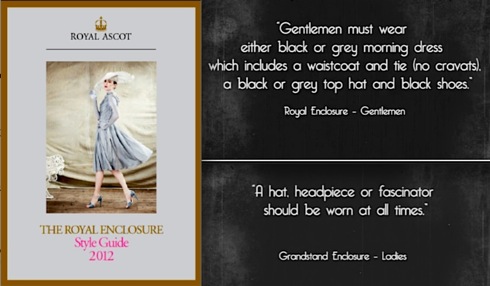
The way it was… Royal Ascot is “one of the pinnacle events of the summer social season”. Click image to run video of the new Style Guide for 2012


➢ A Royal Enclosure Style Guide has been produced for the first time for those attending this week’s Royal Ascot race meeting — view video from The Daily Telegraph

The organisers at Royal Ascot (June 19–23) have created a chic video to advise racegoers on putting together an appropriate look. Those who go off-track with the new guidelines will not be allowed entry to the Royal Enclosure if their hems are more than one inch above the knee, so there’s a lot to consider when getting dressed for the event.

➢ Download the new 16-page Royal Ascot 2012 style guide as a PDF

Royal Ascot, racing, dress code

EACH Ticket Type has its own Dress Code

❏ The Royal Enclosure is the top of the range option, giving you access to all the best viewing areas and facilities on the course. Formal day wear is a requirement.

❏ The Grandstand Admission ticket at Royal Ascot provides similar access facilities to those offered throughout the year. Dress in a manner as befits a formal occasion.

❏ The Silver Ring at Royal Ascot is a separate admission area that does not provide access to the Parade Ring or the main Grandstand. Bare chests are not permitted at any time.

Royal Ascot, racing, dress code

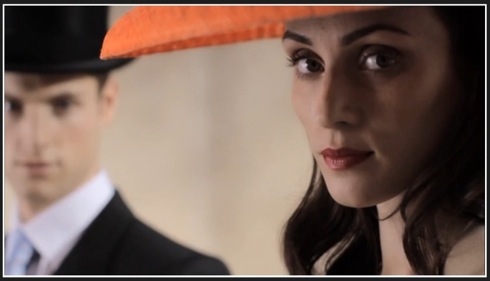
The way it still is… Royal Ascot is where to “enjoy all of the pageantry and history of a quintessentially British day out”. Click image to run video of the new Style Guide

FRONT PAGE

➤ Six rewrites punk history with an outlandish claim about the Not-Really-From-Bromley Contingent

Simon Barker, Six, Punks Dead, Jordan, photography, exhibition

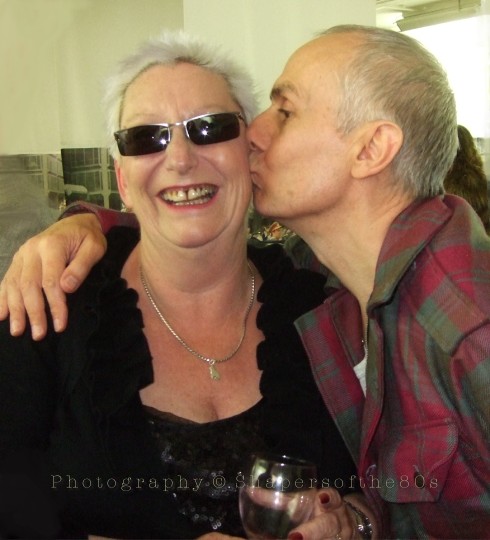
Reunited: a plonker from Six for Jordan at Divus Gallery © Shapersofthe80s

❚ OLD HABITS, EH? A day in the spotlight and Simon Barker, aka Six, starts rewriting history! There we were last night in a Spitalfields gallery, chatting for the first time in 20 years at Punk’s Dead, his new show of early photographs of the now fabled Bromley Contingent, the posse of a dozen fashionistas who helped put the Sex Pistols on the map back in 1976. Having staked his claim to fame as the only person clapping at the end of the Pistols’ sixth gig (Dec 9, 1975, at Ravensbourne College) and being one of four fans with the band during the infamous “Filth & Fury” TV interview (Dec 1, 1976), Simon today works as a photographer in Prague.

Why Prague, I ask, as a big fan of the Bohemian medieval city? He groans: “Oh no! Why Prague? Why does everyone ask me the same question?” You’d never guess Simon and I used to natter away as if we liked each other back in the 80s when I’d pop into Viv’s Worlds End shop after going for a haircut next door at Smile. OK then, Six, why *Bromley*? As in Bromley Contingent. What was in the water in Bromley that produced his posse of poser punks?

“Ah, excellent question!” he replies. “We hated the name. It was created by the media — that woman Caroline Coon.” This is a double-edged dig at both the middle-class, ex-hippy Melody Maker writer who coined the phrase after seeing the “very striking” posse at three Pistols gigs in a row and asking where they came from (Bromley is a town in the south London commuter belt)… and also at me for being another member of the despised legion of journalists.

His Always-a-Punk gene is really kicking in now. “In actual fact, only two of us — me and Steve [Bailey, aka Severin] — came from Bromley. Siouxsie [Susan Ballion, later singer with the Banshees] was from Chislehurst. Billy [Broad, later Idol] lived in Bickley. And Jordan [born Pamela Rooke] came up from Seaford.

“For me and Steve, living in that bit of suburbia, Bromley had the best connection into London — 20 minutes by train. Any further away and it wouldn’t have been so easy to visit for gigs, sex, Louise’s…”

Aha, the location-location transport solution! A recurring theme, because in a surprisingly cooperative interview in 2002 Six did admit that his reason for moving to the Czech Republic “was its location. It is the heart of Europe and a great base to travel from.”

Six was either being pure-punk cussed by splitting hairs about his posse, or possibly was having a bit of a hashtag_Senior_Moment. Bickley is after all the next stop down the line from Bromley, only 2,000 metres away, and Chislehurst another 1,000 metres further on. But fair enough, he’s got a point. Even if you include Sioux and Idol and Bertie “Berlin” Marshall, who lived three doors away from Bowie’s mum in Bromley, five out of a posse of 12 does not a “Bromley” Contingent make. So last night, we witnessed history being rewritten.

WHO waS WHO in the “Bromley” Contingent
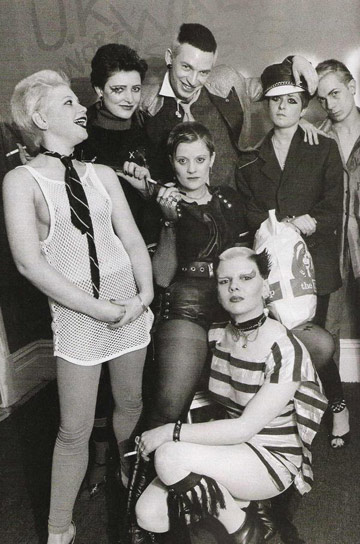
Bromley Contingent, Soo Catwoman, Jordan, punks

Ray Stevenson’s classic 1976 pic of some of the Bromley Contingent, plus Soo Catwoman who came from Ealing

According to Wikipedia: Siouxsie Sioux, Jordan, Soo Catwoman, Simon “Boy” Barker, Debbie Juvenile (née Wilson), Linda Ashby, Philip Sallon, Alan Salisbury, Simone Thomas, Bertie “Berlin” Marshall, Tracie O’Keefe, Steve Severin, Billy Idol and Sharon Hayman.

Caroline Coon’s 1977 book The New Wave Punk Rock Explosion remains a fresh and pro-fan account of the movement’s origins, less prone to mythologising than later histories

➢ Fresh pix from the “14 months” of punk and the last word on what it all meant

➢ Simon Barker chats to Dazed about the anarchic punk era

➢ Another epic Stevenson picture of the Bromley Contingent, 1976

Simon Barker, Six, Punks Dead, Jordan, photography, exhibition

Jordan then and now: the Queen of Punks with Simon Barker’s 1977 photo showing for a month at Divus Temporary Gallery, London E1 6QF © Shapersofthe80s

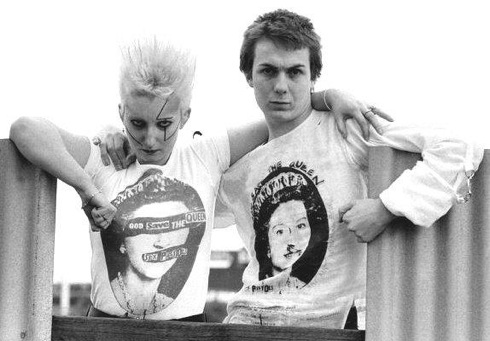
❏ Mind you, the true superstar present in the Spitalfields gallery was Jordan herself, Queen of Punks, artfully positioned in front of Six’s truly iconic portrait of her on the wall, priced at £300 a pop. There wasn’t a moment all evening when she wasn’t surrounded by a buzz of fans and old stars of punk and she was such easy company, chatting away without airs or graces. She said: “I’m a veterinary nurse now and I breed Burmese cats. Look at the number of photos here of me and Siouxsie with cats.”

She has returned to live in Seaford but loves telling the 70s stories about travelling up to London from the south coast resort, being harangued by commuters for her spiky hair and outrageous bondage clothes from McLaren and Westwood’s Chelsea shops Sex and Seditionaries. To keep her out of trouble, one British Rail guard told her to go sit in first class. “The day I came up to apply for a job at Sex, it was shut, so I wandered over to Harrods and applied there in my blonde spikes and green face foundation. They gave me a part-time job in Way In” (their trendy top-floor fashion department).

As the single most inventive pioneer of definitive punk looks, Jordan soon joined Sex, however, becoming their totemic house model and honorary fifth member of the Sex Pistols, all too willing to flash her tits for the press at their ninth gig in Andrew Logan’s loft. In 1977 she briefly managed Adam & The Ants in their hardcore phase, but most notoriously starred in Derek Jarman’s dystopian fantasy movie, Jubilee, singing a raunchy version of Rule Britannia.

➢ Punk’s Dead by Simon Barker is an exhibition of his intimate punk photographs, open for a month from June 7, at Divus Temporary Gallery, 4 Wilkes Street, London E1 6QF.

➢ Punk’s Dead the book by Simon Barker is published by Divus

Click any pic below to launch slideshow

The Year Of Punk 19/12/77

Six, Simon Barker, Punk 1977, LWT, Janet Street-Porter, video

“You don’t have to be a fantastic musician”: Six explains the magic at 7:15 in Janet Street-Porter’s LWT documentary, The Year of Punk, 1977 … Click pic to view video at YouTube

FRONT PAGE

➤ Fresh pix from the “14 months” of punk and the last word on what it all meant

Punk’s Dead , Derek Dunbar ,, Jordan,

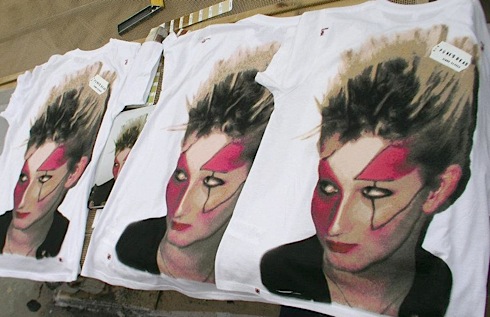
Jordan the queen of punk: pantone matched first samples fresh from the printers on Derek Dunbar’s Facebook page today

❚ HOW MUCH MORE IS THERE TO KNOW ABOUT PUNK? Not much, you might think. Yet today Derek Dunbar — the King’s Road fixer, model, singer, Jarmanite and McLaren acolyte, now styling himself as project manager — announced on Facebook that he is producing some T-shirts emblazoned with Jordan’s image (Jordan the queen of punk, immortalised in Derek Jarman’s movie Jubilee). “These are the first samples we will produce once Six has finished at his exhibition in London so I hope to start in 3 weeks or 4 weeks.”

Exhibition? Six? Who? Those in the know know that Six is aka Simon and Simon was the quiet one in among Susan Dallion (later Siouxsie Sioux), Steve Severin, Debbie Juvenile and Soo Catwoman in those seminal 1976 snaps of the Bromley Contingent — first followers of the Sex Pistols and the Chelsea retail outlets of Malcolm McLaren and Vivienne Westwood. Some of the Contingent became headliners in the punk explosion, Simon playing his part by appearing with the Pistols on the infamous teatime TV show that lost television journalist Bill Grundy his job. More discreetly, as a resident of the St James’s Hotel in Westminster, Simon provided a refuge for punk’s suburban protagonists.

Punk’s Dead , books,photography, Simon Barker , Jordan

1976: Jordan and Simon Barker aka Six (from Derek Dunbar’s Facebook album)

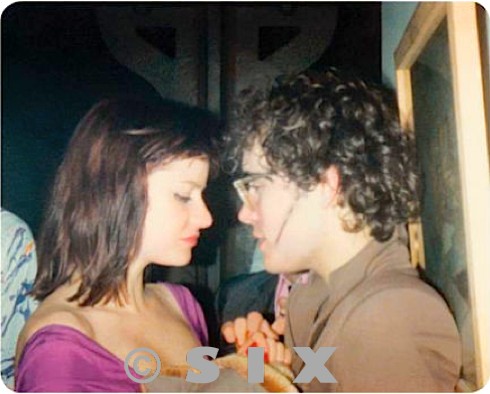
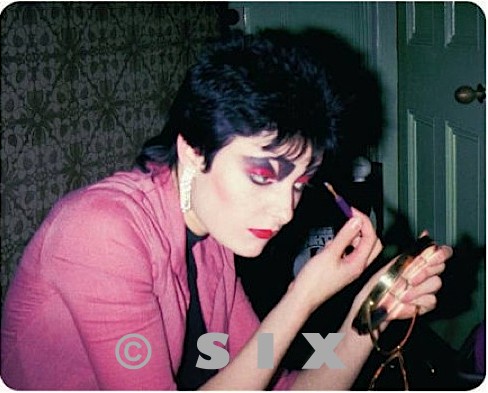
Under his pseudonym Six, he now reveals: “In 1976, I bought myself one of the cheapest pocket cameras available. Fully automatic, with no controls or settings… Subconsciously I concentrated on the women and artists at the heart of what would later be known as punk in London. The photos you see were spur-of-the-moment shots taken by myself for myself and, up until now, I used to think they weren’t good enough to show people.”

Far from it. A quick google reveals these early snapshots to be “a rare and intimate account of punk’s ability to mint newness” and they evince “the cool stillness of seeming to live beyond the end of history.” Ohhhhh!!! Orgasmic! And you’re asking, Who said THAT?

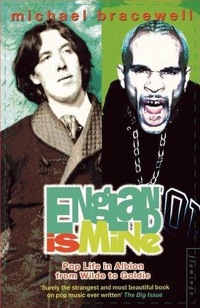
Michael Bracewell,books,England is Mine, Pop LifeGoogle, please tell. The verdict comes from Michael Bracewell (author of England is Mine: Pop Life in Albion from Wilde to Goldie, 2009), one of those writers whose cultural observations you know are worth the effort to read, wrapped though they are in ripely purple prose. And in a recent article about Six, he announces what these days is the official line, that “Punk lasted in the UK for little more than 14 months, between 1976 and the Jubilee summer of 1977.” Anything later was accounted an offshoot of punk, or dubbed simply New Wave!!!

You raise an eyebrow, salivating for more. And more is delivered in his Independent piece from last March…

➢ Beneath the headline Anarchy in the UK, Bracewell declares
these FIVE PRINCIPLES OF PUNK:

  • 1 To some, punk was primarily political in its energy, carrying class war or a reclamation of the Situationist desire to ‘wreck culture’ to the brutalist Britain of the pre-Thatcher 1970s.
  • 2 To others, it was an avant-garde fashion parade: a damply British reclamation of the Zurich Dada or the Ballets Russes.
  • 3 And to yet others it was the gleeful desecration of rock music’s Church of Authenticity, in which had been worshipped the sanctity of the Blues.
  • 4 Speaking with Malcolm McLaren – arguably punk’s architect – shortly before his death in 2010, the case was put more simply: if punk could lay any claim on historic status, he said, it would best be remembered as ‘like doing the Twist in a ruin’.

Sensational, whichever way you take your pick! But he’s warming to his own conclusion:

  • 5 Punk … appeared to confront the stagnation of cultural consumerism – by describing, in a language of self-parody, the notion of modernity itself reaching critical mass and unsurprisingly imploding. Hence, perhaps, the slogan above the door of the SEX boutique at 430 King’s Road in Chelsea: ‘Modernity Killed Every Night’.

Divine! We can go to our graves sure about the meaning of punk, once and for all. Or rather, five times and for all.

Punk’s Dead , books,photography, Simon Barker,Little Nell, Adam Ant

1977: Little Nell with Adam Ant at a Butler’s Wharf party. Photographed by Six

Punk’s Dead , books,photography, Simon Barker , Siouxsie Sioux

1977: Siouxsie Sioux at the St James hotel. Photographed by Six

➢ Punk’s Dead by Simon Barker is an exhibition of his intimate punk photographs, open for a month from June 7, at Divus Temporary Gallery, 4 Wilkes Street, London E1 6QF.

➢ Punk’s Dead the book by Simon Barker is published by Divus

Punk’s Dead , books,photography, Simon Barker

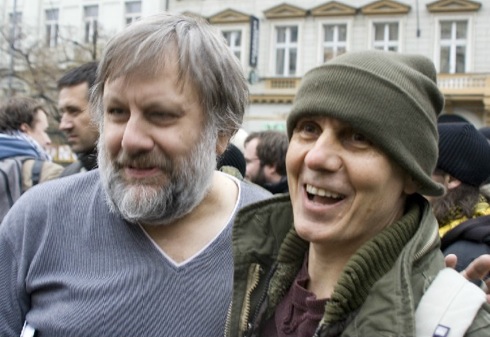
Six in Prague: Barker demonstrating with Slovenian philosopher Slavoj Žižek who has become the zeitgeist interpreter of social phenomena in the 20-tweens

The Year Of Punk 19/12/77

Six, Simon Barker, Punk 1977, LWT, Janet Street-Porter, video

“You don’t have to be a fantastic musician”: Six explains the magic at 7:15 in Janet Street-Porter’s LWT documentary, The Year of Punk, 1977 … Click pic to view video at YouTube

FRONT PAGE
1928–2012 ➤ Sassoon’s revolution: No teasing. No hair spray. Just the cut.

Vidal Sassoon,the bob, Mary Quant, hairstyles

1963: Sassoon creates the “bob” on designer Mary Quant. (Photo: Getty)

“He revolutionised not just hair but fashion” — model-turned-Vogue fashion editor Grace Coddington

Vidal Sassoon , Albert Hall,

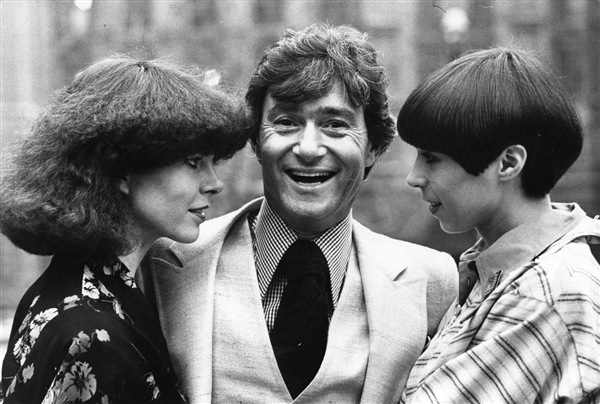
Comeback 1975: Vidal Sassoon between two contrasting examples of his hairdressing for a teach-in at the Albert Hall, where he returned to hairdressing after a five-year break. (Photograph by Tim Graham / Getty)

➢ The Daily Telegraph reports the death at 84 of celebrity hairstylist Vidal Sassoon, whose 1960s wash-and-wear cuts freed women from the tyranny of hairspray…

Vidal Sassoon, who was found dead at home on Wednesday, was at the cutting edge – literally and metaphorically – of hairdressing. His sharp, geometric, low-maintenance 1960s hairstyles revolutionised his craft, sounding the death knell for the stiff, set hairdos of the 1950s. An astute businessman, he made a fortune from his salons and products, and became a household name. “I wanted to eliminate the superfluous and get to the basic angles of cut and shape,” he said… / continued online

+++
❏ Craig Teper’s 2010 documentary Vidal Sassoon: The Movie follows the true rags-to-riches tale of how a boy from a London orphanage went on to open his own Bond Street salon in 1958 and — influenced by the Bauhaus designs he had studied — he create the “shape” that became his signature cut, the five-point bob. It revolutionised hairdressing. His geometric wash-and-wear cuts marked the end of the beehive and the bouffant hair styles of the 50s. Admirers included the Duchess of Bedford, model Jean Shrimpton, actor Terence Stamp, and film star Mia Farrow. In 1963 he devised the classic “bob” for fashion designer Mary Quant, who called him the “Chanel of hair”. By 1964 he’d gone international by opening his first salon in New York.

Vidal Sassoon, Movie

Sassoon The Movie: the London crimper freed women from 50s bouffants by pioneering the low-maintenance hairstyles that defined the 60s

FRONT PAGE

➤ Shapersofthe80s is declared an “invaluable website” by British historian

“winter of discontent” ,  Leicester Square, strikes,

Britain’s infamous “winter of discontent” that brought down the Labour government in 1979: as public service workers went on strike, rubbish piled-up even in London’s Leicester Square

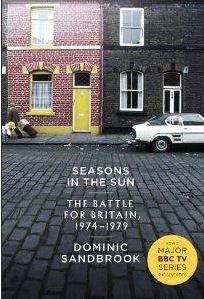
Seasons in the Sun,Battle for Britain, Dominic Sandbrook, books, history, Allen Lane,❚ AN “INVALUABLE WEBSITE” — this is the verdict on Shapersofthe80s by historian Dominic Sandbrook, author of the rich new cultural analysis, Seasons in the Sun: The Battle for Britain, 1974–1979. It’s a doorstep of a book, yet highly readable, which reveals numerous upbeat aspects to the chaotic decade many write off as worthless.

Chapter 31 is especially inspirational! Sandbrook gives generous credit to key characters who Shapersofthe80s has long maintained deserve recognition as movers and shapers pivotal to the energy of the 80s. And, having quoted chunks from our own texts, the historian gives due acknowledgement in his extensive bibliography. Indeed, the scope of his research is more impressive than for much other contemporary history, as Sandbrook not only cites political and economic mandarins, but also sifts fine detail from popular culture and eye-witness reportage across the whole social spectrum.

Sandbrook writes: “Behind the lurid news stories, the late 1970s were the decisive point in our recent history. Across the country, a profound argument about the future of the nation was being played out, not just in families and schools but in everything from episodes of Doctor Who to singles by the Clash. These years marked the peak of trade union power and the apogee of an old working-class Britain – but they also saw the birth of home computers, the rise of the ready meal and the triumph of a Grantham grocer’s daughter who would change our history for ever”

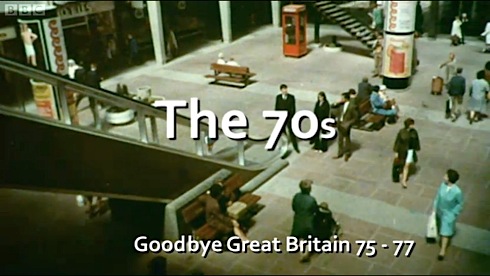
Seasons in the Sun is the fourth title in Sandbrook’s survey of postwar Britain. His unstuffy combination of high and low life is behind the BBC2 series The Seventies currently viewable live and on iPlayer.

BBC2 series The Seventies,Seasons in the Sun ,Dominic Sandbrook

Sandbrook’s Seasons in the Sun forms the basis of the current BBC2 TV series The Seventies

REVIEWS OF SEASONS IN THE SUN

❏ “The first three volumes of Dominic Sandbrook’s epic history of Britain between 1956 and 1979 were exceptionally good. The fourth, Seasons in the Sun, is magnificent … marked by its pace, style, wit, narrative and characterisation as by its exhaustive research.” — Roger Hutchinson, Scotsman

❏ “Sandbrook has created a specific style of narrative history, blending high politics, social change and popular culture … his books are always readable and assured, and Seasons in the Sun is no exception … Anyone who genuinely believes we have never been so badly governed should read this splendid book.” — Stephen Robinson, Sunday Times

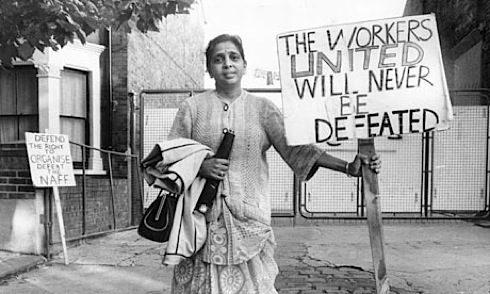
1977, Jayaben Desai, Grunwick, strike, picket

August 1977: Jayaben Desai, treasurer of the strike committee at the Grunwick photo-processing plant, had been picketing for a year, supported by white, male trade unionists while postmen blocked the company’s mail. (Photograph by Graham Wood/Getty)

EVEN WIDER PERSPECTIVE FROM LEADING PLAYWRIGHT

➢ Playwright David Edgar draws together the Sandbrook quartet in The Guardian, May 9, 2012: The 1970s was the moment when our century arrived… As Sandbrook insists, the women’s liberation movement was as much about Hull’s fishermen’s wives and female machinists at Ford Dagenham as feminist activists disrupting Miss World. In 1971, workers campaigning against the closure of Upper Clyde Shipbuilders borrowed the student tactic of the sit-in. As 1970s chronicler Andy Beckett argues, the gay groups who stood shoulder to shoulder with trade unionists outside Grunwick prefigured an alliance which “would become commonplace in the decade to come”. The identity politics that were to become such a satirised feature of the left of the 1970s arose not just out of campus and culture but class war… / continued at Guardian online

FRONT PAGE