Category Archives: Politics

1980 ➤ Secrets revealed about the SAS, arming Afghanistan and death of the tanner

Yes Minister, Nigel Hawthorne, Paul Eddington

Rt Hon James Hacker MP (right): “This is a democracy, and the people don’t like it.” — Civil servant Sir Humphrey Appleby: “The people are ignorant and misguided.” — Hacker: “Humphrey, it was the people who elected me.” (From Yes Minister, BBC TV’s satirical sitcom set in Westminster, launched Feb 25, 1980)

❚ PREVIOUSLY SECRET UK GOVERNMENT RECORDS are routinely declassified after 30 years. Cabinet documents for 1980 were released by the National Archives at noon today, Dec 30 2010. Here’s a selection of titbits most of us have been unaware of…

➢ SAS to be given immunity for killing foreigners — The televised storming of the Iranian embassy building in London in 1980 boosted the SAS’s international prestige and generated invitations to deploy them on overseas hostage rescue missions. (Guardian)

➢ Margaret Thatcher in cover-up after Czech spy exposed John Stonehouse — Did you know that John Stonehouse, the former Labour minister who “did a Reggie Perrin” and vanished abroad, was said to have been a spy? (Guardian)

➢ Britain secretly agreed to back Afghan resistance fighters after the Soviet invasion of their country — One faction of the Mujahideen fighters, who were also covertly funded by the CIA, went on to become founding members of the al-Qaeda terrorist network. (Daily Telegraph)

➢ Unflappable Douglas Hurd stunned into silence during Afghan revelations — UK Confidential on the BBC iPlayer

Ahmad Shah Massoud ,Afghanistan, 1983, Nagakura

Ahmad Shah Massoud (left): on the ground in Afghanistan in the Panjshir province of Afghanistan 1983. Photographed © by Hiromi Nagakura

❏ Listen online to BBC Radio 4’s response to today’s revelations in an excellent edition of UK Confidential chaired by Martha Kearney. After hearing that western powers had decided in 1980 to provide “discreet support for Afghan guerrilla resistance”, former Labour minister Roy Hattersley and former BBC chief political correspondent John Sergeant wrong-foot Douglas Hurd who had been a foreign office minister at the time. How much aid was spent on arms? Had we armed the wrong people? Kearney herself notes that “arms were going to Shah Massoud” (later dubbed “the Afghan who won the Cold War”.) Twice Hurd is forced into silence, as he formulates his eventual reply: “I’m not saying. Of course I’m not saying.” Terrific radio, from the 32-minute mark.

Other topics include Margaret Thatcher’s patrician scolding by Harold Macmillan… her furious row with the Bank of England… her moderate reaction to early trade-union strikes … and how the government tackled an Iranian warship on the River Tyne.

➢ Cabinet ministers feared 30 years ago that MPs were abusing their expenses — Margaret Thatcher was warned that there was a “grave risk of serious public scandal” over Parliamentary allowances and that some politicians may have to be prosecuted. (Daily Telegraph)

Harold Macmillan, Supermac, Vicky

Harold Macmillan: depicted as Supermac by the cartoonist Vicky

➢ Macmillan’s 11-page private warning to Margaret Thatcher — “Supermac”, the Conservative prime minister from 1957-63, sent a remarkable letter criticising the PM’s economic strategy. (Guardian)

➢ The sixpence was killed off to raise £3.5m by melting down the old coins — Margaret Thatcher ordered the “death of the tanner”, introduced in 1551 and made obsolete by the decimalisation of sterling. The last coins were struck in 1967. (Daily Telegraph)

FRONT PAGE

1980s ➤ So many shapers shaped the decade that people think was all down to Margaret Thatcher

A handful of key books this year have added to our estimations of that much demonised decade, the 1980s, and to our understanding of its cultural shifts. Shapersofthe80s has of course always drawn a distinction between the youthful creativity of the earlier Swinging 80s, and the ethos that finally took hold in Britain and earned the name of “Thatcherism”

Loadsamoney, Harry Enfield, Thatcherism1980s

Emblem of the 80s: Harry Enfield’s yob character, Loadsamoney. © Rex features

➢ Rejoice, Rejoice!: Britain in the 1980s,
by Alwyn W Turner (Aurum Press, 426 pages)
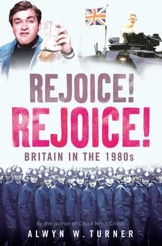
Alwyn Taylor, Rejoice!,1980s,book❏ A SHARP AND WITTY ANALYSIS of the 80s came this year from cultural historian, Alwyn Turner. Its savage title Rejoice! Rejoice! echoes the triumphal cry that burst from the lips of prime-minister-turned-warrior-queen Margaret Thatcher in 1982 when victory was declared over Argentina in the Falklands War (910 dead, 1,965 casualties). Reviewing the book in The Sunday Times, Dominic Sandbrook wrote: “One of the pleasures of Alwyn Turner’s breathless romp through the 1980s is that it overflows with unusual juxtapositions and surprising insights. Who knew, for example, that not only Alan McGee’s Creation Records but the bawdy magazine Viz were set up with money from Thatcher’s Enterprise Allowance Scheme, dismissed at the time as a feeble attempt to disguise the horrors of mass unemployment?

“Where this book really shines is on the intersections between politics and popular culture… For Turner, the defining characteristic of the 1980s was its obsession with size: big money, big hair, big issues, big politics. But what also emerges from his account is the sheer, unashamed nastiness of public life during the Thatcher years. This was a time, after all, when Thatcher’s cheerleader [disc-jockey] Kenny Everett publicly joked about kicking [the elderly opposition leader] ‘Michael Foot’s stick away’, while thousands chanted ‘Ditch the bitch’ at anti-government demonstrations.

“It is a refreshing surprise, however, to read a book on the 1980s in which Thatcher, while naturally dominant, does not entirely drive out all other voices. As Turner admits, the Iron Lady cast a larger shadow over national life than any other prime minister since Churchill: the style magazine i-D, a quintessential product of the decade, called her ‘almost a fact of nature’. But the results of her revolution were mixed at best, and the irony is that in many ways her policies had the opposite effect from what she hoped.”

Turner is not alone in presenting Harry Enfield’s comic character Loadsamoney as the emblematic figurehead for Thatcherism, a swaggering slob waving a fistful of banknotes while yelling, “Look at my wad!”. In the Financial Times Francis Wheen follows through: “Even if many Britons eventually accepted [Thatcher’s] economic remedies, Turner infers in his history of the 1980s, Rejoice! Rejoice!, ‘culturally the country was unconvinced’. Ideals of enterprise were all very well but winning at all costs, with no thought for the loser and no care for the way one played the game, ‘seemed somehow wrong’. The British still sided with heroic failures and doomed underdogs such as the hopeless ski-jumper Eddie (the Eagle) Edwards.”

30-UP FOR A CLUBBING TREASURE

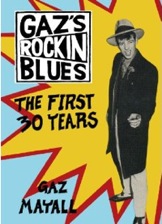
➢ Gaz’s Rockin’ Blues: The First 30 Years,
by Gaz Mayall (direct from Trolley, 280pp)

Gaz Mayall, Jarvis Cocker, Radio 2,

Gaz Mayall on 6Music: celebrating his 30th clubbing anniversary talking with Jarvis Cocker on The Sunday Service in October. © BBC

❏ GAZ MAYALL IS one of UK clubbing’s national treasures, and the paperback Gaz’s Rockin’ Blues is a nostalgic first-person collection of great club photos and comic-strip flyers that tell their own tale of London’s oldest continuous club-night, where Tracey Emin was once the cloakroom girl. The lad in the hat, who has kept his tiny nightspot jumping since July 3, 1980, supplies a brief but breathless string of anecdotes about live guests such as Prince Buster, Desmond Dekker and Joe Strummer. Gaz was one of the pathfinders who perfected the then brilliant notion of throwing a party every Thursday and playing his favourite rebel dance-tunes. As the 22-year-old Gaz told Shapersofthe80s that year: “People come here for good music”, which essentially meant his own heritage as a kid raised amid rock royalty and steeped in ska, reggae, rockabilly, rock and R’n’B.
Gaz's Rockin Blues, book, 1980sOn his club’s 30th anniversary, Kate Hutchinson wrote in Time Out: “It’s still going strong: you’ll find throngs of people swinging to guest live bands and DJs every Thursday night at the Soho basement dive St Moritz. It’s also the kind of hangout that keeps new generations coming, so the crowd always stays fresh. Those who aren’t old enough to go yet can mingle with everyone else at Gaz’s sound-system at Notting Hill Carnival, where he’s been causing a roadblock since 1982, or at his stage at Glastonbury, which he has run for the past three years.”

SHUFFLING BETWEEN STRAVINSKY AND ARMSTRONG

➢ The Music Instinct : How Music Works and Why We Can’t Do Without It, by Philip Ball (Bodley Head, 464pp)
➢ Listen to This, by Alex Ross (Fourth Estate, 400pp)
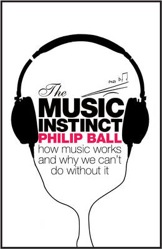
The Music Instinct, Philip Ball, books❏ TWO IMPRESSIVE BOOKS THIS YEAR have dissected how music works its magic. They are not posited on the 80s at all, though they may well be emergent phenomena of our era of musical diversity. Critics heaped praise on Philip Ball’s The Music Instinct, an engaging survey by a popular science writer. Bee Wilson in The Sunday Times called it a “wonderful account of why music matters, why it wrenches our souls and satisfies our minds and sometimes drives us crazy”. In The Guardian Steven Poole praised Ball’s “deft analyses of the limitations of attributing ‘emotion’ to music, or considering it as a ‘language’ (Lévi-Strauss: if music is a language, it is an ‘untranslatable’ one)”. And the Amazon reviewer Steve Mansfield liked the author’s scope “by drawing his examples from across the spectrum of music, equally comfortable discussing and occasionally comparing music as diverse as J.S. Bach, John Coltrane, Eliza Carthy, gamelan orchestras, ragas, Schoenberg, and the Sex Pistols”.
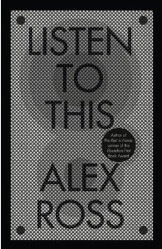
Alex Ross, Listen to This, books❏ IN 2008 ALEX ROSS, music critic for The New Yorker, landed an unlikely bestseller with his gripping survey of 20th-century music, The Rest is Noise, plus a torrent of highbrow praise. This year he packages some choice essays under the title Listen To This, which David Smyth in the London Evening Standard said “ranges even more widely, making century-spanning, triple-jumping connections in the same way his shuffling iPod leaps from Stravinsky to Louis Armstrong. Coming from a background of listening to nothing but classical music in his teens and discovering rock’n’roll in adulthood, Ross can explain the brute appeal of, say, Radiohead’s Creep in a way that makes you feel your mind enlarging as you read”.

TWO WHO CHANGED THE CHARTS

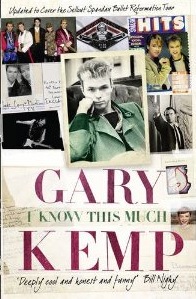
➢ I Know This Much: From Soho to Spandau,
by Gary Kemp (Fourth Estate, 320pp)

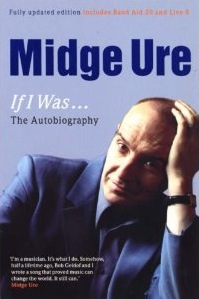
➢ If I Was, by Midge Ure with Robin Eggar
(Virgin Books, 288pp)
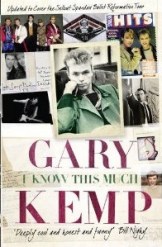
Gary Kemp, I Know This Much❏ FOR A MUSICIAN, the music really tells the life story. It’s rare for many of them to try to flesh out the story in prose, let alone as autobiography. Two who starred centre stage in 1980 were Ultravox’s Midge Ure and Spandau Ballet’s Gary Kemp, and though their accounts of the early transformative years of the decade weren’t actually first published this year, their paperback reprints continue to act as intelligent correctives to the hyperbole that accompanies some of the 30th-anniversary air-punching.

Songwriter Gary Kemp surprised many when last year’s autobiography, I Know This Much, proved so eloquent, encouraging rock writer Paul Du Noyer
to claim that it “sets a new standard for rock memoirs”. One of Amazon’s top reviewers, Mr Steve Jansen, believed that Kemp’s perceptive memories of a London now transformed make a “a touching testament to spiritual growth”. He wrote: “Kemp is able to reflect with great poignancy on a young man’s journey into, and through the shining city of dreams. In Kemp’s case that city, metaphorically, but more often literally — and literary in its evocation — is unmistakably London, and the metropolis is ever present like a ghost, framing his actions and attitude.”

The prominent journalist Robert Sandall of The Sunday Times, who died in July, had made Kemp’s his book of the year: “A sharply observed account by a quintessential London musician. Kemp exudes confidence, candour and a keen appreciation of the capital’s club culture.” This year’s paperback edition brought the story up to date with a postscript on his band’s reunion.
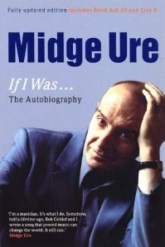
Midge Ure, If I Was❏ MIDGE URE IS THE OTHER eye-witness to the birth of Blitz culture, and his memoir, If I Was, hasn’t been out of print since published in 2004, and a revised edition is slated for next summer. Here, the musician tells with exceptional vigour a no-holds-barred story of his own journey from impoverished Glasgow childhood to new-wave superstar .

Amazon reviewer Lisby writes: “Ure writes fluidly and conversationally, imparting the kind of tactile detail that takes readers to the place and time of which he speaks. Ure is astonishingly honest, yet never vindictive. He is, in his prose, much as he is in his lyrics, a good person trying to be a better one while hoping the same for us all.” Another Amazon regular called thedouses adds: “Midge’s autobiography is a very well written, frank and honest book, which offers a fascinating insight into his own career and life but also other notable musical figures of the 80s and 90s music scenes in Britain, as well as providing background to the Band Aid and Live Aid events. He doesn’t use the opportunity to settle scores as so many of his contemporaries have done.”

Apart from being a busy wizard stirring the magic cauldron from which emerged many musical innovations in the 80s, Ure here establishes his central role in the production of Band Aid’s charity single, Do They Know It’s Christmas?, which led to Live Aid, the globally televised rock concert in 1985 which raised millions for famine relief.

NOT FORGETTING…

David Bowie, 1975 ➢ Any Day Now: David Bowie The London Years (1947-1974), by Kevin Cann (Adelita, 336 pages) was reviewed here on Dec 11. “Being a Bowie fan for almost 40 years I am flabbergasted. Many, many never before seen pictures” — Amazon reviewer Peter Gooren

FRONT PAGE

What larks! Festive fun and games and British ways to make merry

Bobbin’ about to the Fiddle ,Charles Williams, 1817,Thos Tegg,caricature, Almack’s,quadrille,dancing,Lady Jersey,

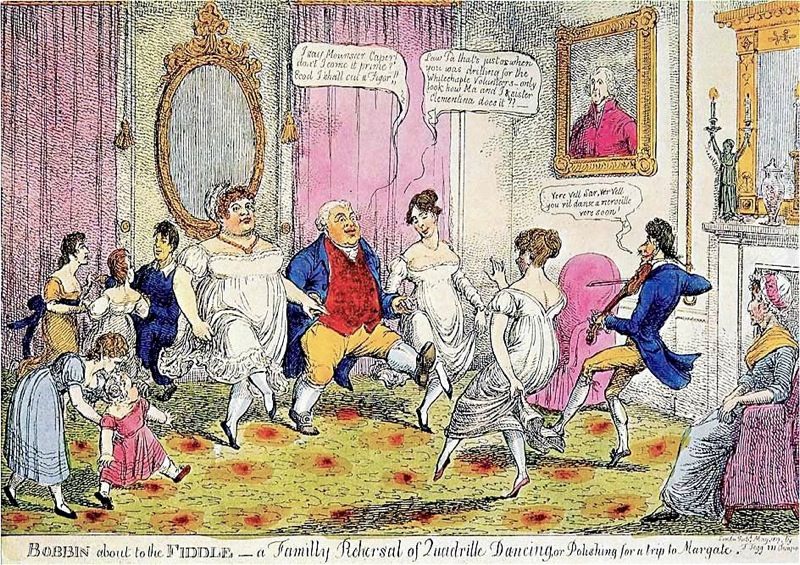
Bobbin’ about to the Fiddle — a Familly Rehersal of Quadrille Dancing, by Charles Williams, May 1817: published by Thos. Tegg No 111 Cheapside

❚ UNLIKE 21st-CENTURY DANCING, when the quadrille was introduced at Almack’s Assembly Rooms in 1815, its steps were notoriously difficult to perform correctly. This luxurious salon in King Street, St James’s — where the ballroom was partitioned off by crimson ropes — was governed by a committee of despotic lady patronesses who ruled over a “magic list” of those who may or may not be admitted to their weekly balls. Studio 54 had nothing on the power of these women: they effectively decided who belonged to “society”… “All on that magic list depends/ Fame, fortune, fashion, lovers, friends…/ Banished thence on Wednesday night/ By Jove you can do nothing right.

Yet even at Almack’s after Lady Jersey, wife of the 5th earl, brought the quadrille over from Paris as an energetic French precursor to traditional square dancing, wallflowers would sit sniggering as they watched the beau monde’s finest stumbling through the intricacies of its steps and twirls and changes of partner. The quadrille nevertheless soon became all the rage, so required determined practice.

Breeding counted for more than money at Almack’s and the prime role of the magic list was to exclude “cits”, precisely the kind of nouveau riche city-dwellers depicted above by caricaturist Charles Williams, in May 1817. This bourgeois family are preparing for their seaside vacation in Margate by practising their dancesteps at home.

The father is saying to the French dancing master: “I say, Mounseer Caper! Don’t I come it prime? Ecod, I shall cut a Figor!!” [ie, figure], and one of the daughters says “Law, Pa, that’s just as when you was drilling for the Whitechaple Volunteers — only look how Ma and I & sister Clementina does it!!” while the dancing master says “Vere vell, Sar, ver vell, you vil danse a merveille vere soon!” Nobody was spared from the satirist’s pen.

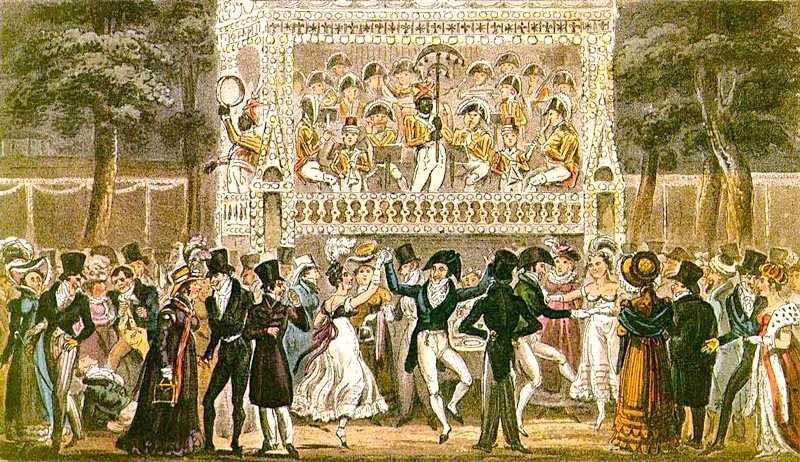
Tom Jerry and Logic, Making the Most of an Evening in Vauxhall,Vauxhall Gardens,George Cruikshank, Jonathan Tyers,Roger de Coverley ,Pierce Egan, Life in London,1821

Tom, Jerry, and Logic Making the Most of an Evening in Vauxhall: by Robert and George Cruikshank, from Pierce Egan’s Life in London (1821)

❚ FOR 200 YEARS THE VAUXHALL GARDENS were the most notorious and important of London’s many pleasure gardens, immortalised in Fielding’s novel Tom Jones by the description “where people come to undo others, and others come to be undone”. Vauxhall lay on the south bank of the Thames, up-river in a rural setting beyond London’s city limits, where the gardens opened before the Restoration of 1660 and closed finally with a fireworks display in 1859. Today all that remains is a small park bearing the name of the original Spring Gardens, while nearby streets do likewise for the enterprising proprietor, Jonathan Tyers, who from 1728 invested in enhancing the grounds so that in their heyday he could charge a guinea admission. (That would be £173 or $267 in today’s money!) He commissioned Roubiliac to make the great statue of the composer Handel for the gardens and added an orchestra pavilion, fountains and temples. Frederick Prince of Wales was his most prestigious patron.

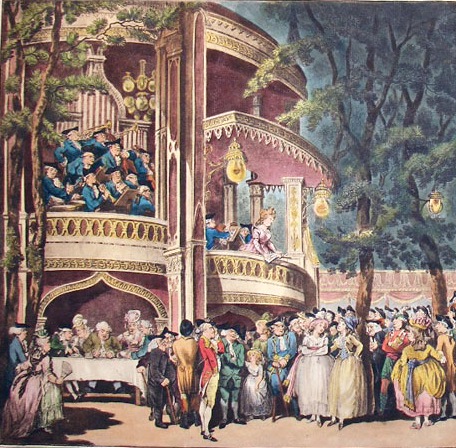
Over several acres Tyers introduced formal plantings which offered attractive paved walks lit by thousands of glass lanterns in the arbours by night, and shrubberies for the making of mischief. Fireworks, hot-air balloon rides and circus performers provided entertainment along with music such as Handel’s from the bandstand.

Vauxhall Gardens, 1732,James Boswell, Dr Samuel Johnson,Rowlandson

Vauxhall, 1732, engraving after a watercolour by Thomas Rowlandson, published by Richard Powell: In the lower box is a supper party of James Boswell, Dr Samuel Johnson, Mrs Thrale and Oliver Goldsmith. Mrs Weichsel sings from the front balcony while Mr Barthelemon leads the orchestra (Princeton University Library)

Elegant painted booths afforded privacy while dining and the ornate Rotunda and other rococo pavilions became famous London attractions. An audience of 12,000 attended Handel’s Fireworks music at Vauxhall which brought together “persons of all ranks and conditions”. The 19th-century history of London Old and New observes “the English assert that such entertainments as these can never subsist in France, on account of the levity of the people”.

By 1712 Sir Roger de Coverley is supposed to have said that he’d have been a better customer to the gardens “if there were more Nightingales and fewer Strumpets.” So it was inevitable a century later that the rakish Tom and Jerry would pay their guinea for admission to Vauxhall. Their rip-roaring “sprees through the Metropolis” would one day give their names to Hollywood cinema’s cartoon cat and mouse, and in their own day they were no less famous.

“Jerry Hawthorn Esq, and his elegant friend, Corinthian Tom, accompanied by Bob Logic, the Oxonian” were young London clubmen created in 1821 by the sports-writer Pierce Egan in his monthly journal, Life in London, which became a runaway success. It was illustrated by the leading satirist of urban life George Cruikshank and its trio of hellraisers became contemporary pinups much copied by other engravers.

The topmost Cruikshank print is not among the best to record the showy splendour of Vauxhall Gardens but it is one of the few to locate Tom and Jerry, their journalist creator and the graphic satirist at London’s hedonist destination — five Regency legends in one image.

Twelfth Night,Isaac Cruikshank, Thomas Tegg,etching,parlour games

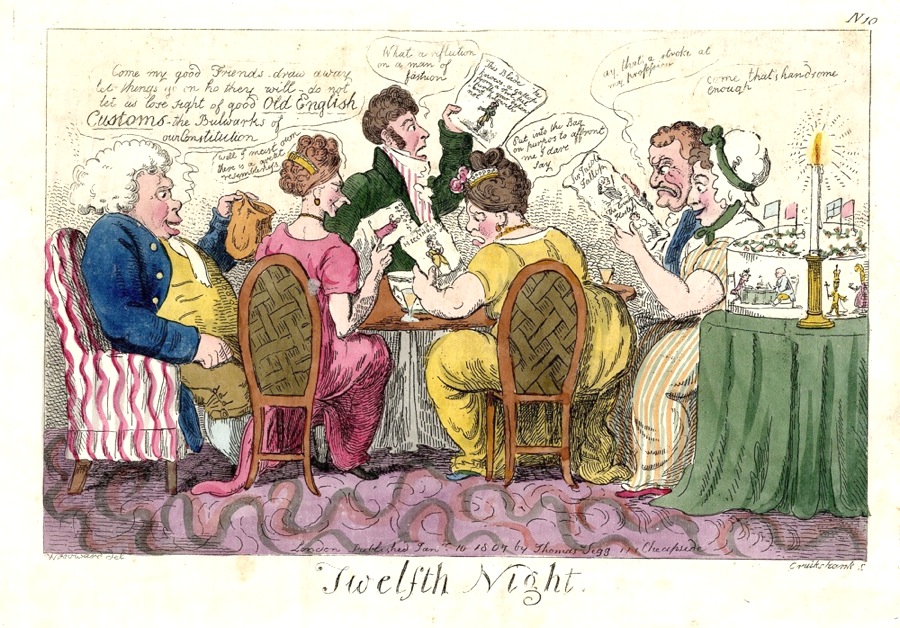
Twelfth Night by Isaac Cruikshank: published Jan 10 1807, by Thomas Tegg, Cheapside

❚ BEFORE TV RULED OUR LIVES, playing parlour games was how families amused themselves at the annual Christmastide gathering and Twelfth Night was the traditional day for games, merriment and feasting. The punch called wassail was the drink of choice, and in the Regency era a grand masqued ball often heralded an end to the solemnity of religious observance. Twelfth Night concludes the 12 days of Christmas and precedes the feast of the Epiphany on January 6 (though these dates vary under different sects of Christianity). It was not until the Victorians, influenced by the monarch’s Germanic roots, that we shifted celebrations to Christmas Day itself, which had previously been only a religious holiday.

Cruikshank’s hand-coloured etching from 1807 (above) shows three couples playing the traditional Twelfth Night game of acting out the character depicted on the tickets they have drawn from a bag held by a fat squire seated at left who sings the praises of “good old English customs”. Each ticket is inscribed with a portrait and description. Only two players are happy with their choice: on the left The Queen of Love has been drawn by a self-satisfied lady with a long nose, and on the right The Lovely Hostess by a jolly lady who smiles. The others have drawn unflattering or sarcastic tickets and regard them with expressions of dismay: the dandy in green is affronted by being perceived as a “man of fashion” while the fat woman in yellow has drawn “Miss Higginbottom” and remarks “Put in the bag on purpos to affront me I dare say”. We see a decorated Twelfth Night cake and candle on the side table.

Isaac Cruikshank is one of the four celebrated British illustrators (along with his son George, Thomas Rowlandson and James Gillray) who established satirical caricature as a powerful medium of social comment at the dawn of the 19th century. The Private Eyes of yesteryear.

The Plumb-pudding in danger, James Gillray,  Humphrey, Library of Congress

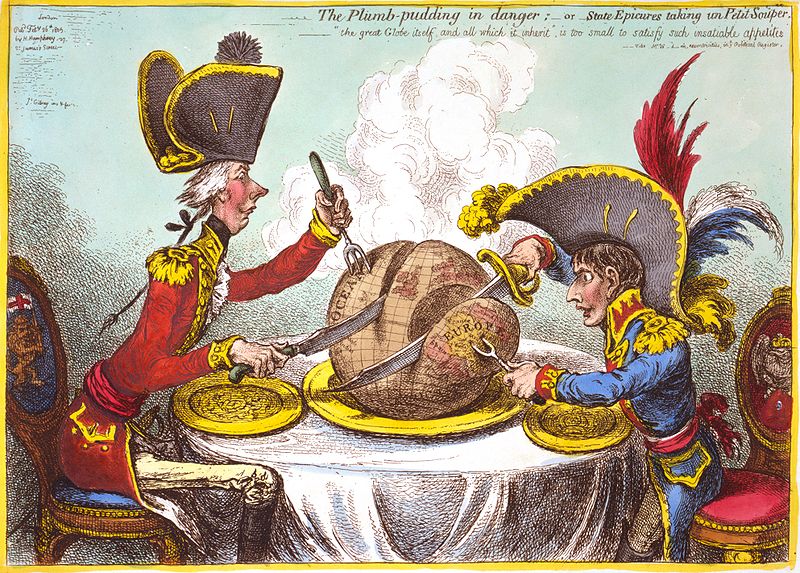
The Plumb-pudding in danger: by James Gillray, published London H. Humphrey, 1805 Feby 26 (Library of Congress)

❚ PLUM PUDDING IS THE ESSENTIAL CONCLUSION to a traditional Christmas feast. It is made not from plums but dried fruit and for good luck every member of the family should have a hand in stirring the mix before it is steamed or boiled. Since medieval times, the pud has become as symbolic of Britishness as Britannia and John Bull. This political cartoon was drawn by James Gillray in 1805 as a response to one of the most traumatic periods in Britain’s history.

It is titled The Plumb-pudding in Danger and shows William Pitt, Britain’s youngest prime minister, wearing a regimental uniform and sharing a table with the French emperor, Napoleon. A plum pudding represents the world as a globe and each leader is carving himself a slice. Pitt takes possession of the seas with a slice considerably larger than Napoleon’s, who carves off Europe where the French are the dominant military power. The previous year war had been renewed between Britain and the First French Empire that had followed the Revolution of 1789 and a period of continual warfare. With Napoleon intent on invading Britain, Gillray produced many prints in which he imagined the horrors of a successful invasion. By 1805 a British naval blockade on France was successfully frustrating French sea-trade and naval retaliation, so that January the emperor sought a reconciliation with England. Presciently this cartoon was published only months before the decisive British naval victory in the Battle of Trafalgar.

W Belch,January,engraving, ice-skating,1810,Henry Raeburn,Coleridge,Georgian England

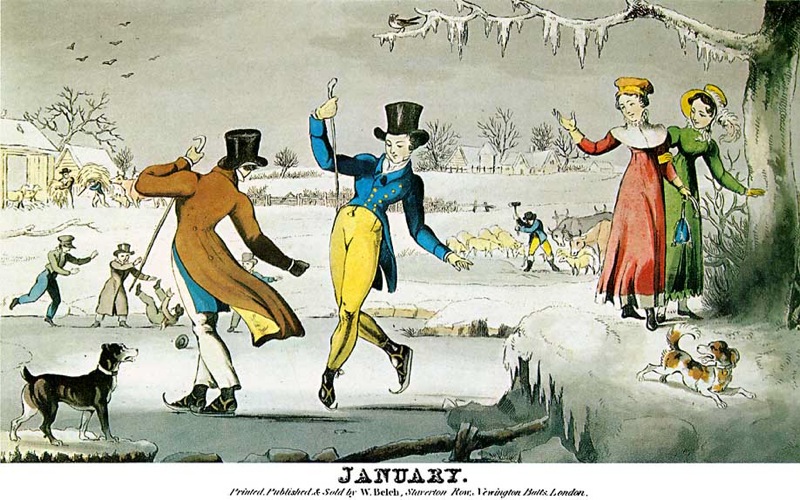
January, one of a series of prints depicting the months, c1810: printed, published & sold by W. Belch, Staverton Row, Newington Butts, London

❚ THESE YOUNG BUCKS ARE FLOUTING THE RULES of ice-skating in the Regency period. Among outdoors activities in Georgian England, skating was so hugely popular that the poet Samuel Taylor Coleridge waxed exceeding florid in a prose essay about the pastime for The Friend magazine, where he noted “the melancholy undulating sound from the skate”. Inevitably society proposed “a proper attitude for genteel rolling”, the posture illustrated most famously in Sir Henry Raeburn’s painting of the Reverend Robert Walker, who as a member of the Edinburgh Skating Society is seen serenely gliding with arms crossed over his chest. Evidently, the two January bucks above were only too keen to flaunt their own style to catch the attention of their female admirers on the riverbank.

➢ The Republic of Pemberley and all things Austen
➢ 500 articles in an online magazine dedicated to Jane Austen’s Regency world

FRONT PAGE

➤ Killing a king tells you who you are — so do your haircut and shoes

execution, painting,1649,Banqueting House , King Charles I

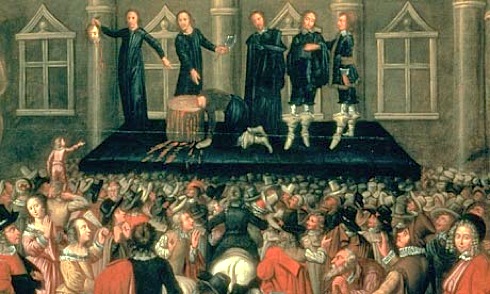
One of Schama’s six epic moments in British history: the execution of King Charles I in 1649, painted by John Weesop. Source: The Gallery Collection/Corbis

The Look, Rock & Pop Fashion❚ SHAPERS OF THE 80s? A STROLL DOWN MEMORY LANE or an antidote to complacency about the present? Let’s hope the vintage yarns on the inside pages of this website provide a constant foil to the topical blog posts on the front. Even on the pop-cultural timeline, parallels deliver insights: parallels between the Swinging 60s and the Swinging 80s, and what feels highly likely in 2010 to become the Swinging Tens. The signposts to every British youth cult since World War Two have always been the haircut and the shoes, as we’re constantly reminded at that absorbing online version of the book The Look: Adventures in Rock & Pop Fashion. So keep your eyes open.

What caused this momentary validity-check was an exhilarating read in today’s Guardian headlined “Kids need to know they belong”. Don’t wince when you hear that it amounted to a vigorous exhortation to schools that are failing to teach to the hilt the dreaded H-word, history. The history of how we came to execute our king, for example, gets short shrift from the national curriculum.

“Irreverent freedom” is a special aspect of life in Britain. “The endurance of rich and rowdy discord” is another. This was telly-don Simon Schama getting into his eloquent stride. Who needs history, he asked? Our children, of course, if they are to know who they are, and whose imaginations risk being held hostage in the cage of eternal Now… In full fig, Schama succinctly listed the benefits of examining the past:

To the vulgar utilitarian demand, ‘Yes, all very nice, I’m sure, but what use is it?’, this much (and more) can be said: inter alia, the scrutiny of evidence and the capacity to decide which version of an event seems most credible; analytical knowledge of the nature of power; an understanding of the way in which some societies acquire wealth while others lose it and others again never attain it; a familiarity with the follies and pity of war; the distinctions between just and unjust conflicts; a clear-eyed vision of the trappings and the aura of charisma, the weird magic that turns sovereignty into majesty; the still more peculiar surrender to authority grounded in revelation, be that a sacred book or a constitution invoked as if it too were supernaturally ordained and hence unavailable to contested interpretation.

➢ Read My vision for schools by Simon Schama
— six key events from the past that no child should miss out on

King Charles I, execution, warrant

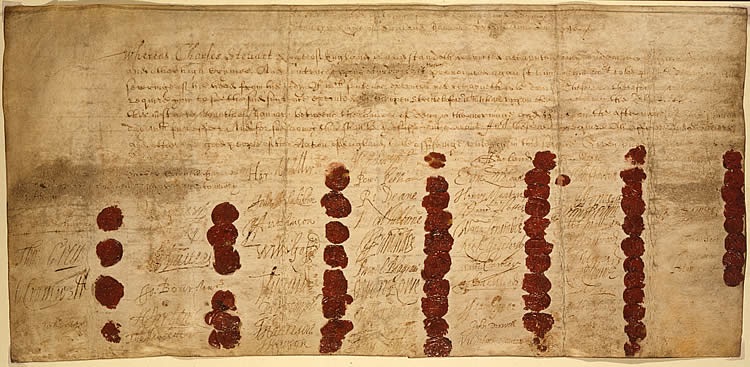
Death warrant of King Charles I (1649): Showing the signatures and seals of 59 of the commissioners who tried Charles I, including that of Oliver Cromwell. This document directly led to the execution of the king, the abolition of the monarchy, and the consequent establishment of a republic to govern England for the only time in its history, between 1649 and 1660. © Parliamentary Archives

FRONT PAGE

1980 ➤ Rik and pals detonate a timebomb beneath another kind of strip for Soho

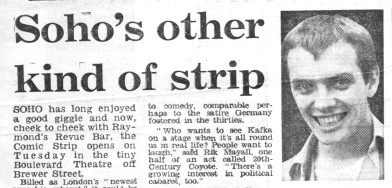
On this autumn day 30 years ago, a handful of comics in their twenties broke free from the bear-pit formula of the Comedy Store, which had opened in London in 1979, modelled on its Hollywood precursor. These soon-to-be-famous clowns were angry with Britain’s complacency in the face of recession and decided to define a new kind of comedy. First news of the breakaway faction that would eventually make household names of French & Saunders, Rik Mayall, Adrian Edmondson, Nigel Planer, Peter Richardson and Alexei Sayle appeared in the Evening Standard’s On The Line page …

Comic Strip, Rik Mayall, Alexei Sayle,Michael White

First published in the Evening Standard, October 2, 1980

❚ SOHO HAS LONG ENJOYED A GOOD GIGGLE and now, cheek to cheek with the king of strip Raymond’s Revue Bar, the Comic Strip opens on Tuesday in the tiny Boulevard Theatre off Brewer Street. Billed as London’s “newest anarchic cabaret”, it could be called Son of the Comedy Store, a nightspot already well established as a Gong Show for would-be comedians.

“The Comic Strip’s going to feature the best of the Comedy Store and more,” explained Peter Richardson, one of a comedy duo called The Outer Limits, who are launching the enterprise with West End impresario Michael White (the man behind the musical Annie). “There was too much experimentation in the Comedy Store. We want to establish a certain standard at the Comic Strip.”

alternative cabaret,comedy, Soho, Comic Strip,1980,Rik Mayall

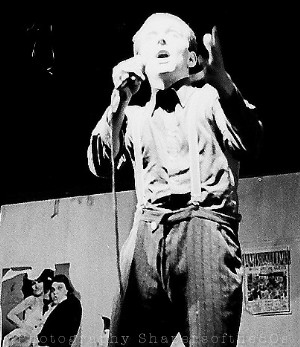
Angry Feminist Poet: Rik Mayall at the Comic Strip, Nov 1980. Photographed by © Shapersofthe80s

He and the comedians he has brought with him — including the Comedy Store’s acerbic compere, Alexei Sayle —believe the traumas of the 1980s have brought a sharper cutting edge to comedy comparable perhaps to the satire Germany fostered in the 30s. “Who wants to see Kafka on a stage when it’s all round us in real life? People want to laugh,” said Rik Mayall, one half of an act called 20th-Century Coyote. “There’s a growing interest in political cabaret too.”

This self-styled “alternative” comedy isn’t all heavy social comment by any means, its roots going back more to clowning. What these comics are attempting is deliberately to shake off the influence of the Footlights clan who have shaped British humour for the past 20 years. Mayall himself has a talent for the merciless lampoon. One of his sketches, a punk commuter lamenting his daily lot, is the funniest invention since John Cleese’s Ministry of Silly Walks.

Last weekend he and The Outer Limits were playing to packed houses at the Three Horseshoes, a pub theatre in Hampstead, as if to prove that alternative humour is booming. The Comic Strip promises a varied line-up which this month includes Pamela Stephenson from BBC-tv’s Not The Nine O’Clock News. Entrance will cost a flat £3.

➢ 1980, A new decade demands new comedy
— Birth of the Comic Strip

FRONT PAGE