Category Archives: Media

1978 ➤ Midge stakes his claim as the weathervane of synth-pop who helped shape the British New Wave

Rusty Egan, Steve Strange, Midge Ure, Visage, synth-pop, new wave, electro-pop, Rocking the Blitz,BBC

Visage Mk 1: Egan, Strange and Ure in 1978 searching for sounds and styles

❚ “I’LL NEVER FORGET FIRST TIME I SAW a synthesiser on Tomorrow’s World. For the first time I saw the possibility to create sounds that had only existed in my head. I’d had no chance of getting my hands on one because they were size of house or at least the cost of one. But then cheaper Japanese synths came on the market, so I bought one. It changed my life because I could make music in a small home studio. The possibilities for young musicians like myself seemed endless.”

This was Midge Ure enthusing during Rocking the Blitz Club (audio at YouTube), another remarkably well-informed BBC Radio 4 documentary on our favourite scene that went out this morning. It was also remarkable for handing over the commentary to Ure, who — despite having earned an OBE for being half the brains behind Band Aid’s smash hit for charity in 1984, and being a founder member of Visage and the voice of Ultravox’s directional chart hit Vienna — is not among the first rank of mythologists programme-makers wheel out to explain the Blitz phenomenon.

This R4 slice of the 80s gave us a refreshingly different take on the familiar fables recycled by the usual suspects, but mediated in this show by Midge’s deeply un-London Lanarkshire lilt. He’s more than qualified to stake his claim to have shaped the music of the Blitz Kids, though he’s reluctant to be described as one of them, being a good four years older, and having had fingers in more pop pies than most on the post-punk scene. Even as the word punk was given the heave-ho in favour of the term “new wave”, Ure was probably the first active player of a synth among any of his clubbing pals, having bought his first, the polyphonic CS-50, at cost direct from Yamaha in the summer of ’78.

His was an obsession shared by fellow Rich Kid, the drummer Rusty Egan, and it led the way to a whole new British dancefloor sound. Ure felt synths “embodied a kind of nostalgia for the future”.
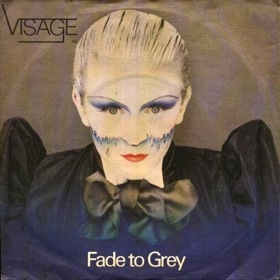
Visage, Fade to Grey,He says: “Rusty and his friend Steve Strange realised our crowd needed somewhere to try out our styles and listen to Euro synth bands like Kraftwerk, Dusseldorf and Telex, whose cutting edge sounds seemed to represent the future.” In almost no time the tribal forces of fashion had granted their wish. Rusty’s deejaying at Billy’s in Soho was augmented by Strange vetting the door to ensure an extreme clubbing attitude, then as 1979 dawned their band of outlandishly dressed clubbing heroes descended on the Blitz.

In his straight-from-the-hip autobiography, If I Was, Midge Ure makes the bold claim: “I had this idea to make music to play in the club. We had to invent our own musical style because our points of reference were very limited — after Kraftwerk, Yello and early Bowie we ran out of influences.” His own taste was for the very textured sounds of the synth built round classic songs, which intuitively caught a mood, unarticulated at that time, for a return to melody. And yet …

“A synth is just a software program and it has a very specific sound — a cold European soulless sound that drummers couldn’t emulate. Only a machine could do this,” he says with eagerness appropriate to a new-wave innovator. “Everybody aspired to be a robot — we didn’t want any human element in there at all, so people sang in a very robotic way. It was not going to sound like Jimi Hendrix. It was going to sound like a watered down version of Kraftwerk.”

❚ MIDGE IS THE ONLY PERSON AMONG THE NEW ROMANTICS to go on record and acknowledge the role of Gary Numan, an otherwise dread name who was perceived as an aloof and unclubbable loner. He definitely never signed in at the Blitz. Yet as 1979 unfolded Numan’s dystopian sci-fi synth sound sidestepped the Blitz Kids to reach No 1 in the UK charts, twice: in May with Are Friends Electric? and in September with Cars. They were blatantly commercial records and that wasn’t how Blitz Kids defined cool.

But Ure recognised Numan had broken down barriers of disapproval within the old guard of the music biz. He was being a great spur. Ure dreamed up the name Visage for his new band who knocked out a demo covering the classic In The Year 2525, with Egan on drums and the eye-catching Strange posing away as vocalist after a few lessons from Ure. Despite music industry scepticism, it won them a deal with Radar Records, the attention of producer Martin Rushent who had an office above the Blitz, and helped rope in Magazine members Dave Formula, John McGeoch and Barry Adamson, and Ultravox keyboardist Billy Currie. A single called Tar was released that September. It didn’t chart, but did clinch them a bigger deal with Polydor in 1980.

Midge Ure, Vienna, Ultravox

The day job: in 1979 Midge Ure (moustachioed) resurrected the name of Ultravox along with (l-r) Warren Cann, Chris Cross and Billy Currie. © Getty

Ure says: “Visage was never really a proper band, just a group of our favourite musicians who we brought together to make experimental music for the Blitz club. Because they were all signed to other labels we chose Steve Strange as our frontman because he looked the part.” This worked well enough. Even while Ure and Currie part-timed with the seven-man studio-only Visage line-up, while steering Ultravox along similar synth-pop lines, Visage put out two successful albums, and a handful of chart singles (the most enduring being Fade to Grey in November 1980). What laid the pathfinding flares for the movement were some uber-stylish art-videos — the first starred Blitz coat-check girl Julia Fodor before she became the fabulous princess and deejay — which disseminated the OTT New Romantic ethos for fans to emulate.

Ure scored the significant double of taking Ultravox’s majestic Vienna to No 2 a month later and for four weeks, then seeing it win Single of the Year at the 1981 Brit Awards. It was produced by the German Conny Plank with an evocatively romantic landmark video stunningly directed by Russell Mulcahy who was creating a whole visual vocabulary for the then novel music video. Ure can take full credit as lead singer and guitarist for breathing a subtle blend of Roxy Music’s style and krautrock clarity into Ultravox and building them into a credible vanguard for the electronic New Wave.

Reflecting back in the R4 doc, Ure says: “There’s no doubt the early 80s was a golden age of music made by real popstars who created themselves. It was more than just padded shoulders and asymmetrical haircuts. It was a pivotal moment in our cultural history when new tech mixed with new ideas to create something really good. All in the pressure cooker environment that was the Blitz club.”
FRONT PAGE

2010 ➤ Sci-fi’s coolest Number 6 finds Gandalf in charge and relocated to 93-6-2-oh!

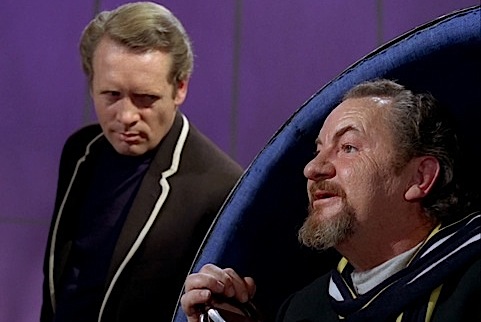
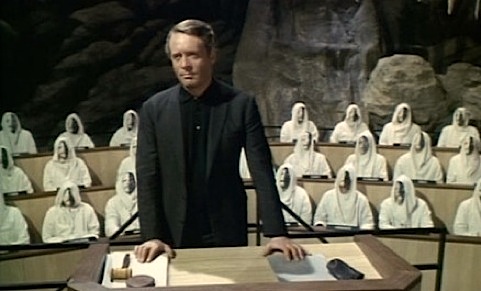
Patrick McGoohan, The Prisoner, 1967
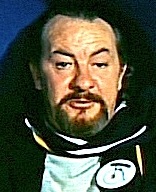
Leo McKern, The Prisoner, 1967❚ THE MAN ABOVE IS CALLED No 6: “I am not a number, I am a free man.” The man on the right is the sinister No 2: “I am the boss.” – “No. One is the boss.”

Such staccato dialogue sustained 17 almost hour-long episodes of The Prisoner in 1967, widely regarded as British TV’s most original series. And was it intense! And mould-breaking. It has been declared the 13th most cultish sci-fi series ever by refusing to solve its own enigma: What on earth was it about? The Prisoner was set in a stylised prison village that was a real-world architectural gem, with quirky costumes and motifs such as its pennyfarthing logo which nobody explained. The show calculated to provoke.

The Prisoner made a star of angry, intelligent Patrick McGoohan, who frowned a lot and so became the coolest dude of all time (after Jimmy Dean). He was also the show’s creator and executive producer and played Lotus-driving good-guy No 6, a secret agent they (who?) won’t allow to retire. In the wake of Michael Caine’s sudden fame as Harry Palmer, it proved a trippy, tongue-in-cheek, cold-war precursor to knowing dramas such as The X-Files, 24, Lost, Twin Peaks, even The Matrix and The Truman Show, by being witty and profound by turns. Over its 17 episodes every Brit actor with swagger signed up for a cameo role, with Leo McKern, Peter Wyngarde, Mary Morris and Patrick Cargill replacing each other in the role of No 2. Dare to start watching the stunning Blu-ray DVD (Network, 2009) of the original 1967 Prisoner and you’ll be agog at how it stands the test of time. (Given that the BBC had launched Europe’s first colour TV service only three months before, The Prisoner’s crisp 35mm cinematography is exceptional for its day.) Don’t expect shoot-em-up action, just heated arguments about who’s on whose side.
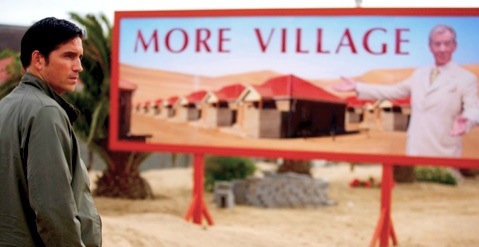
Jim Caviezel, The Prisoner, Ian McKellen, 2010
The six-part remake launches on ITV this week, April 17. The man on the left is now No 6 – he’s an American called Jim Caviezel, who once played Jesus in a Mel Gibson movie. The man in the white suit is the new No 2, one of Britain’s greatest actor-knights known internationally to cinema audiences as Gandalf. (The geeks out there might like to know that the Official Prisoner Appreciation Society will be getting all dressed up for their convention at Portmeirion, the original show’s Welsh location, this very weekend.)

Patrick McGoohan, 2010The new Prisoner has been, hmm, let’s say, zip-coded: 93-6-2-oh! It does contain some neat homages to the earlier epic. McGoohan its creator and its No 6 now reappears as No 93 (right), an old man whose first words pose the new enigma. It brings a tear to the eye to know that at the grand old age of 80, the cool dude Pat died only last year, soon after filming. The other treat is a moody and vengeful balloon called Rover (below). We never knew quite what Rover was the first time round, but he does indeed return.
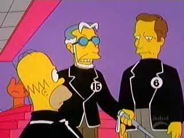
Simpsons, 2000, Menace Shoes, FoxThe Prisoner always was said to be “ahead of its time”. In 1968, Isaac Asimov gloomily declared it was about failure, and was popular because it “cracks the old undemocratic folly of success for the few”. Indeed, years later McGoohan conceded that the bicycle logo was an ironic symbol of progress. Ah, ironic – that’s the word. Perhaps Homer Simpson was the best judge.
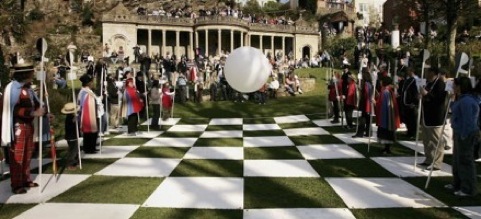
The Prisoner, 1967, Rover

THE DAY NUMBER 2 REALLY CRACKED

Prisoner, Patrick McGoohan, Leo McKern, 1967

No 6 v No 2: McGoohan and McKern locked in a power struggle

❚ AS PRODUCER, THE USUALLY TACIT McGOOHAN made an extraordinary confession about the pressures of making The Prisoner in his interview with Warner Troyer for TVOntario, which was broadcast in 1977. He’s talking about the episode titled Once Upon a Time:

“That was written in the 36-hour period. And Leo McKern, who was a very good friend of mine and a very fine actor [familiar to most of us, in his later years, as Rumpole of the Bailey], came in on short notice to do it, and it was mainly a two-hander. The brainwashing thing, he was trying to brainwash me and in the end No 6 turns the tables. And the dialogue was very peculiar because all it consisted of was mainly “Six, Six, Six,” and five pages of that at one time. And Leo, one lunchtime, went up to his dressing room and I went to see the rushes and I knew he was tired. I went up to the dressing room to tell him how good I thought he’d been in the rushes. And he’s curled up in the fetus position on his couch there, and he says, “Go away! Go away you bastard! I don’t want to see you again.” I said, “What are you talking about?” He says, “I’ve just ordered two doctors,” he says, “and they’re comin’ over as soon as they can.” He says, “Go away.” And he had. He’d ordered two doctors and they came over that afternoon and he didn’t work for three days. He’d gone! He’d cracked, which was very interesting. He’d truly cracked. So I had to use a double, the back of a guy’s head for a lot, and eventually Leo did come back and we completed the scenes, and also he was in the final episode, so he forgave me for everything. But he did crack, very interesting, I thought.”

FRONT PAGE

2010 ➤ McLaren – Svengali of Pistols and punk remembered by those who knew him

❚ MALCOLM McLAREN, THE SVENGALI OF PUNK, DIED YESTERDAY AGED 64. One of his most quotable quotes was delivered to Shapersofthe80s in 1983: “What we create on the streets out of the dustbins of England is an extremely exportable commodity.”

❚ CHRIS SULLIVAN, club-host, Blue Rondo singer and author of Punk (Cassell) “I first met Malcolm McLaren in 1976. I was a naive 16-year-old hot off the bus from South Wales and wandered into his shop Sex, in the armpit of the King’s Road. He invited me to a Sex Pistols concert that night and it changed my life.” ➢➢ Read Sullivan’s full appreciation in The Times, April 10

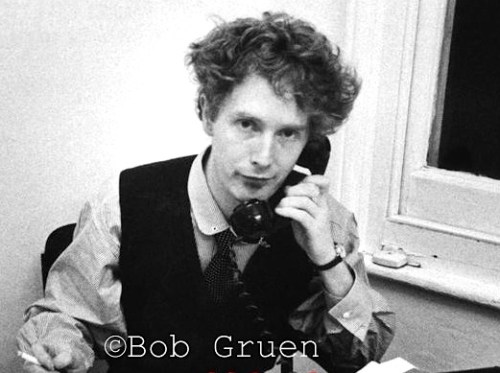
Malcolm McLaren, 1977, Bob Gruen

Malcolm McLaren in 1977: Sex Pistols manager and punk’s Svengali

❚ GARY KEMP of Spandau Ballet was first to summarise McLaren’s influence for Shapersofthe80s: “He drew up the road map by which we all found success. I am shocked and reminded of my own mortality.”

❚ KIM BOWEN, fashion stylist and former Blitz Kid, said “Malcolm left his diary at my house once. I nosed, obviously: ‘There are Fashion Victims everywhere, I’m a Fashion Beast.’ He was.”

❚ RUSTY EGAN, deejay and former Blitz Kid “Malcolm was the Fagin of entertainment, teaching the young how to sell their youth for his benefit.”

❚ DEREK RIDGERS, photographer of the punk years “He had a lot of radical ideas but his true talent was the ability to wind up and goad the media.”

❚ GRAHAM K SMITH, TV exec “Talcy Malcy? The arch Situationist, cultural prankster and near-psychic futurist. He was a seer, who took glee in monetising tomorrow – classically, chaos into cash.”

❚ ANDY POLARIS, former singer with Animal Nightlife “A master manipulator, a magpie and a maverick.”

❚ JAY STRONGMAN, club deejay, said “Malcolm was a true cultural visionary … an alchemist who mixed history, politics, rock’n’roll and fashion to try and create an alternative future and had fun doing it. Some say Malcolm was Britain’s Andy Warhol but I think that does Malcolm a disservice… In terms of popular culture Malcolm was much more influential than Andy Warhol.”

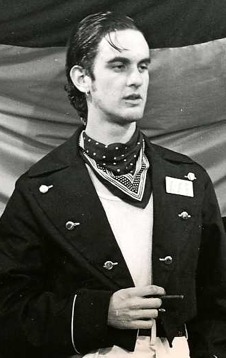
Simon Withers, 1980, Neil Matthews

Simon Withers in 1980. Photographed © by Neil Matthews

❚ SIMON WITHERS, one of the original fashion designers who defined the New Romantic era, and in 1983 worked on the final Worlds End collection before McLaren and Westwood split “I am really shocked by the news. Malcolm was dangerous and inspiring. I have been lucky enough to work with five mentors, he and then Vivienne being the first. Nothing compared to the scale, ambition and sheer Dickensian cheek of what I was shown working with Malcolm and Vivienne. There was a fundamental inquisitiveness about them.

“I worked three days and two nights making stuff in Paris for the last Worlds End catwalk. Vivienne and Malcolm were about to split up, as was the company. What I saw working with them both was that Vivienne had the tenacity and the intense focus, but certainly it came to little without Malcolm. After Paris, I left Vivienne’s workshop for Malcolm’s. He, Andrea Linz and I worked for a year on two or three collections. We did some really good work to find that Malcolm sold our ideas to Jean Paul Gaultier.

“One side of Malcolm that seems to be little written about is that he was a remarkably generous and attentive host and was very kind in surprising ways.”

Read how Shapersofthe80s broke the exclusive news
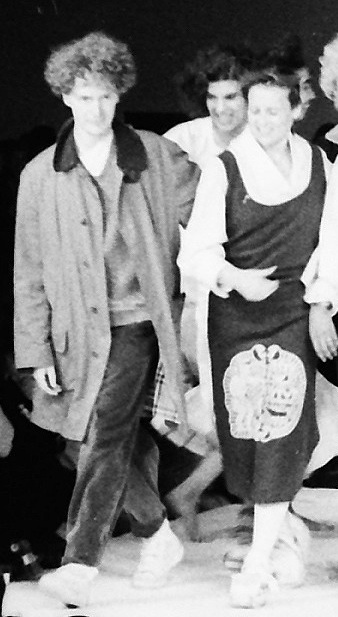
of the Worlds End split in Paris, 1983

➢➢ Pictured together on the very day Malcolm and Vivienne parted

Vivenne Westwood, Malcolm McLaren, Paris 1983, Worlds End, Picture © by Shapersofthe80s

Their last public appearance together, on a Paris runway in 1983... Westwood says: “Malcolm has one more chance to be good.” McLaren says: “I’m not incapable of designing the next collection myself.” Photographed © by Shapersofthe80s

AMONG THE FIRST TRIBUTES THAT WERE PAID

❚ DAME VIVIENNE WESTWOOD, ex-lover and business partner and fashion icon “The thought of Malcolm McLaren dead is really something sad. When we were young and I fell in love with Malcolm, I thought he was beautiful and I still do. I thought, he is a very charismatic, special and talented person. We hadn’t been in touch for a long time. Ben [her son] and Joe [the couple’s son] were with him when he died.”

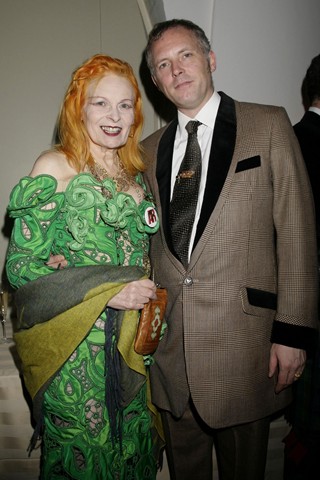
Vivienne Westwood, Joe Corre, 2008, Condenast

Mother and son: Vivienne Westwood and Joe Corre in 2008

❚ JOSEPH CORRE, son and co-founder of Agent Provocateur “He was the original punk rocker and revolutionised the world. He’s somebody I’m incredibly proud of. He’s a real beacon of a man for people to look up to.”

❚ YOUNG KIM, his partner of 12 years “Everything he did was groundbreaking, as an artist he carried on the link from Andy Warhol. I think Malcolm recognised he had changed the culture.”

❚ BARRY MARTIN, his tutor at Goldsmiths college, 1968 “Where he was clever was in using other people to do his bidding without them realising. I didn’t like him much – I didn’t like the manipulation of people’s souls.”

❚ JOHN LYDON, ex-Sex Pistol “For me Malc was always entertaining and I hope you remember that. Above all else he was an entertainer and I will miss him, and so should you.” ➢➢ Video: despite Fox News spoiling for some dirt on McLaren, Lydon does the decent thing “I missed him almost immediately I heard.”

❚ MARCO PIRRONI, Ants guitarist “He didn’t need to accept people who disagreed with him. He wasn’t a stroll in the park.”

❚ ANNABELLA LWIN, singer with Bow Wow Wow “He was a strange creature from another planet” ➢➢ Full interview with Annabella Lwin at EntWeekly

❚ JULIEN TEMPLE, who directed the 1980 Sex Pistols film The Great Rock’n’Roll Swindle “Malcolm was an incredible catalyst. To be in the room with him was to be bombarded with energy.”

❚ SYLVAIN SYLVAIN, founding member of punk rock band the New York Dolls “Malcolm opened up the doors for punk music around the world. He was a visionary and took what was going on in New York City and made it global. His passing represents the final chapter in an era when music was exciting.”

❚ BOB GRUEN, veteran celebrity photographer “What he really wanted was for the New York Dolls to wear his clothes, but the Dolls were falling apart at that time. They credited him with saving their lives because he put [some of them] into rehab… and revitalized them for a little while – long enough to wear his clothes.”

❚ GARY ‘MANI’ MOUNFIELD, Primal Scream and former Stone Roses bassist “What Malcolm and the Sex Pistols started was a generation of musicians who had the balls to think for themselves and challenge the normal working practices of the recording industry.”

❚ TONY PARSONS, author and 70s music journalist “Malcolm gave us our haircuts, our direction and even our clothes. He gave us our look and our swagger.”

❚ NEIL SPENCER, editor of music weekly NME 1978-85 “Malcolm was a loveable rogue, but he wasn’t always loveable either.”

AND ON FACEBOOK

❚ MARK MOORE, club deejay “The man was always such an inspiration and a real pleasure to work with. So very sad.”

❚ JANETTE BECKMAN, photographer
“Malcolm McLaren R.I.P. – impresario, music and fashion genius.” See pix: “Hey DJ let’s play that song keep me dancin’ all night”


BBC REPORT, April 8, at 22:08 GMT

“Malcolm McLaren, the former manager of punk group the Sex Pistols, has died aged 64, his agent has said. McLaren, the ex-partner of designer Vivienne Westwood, was believed to have been diagnosed with cancer a while ago. He set up a clothes shop and label with Westwood on London’s King’s Road in the 1970s and was later a businessman and performer in his own right. The couple had a son, Joseph Corre, the co-founder of lingerie shop Agent Provocateur. His agent told the BBC that McLaren passed away on Thursday morning. He died in Switzerland, according to his family. His body is expected to be returned to the UK for burial.”

GOOGLE, April 9, midday

“Results 1 – 10 of about 83,200,000 for ‘Pistols manager Malcolm McLaren dies’.”


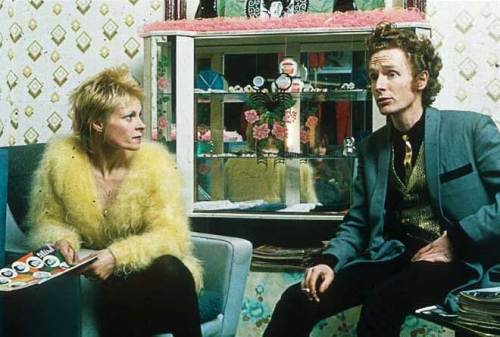
Vivienne Westwood, Malcolm McLaren, 1971

Vivienne in her new spiky dyed-blonde hair and the newly graduated Malcolm in summer 1971 when he changed his name from Edwards to McLaren... They became home-makers and business partners in their first retail outlet done out as a 1950s Teddy Boy’s suburban sitting-room in Paradise Garage at 430 King’s Road, Chelsea. They named it Let It Rock and a great British subcultural saga had begun as they took over the shop, which evolved into Too Fast To Live Too Young To Die, SEX, Seditionaries, and in 1980 into Worlds End which is still there today

VIDEO MEMENTOES OF McLAREN

➢➢ Adam Ant on Malcolm “Skin like Napoleon and a nose to match” – MTV video from 1990 of Adam telling the story of how he met one of Britain’s most irrepressible cult figures
➢➢ McLaren’s Enough Rope interview for ABC TV, 2008 Q: What is it you actually do for a living? A: Somehow I remain permanently cool
➢➢ McLaren’s solo performances include the landmark Buffalo Gals video, which parodied a 19th-century US black-face minstrel standard in weird square-dancing style, complete with Westwood silly hats in 1982
➢➢ Inspiration for Madge? The Bootzilla Orchestra, Deep In Vogue, 1989


How punk bridged the class divide

❚ JON SAVAGE, music writer and author of England’s Dreaming (Faber) “That Malcolm McLaren’s death has made such an impact should not come as a surprise, as it reinforces the privileged place that punk had and still has on our national consciousness. Anyone under 40 or so will have grown up with this as a fact, but for those who were there at the time, there will always be a slight sense of wonder: how did a minority cult have such a powerful impact?”
➢➢ Read Savage’s full piece in The Independent, April 10


A MUSICAL HISTORY LESSON FROM DURAN DURAN’S BASS PLAYER

❚ JOHN TAYLOR on his band’s website “Before Malcolm being a musician in England meant you had to read music, and clock up years of dues and motorway miles, hours of practice and play interminable solos wherever possible. Malcolm’s attitude changed everything. Without him, no punk rock revolution, no Anarchy in The UK, no Never Mind The Bollocks. No Sex Pistols, no Clash. No Duran Duran…”
➢➢ Read on – “Just check out the playlist on the jukebox of ‘Sex’.”


THE OBITUARIES

➢➢ The Times of London McLaren, punk who shook up the Seventies
➢➢ New York Times “I Will Be So Bad”
➢➢ The Guardian Blood, spit and tears as the punk provocateur dies
➢➢ Financial Times Punk Svengali: “Beaten up several times during his time in the Sex Pistols, McLaren was an uncaring dilettante who treated the violence unleashed by punk as just another ironic stunt.”
➢➢ The Daily Telegraph Svengali and arch media manipulator
➢➢ The Independent Drab world of pop needs McLaren’s brand of anarchy
➢➢ BBC News “Charlatan, hustler, plagiarist and … the most evil person on earth”

POSTSCRIPT

➢➢ The Independent Asbestos from his punk shop “killed McLaren”

FRONT PAGE

2010 ➤ Uh-oh, A2A is back and we’re about to be Quattroed in HD!

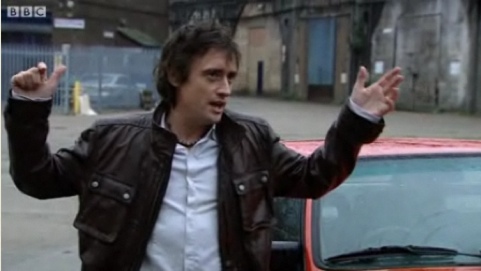
Richard Hammond, Hamster, Philip Glenister, Audi Quattro, 1983, Ashes to Ashes

Hunt to Hammond: “You seriously think I would let a man who looks like a gerbil drive my car?” © BBC

➢➢ See the Hamster run away with the car

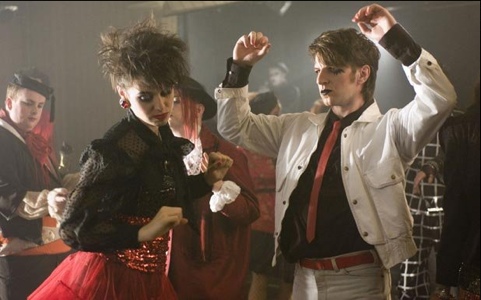
❚ MICHAEL PARKINSON’S “FAVOURITE COP DRAMA” is the one where a car is the star – the turbo-charged 4WD Audi Quattro – and both returned on Good Friday for a third and final eight-week series. Ashes to Ashes, originally set in 1981 and named after the Bowie track that epitomised the New Romantic ethos, divided TV audiences between those who found it ludicrously off-piste and others who loved reliving an era they probably hadn’t lived through. Some of us couldn’t forgive episode two in which Rupert Graves takes Keeley Hawes on a hot date to a tragic slo-mo recreation of the Blitz club in which everybody is too old by half and too lacking in pizazz to have got past Steve Strange’s door police. Worst of all, not one of them can dance the dance.

The show’s saving grace was a soundtrack souped up with hits from Duran, Spandau, OMD, ABC, Human League and many more. Series three is set in 1983 so cross your fingers for some Karma Chameleon, Thriller, Relax, Rebel Run, Rip It Up, Oblivious, Temptation and Who’s That Girl? OK, well, episode 1 delivered Eddy Grant, New Order and Eurythmics, which count for something.

Ashes to Ashes, 2008, Blitz club

Not the Blitz, 2008: Ashes to Ashes recreates the legendary 80s venue where not one clubber can dance the dance. © BBC

FRONT PAGE

2010 ➤ Ex-jailbird George takes his first trancey steps on the path to sainthood

Boy George, 2010, Amazing Grace, Ana Lains

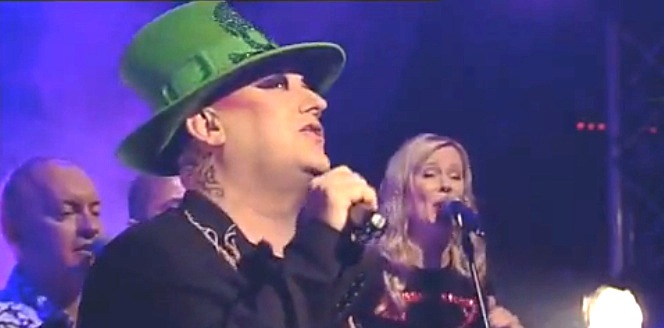
Breakfast outing: Boy George’s comeback on GMTV with Ana Lains, March 24, 2010

❚ THE SON OF A BOXING CLUB MANAGER, camp, skinny, loud-mouthed George O’Dowd was one of the most towering egos among the original Blitz Kids in the London of 1979. He famously worked as cloakroom attendant at the Blitz club where he has since happily admitted “rifling through pockets and handbags” while he was about it. His catchphrase was “Buy us a drink, then.” If you declined, or somebody otherwise offended him, he was likely to unleash all the vitriol his tongue could muster, on friend and foe alike. If they stood up to him and lashed back verbally, he occasionally awarded them an ounce of respect.

Because he was younger than many, he was virtually the last out of the Blitz stable to put together a band and win a recording contract in 1982. It was then a slow burn before Culture Club eventually hit No 1 with Do You Really Want to Hurt Me? in the UK and No 2 the next year in the US.

They soon became one of Britain’s international “pure-pop” supergroups with a blue-eyed reggae sound led by Boy George’s impressively soulful voice. The band won a Grammy in 1984. At his peak, George was Britain’s second most globally recognisable fashion icon after Princess Di. At home his unthreatening brand of androgyny had endeared him to mainstream audiences and he made himself every grannie’s favourite popstar with his line about liking “a nice cup of tea” in preference to sex. It was nevertheless a long time before he confirmed the obvious: that he was gay.

Boy George, 1987, Gabor Scott

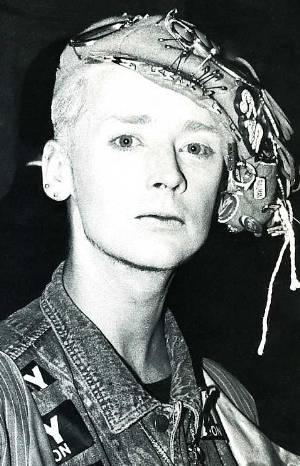
“Junkie George”: Gabor Scott’s © 1987 photograph

The glory was all over effectively by the third album.

George was developing heroin addiction and his romance with drummer Jon Moss fell apart. Grim headlines recorded the deaths of two friends from drugs and before long the tabloids reckoned that “Junkie George” had eight weeks to live. Culture Club broke up in 1986 and the singer’s life swung between unedifying extremes as it pretty much went off the rails for the next 20 years.

These were defined substantially by his drug habits, precipitating repeated encounters with the law, a community service sentence sweeping the streets of Manhattan, and the non-release of many new recordings. He turned instead to deejaying. One small highlight came in 1995 at the ripe old age of 34 with publication of his, for many people, shockingly frank autobiography, Take It Like a Man. This week he admitted: “Nowadays I probably would have said less. The new me would not have gone as far as I did.”

His fortunes hit their lowest ebb last year when he was sentenced to 15 months in jail “for falsely imprisoning a male escort by handcuffing him to a wall and beating him with a metal chain,” as reported in The Guardian. “The judge told the 47-year-old former Culture Club front man, whose real name is George O’Dowd, he had left the escort ‘shocked, degraded and traumatised’ by the ordeal… Passing sentence… Judge David Radford said the singer’s offence was ‘so serious that only an immediate sentence of imprisonment can be justified’.” After four months, George was released on home detention curfew wearing an electronic tag.

None of which was recycled of course in this week’s principal TV interviews as he returned to the commercial pop spotlight with a new dancetrack, Amazing Grace, the first release by a new label, Decode Records. They have boosted George’s vocals with luminous support from Portuguese singer Ana Lains.

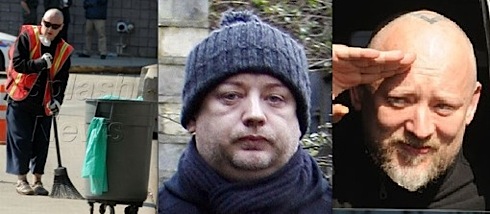
Boy George, 2006, 2009

ID parade: George on community service, New York 2006; before being jailed in Britain, 2009, and on the day of his release. Credits: Splash News, Pacific Coast News, Rex Features

In a cosy breakfast sofa chat for GMTV today, there were chill echoes of those other insouciant jailbirds, the former politicians Jeffrey Archer and Jonathan Aitken, when George showed little sign of remorse for the offences that landed him in jail. Neither did the airhead presenter Lorraine Kelly raise the issue. At least in his grilling by CNN viewers online somebody called Hillary asked: “What do you think the meaning of your life is?”

Later on Monday, George did allow one glimpse of reflection onscreen: “The biggest change for me in past two years was getting sober. I went into prison sober, with a completely clear head, in a very Zen frame of mind. I was a totally different person by the time I went to prison. It was a challenge. I discovered it was like being back at school.”

On the genesis of Amazing Grace, he said: “The song is about realising I have the best job in world. In my life there have been so many moments when I’ve been in amazing places and haven’t really been there because I’ve been arguing with someone. I’ve been at the Taj Mahal or the Grand Canyon having a row about something really petty. So what I try to do now is be present in everything I do, however mundane or however exciting… It’s also about searching for some sort of grace. It’s a spiritual song.”

There’s hope yet, then. Might we expect George, born into the Catholic Church, to follow the path of the saintly Aitken by discovering one god or another and some contrition? Let us all pray.

Boy George performs his comeback single, Amazing Grace, this morning on GMTV… and beforehand George talks about his future
At CNN on Monday George reflected on reinventing himself
before and after jail
Ladypat’s trippy video of Boy George’s Amazing Grace, featuring Ana Lains

++++++++++++

Boy George calls the press ‘sanctimonious’! What can a remorseless thug expect?

Nick Duerden in The Independent this April gets the measure of the man jailed for assault on a younger man: “One thing he didn’t do inside jail was ponder the crime that had landed him inside in the first place. ‘No I didn’t. Why? Was I supposed to?’ ”

Patrick Strudwick on the vile diminishing of Boy George’s crime (The Guardian last December): “We still cannot seem to take crimes of sex and violence against men seriously. The response of the authorities to female victims of rape and domestic violence is often lacking. The response of the public to male victims is one of disbelief, apathy and even humour.”

Which spurs us to reread Alan Franks’ very thorough interview from The Times last October: “What should he feel about the crime that got him jailed? Remorse, surely. Isn’t that what we want to hear before we too can move on from it? The good humour vanishes from his eyes and he says tartly: ‘I’m not going to talk about that.’ ”

FRONT PAGE