Category Archives: London

1981 ➤ New Romantics have their day — rearranging the deck-chairs at the posers’ ball

People’s Palace, Valentine Ball, New Romantics

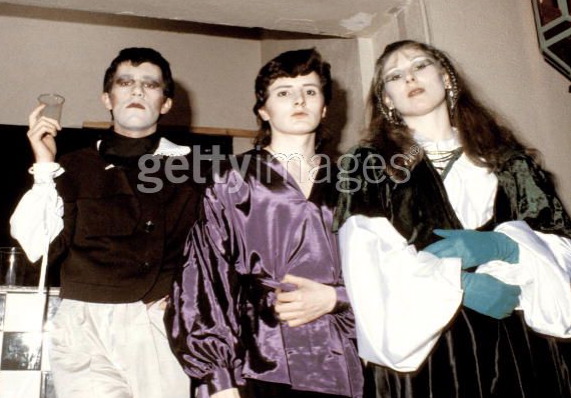
Valentine ball, 1981: last gasp for the New Romantics. Photographed © by Caroline Greville-Morris

❚ VALENTINE’S DAY 1981 was not so much the Woodstock of the New Romantics movement, but more akin to a Scouts and Guides jamboree in a giant ornamental wigwam in north London. Instead of boasting proficiency in camping and camouflage, a few hundred suburban Romantics fluffed up their frills and plastered on the Pan Stik to parade their skills in masquerade and maquillage. The “People of Romance”, as the tickets described them, paid £3.50 for a long evening starting at 5pm. They were expected to hold their own as stars alongside the cult’s budding bands at a venue renamed for a day The People’s Palace.
Astoria Finsbury Park, church, cinema, London

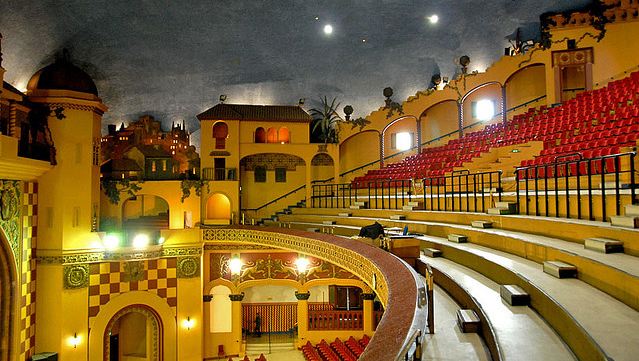
Andalusian fantasy: balcony view of the 1930 Astoria Finsbury Park, now restored. Photographed 2008 © hjuk/Flickr

An auditorium in Finsbury Park made the perfect backdrop. When it opened in 1930, the Astoria was one of Europe’s flagship cinemas seating 3,000 people. Its gloriously kitsch interior architecture depicted an Andalusian village whose rooftops and twisted barley-sugar pillars climbed towards a horizon and the starlit indigo ceiling way above balcony level. For a decade from 1971 the theatre had become a live rock venue, hippily renamed the Rainbow, where finally the stalls had been deprived of seats in favour of dancing audiences. Later the very year it hosted the People’s Palace, the place was to fall into disuse for a decade and a half, before being rescued and restored by a Pentecostal church.
People’s Palace, Valentine Ball, New Romantics, Steve Strange

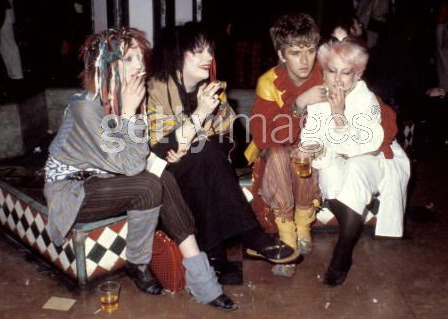
Steve Strange at the People’s Palace, 1981: plus loyal acolytes Myra, Judi and Mandy. In a fleeting fashion show, Judi showed six outfits which along with others for Strange’s videos helped shape the New Romantics silhouette. Photographed © by Caroline Greville-Morris

Thirty years ago today, posses of over-the-top Romantics incongruously wandered its vast auditorium and bars and cavernous Moorish lobby in search of photo opportunities. It seemed at times as if photographers outnumbered the cast. Richard Young, king of London’s celebrity snapperazzi, had arranged two sheets to create an impromptu studio where he was immortalising the generation who relished calling themselves posers, garbed from top to toe in bejewelled, befeathered lace and velvet and ridiculous hats.
People’s Palace, Valentine Ball, New Romantics

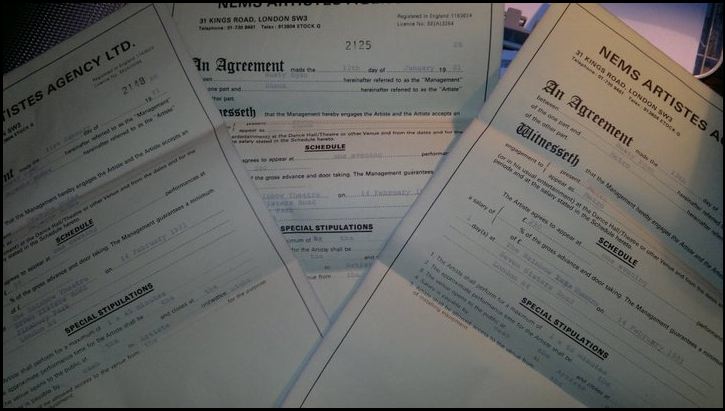
Performance contracts for the People’s Palace, 1981: Shock were paid £500, Metro £250 and Depeche Mode £50. Source: Rusty Egan archive

The soundtrack throughout was the latest electronic pop, spun on Rusty Egan’s turntables as well as played live onstage. On this Saturday Ultravox were arriving at No 2 in the singles chart with Vienna, and here at The People’s Palace they were topping a bill booked by the event’s promoters, Egan and Steve Strange, to capture the zeitgeist, even as the duo planned their next clubbing venture following the closure of their Blitz nights.

Much as Midge Ure protested about his band qualifying as New Romantics, in February ’81 any band toting synths ticked the box. Among supporting acts the then unknown Depeche Mode opened the live sets for a handsome fee of £50 in their first major performance off the clubbing circuit, one week before releasing their debut electro-single Dreaming of Me.
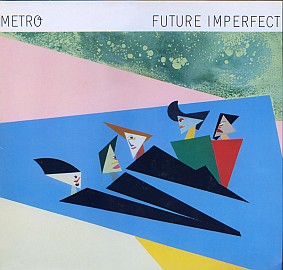
Metro band, pop, Future Imperfect, record sleevesPeter Godwin revived the new-wave band-name Metro, surfing in on the strength of their 1980 album Future Imperfect, followed by the dance troupe Shock, dressed by Birmingham’s Kahn and Bell, as exponents of the robotic dance-style across Britain’s clubland where their single Angel Face was a dancefloor hit.

Steve Strange had hoped to stage a splashy fashion show too, though according to Judi Frankland — who had featured with her outfits in Bowie’s Ashes to Ashes video the previous summer and is visible second from right in the masthead for Shapersofthe80s — “The other designers pulled out at the last minute and as I was still under Steve’s spell he made me carry on and do a ‘show’ alone with a mere six outfits. When he pulled me onto the stage, ohhh that still makes me cringe! However the one good thing I got out of it was being on the same stage as my faves, still to this day, Depeche Mode. I keep bumping into lovely Dave Gahan every few years in the most unexpected places.”

Meanwhile most of the original Blitz Kids — who had animated the Bowie credo that behind a mask you can be anyone you wish — wouldn’t be seen dead at The People’s Palace. In the wake of chart success by Spandau Ballet and Visage, they were competing in a calculated dash towards fame and fortune in clubland, glossy mags and the music biz, whose singles charts by the summer of 1981 welcomed Landscape, Depeche Mode, Soft Cell, The Human League, OMD, Level42, Duran Duran, Heaven 17, Altered Images and Imagination.

Like Midge, we can argue ad finitum whether these acts all technically counted as the New Romantics bandwagon, but they did play dance music, not rock — which defines the reformation that fundamentally vanquished rock to change the sound of the 80s charts — and all benefited from the momentum, as ABC’s Martin Fry later acknowledged. Most of them would, however, set about shaking off the hollow Romantics label in favour of their own musical tastes as soon it had served its purpose. For the moment, like the Titanic heading unwittingly towards its iceberg, the preening Lord Foppingtons and Lady Buxoms at the Rainbow were unaware that theirs was the last real gasp of The Cult That Had Gone Too Far. By Valentine’s Day 1982, there were so many new fashion factions that they would never have turned up for the same ball.
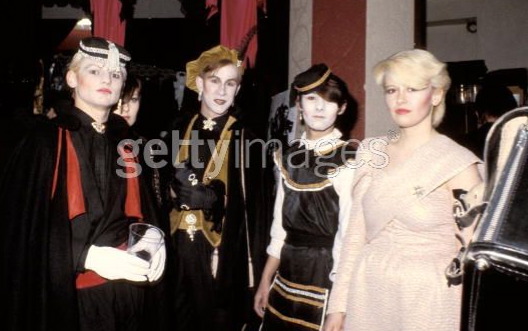
People’s Palace, Valentine Ball, New Romantics, Astoria Finsbury Park

Frills, tassels and hats: Arrivals at the New Romantics ball, 1981. Photographed © by Caroline Greville-Morris
FRONT PAGE

➤ Guardian makes Shapersofthe80s an internet pick of the week

Guardian, Shapersofthe80s, internet pick of the week,swinging 80s,New Romantics,psychedelic snakebite, Sade, Spandau Ballet, Visage, electro-pop, Boy George, Blitz Kids,1980
➢ Thanks, Johnny! See the rest of his selection at Guardian online

[Text revised Feb 14]

❚FLATTERING THOUGH IT IS to have Shapersofthe80s selected by Johnny Dee among his internet picks of the week (The Guardian, Feb 12), it was entirely counterproductive to illustrate it with an irrelevant as well as incorrectly captioned photograph. Once alerted that its choice of image was at odds with this slice of early 80s British life, The Guardian swiftly replaced the online picture with one that was relevant if anodyne, being chosen out of budgetary necessity.

Dee’s review acknowledges the “utter conviction” with which this site documents what some people might view as the lightweight theme of the New Romantic movement, and consequently Shapersofthe80s has proved to be a resource of growing interest to social historians. Sadly, he was disappointed to feel that “there’s not much” on the site to back up the claim that the children of The Blitz effected widespread cultural change, although the piece written for The Guardian’s sister paper The Observer in 2009 does outline this theme, and is well linked from here. This post on the significant collaboration in London’s clubland around 1980 tries to develop those thoughts, as does this one on the changed rhythm of the pop charts. Shapersofthe80s is a part-time commitment and a work constantly in progress, as is made clear on its many pages that remain incomplete, so let’s hope Johnny will return for a further inspection in the future.

FRONT PAGE

1961 ➤ No wonder The Beatles changed the shape of music after 456 sessions practising in public

Beatles, Cavern club, Liverpool,Pete Best, John Lennon, George Harrison, Paul McCartney, Ringo Starr

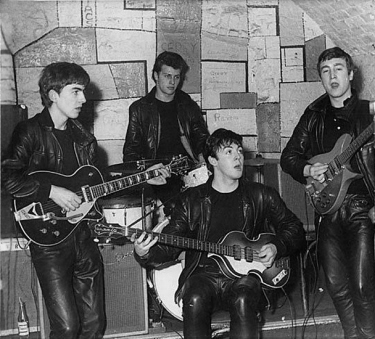
Their regular gig: The early Beatles at the Cavern club in 1961 with Pete Best on drums

❚ ON THIS THIS DAY 50 YEARS AGO four Scousers played the first of 292 gigs at the Cavern club in Liverpool — 292! They were paid £5 and Pete Best was playing drums that day, although when they played their last Cavern lunch date two years later, in Feb 1963, Ringo Starr sat behind the kit and Please Please Me was heading towards No 2 in the charts to be followed by four No 1 hits in a row.

Bob Wooler,DJ, Cavern club, Liverpool

Bob Wooler, Cavern deejay: urged the owner Ray McFall to give The Beatles a try. Picture from Liverpool Post

Two hundred and ninety two gigs is the equivalent of playing every night for 48 weeks without break. In fact, many of those dates were, like the first on Thursday Feb 9, 1961, played to few dozen office workers at lunchtime. Practice may well make perfect but, even so — 292 at one venue! The Cavern’s deejay Bob Wooler booked the bands and gave The Beatles their residency, “playing lunchtime and evening sessions for about 25 shillings a session”, according to Ray Coleman in a definitive biography of John Lennon. “The Cavern, with little ventilation, appalling acoustics, walls dripping with dampness… would tax even the most enthusiastic of young musicians.”

Coleman explains why playing in this club was a decisive tipping point: “It was a hotbed of traditional jazz… The audiences were, in John Lennon’s opinion, snobs against rock’n’roll. He hated them for their superior attitude. The Cavern was to represent, to John, something more than success for The Beatles. He saw it as a crusade against jazz and all it stood for.

“John told jazz singer [author, journalist and cultural guru], George Melly, who had played the club with the Mick Mulligan Band: ‘You lot kept us from getting into the Cavern and other places much earlier. All that jazz crap held us back.’

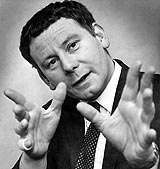
George Melly, jazz singer, The Beatles, Revolt Into Style

“The game was up”: Jazz singer George Melly in 1960. Photographed © by Ray Moreton

“Melly conceded this point to Lennon… With rock’n’roll groups, led by The Beatles, pulling in students, previously jazz’s natural audience, ‘the game was up’, as Melly succinctly puts it. Lennon relished the kill.” On that cramped stage in that desperate year of 1961, Coleman maintains: “Lennon’s demeanour could be likened to that of a caged tiger. Here, he honed his short-sighted, head-tilted, legs-astride stance into a statement of defiance, much more than mere music.”

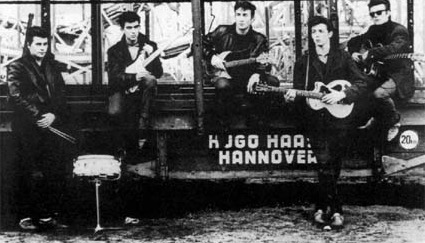
The Cavern residency was a testament to the determination of the man who had been a founder-member of The Quarrymen in 1956. Let’s not forget that the world-beating band who evolved from them also played four seasons in the German city of Hamburg between their bass player Stuart Sutcliffe eventually naming them The Beetles in August 1960 [a spelling Lennon later changed to reflect the beat], and securing their first recording contract in June 1962 with EMI, which was to turn them into the most famous pop group in history.

Beatles, Hamburg, Astrid Kirchherr, Stuart Sutcliffe

The Beatles’ beat look, 1960: honed in Hamburg by photographer Astrid Kirchherr who took this picture when guitarist Stuart Sutcliffe was in the lineup

So how many gigs did these musicians from Liverpool have to play in order to clinch a deal with a major London label in an era when the metropolis viewed the provinces as a foreign land? These were the dark ages before the internet, when television was only starting to replace newspapers as the mass medium, and when many singers upped their vocal register as far as falsetto to be heard clearly through the latest piece of technology, the handheld transistor radio.

A chance phone call in 1960 won The Beatles their first stint in Hamburg where they played seven nights a week at £15-a-week, Aug-Oct (46 gigs at the Indra club) straight on through Oct-Nov (57 gigs at the Kaiserkeller). They returned to Liverpool with moptop hairstyles and bespoke cuban-heeled Chelsea boots from London’s theatrical shoemakers Anello & Davide. After their Cavern debut the next year, 1961, The Beatles returned to Hamburg, Mar-July (98 gigs). They were viewed at the Cavern that November by Brian Epstein who agreed to manage them a month later, and played their first southern gig in Aldershot to 18 people. It was back to Hamburg in spring 1962, April-May (49 gigs), to find that Epstein had a deal ready to sign† the week after they returned. So let’s say that those four tours of duty in Germany amounted to almost exactly 250 gigs. Two hundred and fifty!

rel=nofollow

Beatles relaxing, probably 1961: Rare photo including Stuart Sutcliffe at left and Pete Best at right. (Photo courtesy Yoko Ono Lennon)

The Beatles themselves described their far from meteoric progress in their own words in the monumental Anthology published for their company Apple Corps in 2000. It makes you want to weep.

John Lennon says: “In Hamburg every song lasted 20 minutes and had 20 solos in it. We’d be playing eight or ten hours a night. [This is rather more practice than young musicians achieve at a western conservatoire, and rather less than Chinese music students.] That’s what improved the playing. And the Germans like heavy rock… Paul would be doing What’d I say? for an hour and a half.”

Paul McCartney says: “What’d I say? became like trying to get into the Guinness Book of Records — who could make it last the longest… It has the greatest opening riff ever… then the chorus… then it had the killer ‘Oh yeah!’ — audience participation.”

George Harrison says: “We had to learn millions of songs. We had to play so long we just played everything — Gene Vincent, Chuck Berry, Little Richard, Everly Brothers, Buddy Holly, Fats Domino — everything. Hamburg was really our apprenticeship, learning how to play in front of people.”

Ringo Starr, who met the others in Hamburg while playing drums in Rory Storm and the Hurricanes, says: “This was the point in our lives when we found pills, uppers. That’s the only way we could continue playing for so long. We’d get really wired and go on for days. So with beer and Preludin, that’s how we survived.”

Brian Epstein, Beatles

Brian Epstein: local businessman who became The Beatles’ manager

When they signed with EMI their average age was 20. The band calling itself The Beatles had played 250 gigs in Hamburg, and averaging their Cavern appearances over the year and a half before signing suggests they played 206 gigs there.

So in addition to many other local dates, it took The Beatles at least 456 live gigs to clinch their future as the most commercially successful group in pop. In the UK The Beatles have had more number one albums than any other musical act, and in the US they top Billboard magazine’s list of the all-time top-selling Hot 100 artists.

Four hundred and fifty-six live gigs! And in 1980, when Spandau Ballet signed to Chrysalis just less than a year after assuming their New Romantic identity, they had given — as part of a cunningly formulated plan — exactly 18 live performances (six in the UK plus 12 in St Tropez on-stage nightly). Whatever this says, it’s a measure of how effective mass communications had become during the intervening two decades. And what an exhilarating hurricane they swept before them as the 80s turned into the second great era of British pop.

† LITTLE-KNOWN FOOTNOTE TO HISTORY

❚ THE 1999 PHOTO-BOOK HAMBURG DAYS — a limited edition box-set by Astrid Kirchherr and Klaus Voormann — reveals that the early Beatles lineup (with Pete Best as drummer but without Stuart Sutcliffe who had left the band) had signed their first recording contract in 1961 with Bert Kaempfert, the German Polydor agent who also ran a celebrated light orchestra.

Hamburg Days,Astrid Kirchherr, Klaus Voormann

Hamburg Days: the cover shot

He had hired The Beatles to play under the pseudonym The Beat Brothers to back singer Tony Sheridan, with whom they’d often jammed at The Indra club. On June 22 1961 at the Friedrich Ebert Halle — seen in the slideshow (above) of wonderful early Silver Beatles photos — they all recorded the Sheridan single My Bonnie, which effectively became the band’s first commercial recording when it was released in October 1961 and reached No 5 in the hit parade.

It has become part of Beatles folklore that it was a Sheridan fan called Raymond Jones who brought the band to Brian Epstein’s attention that November by asking for My Bonnie in the record-shop Epstein ran in Liverpool. What Kirchherr and Voorman reveal, contrary to most accounts, is that it was not until May 25 1962 while the band was engaged at the Star Club in Hamburg that Epstein finally persuaded Kaempfert to release The Beatles from his contract with them, effective from June 1. (Only after The Beatles auditioned for George Martin at Abbey Road on June 6 was an EMI deal confirmed.) The Kaempfert contract actually had a further year to run until July 1963. Imagine how mad he must have been when 1963 came round and The Beatles notched those four No 1 hits in a row.

VERDICT OF HISTORY

The late Charlie Gillett, in his consummate history of rock, The Sound of the City (1970), passes this judgement on the Fab Four: “Musically, The Beatles were exciting, inventive and competent; lyrically, they were brilliant, able to work in precisely the right kind of simple images and memorable phrases that distinguished rhythm and blues from other kinds of popular music… But there was something else about them, and it was this that transformed the nature of the world’s popular music as decisively as rock’n’roll had done nine years before — their character as people.”

FRONT PAGE

➤ The Kemp Brothers cook up a mystical morsel

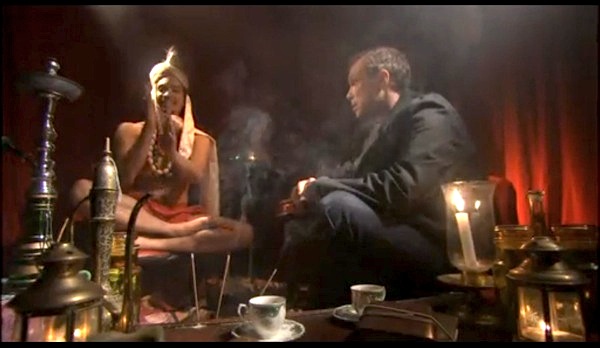
Karma Magnet, Gary Kemp, Martin Kemp, Raj Ghatak

Fatal consultation over a nice cup of tea: celebrity chef Joel Manners (Gary Kemp) meets his guru (Raj Ghatak) in Karma Magnet

➢ Click to view Karma Magnet at Daily Motion

❚ HERE’S A 17-MINUTE SHORT FILM called Karma Magnet, directed by Martin Kemp of Black and Blue Films (also Spandau Ballet bass player) and featuring his brother Gary and Adele Silva. It tells why the luckiest man in the world wants to kill himself for the good of humanity.

No prizes for seeing how many other members of the Kemp family you can spot in this low-budget thriller.

FRONT PAGE

➤ EMI chief confirms record company sale highly likely

Tinie Tempah, EMI, RayBan,

Tinie Tempah, south London star on the troubled EMI label: the 22-year-old rapper keeps his cool in RayBan Wayfarers

❚ AN INTERNAL STAFF MEMO from EMI chief executive Roger Faxon confirms that the historic record label of the Beatles, Pink Floyd and Queen is up for sale. Last Tuesday ownership of EMI, Britain’s oldest record company, passed to Citigroup, the US banking giant, after 114 years of British ownership. The takeover ended speculation that has marred the label’s future ever since 2007 when Guy Hands and his Terra Firma private equity firm bought the British music major for £4.2bn, widely believed to be a massive overpayment. Terra Firma was unable to keep up interest payments on the loans.

In the note sent to music staff last Tuesday, and published today by Guardian online, Faxon confirmed that “there is no doubt that in due course EMI will be up for sale – just like it has been from the day Terra Firma bought it.” But he emphasised: “Regardless of the country of origin of our owner, EMI remains a British company – both legally and spiritually.” Faxon insists that “EMI itself was never in administration”.

➢ Read Roger Faxon’s memo at Guardian online

➢ More on Shapersofthe80s: After Queen quits, who can save EMI?

“The takeover in 2007 of EMI by Guy Hands’s Terra Firma — just as the bubble in financial markets was going pop — will go down in British corporate history as one of the worst ever deals”
Robert Peston, Business editor, BBC News

Further analysis in today’s Guardian by Dan Sabbagh, head of media, is headlined: Is the music company going to go for a song? He writes: “Hands’s instincts at EMI often failed to serve him and the business well. Three-and-a-half years later, after an overambitious acquisition that left the company unable to handle £3bn of debt Hands had taken on, the barbarian at the gates was forced out by his bankers Citigroup.

“Now that Citigroup has written off £2.2bn of loans, EMI, with a manageable £1.2bn debt load, is likely to be sold within months. Out of politeness, Citigroup sources prefer to say predictably that the process is ‘not a fire sale’ and that it is possible – if unlikely – that it will be theirs in a year’s time. The rhetoric is only there to protect the bank in case something goes awry again with a company that counts Katy Perry, Swedish House Mafia and Tinie Tempah among its latter-day artists.”

Warners and BMG are tipped as potential purchasers of EMI.

➢ Read: Is the music company going to go for a song?
at Guardian online

FRONT PAGE