Category Archives: London

2024 ➤ Farewell to Linard, the craziest man I’ve known

Stephen Linard, Blitz Kids, fashion, New Romantics, Canvey Island,

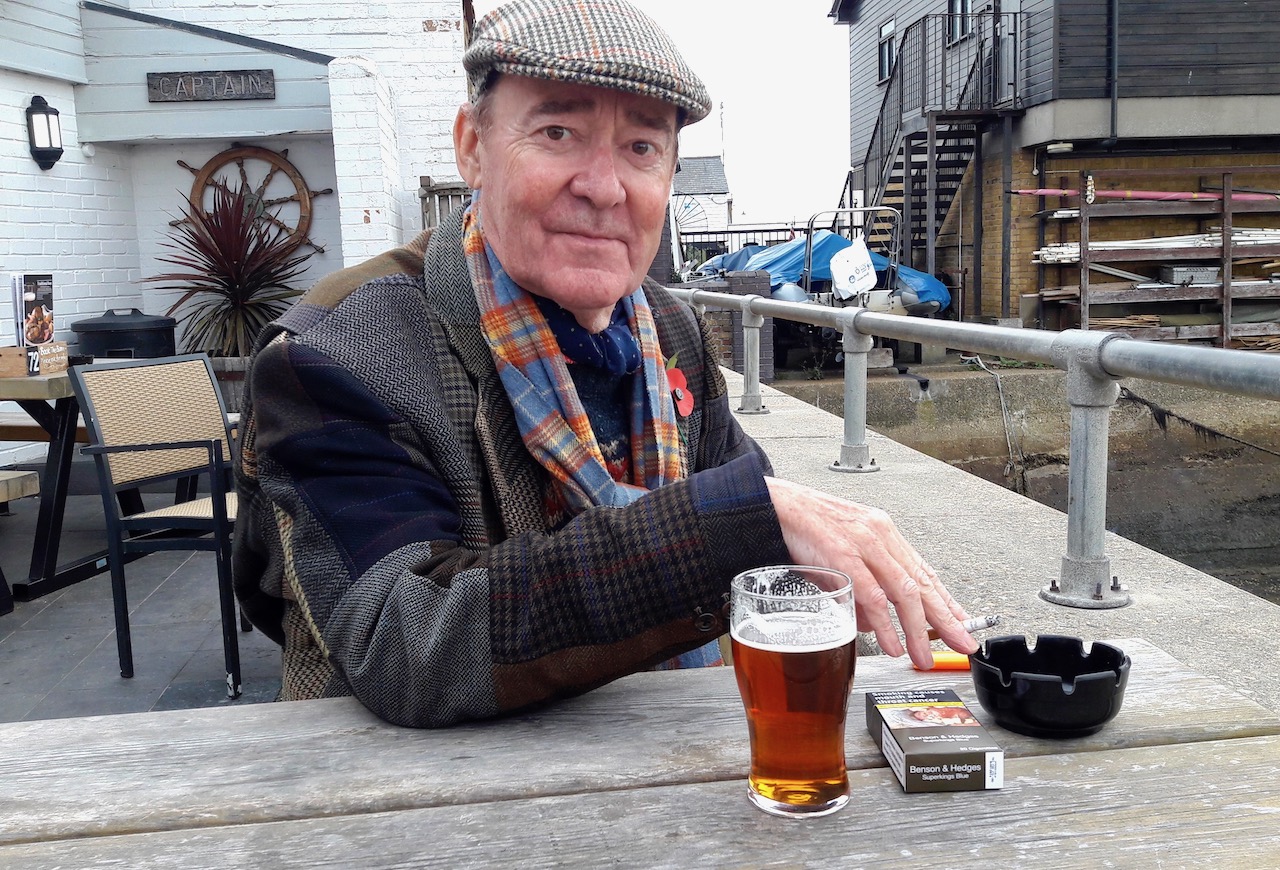
Stephen Linard in 2018: A last pint at his local pub before moving away from Canvey Island. (Photo @ Shapersofthe80s)

INCREDIBLE!!!! Update – Shapersofthe80s has received 8,100 hits during the three days since Stephen’s death. Thank you to his fans

❚ HARD TO ACCEPT THAT STEPHEN LINARD has now died from the extensive throat cancer that had caused him so much pain recently. He was one of the craziest of eccentrics who frequently made me laugh out loud. We met at a party at Steve Strange’s flat in 1980 when he was among the sharpest half-dozen Blitz Kids who changed their looks daily and put the Blitz Club on the map. We hit it off immediately and I soon latched onto the star trio of Stephen, Kim Bowen and Lee Sheldrick who went everywhere together.

I photographed his degree show and over the years helped him through various projects in that era when St Martin’s School of Art failed to equip its graduates with any guidance for running their own businesses. Luckily, pop stars from Pet Shop Boys to U2 and even Bowie readily adopted his strong styles and in 1983 the American fashion press included him among the eight most influential London designers [see link below], noted for his strong eye for colour.

From 1983 to ’86 Stephen lived in Tokyo designing for Jun Co, the fashion giant, on a salary which, he liked to boast, exceeded the prime minister Margaret Thatcher’s. From 1989 until recently Stephen was a key player on the design team at Drake’s, the respected men’s haberdasher off Savile Row (pictured below). The main photo (above) marked a last pint at his local pub on Canvey Island where he lived in his late mother’s house until 2020 before joining the Old Romantic Folks who go on retiring to St Leonard’s-on-Sea.

Only six months ago, as if in anticipation of the worst, Stephen staged a striking exhibition of his early illustrations, titled Total Fashion Victim after the club-night he had hosted at Soho’s coolest hang-out, the Wag. I was lucky enough to write the outline catalogue with him.

drakes-london, Stephen Linard, British tailoring, haberdashery,fashion

Former Blitz Kid and St Martin’s fashion graduate Stephen Linard in 2011: a designer with Drake’s, the gentlemen’s haberdasher, seen here at a staff preview for the opening of its first shop just off Savile Row. (Photograph © Shapersofthe80s)

MORE ON STEPHEN INSIDE

➢ Previously at Shapersofthe80s: 2023, Total Fashion Victim – Linard’s exhibition of his early work

➢ Previously at Shapersofthe80s:
The Blitz Kids WATN? No 28, Stephen Linard

➢ Previously at Shapersofthe80s:
1980, Linard’s Alternative student show gives
Goths their archaic name

➢ Previously at Shapersofthe80s:
1982, Six British designers take London fashion
to the French

➢ Previously at Shapersofthe80s: Overseas influencers
declare eight hot fashion Brits for 1984

THE PROFESSIONAL TRIBUTES

➢ Stephen Linard, London designer, image maker and Blitz Kid, dead at 64 – Detailed analysis of his talents at Women’s Wear Daily, March 2024

➢ Goodbye, Stephen Linard: It was a privilege to know you – by novelist Maggie Alderson

➢ Linard’s entry at the Encyclopedia of Fashion – by Alan
J. Flux; updated by Daryl F. Mallett

➢ Blitz Kid Stephen Linard’s 1980 Neon-Gothic collection anticipated “Heavenly Bodies” by 38 years – from Vogue, 2018

FRONT PAGE

1992 ➤ Who’s the keenest fan of Marcel Proust?

David Hockney, A S Byatt, Lewis Wolpert, Marcel Proust, In Search of Lost Time,

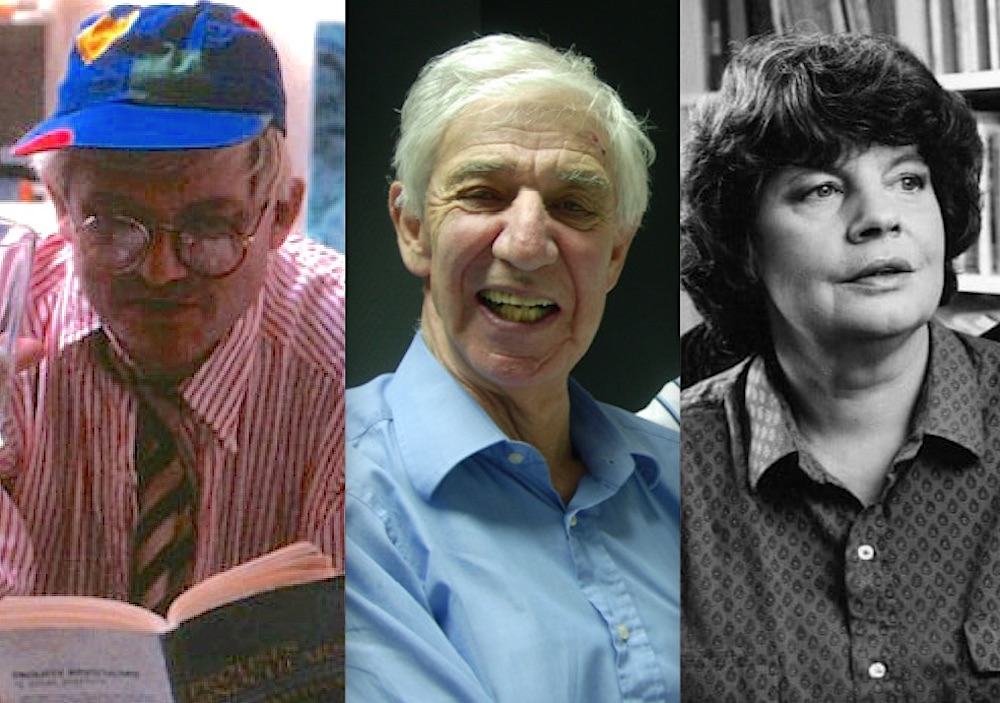
Hockney, Wolpert and Byatt: leading the pack?

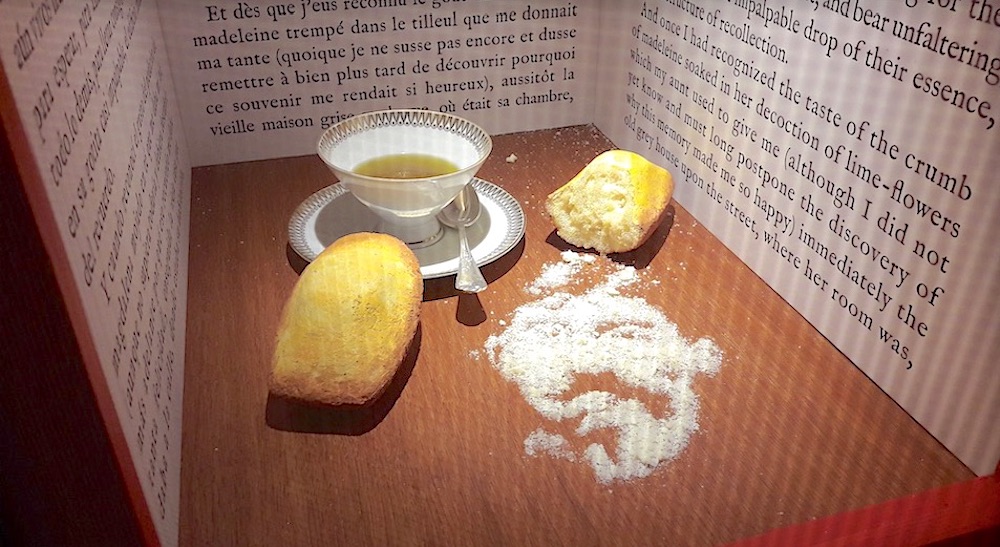
❚ HOW MANY OF US CAN CLAIM to have read the whole of Marcel Proust’s literary masterwork, originally titled for its English edition Remembrance of Things Past, in seven volumes, containing 1.2million words? Not many of us. What about reading it twice? As a journalist I interviewed painter David Hockney on his 46th birthday when he revealed that he had enthusiastically read the epic twice, drawing parallels between the act of looking around Proust’s world by reading his lengthy descriptions and the time it takes for our eyes to dart around a cubist painting. They are both about duration. And the great device Proust donated to literature was his episode of the madeleine, when a simple cake triggers a moment of involuntary memory.

In 1992, when a new English edition titled In Search of Lost Time was published, novelist A S Byatt admitted, without being boastful, that she too had read Proust twice. This happened at a party thrown by the highly sociable biologist Lewis Wolpert who raised the topic as a Proustian two-timer himself, though a viral buzz through this party could find no others. More impressive still, when our paths crossed a couple of years later, Antonia remarked: “Make that three readings now. But this time in French.”

David Hockney, A S Byatt, Lewis Wolpert, Marcel Proust, In Search of Lost Time, madeleine,

Proust’s episode of the madeleine: involuntary memory evoked in a French exhibition of 2015

➢ A S Byatt died last month and received this splendid
obituary in The Guardian

➢ Lewis Wolpert’s obituary in The Guardian, 2021
➢ Previously at Shapersofthe80s:
1983, Hockney’s new vision of the world

FRONT PAGE

2023 ➤ Young sculptor brings bronze into the age of 3D printing

 James Rogers, sculpture, bronze, British Art Fair, Saatchi Gallery,

Rogers line-up: Right, Grafter (A study for boys operating big machines wearing dresses), £7k… Second from right: I can never tell if it’s the head above, or the legs below that take me to the places I end up (Wrong trousers), £8k. (Photographs by me, courtesy of James Rogers © 2023 in the Solo Contemporary section of the British Art Fair with Julian Page.)

❚ ELEVEN BRONZE STATUES in unique relief glint with various coloured patinas under intense lighting at this week’s British Art Fair at Saatchi’s in London. They bear price-tags from £2,000 for a 20cm piece to £14,000 for the tallest at 60cm and all are given intriguing titles such as “A study in the possibility of a man taking so much on the chin, that his jawline blocked the feelings falling out of his mind (Rock Drill / Mandibular Man)”. At a glance they are baffling for conveying a sense of the abstract, while the artist insists they are figurative. Either way, their ripped and torn metallic contours make compelling viewing.

These sculptures express the vision of ex-Camberwell graduate James Rogers aged 30 who talks and writes earnestly about his mission in a daunting torrent of ideas. His website and on-the-job videos are fascinating. He says he is investigating the workflow between man and machine to explore figuration in the post-digital realm of 3D printing. He has also learnt the importance of combining people and stories with objects in the depiction of social networks, hoping to reveal “states of being” as yet undiscovered. Among his obsessions is the Roman emperor Marcus Aurelius whose stoic philosophy can be detected in his wordy titles. Discuss.

Click any picture to enlarge

 James Rogers, sculpture, bronze, British Art Fair, Saatchi Gallery,

Rogers line-up: At left, I wish I was level headed enough to balance the both of us (twins), £6k… At centre, A study in the possibility of a man taking so much on the chin, that his jawline blocked the feelings falling out of his mind (Rock Drill / Mandibular Man), £7k. (Courtesy of James Rogers © 2023)

 James Rogers, sculpture, bronze, British Art Fair, Saatchi Gallery,

Rogers line-up: At right, Hive minded men share beliefs whilst termites share stomachs (He’s built like a brick sh*thouse), £14k… At centre, When everything is shining I can’t even tell you if it’s dark or not, £12k. (Courtesy of James Rogers © 2023)

➢ More about the British Art Fair 2023

James Rogers, sculpture, bronze, British Art Fair, Saatchi Gallery,

JR’s own view of his booth in the top-floor Solo Contemporary section of the 2023 British Art Fair

➢ Visit the James Rogers website… Last month, I installed my largest bronze to date at 1.3m tall on the grounds of the A&A European Sculpture Park at Niemodlin Castle in Poland for permanent outdoor display… Next month, am showing new prints with Julian Page at the Woolwich Contemporary Print Fair… I’ll also show a new body of work with the Centre for Print Research, Bristol, where I’ve been undertaking a residency for the past year.

FRONT PAGE

2023 ➤ Witnessing the performance of Gambon’s life as his tribute to Pinter

Tributes, theatre No Man’s Land, Michael Gambon, Harold Pinter, David Bradley,

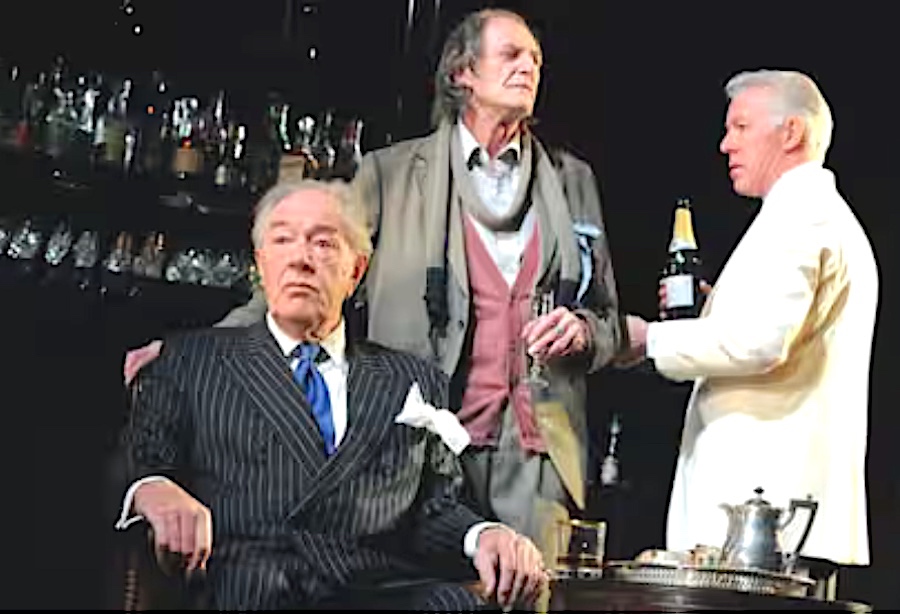
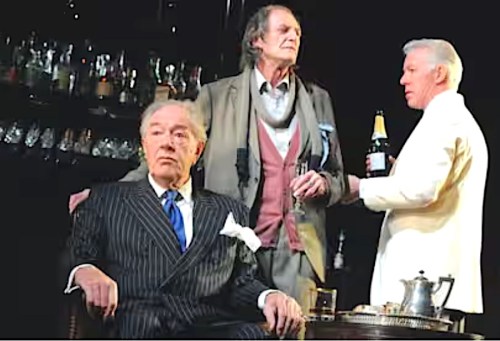
Duke of York’s, 2008: Michael Gambon, David Bradley and Nick Dunning in No Man’s Land. (Photograph: Tristram Kenton)

❚ MICHAEL GAMBON WAS UNDOUBTEDLY Britain’s greatest living actor for much of his career and remained so until his death this week. So, indeed, Harold Pinter had also become our greatest playwright by the end of his life. In the week of Pinter’s death at Christmas 2008, Gambon was playing in the West End in this, one of the master’s most enduring plays, No Man’s Land, and on Boxing Day he marked the theatre’s loss in ways I shall never forget.

That day, on Radio 4’s World at One, Michael Gambon promised to give the performance of his life, so I determined to go and see again the performance I’d already enjoyed the previous month in one of the Pinter’s most haunting masterpieces about two men in their maturity reflecting on their tenuous – or had it been non-existent? – friendship. As Michael Billington had written in his Guardian review: “Every new production of Pinter’s tantalising, poetic play yields new meanings.”

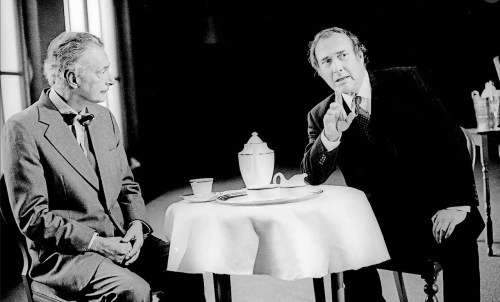
I’d seen it premiered in 1975 with those grandees John Gielgud and Ralph Richardson at the Old Vic and again when transferred to the Lyttelton in 1977 – several times. The great air/earth partnership of Gielgud/Richardson undoubtedly brought compassion to the roles of Spooner and Hirst, yet when Pinter himself played “the Richardson role” at the Almeida in 1993, opposite the sprightly Paul Eddington, the author turned his second act opening almost into a two-handed farce that had us aching in our seats with continuous laughter and subsequently wondering whether he’d always longed for our two greatest actors to loosen up a bit in the original production.

By the time this day’s greatest living actor Gambon put on the mantle of Hirst, a litterateur haunted by dreams and memories, in this new production at the Duke of York’s, we had learnt to laugh heartily at the humour in Pinter, yet now both Gambon and David Bradley as Spooner were also suffusing the prose with more poetry which the renowned “Pinter pauses” punctuate than I could recall from the past.
Tributes, theatre 
No Man’s Land, Paul Eddington, Harold Pinter,

Almeida theatre, 1993: Paul Eddington and Harold Pinter in his own play No Man’s Land. (Photograph: Tristram Kenton)

A month earlier, I’d been caught short by the intensity of Gambon’s stage presence as he made his demons all but tangible before us. Then on Boxing Day, after the hilarious Act 2 recollections of the men’s seemingly shared past, Gambon suddenly changed gear and dropped timbre to whisper the crucial “Good Ghost” speech about the passing faces in his photograph album with an ethereal beauty and clarity of Shakespearean proportions. It was an unparalleled moment to witness.

Following the curtain calls, the cast paused to pay brief onstage tributes to Pinter. Gambon told us that, after rehearsals, the playwright had asked him if he would read the Good Ghost speech at his funeral (which indeed he did only days later). Suddenly for the second time this night, Gambon delivered the speech again there and then. Alas the words lost something of the ineffable truth they had touched when, minutes earlier, Gambon had been in character and had delivered them “trippingly on the tongue”.

Without doubt, the actor brought greatness to the role of Hirst this night – in fairness, all the cast were on the balls of their feet too. More satisfying, in the fleeting moments of live performance, fresh glimpses had been revealed of Pinter’s bleak insights into memory and ageing. All in all, the essence of theatre.

➢ Billington’s review of No Man’s Land in The Guardian, 2008
➢ Michael Gambon’s obituary in The Guardian, 2023

FRONT PAGE

2023 ➤ One savvy fan rates Kid Creole’s London extravaganza

Kid Creole, Coconuts, August Darnell, Boisdale restaurant, London, concert, Andy Polaris,

Backstage after the London show: Animal Nightlife’s singer Andy Polaris meets August Darnell to thank him for a lifetime of inspiration

Not only a handshake and a hug for Andy Polaris from the showman that is August Darnell, but now a taster from his review of the evening in Canary Wharf…

August Darnell is the real deal and the soul survivor of the band Kid Creole and the Coconuts that has evolved over the years from its original cast in the early 80s but wisely maintained its winning formula… At a club night in London’s Canary Wharf his talented musicians provided the muscular sound, the perfect funky backbone which was always a key element of their success. Straight out the gate the Coconuts came to slay with well executed dance moves, while a physical aerobic workout combined with vocal prowess to result in a remarkable feat. I can only think of the Ikettes with Tina Turner who shared these onstage dynamics. My enthusiasm for this dazzling choreography – created by founder member Adriana Kaegi – is fired by the sheer inventiveness at the beating heart of the band… On stage tonight we heard Broadway Rhythm, Animal Crackers and Flip Flop and Fly but of course the loudest cheers were for the hits Stool Pigeon and Annie I’m Not Your Daddy. Both are mini musical masterpieces that buoyed up the audience with more snazzy footwork and infectious brass…

➢ Click to continue reading at Apolarisview

FRONT PAGE