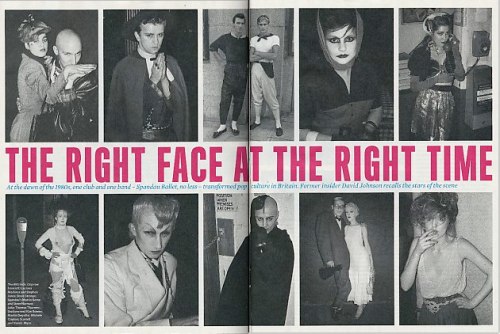
The Observer Music Monthly, Oct 4, 2009. Pictures © by Derek Ridgers
A music and fashion movement evolved from a small club in London in 1980. It went on to dominate the international landscape of pop and put more British acts in the US Billboard charts than the 1960s ever achieved.
Today in 2009, one insider recalls how Steve Strange and Spandau Ballet revitalised UK club culture…
➢➢ Click here to read my major analysis
at the Observer Music Monthly
2009 ➤ How three wizards met at the same crossroad in time
◼ THE REACTIONS TO MY ARTICLE LINKED ABOVE have been mildly shocking since it was published in OMM, the respected music magazine of the world’s oldest Sunday newspaper, The Observer. It appeared in October, a week before Spandau Ballet, the newly-reunited house-band of the 80s Blitz Club, embarked in their UK tour and it tells the story of their genesis as one aspect of a fertile youth movement that rejuvenated all of British pop music for the 1980s.
Why am I surprised that people have been surprised to discover the concerted power wielded by the so-called Blitz Kids in 1980 and after?
◼ “The impact of that article within the music industry has been unbelievable,” said one major mover in the business.
◼ “I didn’t know any of that!” declared a newspaper executive I respect, who was a young music fan in the Eighties. He amazed me.
◼ “That article is the first in any national newspaper to tell the story as it really happened,” said one former Blitz Kid.
◼ “This will become the official history from now on,” said another.
All of which prompts two instant responses. First, that many decision-makers in and commentators on today’s music biz weren’t even born in 1980 – fair enough, fact of life. Second, apart from a handful of life stories written by the popstars involved, the rock historians who missed the boat when the New Romantics movement set sail remain in denial that anything changed in 1980. These sad old punks churn out their chronicles of rock oblivious to the fact that the new pop music of the 1980s became credible and cool and changed the UK singles chart for ever to the rhythms of dance. The point is the people who write the history books were usually looking the other way.
An ugly truth is that precious little innovation emerged from the rock scene of the 80s. After we give due recognition to newcomers such as The Clash, U2, REM and Elvis Costello, the decade’s bestselling rock albums came from stalwarts such as Springsteen, Gabriel, Reed and Mellencamp. Whereas pop being pop, it is the many new names from Prince downwards who gave the decade its myriad new sounds. Sympathy, then, to the young ex-music journalist who admits: “The 80s has been a somewhat historical black hole — most of the literature is for the 60s and 70s in all its forms.”
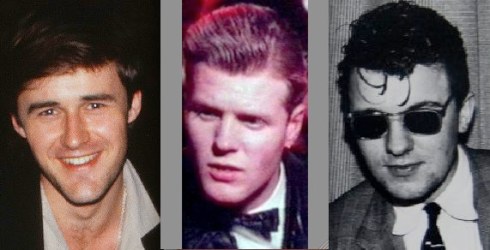
Three who made a difference: Dagger, Egan and Sullivan
So the core contributions of three prime movers behind the new 80s pop — Steve Dagger, Rusty Egan and Chris Sullivan — go ignored by those historians forever in search of the next guitar hero, because this chapter was about nightclubbing and dance music, not about worshipping rock gods in a stadium.
As the youngest manager with a band in the charts, it is no exaggeration to say Dagger, at 23, initiated the overdue reform of the whole moribund record industry. As a clubland deejay, also 23, Egan looked to European electronica to refresh the music Britain danced to (distinctly different beats from the undoubtedly influential post-disco advances then emanating from New York and Chicago). And as a living beacon of inspiration, Sullivan — whose mantra “One look lasts a day” will be his epitaph — was at 20 one of those rare polymaths to whose feet you could trace the roots of many aspects of 80s youth culture, not least the pervasive influence of Soho’s Wag club which he named in his own image, and co-directed and hosted for 19 years with an emphasis on black music.
◼ WHAT’S SPOOKY IS THAT THESE THREE WIZARDS met at the same crossroad in time. What’s important to stress is that they did not act alone. Some people may feel it unfair to name them as leaders of the movement, though I have no hesitation doing so. Dagger, Egan and Sullivan were crucial agents of change — pathfinders who stuck out their necks by daring to do things differently. Without their vigour, diligence, compulsion and good musical taste, the UK’s dire pop scene in 1979 would never have started shifting. Yet they are the first to admit what everybody around them at the time knows: they could not have impacted on the zeitgeist as they did without the dazzling constellation of movers and shakers who orbited the Blitz Club in London’s Covent Garden. Nor should we understate the roles of Perry Haines and Robert Elms who in their early incarnations as cub-reporters were energetic at promoting the Now Crowd’s activities both in the new publications that sprang up as well as in mainstream media.
Andy Polaris, charismatic singer with Animal Nightlife, remarked that my Observer survey overlooked significant episodes beyond the Blitz, and the many “true style queens” who stirred the creative clubland mix, and he gave special credit to “Pinkie, Melissa, the lovely Luciana, Myra (ex-flatmate), Scarlett, Wendy, and Claire with the hair”. He was absolutely right, but he accepted later that because a music magazine had commissioned my 4,000-word slice of history, it was required to emphasise the progress of Spandau as the breakthrough clubland band.

The Observer OMM Oct 4, 2009
Sullivan himself today deflects credit for his own waggish role in actively reshaping clubland: “If you run a club you’re only as good as the person who comes through the door. Whatever your inspiration, you always need the following. In the 80s, a lot of people made a success out of being themselves and the world would be a boring place without them.”
Shapersofthe80s will redress the balance by telling fuller aspects of the history as the weeks go by. It’s central to this website’s credo that sheer youthfulness and significant collaboration were the unprecedented hallmarks of the New Romantics juggernaut. Just as the Swinging Sixties were shaped by perhaps 30 bright sparks in Chelsea, so the Swinging Eighties were shaped by 30 or 40 energised individuals in and around the Blitz.
These post-punk hedonists represent a final cohort of Baby Boomers as the postwar birth-rate peaked in the UK, before it began to plummet for a decade and sociologists drew the demarcation line announcing Generation X (somewhat later than in the US). The cohort born between 1958 and 1964 (proponents of the Generation Jones thesis choose the bracket 1955 to 1967) shared the liberal boomer instincts for reassessing contemporary values, but as they finished their education the ravages of economic crisis during the 1970s threatened any expectations of entitlement and galvanised them to pursue self-sufficiency on their own terms.
As the Blitz Kids shook off teenage doubt, 1980 saw an outburst of all those talents that the following Generation X would have to live up to — leadership, adaptability, negotiating skills, focus. And as children of the age of mass TV, these can-doers excelled especially in visual awareness. There certainly hasn’t been anything like such a determined manifestation of youth culture since 1980, when the future looked daunting and the young had every right to demand a new deal.
◼ EVERYTHING ABOUT 1980 WAS EXCEPTIONAL. Britain was plummeting into recession in a far scarier world than today’s. Right now, Britain’s future looks dismal because the financial crash of 2007–8 will impose years of sacrifice and economic decline which no political party can prevent. That much is certain. In 1980 the future was unfathomable. A writer who is a former colleague of mine said of the Observer article that she didn’t recognise my political interpretation of the 80s. I’d say that in itself is indicative. Such was the turmoil pervading the entire political spectrum, that the nation’s fortunes looked dramatically different depending where you stood.
Despite the Conservative election landslide of 1979 that put Margaret Thatcher in power, unemployment was soaring and the political climate stank with public disillusion while Labour extremists saddled their strife-torn party with an unelectable leader to force splits within its ranks. Britain was a year away from a mighty rending of national fabric. When the Labour Party fell apart, it came as a shock to MPs from all parties to see angry moderates leave to launch a new Social Democratic Party (SDP), so named because they wanted to model it on the social democracy of the European Union. An SDP Alliance with the Liberal Party not surprisingly scored by-election successes.

The Observer OMM Oct 4, 2009
The Cold War between the West and the Soviet Union escalated with the Soviet invasion of Afghanistan, and Iran became an unknown quantity following the fall of the Shah. British suspicion of the US was exacerbated when the UK government agreed to its establishing ground-launched Cruise missile bases within spitting distance of London, thus magnifying its potential as a target for Russia. Then, even as the IRA intensified its bombing offensive in Northern Ireland, the Conservative government went to war with Argentina.
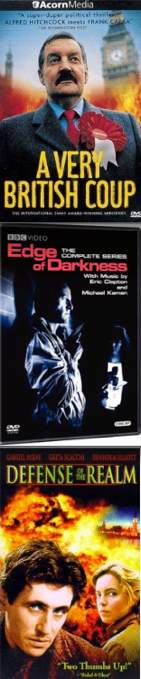
 Television and cinema documented the paranoia of the age in a series of unnervingly intelligent “what-if” political dramas. (It’s well worth catching up with A Very British Coup, Defence of the Realm, Hidden Agenda, House of Cards and Edge of Darkness, which is widely regarded as the best British TV drama ever, currently being remade with Mel Gibson.)
At a more parish-pump level, Britain’s three-tier class war was alive and rampant, as Jilly Cooper’s book titled Class showed by becoming a runaway bestseller in 1979. Even our liberal-minded editor at the Evening Standard, Charles Wintour — a guiding hand behind the new SDP — was wont to ask when hiring staff for the Londoner’s Diary: “Which set do you move with?” Which “set” you aligned yourself with in society deeply coloured your view of the Thatcher years, which became characterised by unfeeling gentrification and the destruction of organised working-class power bases.
◼ ALLEGIANCES BURST SPECTACULARLY INTO LIFE on the Guardian newspaper’s website this year, 2009. In response to news of Spandau Ballet’s reunion on March 25, a blogger expressed his loathing of the band as the embodiment of “Thatcherism on vinyl” which promptly precipitated 345 comments. Yes, 345 !!! Can anybody recall another pop group provoking such outrage among the Guardian’s politically engaged readership?
One reader nicknamed Georges Bataille injected a note of reason among those 345 comments. He made a pertinent case for the UK’s North-South divide providing a barometer of the politics of pop… a more traditional Red Flag Old Labour legacy in the once-industrial North of England, and a softer more mainstream pinkishness from the Red Wedge bands of the South. (It still comes as news to many fans that three of the Spandau Ballet boys’ fathers were committed trade-unionists, and the band members and many in its entourage were Labour voters.)
I’d argue that in the 1980s, much more so than in today’s politically indifferent climate, where you came from both geographically and culturally made a huge difference to how the forces of lacerating social change impinged on you. The “set” you moved with tended to subscribe to a unique mindset and tensions weren’t far from the surface. Jingoism over the Falklands war split the young from the old. Republicans agitated for an end to the monarchy. For the first time in generations, Britain witnessed rioting on its streets over issues such as race, unionisation and taxation.
◼ BACK AT THE METROPOLITAN PAPER where I worked, its revered editor made the unforgivable decision to spike the first discussion of the Blitz scene I submitted for publication in 1980. His handwritten verdict on my copy was: “Rather too esoteric for us.” A few months later I tried again with a broader survey of the private worlds of young Londoners. This time the deputy editor flew off the handle. “You’re making this up!” he stormed. I protested that he lived just down the trendy King’s Road, about half a mile from the influential clothes shop, Acme Attractions, so he must have noticed these weird young fashionistas. His reply: “I’m pleased to say I haven’t walked down the King’s Road in 20 years.” Fortunately, by this stage Wintour had seen the light and he agreed to publish, albeit an abridged version of what I had written. Dagger, Egan, Sullivan and friends were well along the road to making history.
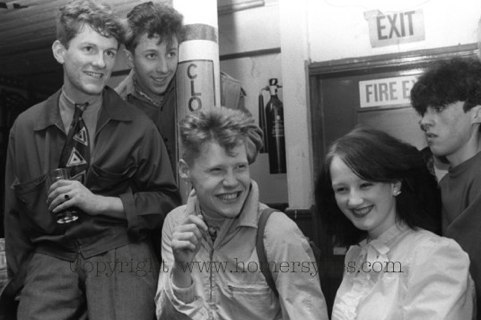
London’s young dynamos in waiting: seen at the Blitz in 1980, Ollie O’Donnell, Jon “Mole” Baker, Robert Elms and Jo Hargreaves. Photograph courtesy of http://www.homersykes.com
➢ Elsewhere at Shapersofthe80s: 190 acts who set the style for the new music of the 1980s
FRONT PAGE




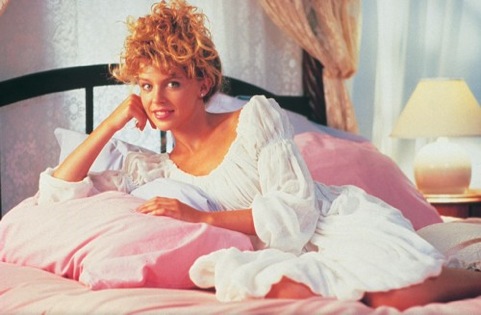
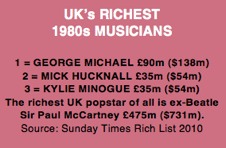 The other two richest stars from the 80s are each estimated to be worth a relatively puny £35m ($54m). They are Lancastrian Mick Hucknall of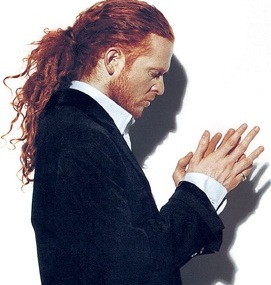






 ➢➢ Shapers of the 80s ➣➣