Category Archives: Clubbing

➤ Martin Rushent — the man who made stars of the Human League — is dead

Martin Rushent , electronic music, British pop, swinging 80s,

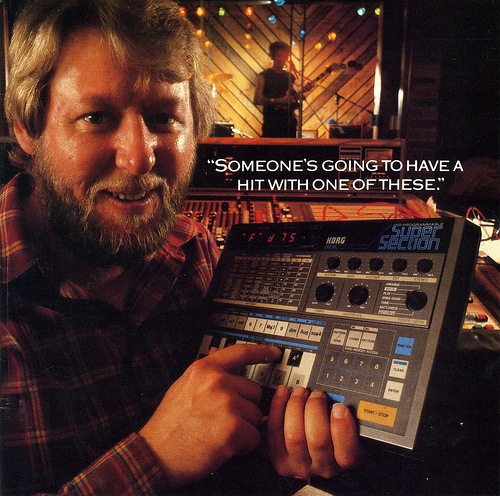
Martin Rushent with Korg Super Section programmable sequencer (1985)

❚ A TRUE SHAPER OF THE 80s DIED YESTERDAY. Martin Rushent, the mould-breaking UK music producer, was 63 when he suffered a heart attack at his home in Berkshire. What he stamped on 80s electronica was a rhythmic template of synths and drum machines that came to characterise much mainstream pop, notably The Human League’s breakthrough album Dare in 1981, which spent 71 weeks in the UK chart, and became a worldwide smash. Rushent was known as a hard taskmaster. He insisted on bringing the Sheffield-based band south to escape the “unhealthy atmosphere” of Monumental Studios oop north, and his influence was not immediately welcomed by the League’s leader Phil Oakey, following the early band’s split and reconfiguration in 1980.
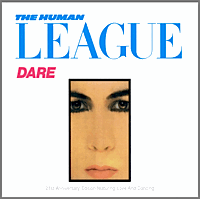
Dare, The Human League,album, pop music, Martin RushentIt began with their first single The Sound of the Crowd [see video below] which peaked at No 12. Rushent was a pioneer of the remix, who decided to improve on the League’s original version of Dare by creating 1982’s Love And Dancing, a complete makeover of the original album. It went to No 3 in the LP chart and is today regarded as his game-changing calling card. As with the Stranglers earlier, Rushent achieves a razor-sharp clarity for each instrument, here dominated by the electronics he so believed in. The Scottish pop group Altered Images also enjoyed chart hits thanks to Rushent’s production. He was named Best British producer in the 1982 BRIT Awards.
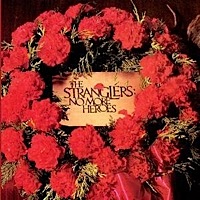
The Stranglers,rock music,No More HeroesMany also regard Rushent as the best new-wave producer of the late 70s through his work with The Stranglers, Britain’s longest-surviving rock band from that post-punk era (he produced their first three albums which would become both commercial and classic, Rattus Norvegicus, No More Heroes and Black and White), as well as Gen X, Buzzcocks, XTC, 999 and Hazel O’Connor. Other acts he engineered earlier in the 70s were T.Rex, David Essex, Fleetwood Mac, Yes and Shirley Bassey.

Rushent custom-built a £250,000 high-tech recording studio at his home near Reading where, he said, “The air-conditioning alone cost me £35,000”. Here ex-Buzzcock Pete Shelley made his debut album Homosapien (1981) as a solo artist for Rushent’s record label Genetic. This had its London office a couple of floors up from the legendary Blitz club where Rusty Egan and Steve Strange ushered in the New Romantics movement in 1979. Egan says that Rushent facilitated two Visage tracks, Tar and Frequency 7 (“recorded in his garage in 1979”).

His 37-year-old first son Tim says his father hated playing by any accepted rules of the game and brought irreverence to the production process. His musical signature was to add a sophisticated mix of vibrance and colour, so beefing up the musical temperature higher than a band managed to achieve for themselves. He cites The Human League’s first No 1 hit Don’t You Want Me, and Fascination (as well as Altered Images’ Happy Birthday album track). Dad’s tactic had been to bring into The Human League punk rocker Jo Callis from the Rezillos to act as a co-writer and catalyst.
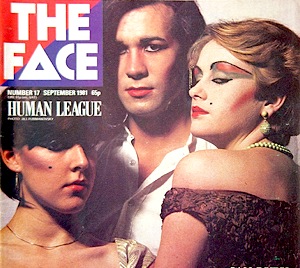
Human League, Phil Oakey, Joanne Catherall ,Susan Sulley

The Human League, 1981: Phil Oakey and the girls he immortalised in that lyric, Joanne Catherall and Susan Sulley

BBC journalist Linda Serck recalls how Rushent made clear who was boss when he met The Human League: “They were under the impression that I was going to work on what they’d done so far and improve that and carry on. I said, ‘No I’m not doing that, we’re starting again’, which was a bit of a shock for Phil [Oakey]. He argued about that but I said, ‘No, if I’m going to produce you, you’re going to do what I tell you to do’. This is my attitude to everybody I produce, it’s a sort of democratic dictatorship!”

Tragically for producer and band, the end came abruptly after three years’ hard work. In a moment of pique, backing singer Susan Sulley (famously discovered while at school dancing “in a cocktail bar”) asked the perfectionist Rushent, who was old enough to be her father: “What do you know about what young people want?” In any normal workplace this would be grounds for her dismissal. In this case, the insult detonated the end of a lucrative, million-selling business partnership.

Today, Rushent leaves his wife, Ceri, and four children from two marriages.

➢ “When producer Martin Rushent took the Human League’s leaden new song and turned it into pop gold, the band hated it” — A revealing interview with Sound On Sound, 2010

♫ Peaches by The Stranglers — “Bass sound?! I asked him one time how he got that bass sound, he said: I turned everything up” — James Rushent, his second son, a musician.

♫ Three days ago Martin Rushent listened to two of his own tracks at his MySpace page: In Your Arms Again (from 2007) and Itchy Hips (2006).

+++

AMONG TRIBUTES FLOODING IN TODAY

Hugh Cornwell , The Stranglers,Hugh Cornwell (left), vocalist and guitarist with The Stranglers: “ It is with great sadness that I hear of Martin Rushent’s passing. He was a vibrant and gifted individual who was able to extract the essence of what The Stranglers began with, and translate it into something that could be played on radios across the UK. It was obviously no one-off success, as he was later to show with The Human League. I remember him fondly.

Midge Ure of Ultravox “ He saw the potential in synthesisers and a future in electronic music. Sad loss for all music.

Visage drummer Rusty Egan: “ Martin, Midge Ure, Barry Adamson, Billy Currie, Dave Formula, John McGeogh, myself and Steve Strange all hanging in your house in summer of 1979 recording our debut album VISAGE … Because YOU believed … THANK YOU … You were a total genius, and like all geniuses before you, you had a crazy life but an amazing body of work … I am welling up remembering your kindness and love for music…
➢ Listen to Rusty Egan’s set of Martin Rushent re-mixes from the 80s dancefloor newly uploaded to Soundcloud

Altered Images drummer ‘Tich’ Anderson: “ I’ll remember all those hours in Genetic studios fondly. Sorry for crashing your Jaguar. xxxxxx You were a genius Martin.

Visage vocalist Steve Strange: “ Martin one was not only a genius but as a 17-year-old making his first record, he was a true role model, inspiration and guiding figure. He signed our first record Tar to his record label and for us, started the ball rolling. We owe him so much. Thank you.

Tim Rushent, son and sound producer: “ As many of you know I had a VERY fractious relationship with my Dad. But I never doubted his work as a producer, friend and raconteur. Feeling even more proud of him professionally today than I have done for 37 years.

➢ Pay your own tribute at the Facebook page Martin Rushent Memories

Prof Ben Rosamond, Uni of Copenhagen: “ Just under 36 minutes of music, but thousands of hours in the making. According to Simon Reynolds in Rip it Up, Love and Dancing consisted of 2,200 main edits and a further 400 small edits. There were so many splices that the mastertape was close to disintegration. The work of a genius. Others have said this, but it’s true for me as well. Martin, you fashioned the soundtrack of my teenage years and so many of the melodies and musical phrases that pop in and out of my adult consciousness are yours. Thank you. Rest in peace.

Heather Priestley, anaesthetic ODP, London: “ Martin you were a much loved legend, RIP. I haven’t felt this sad since losing John Peel, like you, part of my youth and the music that made me who I am today.

➢ Telegraph obituary: “Rushent forged a new way of sequencing and programming synthesiser-based music — in the process pioneering the technique of sampling”


FRONT PAGE

2011 ➤ The ghosts of Fac and Hac walk tall again

Hacienda, Manchester, clubbing, Tony Wilson, Peter Hook, Factory Records

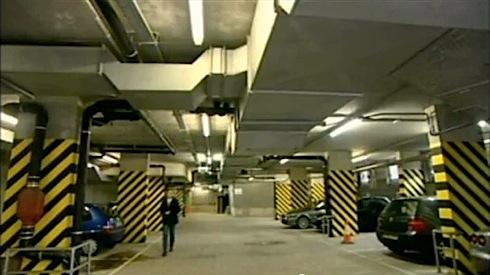
The Hacienda today: the former nightclub’s dancefloor is a carpark beneath a block of flats. Click image to run rare video footage as Tony’s son Oliver Wilson reflects on the legacy of his father’s nightclub

❚ BIG NEWS OUT OF MANCHESTER, recently named the UK’s live music capital by the PRS. After a week or two of wrinkles comes a smart new website and the very clear announcement: “Haçienda Records is the official digital label of FAC51 The Haçienda and based exclusively at fac51thehacienda.com. Crossing all forms of indie and dance genres, the label has initially been an outlet to publish the output of Peter Hook but with the new revamp and full establishment of the label, Haçienda Records is also gearing up to release new and established artists on a monthly basis.”

❏ May 18–28, 2011 — Haçienda Records launches its new website with an exhibition of original memorabilia titled The Haçienda Then and Now, at the Richard Goodall Gallery in Manchester. Some FAC51 artworks on show are for sale at the gallery, along with original club posters.

Ben Kelly, Hacienda club, Manchester, clubbing, Peter Hook

Industrial light and magic: Ben Kelly’s design for the Haçienda interior in its heyday — plus that treacherous step onto (or off!) the dancefloor. Two views, idealised as silkscreen prints by Morph & Ben Kelly 2011, available through paulstolper.com

MUSIC HIGHLIGHTS TO PREVIEW AND PURCHASE

Haçienda Records initiates a new cataloguing series that starts with HAC 001, Man Ray’s Summer 88 EP (Jan 2010). The new website contains all Man Ray and Freebass releases to date, plus Basement Jaxx, 808 State and many other Factory mixes.

FAC 51, The Haçienda, record label, Factory Records, Hacienda club, Peter Hook❏ Man Ray’s new EP Tokyo Joe (Hac 006), released exclusively on the website, is a reworking of the version made for the opening of The Factory club in Manchester in February 2010.

❏ The Light’s debut EP 1102 /2011 is released May 16.

❏ Graeme Park, the Haçienda’s resident Saturday night deejay in the 80s, contributes a mix of classic and modern acid house and disco, as Then Haçienda Now, plus his Vinyl Fixation Vol 1.

❏ “Mancunian Rock Royalty” Hooky and Rowetta presided over world premieres of The Light’s rendition of Atmosphere and the unreleased Joy Division track Pictures In My Mind Friday on BBC 6 Music’s Radcliffe And Maconie Show, April 29.

❏ Haçienda Record’s releases for June and July are Humanizer’s This Tiny Universe EP, and Richie G’s Baum…./Titten, a double header of German and underground resistance-style instrumental techno.

Artists who wish to send material for consideration
should e-mail artists [at] fac51thehacienda.com

PETER HOOK ON THE FOLLY OF FACTORY

24-Hour Party People, Michael Winterbottom,Factory Records, movie trailer,

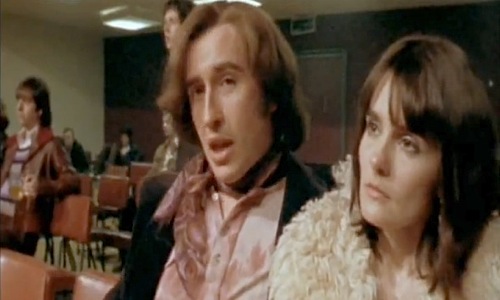
Face of Factory: Steve Coogan plays Tony Wilson in the all too ironic docu-drama, 24-Hour Party People

❚ BASSIST PETER HOOK was a co-founder of the rock band Joy Division in 1976, originally named Warsaw, with vocalist Ian Curtis, guitarist Bernard Sumner and drummer Stephen Morris. After the death of Curtis in 1980, the band reformed as New Order. Joy Division’s debut album, Unknown Pleasures, was released in 1979 on Tony Wilson’s nascent label Factory Records, the story of which became the most priceless rollercoaster ride in UK rock history. The label attracted a roster of idiosyncratic acts, plus luminous talents such as graphic designer Peter Saville and architect Ben Kelly who created the landmark nightclub the Hacienda, which opened 29 years ago next Saturday, dubbed with its product number FAC51, and with Hook as co-owner. All are parodied in Michael Winterbottom’s 2002 film 24 Hour Party People, and some feature in Anton Corbijn’s 2007 film Control about the life of Curtis.

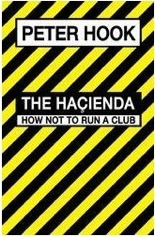
Peter Hook,The Hacienda, How Not to Run a Club,paperbackIn 2009 Hook told the tale of FAC51, in The Hacienda: How Not to Run a Club, in a very personal memoir of the 80s which is far sadder, funnier, scarier and stranger than anyone could imagine. The Sunday Times Culture review called him “a born anecdotalist”. i-D has an interview here. In 2010, Hook opened a new venue in Manchester, FAC251, in the former office of Factory Records designed by Kelly. This week the digital record label follows.

➢ Peter Hook’s own website

FRONT PAGE

1982 ➤ Spot the faces at Phil and Rob’s bleeding-edge Dirtbox


+++
❚ HERE’S A NEW SLIDESHOW compiled by Ian Whittington, the original deejay at the Dirtbox — London’s itinerant underground warehouse party run by Phil X and Rob Y, which started life in March 1982 over an Earl’s Court chemists shop. By 1983 it was one of the four key club-nights that defined The New London Weekend in The Face magazine. In among the soulboys, soulgirls and rockabillies, look out for a young Sade, her musicians Stuart and Paul (then in the band Pride), Boy George and George Michael … Ian says the Nina S soundtrack was played at the Dirtboxes in London Bridge, King’s Cross, Stockwell Green, Titanic, Wandsworth and Bournemouth.

FRONT PAGE

1981 ➤ Ballet on Broadway, leading the British invasion of America, spring 1981

On this day 30 years ago, 21 Blitz Kids, average age 21, took Manhattan by storm. Spandau Ballet provided the new British electropop, the Axiom design collective provided the radical London fashion show, while Tina Turner and Robert de Niro joined the coolest audience in New York City to witness the new sounds and new styles of Swinging London…

 Spandau Ballet, Blitz Kids, Jim Fourratt, Axiom fashion,Sade Adu,British invasion,

First published in the first issue of New Sounds New Styles in July 1981

Click here to read what happened for seven days in May
when the Ballet hit Broadway

FRONT PAGE

➤ Did London’s £15m security cameras really fail to record attack on Boy George’s best friend?

Philip Sallon, nightclubbing, homophobic attacks,

Birthday party 2010: clubworld entrepreneur Philip Sallon seen last November at Home House, courtesy pandemonia99.blogspot.com

❚ LAST WEEKEND BANG ON PICCADILLY CIRCUS one of London nightclubbing’s most familiar superstars — a leading club promoter and party planner for the past 30 years — was beaten senseless at about 3.30am. Police say two people kicked him in the head repeatedly and ran off. They fractured his skull. So far, however, neither the Metropolitan Police nor Westminster City Council have reported any surveillance video footage of the incident. On Piccadilly Circus.  The most famous, most brilliantly lit traffic roundabout in our 24-hour capital city.

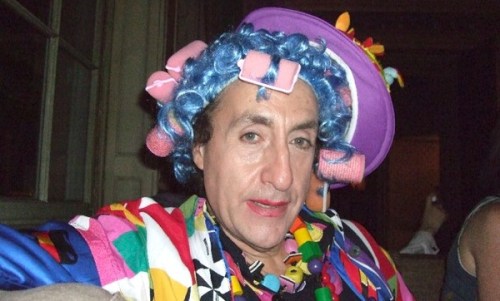
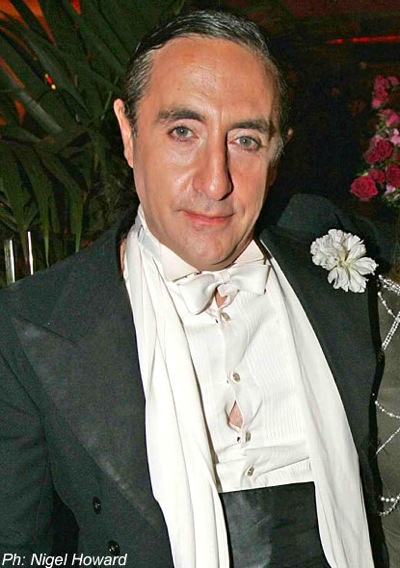
Philip Sallon, club promoter, party planner

Sallon as few of us have ever seen him, pictured last year by Nigel Howard

Tuesday’s Evening Standard carried the headline: Boy George appeals to catch attackers of ‘oldest and closest friend’. The report said: “Philip Sallon, 59, a flamboyant figure on the West End club scene, is recovering in hospital after the assault near Piccadilly Circus in the early hours of Saturday. Mr Sallon, from St John’s Wood, who founded the Mud Club in the Eighties, was stamped on and kicked in the head and suffered broken bones in his face.”

The fact that Sallon is an overtly gay man has raised suspicions that the attack was motivated by homophobia.

Pop star George O’Dowd told the Standard: “I am very upset. He is my oldest and closest friend. He is a colourful character but certainly not aggressive. He is not someone who would have got into a fight. He is a bit like me and just goes out on his own.”

➢ Meet at the Eros statue on Piccadilly Friday night/Saturday morning April 15–16, from midnight to 03:30 to distribute witness appeal flyers, to talk to potential witnesses and to show your support. Alice Shaw, Tamara Adair, Benjamin Till have organised the Facebook group Supporting Philip Sallon.
➢ April 8 update: Guardian Online reports a change to the precise location where Sallon was attacked. “The victim was found outside Ripley’s Believe It or Not exhibition,” police told The Guardian. This is housed in the triangular building once known as the London Pavilion, directly across Shaftesbury Avenue from Gap, which was mentioned in early reports.

April 16 update — Only about 30 of the 127 Facebookers who said they would attend this morning’s rally had arrived when Sallon sympathisers carrying posters bearing the victim’s photo departed from the Eros steps just after midnight to seek witnesses in nearby streets. One of the three Westminster policemen accompanying them was vague about where Sallon had been found on April 2. He seemed to think Sallon had staggered north to Regent Street before collapsing, whereas the Standard had police reporting he was found outside Gap and The Guardian outside Ripley’s, which has five security cameras on various parts of its Piccadilly facades. Among many building works in progress around the Circus, five more CCTV cameras can be seen within line of sight of Eros himself, which makes it all the more surprising that no footage of the attack has come to light.

George appealed for witnesses to come forward: “The police are dealing with it but apparently there is no CCTV footage.”

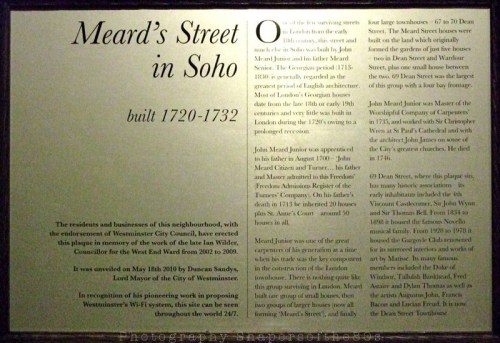
The scandalous irony is that half a mile away, Westminster Council celebrates the glory of its CCTV system with a plaque in Meard Street, Soho, on the wall of the former nightclub “Gossips formerly Billy’s”. This legendary cellar club is where Sallon and O’Dowd’s generation gave birth to the once-a-week clubnight that transformed British clubbing at the dawn of the 80s, and made London a dance destination for the young people of Europe. [Read The Making of UK Club Culture, from The Face, 1983]

The inscription on the plaque, which was unveiled only last year, pays tribute to the late Ian Wilder, a Westminster councillor: “In recognition of his pioneering work in proposing Westminster’s Wi-Fi system, this site can be seen throughout the world 24/7”. Opposite the plaque, a Wi-Fi enabled camera hangs from a lamp-post so that the world may view the reasonably tranquil pedestrian walkway that is Meard Street. Seemingly, Piccadilly Circus which teems with people and traffic most nights at 3am does not qualify for such 24/7 surveillance.

CCTV,Westminster Council, Meard Street, Soho, security, WiFi

Visible on camera 24/7: Westminster Council’s plaque in Meard Street

Councillor Wilder saw how wireless technology was being deployed during a visit to the United States. In 2004 he initiated the installation of a pilot wireless network and four wireless TV cameras in Soho, portable enough to be moved to potential troublespots and slung from lamp-posts without attracting attention. They cost a fifth as much as traditional fixed-line CCTV cameras.

Within two years, the Wireless City Project had become a network of 40 wireless cameras, and in Soho, eight remote monitoring stations, as well as mobile applications for food and licensing inspectors, housing estate officers, and parking attendants. These cameras were integrated into Westminster’s existing £15million monitoring system of wired CCTV cameras. The council has long believed that its street surveillance network is one of the most efficient in the world, capturing high-quality, scalable data that can provide viable evidence in the law courts.

A video report at Guardian Online shows us inside Westminster’s CCTV control centre, where a supervisor talks confidently about being able to identify “aggressive beggars, illegal street trading — we can see it all” while enjoying “full talkthrough with police on the ground”. And yet. No sign of two thugs beating Philip Sallon unconscious, apparently. He is still in hospital.

Meanwhile in today’s Evening Standard fashion editor Laura Craik cites the police statistic that homophobic incidents in London have increased by 28 per cent over the past four years — “and that only reflects the ones that were reported”.

❚ @BoyGeorge on Twitter “My friend was brutally attacked & hospitalized on Saturday in Piccadilly, someone called an ambulance? Was it you?” — If you witnessed Philip Sallon’s beating last Saturday at about 3.30am, contact Westminster Serious Violence Team on 0207 321 9315, ref 65 1803/11, or Crimestoppers on 0800 555 111.

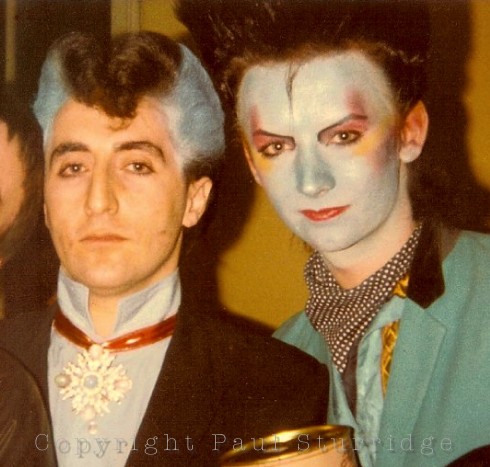
Philip Sallon, George O'Dowd, 1980

Philip Sallon with George O’Dowd, 1980: as mentor and guiding light, Sallon gave George his first break as a deejay at Planet’s nightspot and urged him to form a pop group. Photographed at one of Paul Sturridge’s houseparties in Harlesden

➢ Who’s who in the New London Weekend — The Face in 1983 picks Philip Sallon’s Mud Club as one of the four prime movers making London swing again

➢ View video of The Cruella Diaries — Philip Sallon in performance mode… “I’m wearing British ethnic at the moment”

➢ June 8 update: Wise-cracking Sallon shimmies back onto London’s party scene

Siouxsie Sioux, Steve Severin, Bromley Contingent, Philip Sallon, punks, Bill Grundy

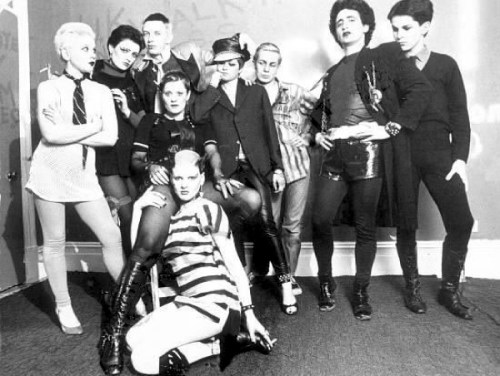
Epic picture of the Bromley Contingent, 1976: Cricklewood-born style leader Philip Sallon wears plastic shorts, second right. The Bromley Contingent were the core Sex Pistols fans who popularised early punk looks. They included Siouxsie Sioux, Steve Severin, Simone Thomas and Simon “Boy” Barker who appeared on teatime TV when the Pistols were interviewed by Bill Grundy in December 1976. Between them they uttered a series of expletives live on-air, achieved lift-off for the punk movement and catapulted Grundy out of his job. (Photographed © by Ray Stevenson)

➢ 2012 update: Six rewrites punk history with an outlandish claim about the Not-Really-From-Bromley Contingent

FRONT PAGE