Category Archives: books

➤ A chapter of Bowie’s musical legacy best forgotten

David Bowie, Lazarus, msjuicals, Michael C Hall, Enda Walsh,

Click to enlarge: cinemascopic stage for Lazarus in New York with Michael C. Hall (left), Cristin Milioti and Michael Esper. (Photo Jan Versweyveld)

WHOEVER GULLED DAVID BOWIE into endorsing the inconsequential and tedious off-Broadway production of Lazarus which opened in London this week can never be forgiven. It is a disgrace on two levels: there’s not an ounce of theatre to this live “play” in which Bowie’s songs are the sole source of inspiration. And the theatre’s sightlines are atrocious.

The only merit in the entire performance comes from the live musicians. The actors have forgotten any training they had, merely meandering around the stage, sitting or lying on it, semaphoring superficially; the script, “a new story” written by Enda Walsh with Bowie, hasn’t the first idea about how to deliver their characters; and the plot moves no further than it was left in the book by Walter Tevis and the cult film on which Lazarus bases its existence, The Man Who Fell to Earth (1976), directed brilliantly by Nicolas Roeg and starring Bowie. In this musical claiming to be a “sequel”, after two mind-numbing hours nothing has been advanced for the immortal Earth-bound alien Thomas Newton who lives on gin and television.
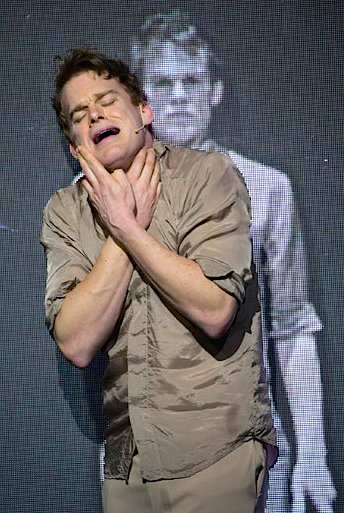
Lazarus, Michael C Hall

Michael C Hall as Newton on the London stage

It creaks like a period piece of sci-fi by ignoring the major technologies that have transformed fiction no less than real-life during the past 40 years: the personal computer, the genome, the internet, artificial intelligence. This year’s TV drama The Night Manager, as an updating of John Le Carre’s 1993 novel, was infinitely more electrifying about the nowness of progress.

Nostalgia does find its place in the best new number Bowie wrote for Lazarus, Where Are We Now?, a deeply affecting tour of the melancholy old postwar Berlin which anybody who visited before the fall of the wall will never forget. Alas, here a culture gap yawns between the imaginative compass of music and the human efforts live onstage which all musical theatre must reconcile. Lazarus is a rock-world concept, bereft of dramatic chemistry, that relies on projected light to evoke the visual kaleidoscope of music videos, from which The Message is whatever key image the PR machine decides to promote. Theatre, it ain’t.

Worse, the biggest insult of all are the ticket prices in the 900-seat temporary installation calling itself the King’s Cross Theatre and being charged by Robert Fox and Jones/Tintoretto Entertainment. Quite apart from the external soundtrack from traffic and aircraft and railway activity, whoever designed this space and its sightlines has never sat in a theatre before.

From our so-called “TOP PRICE” * £65 tickets, situated about two-thirds of the way back, we never had a view of more than the top half of the wide cinemascopic stage. The angle of the raked auditorium was entirely to blame for placing at least six heads directly in front of each paying customer, and everybody else within range spent the duration bobbing their heads and weaving sideways to catch a glimpse of the stage and its often inanimate actors. The bigger disgrace is that other customers had been charged at “Premium” price levels from £160 downwards.

Frankly, I am convinced Bowie is turning in his grave at this presentation of his music.

* Surely a trades mis-description when there are THREE “Premium” price tiers above the so-called “Top Price”!

➢ Tickets still available for Lazarus which runs
until 22 Jan in London

13 NOV UPDATE: THE LONDON REVIEWS

➢ Michael Billington, the Guardian: “an exploration of the existential angst that pervades Bowie’s music: this is the story of a man never wholly at ease in himself or his surroundings. I found myself more impressed by the visual sophistication than emotionally engaged by the story.”

➢ Susannah Clapp, The Observer: “an extended pop video. Woozy and rapt. Long on style but short on wit.”

➢ David Jays, Sunday Times Culture: “an otherwordly muddle… Bowie devised a portentous scenario; Walsh keeps it dead on the page.”

➢ Roundup of reviews in The Stage: “Pretty much the entire world’s press turned out to review its London opening. And everyone disagrees.”

➢ Singer Andy Polaris experiences his own unsettling realisation during Lazarus the musical
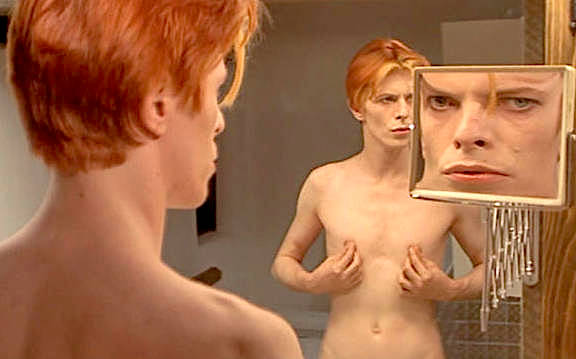
David Bowie, The Man Who Fell to Earth, Nicolas Roeg, films,

Bowie as Newton in the film TMWFTE, 1976: androgynous rock star as an alien visiting Earth from the planet Anthea

➢ David Bowie’s last three songs: decoding the final transmission – Dorian Lynskey at The Guardian

➢ Previously at Shapersofthe80s: A sensational portrait of Bowie as the man who shaped our responses

➢ Previously at Shapersofthe80s:
“I’m not a rock star” Bowie often said

LAZARUS FROM BOWIE’S ALBUM BLACKSTAR
FRONT PAGE

➤ 40 years on, Ridgers casts an honest spotlight on the birth of punk

Derek Ridgers, punk ,Vortex , Clare Thom

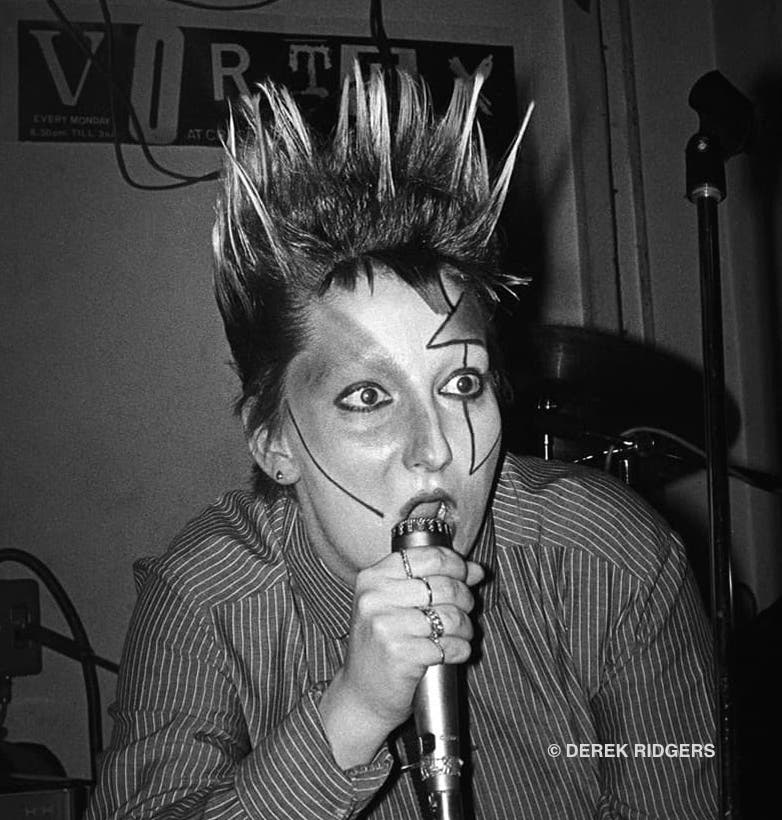
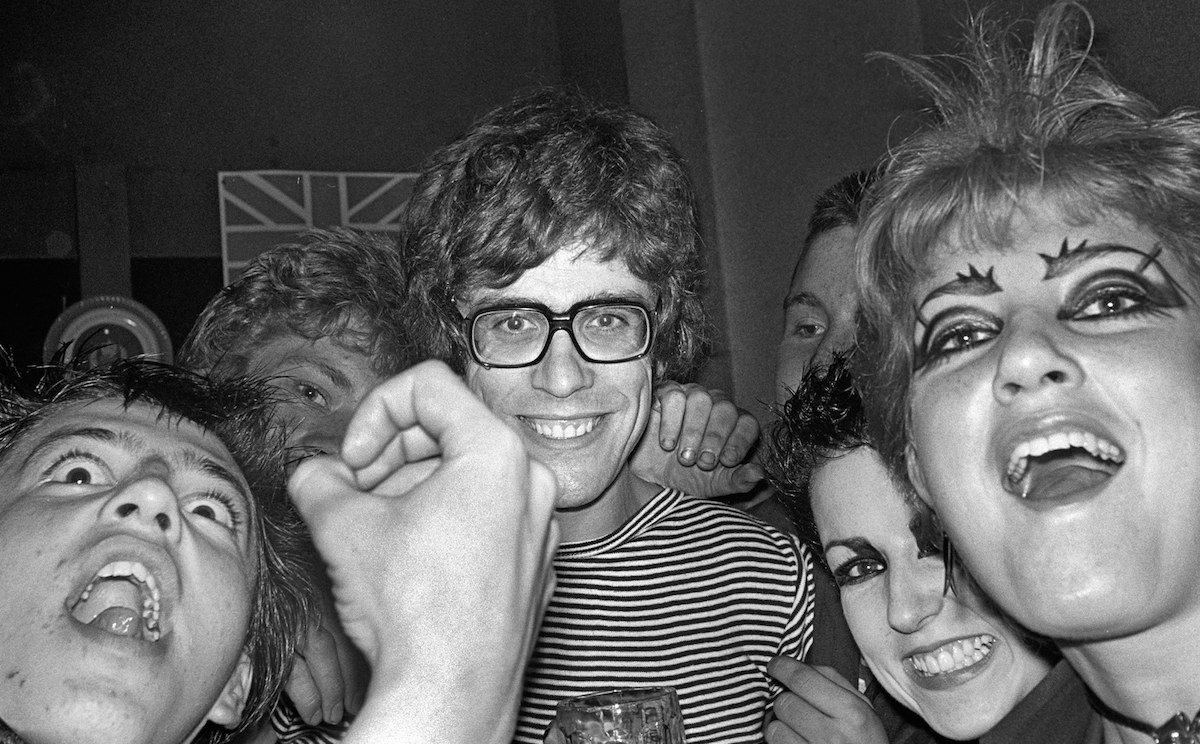
“I didn’t make a very good punk,” says photographer Derek Ridgers, here snapped by a passing punk at the Vortex in 1977, with future Blitz Kid Clare Thom at right

◼ THE CLICHES ABOUT PUNK are the rage, the nihilism, the safety pins. In fact, punk dawned in 1976, like all British youth cults, as a fashion statement that trumped those clichés. A new and powerful photo book from Derek Ridgers titled Punk London 1977 shows in 152 pages just how considered were its style leaders who had to invent their own iconoclastic looks before they could be bought off the peg. There were no mohican haircuts at the Roxy club when it opened in December 1976 and for 100 days became the platform for Generation X, the Clash, the Jam, the Heartbreakers, the Boys, Buzzcocks, Siouxsie and the Banshees and a raucous wave of rebel music that spread to Soho’s Vortex and the 100 Club.

Ridgers says: “In ’76 the audience became more interesting than the bands.” As he turned his camera away from the stage, he focused on the unique characters in the audience who were creating a new movement through self-expression. “Most of the early punks didn’t look like punks anyway. They just looked like young people who would alter their clothes: very often it would be school uniform or there would be bin liners, a few safety pins but not very many. The ethos of punk is really ‘Do it yourself’. It’s not dressing up in leather and having a mohican.”

Click any pic below to launch slideshow

The book launched last night in Mayfair with a vibrant exhibition of its photos and a swell party hosted by menswear designer Paul Smith and the British Fashion Council. Rightly Vogue.com asked Ridgers yesterday: What did you wear while documenting these kids? He replied: “Often I’d be going to gigs straight from work, so I simply wore what I’d worn there—usually a jacket, open-neck shirt, and jeans. I was not a punk by any means.” There’s a key picture of the Damned playing the Roxy in early 1977 where Ridgers is visible in the top right-hand corner, standing on the stairs, in glasses, open-neck shirt, cardigan, smiling. “I didn’t make a very good punk,” he says. No, just a very perceptive footnote to history!

Dazed Digital probed further and asked: Out of all the scenes you’ve photographed, which have you most felt part of? Ridgers replied: “There must be a part of me that wanted to be part of all of them. I see my photography as a very vicarious thing. I suppose if I didn’t wear glasses and if I’d been a little bit more of a macho type of guy, I would have been a skinhead. I don’t think I could’ve ever been a punk or a new romantic.”

As an observer he carved out his own beat along the labyrinthine path British youth culture took during the exotic 80s and became the go-to lensman for his take on more extreme outsider cults. Ridgers told Dazed: “There were a lot of photographers around but I stuck it out longer. Woody Allen said something about success is 80% just being there. It’s the thing with me – I was there. I can’t make any other claims apart from the fact that I was there. Through everything. On the edge looking in. With a camera I was able to stare with some legitimacy.”

The trash mag Polyesterzine asks Ridgers if he could compare today’s Zeitgeist to any of the eras he had shot. “No, not at all,” he replies. “The late ’70s and early ’80s was a very different, much darker time. The streets of London were a mess. The poor guy [I photographed] who had ‘We are the flowers in your dustbin’ tattooed across his forehead had it exactly right. They did all seem like the flowers in a dustbin. . . Things are very different now because a lot of those little clubs don’t exist. Soho for instance, where nearly half my nightlife photographs were taken, is rapidly changing. There isn’t the same after dark frisson of excitement about the place any more. Gentrification and the need for developers to maximise the profit from every square inch of the place means that there just aren’t any scruffy, little basement clubs left. Those scruffy, little basement clubs were the area’s lifeblood.”

➢ Punk London 1977 is published by Carpet Bombing Culture

Adam Ant, Jordan, Vortex, punk, Derek Ridgers,

Derek Ridgers immortalises the night that the pioneering punk icon Jordan sang with The Ants at the Vortex, and says today: “They played far better music IMHO than when Adam became a big star in the 80s”

A GALAXY OF GALLERIES OF RIDGERS’ PIX

➢ At i-D – light on punk’s incendiary early days

➢ AllAccess Online in the cauldron of youth culture

➢ Dazed Digital pictures Punk London

➢ Accent shoots Brutus SS16 with Derek Ridgers

Captain Sensible , Damned , punk music, Roxy , Derek Ridgers

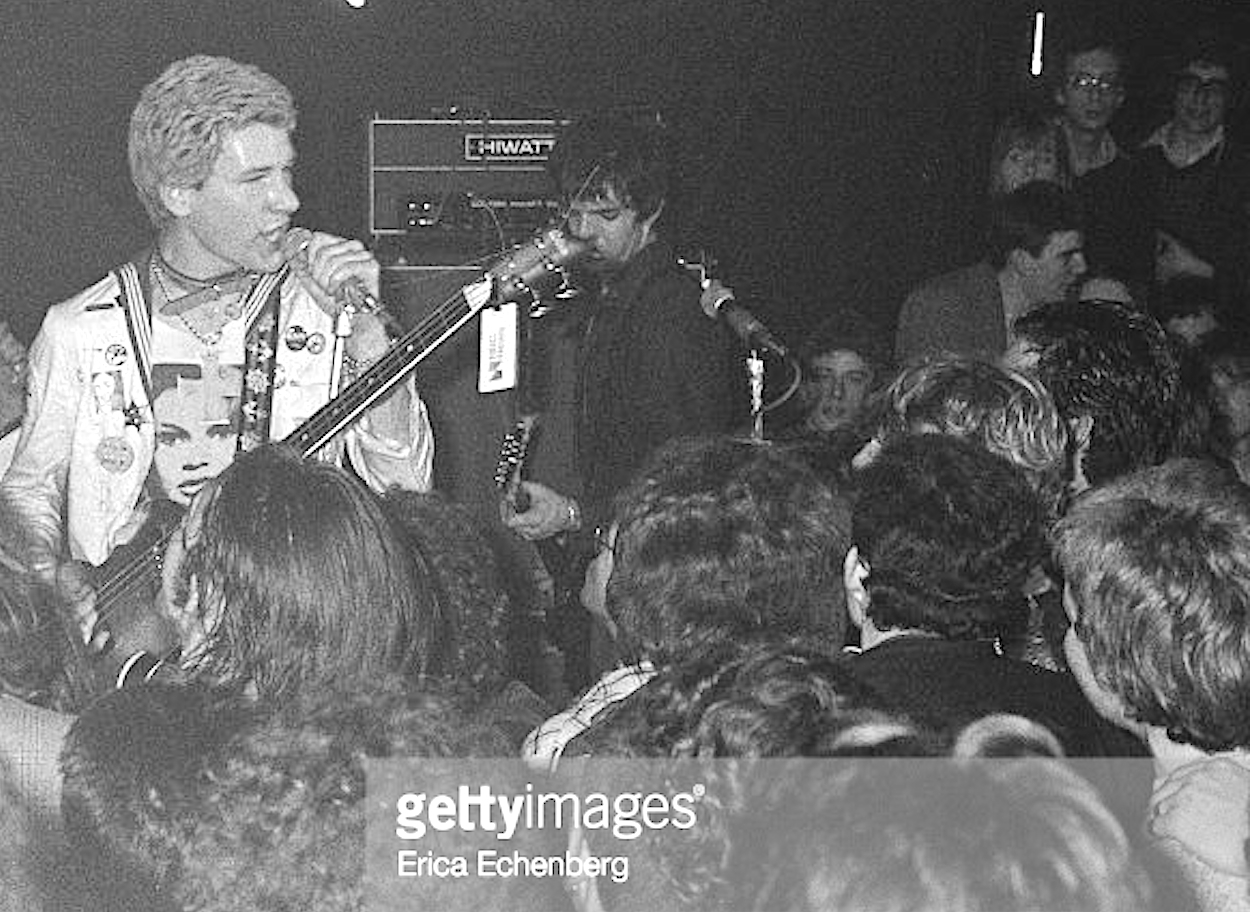
Captain Sensible fronts the Damned at the Roxy in 1977: spot Ridgers the cameraman top right in glasses and open-neck shirt. Photographed by Erica Echenberg

Don Letts, Andrew Czezowski , punk,Roxy

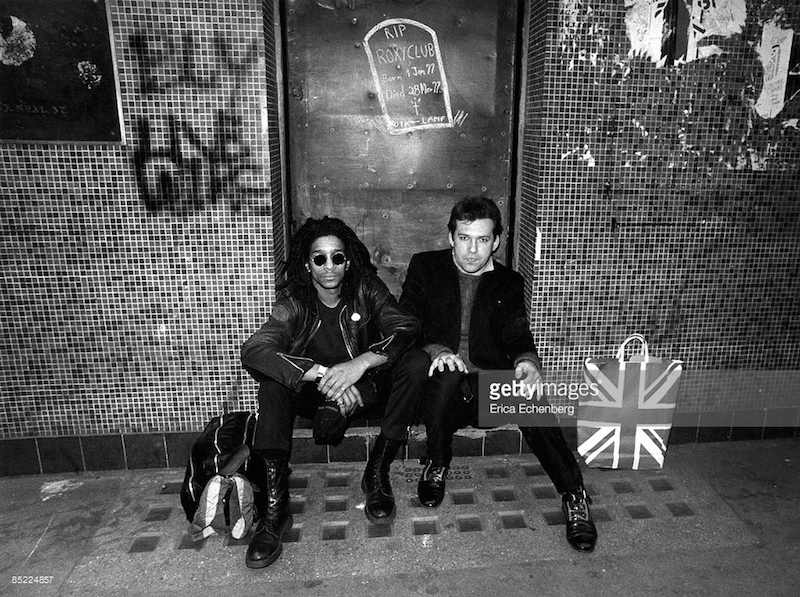
28 March 1977: deejay Don Letts and club promoter Andrew Czezowski outside the Roxy when it closed, three months after giving birth to punk. Photographed by Erica Echenberg

FRONT PAGE

➤ Now David Bowie’s landlady tells her story of the lodger from Mars

David Bowie , Mary Finnigan, book, pop music, biography, Psychedelic Suburbia, 1969, Space Oddity, Beckenham Arts Lab,

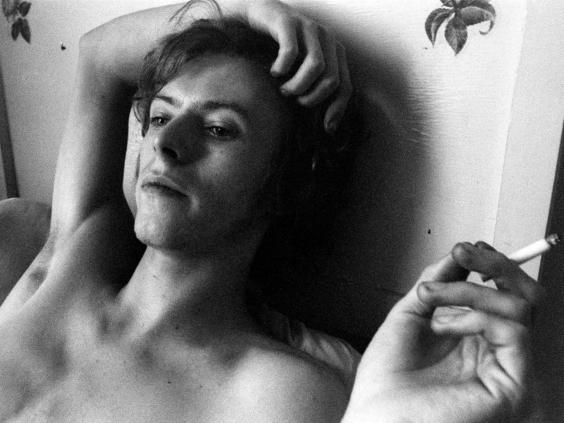
David Bowie at home in Beckenham in 1969, where he became the lodger and lover of Mary Finnigan. (Photo by Ray Stevenson/Rex)

◼ AS A STRUGGLING FOLK SINGER David Bowie was 22 years old and living with his parents in south-east London when, by chance, he met journalist Mary Finnigan, eight years his senior, and moved into her flat in Foxgrove Road, Beckenham, where she lived with her two children from an early marriage.

They became lovers and launched a successful folk club which became the iconic Beckenham Arts Lab at The Three Tuns pub (now a Zizzi restaurant) on the High Street. Mary’s new book, Psychedelic Suburbia, offers new insights about Bowie in 1969, the year in which his first single Space Oddity reached the pop charts. Today The Independent runs a fabulously revealing extract:

We do not observe landlady-lodger conventions. I am happy with this arrangement – we share tincture of cannabis and Lucy’s deliveries of high-quality hashish. We share the space, cook and eat together. And a few days after he moves in, David and I sleep together.

The seduction is a work of art and takes me totally by surprise, when I come home one Saturday evening after a shift at The Sunday Times (edited in those days by my friend and journalistic mentor, Harry Evans). Usually I return to a messy kitchen and a sink full of dishes, showing evidence of baked beans, fried egg and tomato ketchup. But on this occasion, interesting cooking smells greet my arrival, the kitchen is clean and tidy, with the table laid for two plus flowers, candles and incense. The kids are fed, washed and tucked up in bed.

After a spliff and a nice dinner, David creates a nest of cushions on the floor of his room. He settles me into it and places speakers close to my ears on each side. Then he plays me a selection of his current favourite musical influences. Some are obscure, others well known – Jacques Brel, for example, and mind-blowing stereo phasing from Jimi Hendrix. . . / Continued at The Independent online

David Bowie , Mary Finnigan, book, pop music, biography, Psychedelic Suburbia, 1969, Space Oddity, Beckenham Arts Lab,

Friend, lover and landlady: Mary Finnigan and her personal new book about living with Bowie

“ Living from hand to mouth, David also does
casual shifts from time to time at Legastat, a copying office in central London ”
– Bowie as a Brook Street temp ?!?!

David Bowie , Mary Finnigan, book, pop music, biography, Psychedelic Suburbia, 1969, Space Oddity, Beckenham Arts Lab,
➢ Psychedelic Suburbia: David Bowie and the Beckenham Arts Lab by Mary Finnigan (£14.95, Jorvik Press) out now

➢ Previously at Shapersofthe80s: Weird and wonderful new Bowie – his Blackstar man is set to blow our minds, this Thursday

FRONT PAGE

2016 ➤ Shakespeare announces tour dates for US comeback

William Shakespeare, First Folio, US tour, Folger

400th anniversary of William Shakespeare’s death: the Folger Shakespeare Library in Washington, DC, owns 82 copies of his First Folio! (Photo: Folger)

➢ 400 years after his death, Shakespeare’s First Folio goes on tour, NPR reports:
One of the world’s most precious volumes starts a tour on Monday, in Norman, Okla. The Folger Shakespeare Library in Washington, DC, is sending out William Shakespeare’s First Folio to all 50 states to mark the 400th anniversary of the bard’s death. Published seven years after he died, the First Folio is the first printed collection of all of Shakespeare’s plays. Of approximately 750 copies of the First Folio that were printed, 233 survive. The Folger has 82 of them — the largest collection in the world. . . / Continued at NPR online

“The Folger has 82 First Folios” !!!

➢ Dates for the year-long touring exhibit of the First Folio from coast to coast

FRONT PAGE

➤ Spicy new survey from Derek Ridgers celebrates the wild hours between dusk and sunrise

books, Carpet Bombing Culture,photography, nightlife, London, UK, youth culture, street style, Dark Carnival, Derek Ridgers

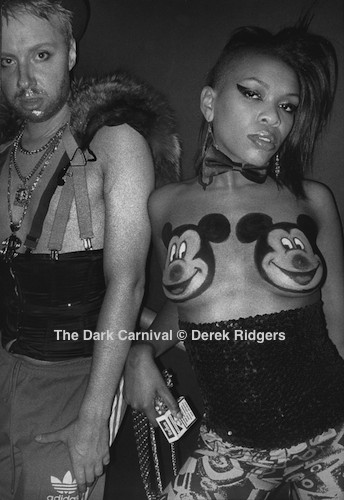
Clubbers at the Astoria in 2000 photographed by Derek Ridgers

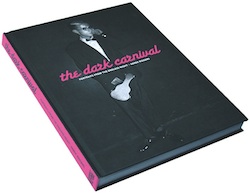
◼ HERE’S A PROMO VIDEO FEATURING some preposterous talking heads who include photographer Yasmine Akim and dancer Constantine Flowerz, describing a new large-format book of spicy photographs from Derek Ridgers’ travels through London clubland… The Dark Carnival: Portraits from the Endless Night is being published next week by Carpet Bombing Culture.

books, Carpet Bombing Culture,photography, nightlife,London, UK, youth culture, street style, Dark Carnival, Derek Ridgers, If you’re in it, you’ll be on the list for the launch party on Friday 27th from 5pm at the Lights of Soho gallery, followed on by a free Soho Swag night from 9.30pm at the 68 and Boston bar at the top end of Greek Street, hosted by 80s shapers Christos Tolera and Chris Sullivan.

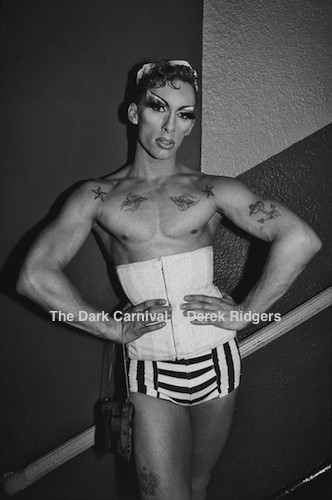
The Dark Carnival is Derek’s second book published this month. He modestly calls it “my 40-year wander through nightclubs” but this delicous cornucopia selected by Derek himself proves much more of an adult shocker where anything goes on the themes of sexuality, seduction and shame (lack of), with eye-poppers shot at Anarchy, Smack, Submission, Wacko, Wicked, Rubber Ball and coming right up to date at Torture Garden.

➢ Buy The Dark Carnival direct from Carpet Bombing Culture, 216 huge pages for £30

photography, nightlife, London, UK, youth culture, books, Carpet Bombing Culture,street style, Dark Carnival, Derek Ridgers

Anonymous clubber in Brixton 2011 photographed by Derek Ridgers

AUDIO UPDATE: ROBERT ELMS INTERVIEWS DEREK ON BBC RADIO LONDON 9 dec 2015

+++
Q: Does this kind of nightlife still exist?

“Yes it does. It’s not quite so focussed today and readily categorisable. Hardly any of the little basement clubs are left in Soho. I think the St Moritz is the only one” – Derek Ridgers on BBC Radio London

FRONT PAGE