Monthly Archives: Nov 2010

1918 ➤ War: the 20th-century way to build a new world

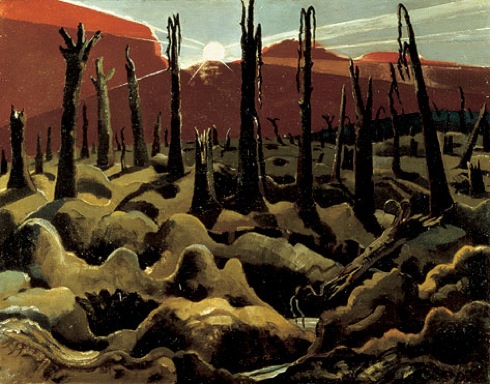
We Are Making a New World,  Paul Nash,Imperial War Museum,Robert Hughes, Shock of the New

We Are Making a New World, 1918: war artist Paul Nash’s ironic vision of the Western Front (Imperial War Museum, London)

❏ Robert Hughes laments the effects of war in The Shock of The New, his 1980 BBC series on modern art (6 minutes)
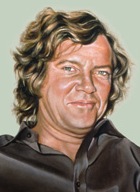
Robert Hughes , Sylvia Shap,Smithsonian Institute

Robert Hughes (1981): detail from portrait of the critic by Sylvia Shap (Smithsonian Institute)

❚ “IF YOU ASK where is the Picasso of England or the Ezra Pound of France, there is only one probable answer: still in the trenches.”

In 1980 the no-nonsense art critic Robert Hughes was standing in the former waste-land created in France by sustained bombardment between 1914 and 1918. He was presenting the milestone TV epic, The Shock of the New, which spanned the 20th century in eight hour-long episodes described recently by one critic as “the greatest series on art ever made”. Just as Jacob Bronowski’s powerful documentary series The Ascent of Man had transformed how new generations thought about science in 1973, so too did the Australian-born Hughes for art.  He had already been the critic for the weekly Time magazine for ten years, and the insight, wit and accessibility evident in his TV series confirmed his status as the world’s leading voice on contemporary art.

“World War One destroyed an entire generation,” Hughes maintained in episode two, titled The Powers That Be. “We don’t know and we can’t even guess what might have been painted or written if the war had never happened. As for the waste of minds, we know the names of some who died: among the painters, Umberto Boccioni, Franz Marc, August Macke; the sculptor Henri Gaudier-Brezska; the poets Isaac Rosenberg and Wilfred Owen. But for every one whose name survives there must have been scores, possibly hundreds of those who never had a chance to develop.”
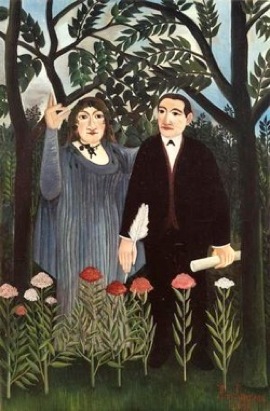
Guillaume Apollinaire ,Henri Rousse

Muse Inspiring the Poet (1909): Henri Rousseau’s painting of French poet Guillaume Apollinaire and Marie Laurencin (Art Museum of Basle)

Today being Remembrance Sunday — the closest to “the eleventh hour of the eleventh day of the eleventh month” in 1918 when the Allies confirmed the cease-fire by signing an Armistice — the BBC not only recalled “the pity of war” through the familiar poems of England’s romantic realists Owen and Siegfried Sassoon. Radio 4 also shocked us with a slice of the French poet so avantgarde as to bravely interlace his awe at the nightmare spectacle of the trenches with themes of eroticism, mechanization and other modernist speculation — Guillaume Apollinaire, the man who gave us the word surrealism. He too had sustained a serious shrapnel wound fighting in the trenches, and died just before Armistice Day.

“Ah Dieu! que la guerre est jolie,” he declared in 1915, which can be roughly translated into English as “Oh! What a lovely war” but unlike the anti-war stage musical of that name created by English Theatre Workshop producer Joan Littlewood, and the subsequent film, Apollinaire’s line was devoid of irony. His first war poem, The Little Car written in August 1914 after he’d driven into Paris to find mobilisation being announced, contained these prescient lines:

We said farewell to an entire epoch
Furious giants were rising over Europe
Eagles were leaving their eyries expecting the sun
Voracious fish were rising from the depths
Nations were rushing towards some deeper understanding
The dead were trembling with fear in their dark dwellings

Dogs were barking towards the frontiers
I went bearing within me all those armies fighting
I felt them rise up in me and spread over the regions through which they wound
The forests and happy villages of Belgium
Francorchamps its l’Eau Rouge and its springs
A region where invasions always take place
Railway arteries where those who were going to die
Saluted one last time this colourful life
Deep oceans where monsters were stirring
In old shipwrecked hulks
Unimaginable heights where man fights
Higher than the eagle soars
There man fights man
And falls like a shooting star

Within me I felt skilful new beings
Building and organising a new universe
A merchant of amazing opulence and prodigious stature
Was laying out an extraordinary display
And gigantic shepherds were leading
Great silent flocks that grazed on words
While every dog along the road barked at them

➢ Listen to Radio 4’s Oh What a Lively War — Martin Sorrell explores the work of Guillaume Apollinaire
➢ The Shock of the New: Art and the Century of Change
— Robert Hughes’s book updated and still on sale
FRONT PAGE

➤ The Princess known as Julia becomes an art object for sale

Ben Ashton, Princess Julia ,

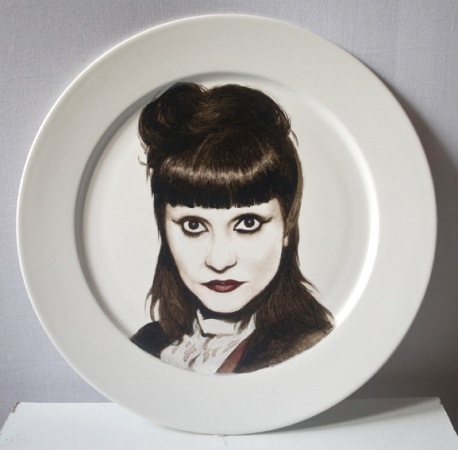
One of Ben Ashton’s unique Princess Julia hand-painted plates on sale at the House of Voltaire pop-up shop. Image courtesy of Simon Oldfield Gallery

❚ PRINCESS JULIA, deejay, former Blitz Kid and a work of living art in daily life, has now been immortalised in the form of a pair of hand-painted ceramic plates. They are newly created by 27-year-old Slade graduate Ben Ashton, a painter and performance artist whose themes include celebrity and voyeurism. The plates go on sale priced £1,250 each in a pop-up shop being run by Studio Voltaire, a not-for-profit independent arts organisation that provides education and studio space in London. Throughout the month, familiar faces from the arts and fashion worlds will be fronting the shop. Julia herself plans to attend on Sunday 21st.

An exclusive edition of canvas bags with leather details, £120, by Stefania Pramma is available through Studio Voltaire online

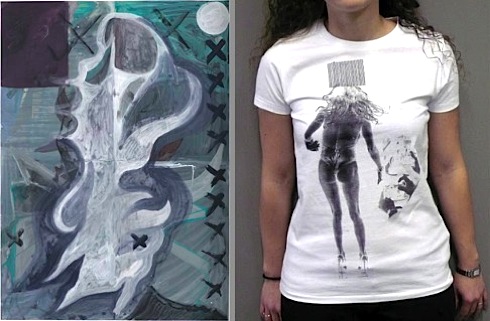
The House of Voltaire is a fund-raising outlet open until Dec 4 in the heart of Mayfair selling a diverse selection of limited editions and original pieces by leading contemporary artists. Gift notions include creative Christmas cards by Cary Kwok, editioned T-shirts by Clunie Reid, lambswool blankets by Renee So, a David Noonan screenprint and splendid canvas tote bags by Darbyshire & Spooner.

Studio Voltaire produces portfolios and affordable editions (£50-£100 per print) of such artists as Linder, Cerith Wyn Evans, Spartacus Chetwynd, Mark Titchner, Dawn Mellor, Daniel Sinsel, Ryan Gander, Hilary Lloyd and Mark Leckey. These are on sale through the Studio’s online gallery.

For Ashton himself the portraits of Julia are the start of a year-long collaboration with other creative talents in The Bloomsbury Studio, a subsidised space opened in 2008 by Simon Oldfield, a 32-year-old former lawyer turned gallerist. Part of his gallery’s profits go to support charitable organisations such as the Whitechapel Gallery and the Contemporary Art Society in its centenary year.

➢ House of Voltaire pop-up shop — Upstairs at Rupert Sanderson, 
19 Bruton Place, London W1 (Nov 11-Dec 4, Mon–Sat 11am-7pm, Sun 12-6pm)
➢ Studio Voltaire online gallery and shop
➢ Inquire about Ben Ashton’s work through the Simon Oldfield Gallery where he has a solo show Feb 11-March 19

Joel Croxson,Clunie Reid, House of Voltaire

At the pop-up House of Voltaire: unique works donated by painters such as Joel Croxson, left, and silkscreened 100% cotton T-shirts by Clunie Reid

➢ Watch artist Ben Ashton live in his Bloomsbury studio

FRONT PAGE

➤ Hear a clip from Duran Duran’s new album — lucky No 13?

Duran Duran, Roger Taylor, John Taylor, Katharine Hamnett

Duran’s Roger Taylor and John Taylor: delivering the new Hamnett message. Photographed © by Roger Dekker

❚ DURAN DURAN ANNOUNCE THEIR 13th ALBUM, the Mark Ronson-produced, nine-track All You Need Is Now, to be released via iTunes on December 21 and in stores on CD and vinyl in February 2011. Keyboardist and original member Nick Rhodes says: “It’s the best record we’ve made in over two decades.” Fingers must be very tightly crossed in view of their last album attempt.

Nick Rhodes, Duran Duran, Dazed & Confused, synthesisers

Nick Rhodes: “videos for every track”

True Shapers of the 80s will recall the glory days of Duran Duran — Rio, Girls on Film and Hungry Like the Wolf — when the Brummie New Romantics were one of Britain’s half-dozen supergroups among the MTV generation. Their champagne lifestyle videos such as Rio, shot on 35mm film, set new standards for extended pop promos during the British invasion of American charts — over the years Duran have claimed 21 singles in the Billboard Hot 100.

Rhodes says of the new album: “We will be making videos for every track, which is something we certainly haven’t done since the very beginning.” This week Duran’s Taylors, Roger and John, were pictured in Katharine Hamnett T-shirts (in an echo of her Choose Life message in the 80s) in Roger Dekker’s photo shoot for the album.

Simon Le Bon, Red Carpet Massacre,

“Humpty” Le Bon during the 2008 Massacre

The venture results from a 2008 collaboration in Paris between Mark Ronson and all four original members of DD — John Taylor, Roger Taylor, Nick Rhodes and Simon Le Bon. In Ronson’s words this is the “imaginary follow up to Rio that never was”. The band also promises a spring world tour to promote the album.

Well, they’re going to have to do miles better than the tedious Red Carpet Massacre album a couple of years back which was an utter chart failure. The tour saw a portly Le Bon gallumphing breathless around the stage in his skinny-fit outfit like a trussed-up Humpty-Dumpty, well past it. The obvious lack of chemistry between singer and musicians was an embarrassment all round, sadly recorded for posterity by VH1. Unsurprisingly, Duran’s five-year contract with Epic Records was not renewed in 2009, and they are currently fending for themselves.

Facebook commenters are already calling for Le Bon to shed his current beard. What about some weight too? Even then, the old fella will need a shot of Viagra.

Duran Duran, logo
♫ Hear a clip from Duran Duran’s single Being Followed,
which is set for release a week ahead of the new album

FRONT PAGE

➤ Status update: QueenLiz2 goes live on Facebook, though Her Maj will not be abused

Fully connected: No of course it’s not Her Maj, just one of the Queen’s impersonators. Photograph © by Mark Bourdillon

❚ NOT BAD — THE ROYAL FAMILY HAS MADE 209,000 friends in its first three days on Facebook. Rebranding what she has along called “The Firm” as The British Monarchy (TBM), Her Majesty Queen Elizabeth II this week opened for business on the web’s biggest social network where democracy in action means that, although we cannot strictly become Her Majesty’s “Friend” as with every other Facebook member, we can express her popularity by clicking on the notorious “Like” button. Nor can we “poke” the Queen or Prince Philip in the jargon of getting acquainted online, but we can certainly scrawl on their wall, though the First Footman of the Interweb reserves the right to remove offensive comments. Indeed, he was kept on his toes on Monday heading off a stream of republican abuse that included the phrase “scrounging layabouts”.

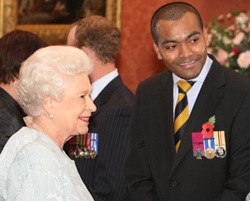
Queen Elizabeth II, Johnson Beharry, VC

Here We are today: meeting Lance Corporal Johnson Beharry, holder of the Victoria Cross (VC), Britain’s highest award for gallantry

Innovations include an exclusive “Near Me” application which will enable British citizens as well as Al-Qaeda to track the Queen’s every move on a searchable map of the United Kingdom. The Court Circular, the topical record of official royal engagements produced by the royal household, is also available on Facebook. For the past 200 years The Times and two other newspapers have enjoyed this privilege.

The TBM Facebook group is however reluctant to share the monarch’s intimate tastes such as those reported in yesterday’s Times and elsewhere: that the Queen’s favourite tipples are gin and Dubonnet; that her TV viewing includes The Bill (a police soap), and Kirsty’s Home Videos (compilations of the British public at play) which she asks her servants to tape when she’s busy, as well as re-runs of horse-racing; and that her cornflakes reside in a Tupperware container on the breakfast table.

An aide said: “Facebook is probably the last bastion of social media the royal household had not yet entered, and the Queen is keen to be fully signed up to the 21st century. The important thing about Facebook is its international reach, as the Queen is head of state in 16 countries.” The 84-year-old Queen uses a mobile phone, has her own private email address, surfs the web and ventured into online networking in 2007 by launching TheRoyalChannel on One’s Tube, sorry, YouTube, followed by @BritishMonarchy on Twitter last year and Flickr this summer.

Royal.gov.uk remains the official website of The British Monarchy which represents all 17 “working members” of the Royal Family. It confirms their official surname as Mountbatten-Windsor, and reminds us that the traditional greeting from men is a neck bow (from the head only) whilst women do a small curtsy. Otherwise, a handshake is fine.

➢ The British Monarchy at Facebook

LOOK WHO WON GONGS THE OTHER WEEK

Brian Cox, Vicki Michelle, ’Allo, ’Allo, University of Manchester, British Monarchy,investiture

Stars of TBM at Facebook: Brian Cox, TV meteor and professor of particle physics at the University of Manchester, displays his OBE (Officer of the Order of the British Empire) following an investiture ceremony at Buckingham Palace in October when the Queen honoured him for services to science. A Facebook comment asked: “What about his achievements as keyboard player for D:Ream?” The actress Vicki Michelle, best known for her role as the saucy French waitress Yvette in the BBC comedy series ’Allo, ’Allo (1982-92), won the MBE (Member of the Order of the British Empire) for charitable services. Her catchphrase when being clinched in the kitchen was: “Ooooooh, René.” © Press Association

FRONT PAGE

➤ Killing a king tells you who you are — so do your haircut and shoes

execution, painting,1649,Banqueting House , King Charles I

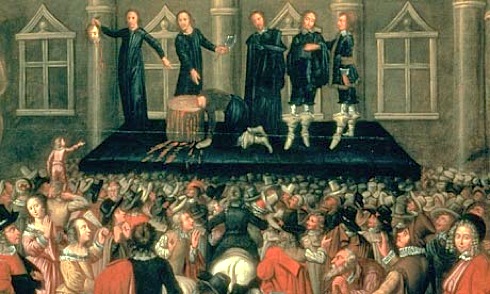
One of Schama’s six epic moments in British history: the execution of King Charles I in 1649, painted by John Weesop. Source: The Gallery Collection/Corbis

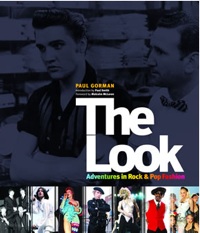
The Look, Rock & Pop Fashion❚ SHAPERS OF THE 80s? A STROLL DOWN MEMORY LANE or an antidote to complacency about the present? Let’s hope the vintage yarns on the inside pages of this website provide a constant foil to the topical blog posts on the front. Even on the pop-cultural timeline, parallels deliver insights: parallels between the Swinging 60s and the Swinging 80s, and what feels highly likely in 2010 to become the Swinging Tens. The signposts to every British youth cult since World War Two have always been the haircut and the shoes, as we’re constantly reminded at that absorbing online version of the book The Look: Adventures in Rock & Pop Fashion. So keep your eyes open.

What caused this momentary validity-check was an exhilarating read in today’s Guardian headlined “Kids need to know they belong”. Don’t wince when you hear that it amounted to a vigorous exhortation to schools that are failing to teach to the hilt the dreaded H-word, history. The history of how we came to execute our king, for example, gets short shrift from the national curriculum.

“Irreverent freedom” is a special aspect of life in Britain. “The endurance of rich and rowdy discord” is another. This was telly-don Simon Schama getting into his eloquent stride. Who needs history, he asked? Our children, of course, if they are to know who they are, and whose imaginations risk being held hostage in the cage of eternal Now… In full fig, Schama succinctly listed the benefits of examining the past:

To the vulgar utilitarian demand, ‘Yes, all very nice, I’m sure, but what use is it?’, this much (and more) can be said: inter alia, the scrutiny of evidence and the capacity to decide which version of an event seems most credible; analytical knowledge of the nature of power; an understanding of the way in which some societies acquire wealth while others lose it and others again never attain it; a familiarity with the follies and pity of war; the distinctions between just and unjust conflicts; a clear-eyed vision of the trappings and the aura of charisma, the weird magic that turns sovereignty into majesty; the still more peculiar surrender to authority grounded in revelation, be that a sacred book or a constitution invoked as if it too were supernaturally ordained and hence unavailable to contested interpretation.

➢ Read My vision for schools by Simon Schama
— six key events from the past that no child should miss out on

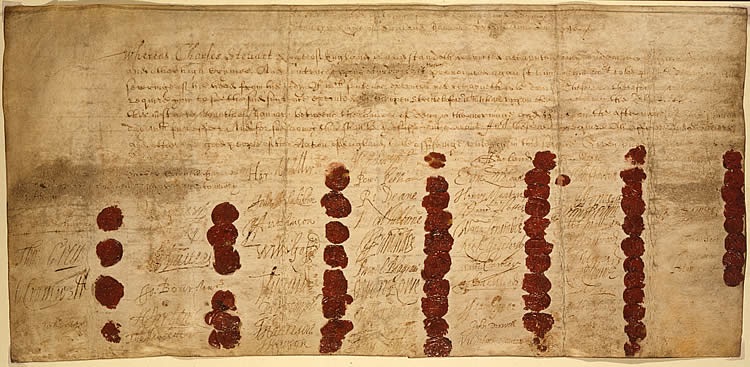
King Charles I, execution, warrant

Death warrant of King Charles I (1649): Showing the signatures and seals of 59 of the commissioners who tried Charles I, including that of Oliver Cromwell. This document directly led to the execution of the king, the abolition of the monarchy, and the consequent establishment of a republic to govern England for the only time in its history, between 1649 and 1660. © Parliamentary Archives

FRONT PAGE