Tag Archives: Interview

2011 ➤ Boy George hits the big Five-0 and he now says, yes, he has ‘lots of regrets’

Boy George , 50th birthday,interview, Here And Now 2011,

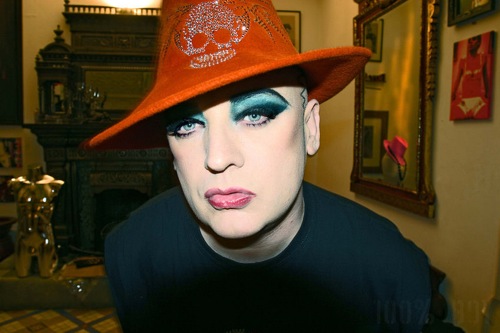
Boy George at home: 50-up but when will he stop pouting?

❚ ON TUESDAY JUNE 14 George O’Dowd celebrates his 50th birthday with a few select friends at the Vauxhall nightspot, The Lightbox. Yesterday an interview in the Daily Mail reunited him with Spencer Bright, the co-writer of his 1995 autobiography Take It Like A Man, which proved more cringingly honest and fuller of nasty settlings of scores than any popstar in their right mind should attempt. For that reason it was — and remains — a compulsively readable milestone in the endurance course that is Boy George’s life.

In recent years, interviews have been marred by self-serving psychobabble and improbable mysticism, but yesterday’s talk with Spencer Bright finds George momentarily on a more even keel. Finally, finally, Spencer elicits an astonishing confession from him: “Now, I can actually say that I do have lots of regrets.”
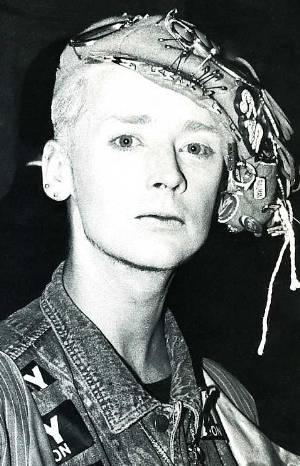
Boy George, 1987, Gabor Scott

“Junkie George”: Gabor Scott’s © 1987 photograph

George had always been among the more highly visible of London’s style-setting Blitz Kids. By the mid-80s he had become one of the biggest popstars of the decade and his “blue-eyed reggae” band Culture Club was among Britain’s half-dozen New Romantic supergroups dominating world pop charts during the second British invasion of the US. Culture Club’s first two singles Do You Really Want to Hurt Me? and Karma Chameleon reached No 1 in several countries during 1982–83, and the band won a Grammy Award in 1984.

After four albums, songwriting had made George a millionaire several times over but he had also fallen prey to heavy drugs and at the age of 25 his band dumped him. He began squandering his life away, as outlined in Ex-jailbird George here at Shapersofthe80s, and fully documented at Wikipedia. A much sanitised account of his teen years was broadcast last year as the TV drama Worried About The Boy, after which ex-Blitz Kids gave their verdicts at Shapersofthe80s.

➢ IN YESTERDAY’S DAILY MAIL, SPENCER BRIGHT WRITES:

At one point it didn’t seem as if Boy George would make it much past his 25th birthday. Yet here he is, about to celebrate his 50th next Tuesday, and the transformation from the boy popstar to man seems astonishing. No one could be more pleased than me. George and I have a long history, from the days when, as a newspaper reporter, I used to follow him on the club and music scenes. In the early 1990s I helped him write his autobiography Take It Like A Man. We’ve been through a lot together. The book took four-and-a-half years, with much shouting and screaming, mostly from him at me, and moments where he’d crack me up so much I could hardly stand up.

GEORGE IS DESCRIBED AS A SOUGHT-AFTER DJ, PRODUCER, SONGWRITER AND PERFORMER:

People know me recently for lots of drama. For being arrested and going to prison. I’ve got my work cut out to remind them what I actually do.

The Mail interview airs various optimistic hopes which, for somebody with George’s track record, are a hostage to fortune. After claiming to have kicked many of his vices, we’re told he gave up smoking cigarettes six weeks ago — but ask any smoker how many times that gets said in a lifetime! “There are hopes of soon working with top producer Mark Ronson on a record with a reunited Culture Club, and an arena world tour next year.” But no mention of how his criminal records will bar entry into a significant number of countries.

GEORGE CONCLUDES:

I’ve never been a bad person and always had quite good morals. I cherish the moderate life now: I don’t want drama or complication.

➢ Read the full Daily Mail interview with Boy George dated June 9

➢ George performs with other 80s stars in the 2011 Here And Now summer tour from June 17. The single Sunshine Into My Life by Funkysober featuring Sharlene Hector, written and produced by Boy George, is out now on his own label, VG Records
FRONT PAGE

2001 ➤ Hear about the many lives of Midge Ure, the Mr Nice of pop


+++
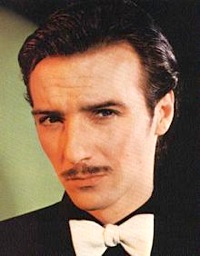
Midge Ure ,Ultravox,Live Aid, Band Aid, pop music❚ FRESH ON YOUTUBE, the life of “all-round good bloke” Midge Ure OBE, the former engineering apprentice from Glasgow who decided to play guitar. Told for the BBC’s This Is Your Life in 2001. We hear the Stumble demo tape complete with ice-cream van chimes, how for Salvation his name Jim was turned backwards to make Midge (because it was posher than Mij), how he became a teenybop star in Slik, joined “this filthy punk band” Rich Kids in London and co-founded Visage, survived the US tour as a Thin Lizzy stand-in sporting a pink shirt and yellow Aladdin trousers, and being pipped to the No 1 chart spot in Ultravox. Spandau Ballet’s Martin Kemp describes Midge as “one of the nicest blokes I’ve ever met in the music business” while Gary Kemp believes Midge’s pencil moustache defined the New Romantics stance of the 80s.

Midge Ure ,Ultravox, pop music, Chris Tarrant, This Is Your Life

Chris Tarrant, host of Who Wants to Be a Millionaire? — cruelly reminding Midge Ure on TIYL of the superior act that kept Ultravox from the No 1 spot in the charts © BBC

Midge Ure ,Ultravox,Live Aid, Band Aid, pop music, Bob Geldof,1984, This Is Your Life

This Is Your Life, 2001: Bob Geldof who sprang the surprise on Midge Ure

And of course we hear of the day in 1984 when Bob Geldof had seen the tearjerking news bulletin about the famine in Ethiopia, and rang his partner, the TV presenter Paula Yates, who was working at Tyne Tees Television and he asked who was appearing on The Tube pop show that week. She said Midge Ure. Put him on, said Geldof, “And I was embarrassed because I’m not having hits, he’s having mega-hits”, and Geldof was trying to propose making the epic charity record by Band Aid [read more at Shapersofthe80s on the song that became the biggest hit in British pop history]. “And Midge said ‘Are you going to write it?’ And I said well I dunno, and he said ‘You write a bit and I’ll write a bit’. An instant solution without me being embarrassed. And within a day a tape came over. He was so enthusiastic.” The rest was Band Aid/Live Aid history.


FRONT PAGE

➤ Martin Rushent — the man who made stars of the Human League — is dead

Martin Rushent , electronic music, British pop, swinging 80s,

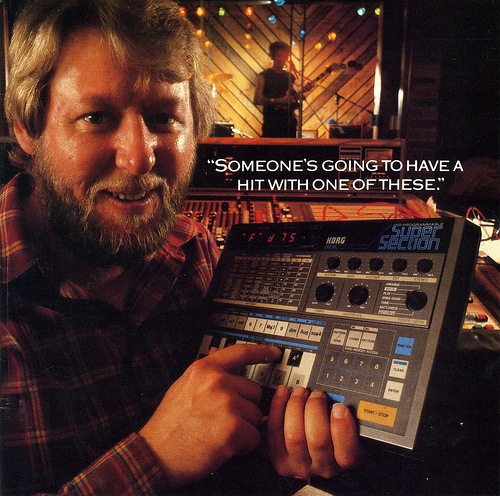
Martin Rushent with Korg Super Section programmable sequencer (1985)

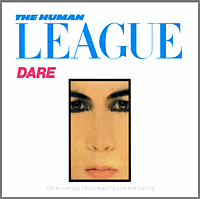
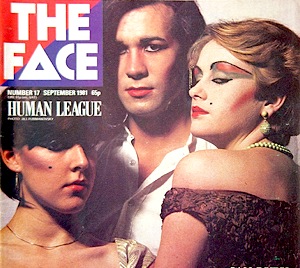
❚ A TRUE SHAPER OF THE 80s DIED YESTERDAY. Martin Rushent, the mould-breaking UK music producer, was 63 when he suffered a heart attack at his home in Berkshire. What he stamped on 80s electronica was a rhythmic template of synths and drum machines that came to characterise much mainstream pop, notably The Human League’s breakthrough album Dare in 1981, which spent 71 weeks in the UK chart, and became a worldwide smash. Rushent was known as a hard taskmaster. He insisted on bringing the Sheffield-based band south to escape the “unhealthy atmosphere” of Monumental Studios oop north, and his influence was not immediately welcomed by the League’s leader Phil Oakey, following the early band’s split and reconfiguration in 1980.

Dare, The Human League,album, pop music, Martin RushentIt began with their first single The Sound of the Crowd [see video below] which peaked at No 12. Rushent was a pioneer of the remix, who decided to improve on the League’s original version of Dare by creating 1982’s Love And Dancing, a complete makeover of the original album. It went to No 3 in the LP chart and is today regarded as his game-changing calling card. As with the Stranglers earlier, Rushent achieves a razor-sharp clarity for each instrument, here dominated by the electronics he so believed in. The Scottish pop group Altered Images also enjoyed chart hits thanks to Rushent’s production. He was named Best British producer in the 1982 BRIT Awards.
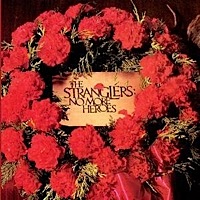
The Stranglers,rock music,No More HeroesMany also regard Rushent as the best new-wave producer of the late 70s through his work with The Stranglers, Britain’s longest-surviving rock band from that post-punk era (he produced their first three albums which would become both commercial and classic, Rattus Norvegicus, No More Heroes and Black and White), as well as Gen X, Buzzcocks, XTC, 999 and Hazel O’Connor. Other acts he engineered earlier in the 70s were T.Rex, David Essex, Fleetwood Mac, Yes and Shirley Bassey.
Rushent custom-built a £250,000 high-tech recording studio at his home near Reading where, he said, “The air-conditioning alone cost me £35,000”. Here ex-Buzzcock Pete Shelley made his debut album Homosapien (1981) as a solo artist for Rushent’s record label Genetic. This had its London office a couple of floors up from the legendary Blitz club where Rusty Egan and Steve Strange ushered in the New Romantics movement in 1979. Egan says that Rushent facilitated two Visage tracks, Tar and Frequency 7 (“recorded in his garage in 1979”).

His 37-year-old first son Tim says his father hated playing by any accepted rules of the game and brought irreverence to the production process. His musical signature was to add a sophisticated mix of vibrance and colour, so beefing up the musical temperature higher than a band managed to achieve for themselves. He cites The Human League’s first No 1 hit Don’t You Want Me, and Fascination (as well as Altered Images’ Happy Birthday album track). Dad’s tactic had been to bring into The Human League punk rocker Jo Callis from the Rezillos to act as a co-writer and catalyst.

Human League, Phil Oakey, Joanne Catherall ,Susan Sulley

The Human League, 1981: Phil Oakey and the girls he immortalised in that lyric, Joanne Catherall and Susan Sulley

BBC journalist Linda Serck recalls how Rushent made clear who was boss when he met The Human League: “They were under the impression that I was going to work on what they’d done so far and improve that and carry on. I said, ‘No I’m not doing that, we’re starting again’, which was a bit of a shock for Phil [Oakey]. He argued about that but I said, ‘No, if I’m going to produce you, you’re going to do what I tell you to do’. This is my attitude to everybody I produce, it’s a sort of democratic dictatorship!”

Tragically for producer and band, the end came abruptly after three years’ hard work. In a moment of pique, backing singer Susan Sulley (famously discovered while at school dancing “in a cocktail bar”) asked the perfectionist Rushent, who was old enough to be her father: “What do you know about what young people want?” In any normal workplace this would be grounds for her dismissal. In this case, the insult detonated the end of a lucrative, million-selling business partnership.

Today, Rushent leaves his wife, Ceri, and four children from two marriages.

➢ “When producer Martin Rushent took the Human League’s leaden new song and turned it into pop gold, the band hated it” — A revealing interview with Sound On Sound, 2010

♫ Peaches by The Stranglers — “Bass sound?! I asked him one time how he got that bass sound, he said: I turned everything up” — James Rushent, his second son, a musician.

♫ Three days ago Martin Rushent listened to two of his own tracks at his MySpace page: In Your Arms Again (from 2007) and Itchy Hips (2006).

+++

AMONG TRIBUTES FLOODING IN TODAY

Hugh Cornwell , The Stranglers,Hugh Cornwell (left), vocalist and guitarist with The Stranglers: “ It is with great sadness that I hear of Martin Rushent’s passing. He was a vibrant and gifted individual who was able to extract the essence of what The Stranglers began with, and translate it into something that could be played on radios across the UK. It was obviously no one-off success, as he was later to show with The Human League. I remember him fondly.

Midge Ure of Ultravox “ He saw the potential in synthesisers and a future in electronic music. Sad loss for all music.

Visage drummer Rusty Egan: “ Martin, Midge Ure, Barry Adamson, Billy Currie, Dave Formula, John McGeogh, myself and Steve Strange all hanging in your house in summer of 1979 recording our debut album VISAGE … Because YOU believed … THANK YOU … You were a total genius, and like all geniuses before you, you had a crazy life but an amazing body of work … I am welling up remembering your kindness and love for music…
➢ Listen to Rusty Egan’s set of Martin Rushent re-mixes from the 80s dancefloor newly uploaded to Soundcloud

Altered Images drummer ‘Tich’ Anderson: “ I’ll remember all those hours in Genetic studios fondly. Sorry for crashing your Jaguar. xxxxxx You were a genius Martin.

Visage vocalist Steve Strange: “ Martin one was not only a genius but as a 17-year-old making his first record, he was a true role model, inspiration and guiding figure. He signed our first record Tar to his record label and for us, started the ball rolling. We owe him so much. Thank you.

Tim Rushent, son and sound producer: “ As many of you know I had a VERY fractious relationship with my Dad. But I never doubted his work as a producer, friend and raconteur. Feeling even more proud of him professionally today than I have done for 37 years.

➢ Pay your own tribute at the Facebook page Martin Rushent Memories

Prof Ben Rosamond, Uni of Copenhagen: “ Just under 36 minutes of music, but thousands of hours in the making. According to Simon Reynolds in Rip it Up, Love and Dancing consisted of 2,200 main edits and a further 400 small edits. There were so many splices that the mastertape was close to disintegration. The work of a genius. Others have said this, but it’s true for me as well. Martin, you fashioned the soundtrack of my teenage years and so many of the melodies and musical phrases that pop in and out of my adult consciousness are yours. Thank you. Rest in peace.

Heather Priestley, anaesthetic ODP, London: “ Martin you were a much loved legend, RIP. I haven’t felt this sad since losing John Peel, like you, part of my youth and the music that made me who I am today.

➢ Telegraph obituary: “Rushent forged a new way of sequencing and programming synthesiser-based music — in the process pioneering the technique of sampling”


FRONT PAGE

➤ Up close and cool — Paradise Point’s first official video

+++
❚ THIS SIZZLINGLY COOL STUDIO VIDEO of the single Run In Circles is launched today at YouTube by Paradise Point, London’s teen livepop band who’ve been together now for six months. PP’s first concert review at Shapersofthe80s said of their debut: “Paradise Point are in the wide-eyed realm of Romeo and Juliet. They are great romancers, who cast the vocalist Cam as Romeo putting his heart through the Magimix for his Juliet.” Since then talent-spotter Callofthewyld has added: “Paradise Point are a 2011 take on classic boy bands such as Duran Duran, Spandau Ballet and even ABC. They surely must have been made in some manager’s laboratory … This lot are sex on legs and even if they weren’t actually any good they would still find it hard to walk on stage without being shrieked at. Fortunately their music is excellent too.”

Paradise Point, Run In Circles , video, Cameron Jones,pop musicThis hot and elegant new video for Run In Circles was directed by the bass player Roman Kemp, who studied film at sixth-form college. It was shot in the family “studio” — “My games room,” insists Roman’s dad, Martin — and the camera lingers so intensely on the singer Cameron’s lips that Boy George is said to have tweeted the sort of compliment we couldn’t possibly repeat here. Compare and contrast the new vid with their live debut before an audience at London’s Punk club last November, shot by Shapersofthe80s, below…

➢ Paradise Point’s next show will be filmed at the O2 Academy Islington, Wednesday, June 29 at 7pm, tickets £5 from Ticketweb

FRONT PAGE

➤ Brett on the love that created “a Suede landscape” in the tribal 80s

Brett Anderson, Suede, 2011, concerts, interview, beat magazine

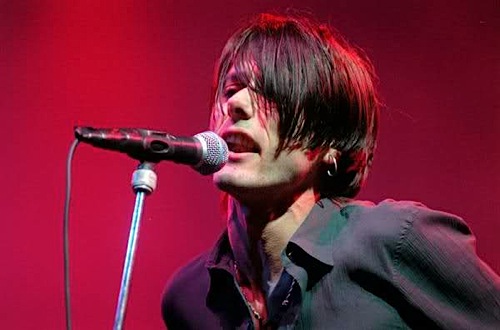
Brett Anderson: “emulating people shouldn’t be about wanting to sound like them”

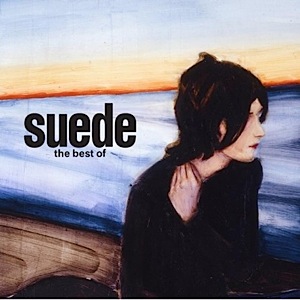
STRICTLY SPEAKING, Suede were a supercool guitar band of the 80s, having come together in 1989, though admittedly their hits followed in the 90s. Having reformed last year, alas without guitarist Bernard Butler, they released The Best Of Suede in November and tonight they play Suede’s music in sequence at the first of three gigs at London’s O2 Academy in Brixton May 19–21, plus Dublin’s Olympia Theatre, May 24–26. An interview with the current issue of BEAT magazine has singer Brett Anderson (“the lost boy of Britpop”) reflecting on the climate in which the band formed…

“As a teenager in the early 80s it was an incredibly tribal time, everyone at school was either a mod or a punk or a skinhead or a headbanger. Which gang you belonged to said who you were as a person. This was when I was thirteen or fourteen, when I first started buying records and I suppose that influenced the sort of band I wanted Suede to be, I wanted them to be the sort of band people would get tattooed. I wasn’t particularly interested in Suede just being liked; I was only really interested in Suede being loved.

Best of Suede, 2011, Brett Anderson“Suede was about the intense passion of being loved as a band and constructing a universe for people to dive into and that was all part of the iconography of the sleeves and the worlds I sang about and possibly the over-use of lots of the imagery was all part of it. Maybe it was all part of my need to belong somewhere. We established a Suede landscape, and I always loved those bands that did that. Maybe it’s a very much over-used reference point but I did grow up loving The Smiths records and loving what they did and the kind of tribalism they created.

“I never wanted to be The Smiths, emulating people shouldn’t be about wanting to sound like them. I was talking to Jamie from Klaxons and he said he was a huge Suede fan when he was growing up and that Suede were the reason he wanted to be in a band. You listen to Klaxons, and they don’t sound anything like Suede and that’s the biggest compliment. That they took something of the spirit of Suede, they didn’t rip off the cord sequences, they didn’t rip off the words and they didn’t dress like Suede.

➢ Read Brett’s full interview with
Daryoush Haj Najafi in BEAT

“They just took something of the spirit and sense of aiming to achieve something that was meant to be a little bit unachievable. And they created this incredible very original band. I’m really proud of that sort of influence. It’s the same with Bloc Party. There’s all these bands, that have told me that Suede have been incredibly influential, but they don’t sound like Suede, that’s almost like a double compliment for me.”

❏ Brett also deals with drugs, androgyny, Justine and Bernard — “I actually put an advert in the NME, that’s how I met Bernard. It read, ‘Must like Pet Shop Boys, The Smiths, David Bowie and Lloyd Cole and The Commotions. No musos, no beginners, some things are more important than ability’.”

➢ Suede headline July’s Latitude Festival in Suffolk

FRONT PAGE