Category Archives: Youth culture

2010 ➤ Can Generation Y be bovvered to vote?

❚ THE MOST EXCITING GENERAL ELECTION FOR 31 YEARS takes place in the UK this week. Since the Conservative landslide that put Margaret Thatcher into Downing Street on this day, May 3, 1979, British voters have seen only one change of political ideology, from right to left (to use the word generously), with the Labour party landslide of 1997. The Conservative government won four consecutive general elections, and Labour governments subsequently won three.
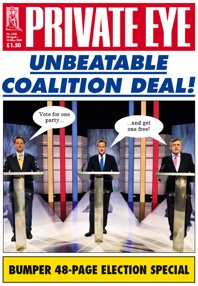
Private Eye, 2010, general election

Boy wonder: “Vote for one party…” Old lags: “… and get one free!”

This points up unique new aspects of generation gaps. Half the adult population who are entitled to vote – and this embraces the UK’s delayed Generation X – have known only one political sea-change, while everybody younger than 31 – the 11m that include Generation Y who reached voting age since Labour came to power – have experienced only one flavour of government. Consider the tensions that should be reverberating within this nation’s breasts.

During the 1980s the Thatcher administration shifted for ever the tectonic plates underpinning society (though the concept of “society” was one she as prime minister famously denied). Parallels with today are spookily similar: an unprecedented recession has toppled many supporting pillars of the economy, while unemployment is passing 2.5m just as it did in 1979. Currently one-fifth of all people of working age are “economically inactive”. Among today’s 18-24-year-olds the unemployment rate is 17%, even for graduates. And a decade of austerity is set to declare itself just after the election.
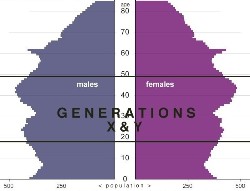
Gen X, Gen Y, UK population, 2008

UK population by age: 18-49 year-old clout (ONS)

By the dawn of the Swinging 80s, the young had grown very angry indeed with the grown-ups’ way of running things. Yet in the 20-tens, we find ourselves still unsure whether Generation Y are activists or slacktivists. Meanwhile those researchers at Pew already have a shrewd idea about the politics of online social networkers and whether they can be bovvered enough to stray offline and put an X on a ballot paper. Don’t hold your breath.
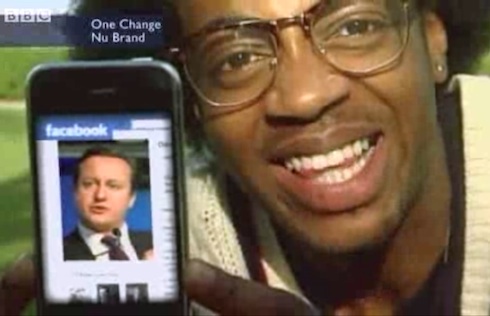
vote,, general election,Newsnight , rapping, Nu Brand, Generation Y ,anthem, politics,

Would these songs change your vote? Newsnight invites rappers Nu Brand to create an anthem for the Conservative Party (BBC)

➢ VIEW VIDEOS ♫ BBC Newsnight’s Danny Robins commissioned fab, bangin’ political party anthems from Haduken!, Right Said Fred and Nu Brand
Generation Jones stakes its claim between the Baby Boomers and Generation X in the UK

FRONT PAGE

1980 ➤ Birth of The Face: magazine that launched a generation of stylists and style sections

❚ WHEN NICK LOGAN, A FORMER EDITOR OF THE NME, launched The Face in May 1980 little did he realise it would become the decade’s “style bible” and one of the six great postwar magazines to change the course of British journalism. The Face married music, popular culture, politics and street style with radical art direction and new fonts by Neville Brody. It paid peanuts to a select bunch of savvy and passionate writers, photographers and “stylists” who gave the word a fresh meaning (almost entirely lost today) and inspired an avalanche of imitators in mainstream media, retail, advertising and beyond.

The Face, magazine, 1984, men in skirtsItself dubbed “the world’s best-dressed magazine”, The Face broke with mainstream complacency by actively inventing or giving focus to entire movements that combined clothes, music and attitude. Many came to define the 80s – from The Cult With No Name which was eventually rechristened New Romantics, the Hard Times ripped Levi ensemble, the Burberry-loving Casuals, and the “bad boy” Buffalo silhouette created by Ray Petri and Jamie Morgan. This, if any, became the urban male uniform of the mid-80s, and was celebrated only last winter by an issue of Arena Homme + magazine, art directed by Brody who designed for the occasion two custom typefaces called Buffalo and Popaganda.
At its peak The Face sold 100,000 copies monthly. Brody moved on in 1986 and Logan in 1999, though the title endured until 2004. Logan launched Arena in 1986 as a men’s monthly, soon edited by Dylan Jones, who today edits GQ UK. The British edition of Arena endured until 2009.

➢➢ The birth of The Face — Read the first article introducing Nick Logan’s new magazine, in the Evening Standard on May 1, 1980

HOW THE TWO KEY SHAPERS BEHIND THE FACE SAW IT

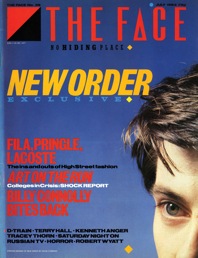
The Face, magazines, July 1983, New Order, Art on the Run❚ NICK LOGAN, publisher of The Face, was a working-class journalist from East London “People said you couldn’t then call a magazine anything as obscure as just The Face… I didn’t see why Tatler should have good paper and good photography and it should be denied to people like me.”

❚ NEVILLE BRODY on art-directing the early Face “It was a big laboratory. The New Order cover was a picture of the lead singer, and it wasn’t that great, a bright blue background. I said to Nick this picture was so shit and he said, Why don’t you crop it off the corner of the page? All you saw was the top left-hand corner of his face – immediately so commercial, and no other commercial magazine would have done anything like it. Great courage is what set his magazine apart.”

➢➢ Launching the style decade Lively social analysis in BBC Radio 4’s anniversary documentary starring all the usual suspects: on iPlayer until May 13

FRONT PAGE

2010 ➤ Index of posts for March-April

McLaren, O'Dowd,Shapersofthe80s,Index March April 2010

McLaren departs this world ... O’Dowd demands a place in the spotlight

➢ Kemp sets a new standard for rock memoirs

➢ Grace Jones turns her back on London ;-)

➢ Rich List puts George Michael top of the popstars from the un-lucrative 80s

➢ In Australia, Spandau make Jason feel like a kid again: one true pop fan reviews their show

➢ What a tear-jerker! McLaren mashes up his own musical ‘Requiem to Myself’

➢ Punk glitterati see McLaren noisily to his grave

➢ Nnnnn-na-na-na, nnnnn-na-na, Nineteen

➢ Midge stakes his claim as the weathervane of synth-pop who helped shape the British New Wave

➢ Sci-fi’s coolest Number 6 finds Gandalf in charge and relocated to 93-6-2-oh!

➢ McLaren — Svengali of Pistols and punk remembered by those who knew him

++++++

➢ Uh-oh, A2A is back and we’re about to be Quattroed in HD!

➢ Ex-jailbird George takes his first trancey steps on the path to sainthood

➢ A giant dies: Charlie Gillett, the man who defined rock’n’roll and world music

➢ Barcelona: Spandau wow lifelong fans in their other spiritual home

➢ Albums that defined the new 80s funk

FRONT PAGE

➤ Kemp ‘sets a new standard for rock memoirs’

Gary Kemp, autobiography, I know this much, Bill Nighy,Steve Jansen,paperback❚ ONE LONDONER’S LIFE newly topped up in paperback today. . . Spandau Ballet songwriter Gary Kemp surprised many when last year’s autobiography, I Know This Much, proved exceedingly well written and frank, what’s more. Many of his contemporaries – such as top Amazon reviewer Steve Jansen — believe that his perceptive memories of a London now transformed make a “a touching testament to spiritual growth”. Jansen writes:

“The real value of I Know This Much, aside from its glistening prose, is in witnessing someone discovering themselves. Always something of an odd penny, the Spandau songwriter and arguably its spiritual leader was always wiser than his pop position called for, and his working class soulboy roots never really sat comfortably with his angular New Romantic entrance. This rendered him somewhat pretentious to many, and his flaunting of left-wing politics often grated when framed by his band’s timely, aspirational image.

“However, with the benefit of distance and maturity (and following his time in the wilderness, as Joe Strummer would say, when discussing that inevitable period between an artist’s fall and his redemption), Kemp is able to reflect with great poignancy on a young man’s journey into, and through the shining city of dreams. In Kemp’s case that city, metaphorically, but more often literally — and literary in its evocation — is unmistakably London, and the metropolis is ever present like a ghost, framing his actions and attitude . . .

“From the sheer and challenging poverty of his childhood, through to the sensitively handled, near tear-jerking account of his parents’ death within days of each other in 2009, money and success is always comes second to recollections of his brother, mother and father. Kemp is evidently, despite his aloof lone wolf image, a highly sensitive and lovingly loyal chap, but this is an identity that he has to arrive at; and time and the ravages of age are the consequential pain of his slow lesson.”

The new paperback edition from Fourth Estate brings us up to date with a postscript on the band’s reunion.Rock journalist Robert Sandall of The Sunday Times made Kemp’s his Book of the Year: “A sharply observed account by a quintessential London musician. Kemp exudes confidence, candour and a keen appreciation of the capital’s club culture” … “Sets a new standard for rock memoirs,” says rock writer Paul Du Noyer … “Deeply cool,” says the deeply cool actor Bill Nighy.

Barbara Ellen interviews Kemp in the Guardian on his autobiography: “a fascinating slice of social history”

FRONT PAGE

2010 ➤ Rich List puts George Michael top of the popstars from the un-lucrative 80s

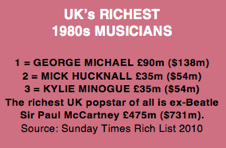
❚ ONLY THREE MUSICIANS FROM THE 1980s are included in the annual Rich List of Britain’s top 50 music millionaires, published today by The Sunday Times. The richest musician of the decade who holds his own amid the older gods of rock is singer-songwriter George Michael who is worth £90m ($138m) today. He sits at No 25 in the ST’s top 50. George is pictured above in Wham!’s Club Tropicana video (where “the drinks are free”). His group’s “pure pop” epitomised the sybaritic style which by 1983 was signalling the divide in British music between electronic earnestness and full-on hedonism.

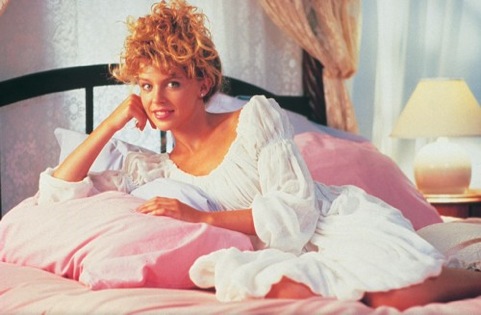
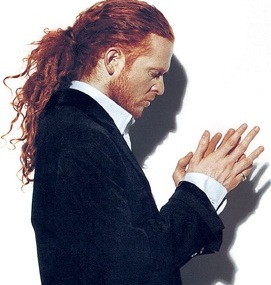
Rich List, 2010The other two richest stars from the 80s are each estimated to be worth a relatively puny £35m ($54m). They are Lancastrian Mick Hucknall of Simply Red (their summer tour climaxes with a farewell concert on Dec 19 and is booking now), and pop diva Kylie Minogue who found fame in the UK through the Australian TV soap, Neighbours. The Sunday Times justifies Kylie’s presence in this UK list, as someone who often seems “more British than the British”. She herself has regarded the UK as “my adopted home” almost since 1988 when her debut single, I Should Be So Lucky, went to No 1 and set her on the path to becoming the most successful female artist in the UK charts. She was honoured by the Queen with an OBE in 2008.
Mick Hucknall

Simply Red’s Hucknall: a December farewell

Since the 2009 Rich List, three 80s stars have dropped out from the top 50 musicians: Annie Lennox, Simple Minds vocalist Jim Kerr and Sade – though her sensational album comeback this year is likely to be reflected in next year’s list. Astonishingly the creative genius behind Kylie and the huge stable of Stock Aitken and Waterman acts – Pete Waterman – last appeared in the Rich List in 2007.

Should we assume creativity does not equate to profitability? From a musician’s perspective the 80s have been the least lucrative decade in pop history, apart from the Noughties from which only TV impresario Simon Cowell emerges as a multi-millionaire (£165m). Inevitably, older musicians have had longer in which to sell records and accrue proceeds, so the 1960s yield 20 musicians in the Rich List who are still millionaires today, led by Sir Paul (£475m, $731m), Sir Mick (£190m) and Sir Elton (£185m). From the 1970s there are ten in the top 50, with Sting way out in front (£180m).

Among the richest artists from the 90s is Victoria (“Posh Spice”) Beckham (£145m whose fortune the ST oddly entwines with her footballing husband’s). Robbie Williams is now worth £85m and Gary Barlow £35m – both started out in boyband Take That. The Gallagher brothers of Oasis are worth £55m, and Jay Kay of Jamiroquai £35m.

Kylie Minogue, 1987, Lucky

Getting lucky in 1988: Kylie went straight to No 1 and never looked back. Photograph © by PAL Productions Ltd

The Rich List names 13 moguls ruling the UK biz, led by former songwriter and Warner Music Group chairman, the American Edgar Bronfman who has made his home in London, and is worth £1,640m ($2,522m). The ST reports him as being “well placed to snap up the beleagured EMI”, effectively Britain’s last homegrown record company, founded in 1931.

Leaders among the younger British businessmen are Simon Fuller (£350m, $540m), the former Spice Girls manager who struck gold as creator of TV’s Idol franchise which has been sold worldwide during the past decade, and Jamie Palumbo (£150m, $231m) who founded the Ministry of Sound clubbing empire.

➢➢ Summary of The Sunday Times Rich List Musicians 2010

FRONT PAGE