Tag Archives: Swinging 80s

➤ Steve Strange puts on an Essex face for Ascot

Steve Strange ,Ascot racecourse, Here & Now, 80s music,

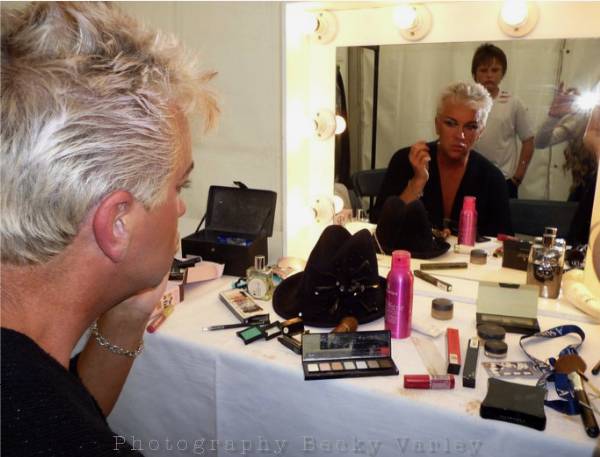
Steve Strange before: master face-painter at work at Ascot... Photography by Becky Varley

❚ OLD ROMANTIC HABITS DIE HARD. Steve Strange finally got himself onto a stage this weekend singing the odd Visage hit, following the horse-racing at Ascot in Berkshire for this summer’s last Here & Now 80s revival line-up. But beforehand, the veteran poser and onetime greeter at the Swinging 80s Blitz club had to plaster over the cracks with a touch of Polyfilla — he’s just celebrated his 52nd birthday after all. Then, naturally, he couldn’t resist applying slightly more bronzer than an Essex girl would need for a night out clubbing down the Chigwell Road. The after snap is a minor miracle that should convince the doubters Steve hasn’t lost his knack for maquillage, whatever the voice sounded like (audience reports eagerly awaited). Supporting Steve during his comeback was a galaxy of 80s stars who included Kid Creole, Toyah Willcox, Paul Young and Jimmy Somerville.

Who better than Steve could qualify as the face of a cosmetics firm, according to breaking news at Wales Online? (Remember his origins as Steven John Harrington from Newbridge where he went to school?) WO reports this weekend: “The Visage frontman, famed for wearing garish eye shadow, mascara and blusher alongside the likes of Boy George in the 80s New Romantic movement, is set to front products made by Illamasqua. The firm aptly markets its range as ‘night-time make-up for your alter ego’ and says its distinct style is inspired by members of ‘alternative scenes’.” Bingo!

➢ Visit Facebook to view more Here & Now pictures at Ascot yesterday from Becky Varley and Shawn Clubcapture

Steve Strange ,Ascot racecourse, Here & Now, 80s music,

Steve Strange after: masterly poise onstage with Here & Now at Ascot. Photography by Shawn Clubcapture

FRONT PAGE

2001 ➤ Hear about the many lives of Midge Ure, the Mr Nice of pop


+++
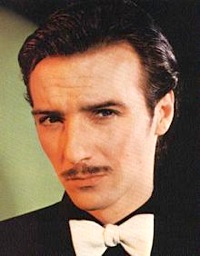
Midge Ure ,Ultravox,Live Aid, Band Aid, pop music❚ FRESH ON YOUTUBE, the life of “all-round good bloke” Midge Ure OBE, the former engineering apprentice from Glasgow who decided to play guitar. Told for the BBC’s This Is Your Life in 2001. We hear the Stumble demo tape complete with ice-cream van chimes, how for Salvation his name Jim was turned backwards to make Midge (because it was posher than Mij), how he became a teenybop star in Slik, joined “this filthy punk band” Rich Kids in London and co-founded Visage, survived the US tour as a Thin Lizzy stand-in sporting a pink shirt and yellow Aladdin trousers, and being pipped to the No 1 chart spot in Ultravox. Spandau Ballet’s Martin Kemp describes Midge as “one of the nicest blokes I’ve ever met in the music business” while Gary Kemp believes Midge’s pencil moustache defined the New Romantics stance of the 80s.

Midge Ure ,Ultravox, pop music, Chris Tarrant, This Is Your Life

Chris Tarrant, host of Who Wants to Be a Millionaire? — cruelly reminding Midge Ure on TIYL of the superior act that kept Ultravox from the No 1 spot in the charts © BBC

Midge Ure ,Ultravox,Live Aid, Band Aid, pop music, Bob Geldof,1984, This Is Your Life

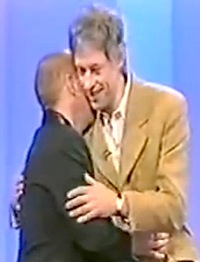
This Is Your Life, 2001: Bob Geldof who sprang the surprise on Midge Ure

And of course we hear of the day in 1984 when Bob Geldof had seen the tearjerking news bulletin about the famine in Ethiopia, and rang his partner, the TV presenter Paula Yates, who was working at Tyne Tees Television and he asked who was appearing on The Tube pop show that week. She said Midge Ure. Put him on, said Geldof, “And I was embarrassed because I’m not having hits, he’s having mega-hits”, and Geldof was trying to propose making the epic charity record by Band Aid [read more at Shapersofthe80s on the song that became the biggest hit in British pop history]. “And Midge said ‘Are you going to write it?’ And I said well I dunno, and he said ‘You write a bit and I’ll write a bit’. An instant solution without me being embarrassed. And within a day a tape came over. He was so enthusiastic.” The rest was Band Aid/Live Aid history.


FRONT PAGE

1982 ➤ Spot the faces at Phil and Rob’s bleeding-edge Dirtbox


+++
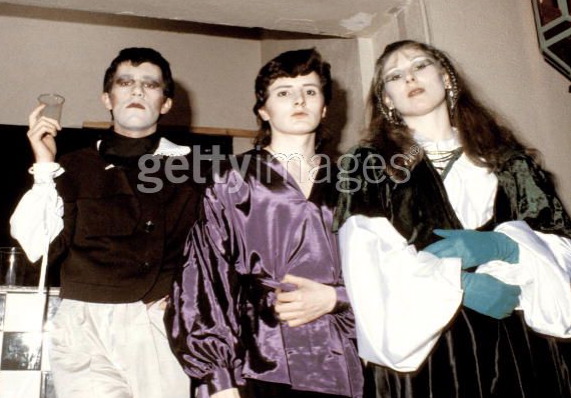
❚ HERE’S A NEW SLIDESHOW compiled by Ian Whittington, the original deejay at the Dirtbox — London’s itinerant underground warehouse party run by Phil X and Rob Y, which started life in March 1982 over an Earl’s Court chemists shop. By 1983 it was one of the four key club-nights that defined The New London Weekend in The Face magazine. In among the soulboys, soulgirls and rockabillies, look out for a young Sade, her musicians Stuart and Paul (then in the band Pride), Boy George and George Michael … Ian says the Nina S soundtrack was played at the Dirtboxes in London Bridge, King’s Cross, Stockwell Green, Titanic, Wandsworth and Bournemouth.

FRONT PAGE

1981 ➤ New Romantics have their day — rearranging the deck-chairs at the posers’ ball

People’s Palace, Valentine Ball, New Romantics

Valentine ball, 1981: last gasp for the New Romantics. Photographed © by Caroline Greville-Morris

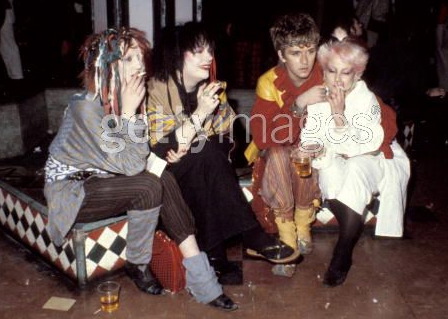
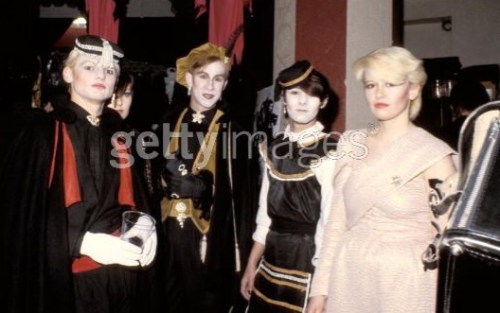
❚ VALENTINE’S DAY 1981 was not so much the Woodstock of the New Romantics movement, but more akin to a Scouts and Guides jamboree in a giant ornamental wigwam in north London. Instead of boasting proficiency in camping and camouflage, a few hundred suburban Romantics fluffed up their frills and plastered on the Pan Stik to parade their skills in masquerade and maquillage. The “People of Romance”, as the tickets described them, paid £3.50 for a long evening starting at 5pm. They were expected to hold their own as stars alongside the cult’s budding bands at a venue renamed for a day The People’s Palace.

Astoria Finsbury Park, church, cinema, London

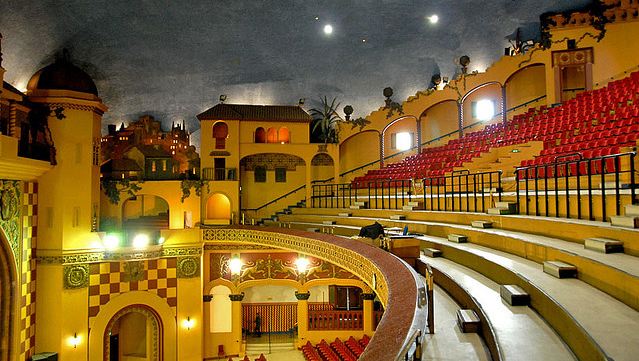
Andalusian fantasy: balcony view of the 1930 Astoria Finsbury Park, now restored. Photographed 2008 © hjuk/Flickr

An auditorium in Finsbury Park made the perfect backdrop. When it opened in 1930, the Astoria was one of Europe’s flagship cinemas seating 3,000 people. Its gloriously kitsch interior architecture depicted an Andalusian village whose rooftops and twisted barley-sugar pillars climbed towards a horizon and the starlit indigo ceiling way above balcony level. For a decade from 1971 the theatre had become a live rock venue, hippily renamed the Rainbow, where finally the stalls had been deprived of seats in favour of dancing audiences. Later the very year it hosted the People’s Palace, the place was to fall into disuse for a decade and a half, before being rescued and restored by a Pentecostal church.
People’s Palace, Valentine Ball, New Romantics, Steve Strange

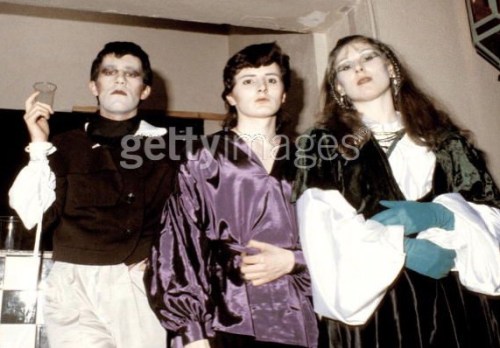
Steve Strange at the People’s Palace, 1981: plus loyal acolytes Myra, Judi and Mandy. In a fleeting fashion show, Judi showed six outfits which along with others for Strange’s videos helped shape the New Romantics silhouette. Photographed © by Caroline Greville-Morris

Thirty years ago today, posses of over-the-top Romantics incongruously wandered its vast auditorium and bars and cavernous Moorish lobby in search of photo opportunities. It seemed at times as if photographers outnumbered the cast. Richard Young, king of London’s celebrity snapperazzi, had arranged two sheets to create an impromptu studio where he was immortalising the generation who relished calling themselves posers, garbed from top to toe in bejewelled, befeathered lace and velvet and ridiculous hats.
People’s Palace, Valentine Ball, New Romantics

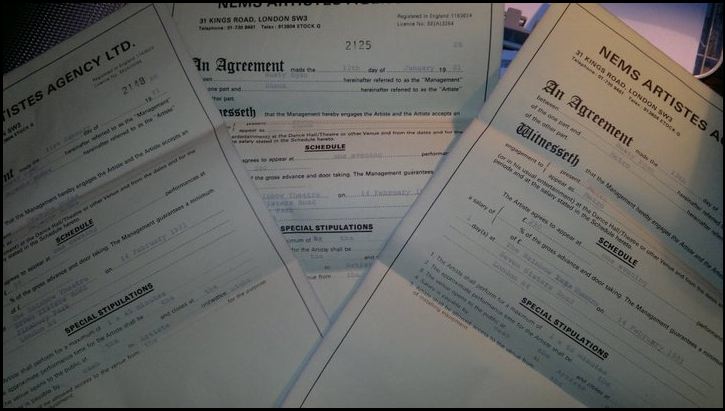
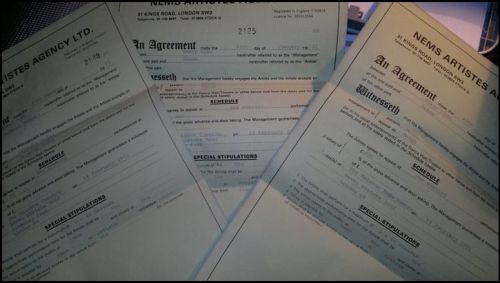
Performance contracts for the People’s Palace, 1981: Shock were paid £500, Metro £250 and Depeche Mode £50. Source: Rusty Egan archive

The soundtrack throughout was the latest electronic pop, spun on Rusty Egan’s turntables as well as played live onstage. On this Saturday Ultravox were arriving at No 2 in the singles chart with Vienna, and here at The People’s Palace they were topping a bill booked by the event’s promoters, Egan and Steve Strange, to capture the zeitgeist, even as the duo planned their next clubbing venture following the closure of their Blitz nights.

Much as Midge Ure protested about his band qualifying as New Romantics, in February ’81 any band toting synths ticked the box. Among supporting acts the then unknown Depeche Mode opened the live sets for a handsome fee of £50 in their first major performance off the clubbing circuit, one week before releasing their debut electro-single Dreaming of Me.
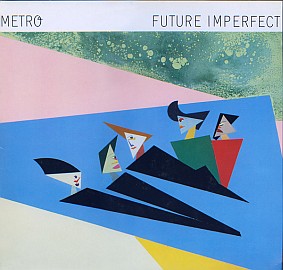
Metro band, pop, Future Imperfect, record sleevesPeter Godwin revived the new-wave band-name Metro, surfing in on the strength of their 1980 album Future Imperfect, followed by the dance troupe Shock, dressed by Birmingham’s Kahn and Bell, as exponents of the robotic dance-style across Britain’s clubland where their single Angel Face was a dancefloor hit.

Steve Strange had hoped to stage a splashy fashion show too, though according to Judi Frankland — who had featured with her outfits in Bowie’s Ashes to Ashes video the previous summer and is visible second from right in the masthead for Shapersofthe80s — “The other designers pulled out at the last minute and as I was still under Steve’s spell he made me carry on and do a ‘show’ alone with a mere six outfits. When he pulled me onto the stage, ohhh that still makes me cringe! However the one good thing I got out of it was being on the same stage as my faves, still to this day, Depeche Mode. I keep bumping into lovely Dave Gahan every few years in the most unexpected places.”

Meanwhile most of the original Blitz Kids — who had animated the Bowie credo that behind a mask you can be anyone you wish — wouldn’t be seen dead at The People’s Palace. In the wake of chart success by Spandau Ballet and Visage, they were competing in a calculated dash towards fame and fortune in clubland, glossy mags and the music biz, whose singles charts by the summer of 1981 welcomed Landscape, Depeche Mode, Soft Cell, The Human League, OMD, Level42, Duran Duran, Heaven 17, Altered Images and Imagination.

Like Midge, we can argue ad finitum whether these acts all technically counted as the New Romantics bandwagon, but they did play dance music, not rock — which defines the reformation that fundamentally vanquished rock to change the sound of the 80s charts — and all benefited from the momentum, as ABC’s Martin Fry later acknowledged. Most of them would, however, set about shaking off the hollow Romantics label in favour of their own musical tastes as soon it had served its purpose. For the moment, like the Titanic heading unwittingly towards its iceberg, the preening Lord Foppingtons and Lady Buxoms at the Rainbow were unaware that theirs was the last real gasp of The Cult That Had Gone Too Far. By Valentine’s Day 1982, there were so many new fashion factions that they would never have turned up for the same ball.
People’s Palace, Valentine Ball, New Romantics, Astoria Finsbury Park

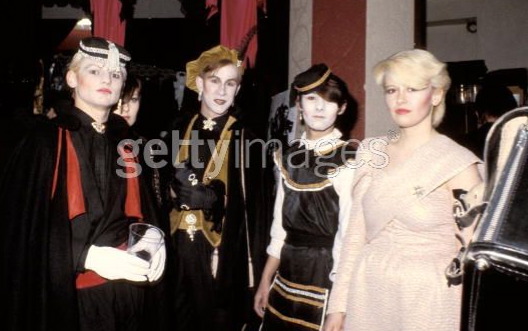
Frills, tassels and hats: Arrivals at the New Romantics ball, 1981. Photographed © by Caroline Greville-Morris

FRONT PAGE

➤ Guardian makes Shapersofthe80s an internet pick of the week

Guardian, Shapersofthe80s, internet pick of the week,swinging 80s,New Romantics,psychedelic snakebite, Sade, Spandau Ballet, Visage, electro-pop, Boy George, Blitz Kids,1980
➢ Thanks, Johnny! See the rest of his selection at Guardian online

[Text revised Feb 14]

❚FLATTERING THOUGH IT IS to have Shapersofthe80s selected by Johnny Dee among his internet picks of the week (The Guardian, Feb 12), it was entirely counterproductive to illustrate it with an irrelevant as well as incorrectly captioned photograph. Once alerted that its choice of image was at odds with this slice of early 80s British life, The Guardian swiftly replaced the online picture with one that was relevant if anodyne, being chosen out of budgetary necessity.

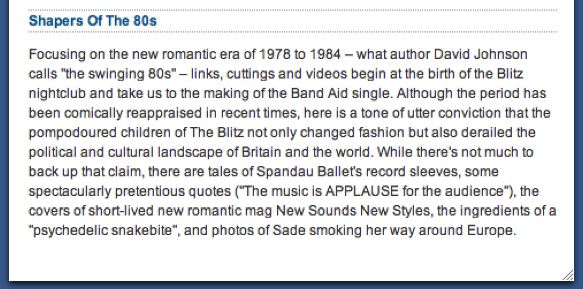
Dee’s review acknowledges the “utter conviction” with which this site documents what some people might view as the lightweight theme of the New Romantic movement, and consequently Shapersofthe80s has proved to be a resource of growing interest to social historians. Sadly, he was disappointed to feel that “there’s not much” on the site to back up the claim that the children of The Blitz effected widespread cultural change, although the piece written for The Guardian’s sister paper The Observer in 2009 does outline this theme, and is well linked from here. This post on the significant collaboration in London’s clubland around 1980 tries to develop those thoughts, as does this one on the changed rhythm of the pop charts. Shapersofthe80s is a part-time commitment and a work constantly in progress, as is made clear on its many pages that remain incomplete, so let’s hope Johnny will return for a further inspection in the future.

FRONT PAGE