Tag Archives: 2011

➤ Martin Kemp in the hot seat talking about food hell and gothic horror

Saturday Kitchen, TV, cookery, Martin Kemp, James Martin

Cookery tips and chat: James Martin grills Martin Kemp on Saturday Kitchen (BBC)

+++
❚ CATCH UP WITH MARTIN KEMPguesting on today’s Saturday Kitchen, a cookery show in which he chatters away to the host James Martin who’s rustling up the grub. They warm up deciding “food hell” for him is beef — “I never eat it. I just don’t see it, not that I’m worried about eating beef but in my mouth it feels like a piece of rubber.” Martin gets into his stride around the 28-minute mark when a really genial conversation ensues. Talk ranges from his homegrown tomatoes, to appearing on Jackanory at the age of seven, playing video-games with his son and his new life as a film director. Inevitably he gets in a plug for his psycho-chiller, Stalker, that opens next month. “It’s horror in an old-style gothic way, something along the lines of Single White Female. It’s not how many ways can you murder someone within five minutes. It’s a real story and a great piece of acting…”

➢ VIEW Saturday Kitchen, Sep 17, on BBC iPlayer for one week

➢ Martin Kemp talks to FrightFest TV in August about his directorial debut, Stalker

➢ Catch up on Stalker coverage of interviews and
trailer at Shapersofthe80s

FRONT PAGE

➤ The clubs are alive to the smells of music

Sencity, multisensory, music event,indigO2,aroma jockeys, disco

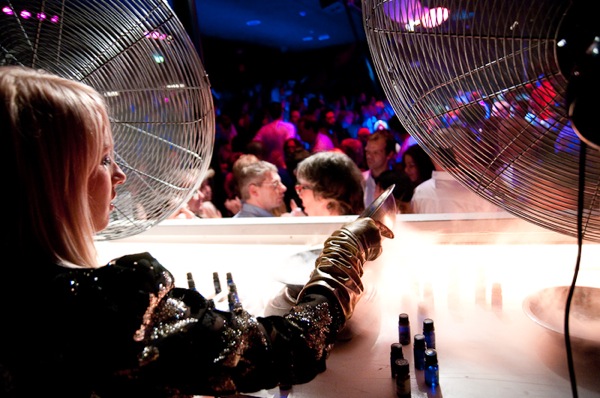
Aroma jockey on the Sencity case: two fans, a load of fragrances, and a heaving dancefloor in Rotterdam

❚ YES, YOU SEE HERE AN AROMA JOCKEY. What we can’t show are the vibrating dancefloors and vests when Sencity London introduces Britain to its first “multisensory music event” on October 8 at the indigO2 club in the mighty Greenwich dome. This Dutch nightlife creation can be enjoyed by deaf as well as hearing music fans in the 1,500-capacity space. VJs and text jockeys display dynamic visualisations of lyrics from performers, while sign dancers accompany the acts to translate lyrics and emotions of the music into British Sign Language.

FRONT PAGE

➤ Crooner Bennett defers to the rootsy tigress that was Amy Winehouse

+++
❚ IT’S PRETTY CLEAR who is the jazz singer in this much-anticipated video (above), released today. The old croaker Tony Bennett may be the last living legend in the crooner tradition, but he is utterly outclassed by the astonishing retro inflections of Amy Winehouse. She was his fan, so the 1930 standard Body and Soul, written for another showbiz legend Gertrude Lawrence, makes a noble epitaph for Amy. However, look to any number of earlier performances on video to appreciate the full measure of her sinuous, soulful, contralto voice, her body and her soul. She sang, as the Guardian obituary said, “as if her heart were damaged beyond repair”. Watch, as one example, her live acoustic version of Love is a Losing Game in 2007 (below) through to its ineffable conclusion.

Amy Winehouse Foundation launches
on her 28th birthday

➢ From today’s Daily Telegraph:
The Winehouse family have launched the foundation to mark what would have been the singer’s 28th birthday. Her mother Janis said: “We want to give money to projects that make a direct difference. It is a source of great comfort to know that Amy would be proud of this.”

One of the first major sources of income for the Amy Winehouse Foundation will be from her duet with Tony Bennett, which is released today. It was given its first play on the Ken Bruce show on Radio 2 this morning. Winehouse’s father Mitch said: “Amy was very generous and we kept coming back to the thought of how much she loved children. It seemed appropriate that the focus of our work should be with young people, those who are vulnerable either through ill health or circumstance.

Amy’s last studio recording

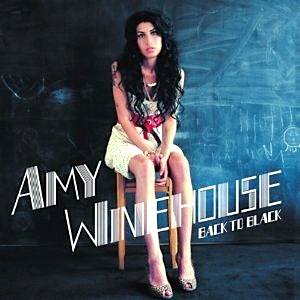
Amy Winehouse , Back to Black, albums, best-sellers,❏ The duet with her 85-year-old hero Tony Bennett, and titled Body and Soul, was Amy’s last recording. Released today by Columbia Records, the song was laid down on March 23 at Abbey Road Studios in London for Bennett’s upcoming Duets II album.

Amy was found dead at her flat in north London on July 23. Her critically acclaimed second album Back to Black, produced by Mark Ronson and Salaam Remi, was much more Motown-flavoured R&B than her jazz-influenced debut, Frank, which won an Ivor Novello Award and prompted Billboard to describe her voice as “astounding”. Released in 2006, Back to Black reached No 1 several times in the UK, No 7 in the US, and yielded five hit singles aching with explicit and heartfelt lyrics, most notably Rehab. Renewed demand during the past month sent it back to No 1 to become the UK’s best-selling album of the 21st century.

FRONT PAGE

1922–2011 ➤ Richard Hamilton: second thoughts about his definition of Pop Art

Swingeing London 67,Richard Hamilton,  Tate,Robert Fraser  ,Mick Jagger

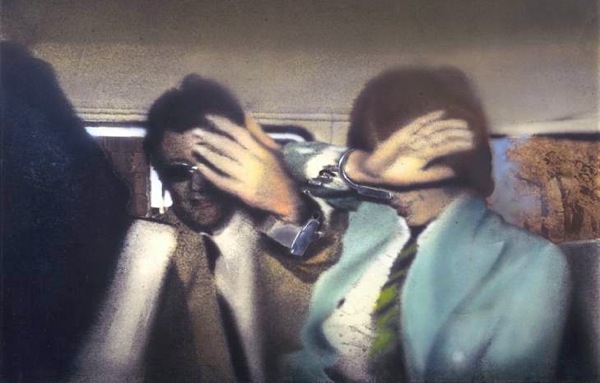
Swingeing London, a great modern history painting from the Swinging 60s: in the back of a police car on their way to court Hamilton’s art dealer Robert Fraser and Rolling Stone Mick Jagger sit shielding their faces against the media glare. The image is based on a press photograph published in the Daily Sketch and the title is deliberately spelt with an E, referring to the judge’s pronouncement on the “swingeing sentence” he handed down as a deterrent after both were convicted on drugs charges. For many, this occasion typified the moral backlash against the liberalisation of the 1960s. (Above, detail from Swingeing London 67 (f) 1968-69, acrylic, collage and aluminium on canvas © Richard Hamilton, in the Tate collection)

+++
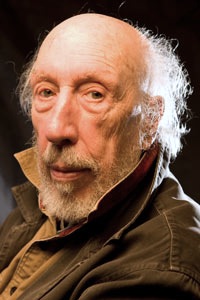
❚ “ RICHARD HAMILTON, the most influential British artist of the 20th century, has died aged 89. In his long, productive life he created the most important and enduring works of any British modern painter… Hamilton has a serious claim to be the inventor of pop art… Driven by intellect and political belief, Hamilton created undying icons of the modern world.”
➢ Read Jonathan Jones at The Guardian online

IN 1957 HAMILTON DEFINED THE EVERYDAY
COMMONPLACE VALUES OF POP ART…

“ Pop Art is:
Popular (designed for a mass audience)
Transient (short-term solution)
Expendable (easily forgotten)
Low cost
Mass produced
Young (aimed at youth)
Witty
Sexy
Gimmicky
Glamorous
Big Business ”

❏ His definition appeared as part of a long rumination on post-war art in a letter to Peter and Alison Smithson, published online at Warholstars.org, but taken from The Collected Words 1953–1982 by Richard Hamilton (Thames & Hudson 1982)

IN 2002 HE ADMITTED WHERE HE WAS WRONG

➢ John Tusa interviewed Hamilton for Radio 3 — Listen and read the transcript at the BBC website

Richard Hamilton, pop art , painter, John Tusa, interview

Hamilton: a lesson learnt from Warhol

TUSA:“Your definition hasn’t, as you said, stood the test of time because pop art as we now know it and as it became, has ended up being anything but transient, expendable and commercial. It’s been in a way co-opted by the systems and the commercialism of the fine-art world itself.”

HAMILTON: “When I made that list I thought what are the characteristics of what we call pop art, and then I listed them, big business and so on; the record system, Hollywood and all the other things. Then I looked at this list that I had made, which had nothing to do with fine art or anything that I was painting or doing and said, is there anything in this list which is incompatible with fine art? And my answer was no, except for one thing and I said, Expendable. Now, is fine art expendable? And I thought, no; I can’t quite stomach that. Everything else, OK, but expendability as a throwaway attitude is not something that can be acceptable as pop art, and I was proved wrong. Warhol approached art from the point of view of expendability, so I admire him enormously for having brought my attention to the fact that I was wrong.”

HAMILTON AS COMMENTATOR ON
A FABLED DRUGS BUST

❏ Hamilton’s Swingeing London series of paintings and prints were his response to the arrest of his art dealer Robert Fraser and his imprisonment for the possession of heroin. This followed the now fabled police raid on a party at the Sussex farmhouse of Keith Richards, of the rock group the Rolling Stones, in February 1967. There they found evidence of the consumption of various drugs and in June, Fraser and Mick Jagger (the band’s lead singer) were found guilty of the possession of illegal drugs. This gave rise to the sarcastic newspaper headline “A strong sweet smell of incense” which Hamilton incorporated into a huge collage of the resulting newspaper cuttings which he titled Swingeing London 67 — Poster.
➢ Read Keith Richards’ account of this raid and the truth about the infamous Mars bar

❏ Video above: This Is Tomorrow (1992), clip from a C4 television documentary by Mark James in which the Father of Pop Art Richard Hamilton talks about his time as a tutor to pop star Bryan Ferry at Newcastle University art school

FRONT PAGE

2001 ➤ The other 9/11 assassination: could Massoud have become his nation’s spiritual leader?

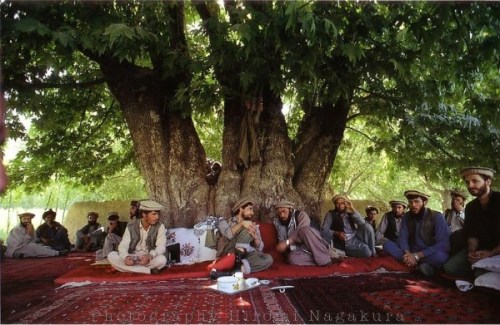
Ahmad Shah Massoud and followers photographed by the Japanese photographer and anthropologist Hiromi Nagakura who knew him over two decades... “Massoud said to me, ‘We are fighting against terrorism. If we don’t fight here, the war will only expand.’ After September 11, I finally understood what he was talking about.”

❚ SUNDAY IS THE TENTH ANNIVERSARY of the 9/11 terrorist attacks on the United States, but this week also marks a decade since Al Qaeda assassinated the one figure who was holding out against its protectors, the Taliban. This was Ahmad Shah Massoud, an Afghan guerrilla commander known variously as The Lion of Panjshir and the Afghan Che Guevara who became the nation’s defence minister. Following his death he was nominated for a Nobel Peace Prize, declared a National Hero of Afghanistan and Sept 9 is now observed there as a national holiday known as Massoud Day.

He was assassinated at the age of 48 two days before the Twin Towers fell, ostensibly as part of the 9/11 process to draw the US into the Afghan war in 2001. Two Tunisian suicide bombers posed as overseas television journalists to interview Massoud in Khvajeh Ba Odin, a small village in north Afghanistan, where they detonated a bomb hidden in their camera.
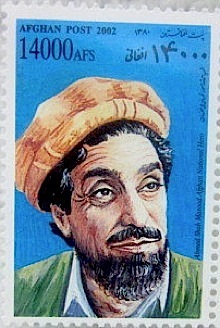
Ahmad Shah Massoud, postage stampIn 1996, during the civil war in Afghanistan, the Taliban seized the capital city, Kabul, and soon the majority of their fighting force were soldiers imported from abroad by Al Qaeda, the Sunni Islamist militant group founded by Osama Bin Laden and designated a terrorist organisation by the United Nations.

In 1989, Massoud had been instrumental in driving the Soviet army out of Afghanistan. In the 90s, with the Taliban gaining control of 90% of the country, he opposed them by creating the United Front (Northern Alliance), and so posed a constant threat to Al Qaeda.

What was revealed only last December, when the 30-year rule released previously secret UK Cabinet papers, was that western powers had decided in 1980 to provide “discreet support for Afghan guerrilla resistance” after the Soviet invasion of their country. This not only meant Britain secretly supplying arms to Massoud, but also that one faction of the mujahideen fighters were covertly funded by the CIA. These went on to become founding members of the Al Qaeda terrorist network.

➢ Afghanistan’s “lost pillar of stability” — Listen to yesterday’s flagship Today show on BBC Radio 4, when security correspondent Gordon Corera discussed why Massoud had to die before the Twin Towers fell. If he had lived, many believe Massoud would have become a vital pillar of stability for his nation.
Massoud Tomb, Afghanistan,video,DocsOnline

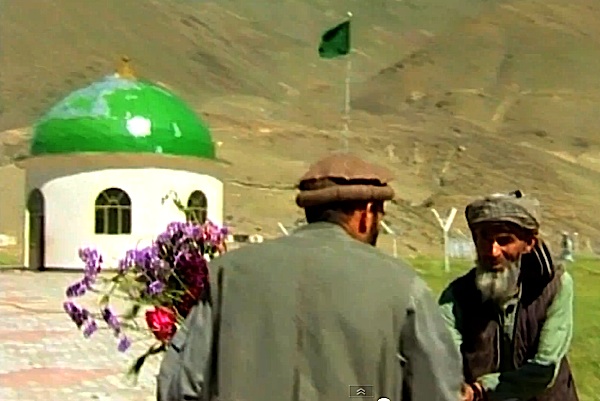
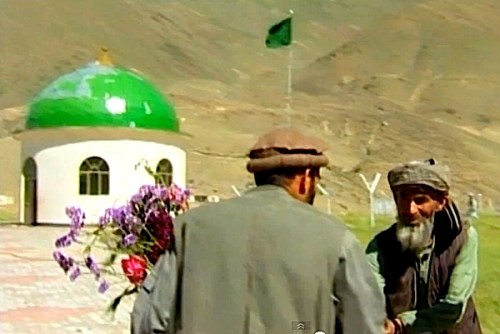
Annual pilgrimage: Ahmad Shah Massoud’s chauffeur brings flowers from his leader’s garden to his tomb overlooking the Panjshir Valley. (Grabbed from video documentary by Iqbal Malhotra)

➢ VIEW a scene from Ahmad Shah Massoud, a documentary (above) by Indian film-maker Iqbal Malhotra (from DocsOnline)

An Intimate Portrait of the
Legendary Afghan Leader

A freedom fighter, a warrior, a man of God, an intellectual, a humanitarian, a liberal… the list goes on. Massoud was a renaissance man, though his modesty would never acknowledge it. This is perhaps his greatest quality – humility. Unlike radical leaders such as Che Guevara, his desires were modest: Freedom and prosperity for his people.

Massoud was a passionate enemy of terrorism. He strongly objected to any terrorist-style actions by mujahideen during the war with the Soviets, and identified the war against the Taliban as a war against terrorism.

Massoud was a deeply spiritual man and a devout Muslim. It is important to make these distinctions, for “Massoud the man” has perhaps more in common with Mahatma Gandhi than Che. We are exposed to a man of grace, who revelled in the beauty of his country and his creed.

➢ Read more: the biography of Massoud by Marcela Grad is appraised by Justin McCauley in the Vienna Review of Books

FRONT PAGE