2010 ➤ Can Generation Y be bovvered to vote?

❚ THE MOST EXCITING GENERAL ELECTION FOR 31 YEARS takes place in the UK this week. Since the Conservative landslide that put Margaret Thatcher into Downing Street on this day, May 3, 1979, British voters have seen only one change of political ideology, from right to left (to use the word generously), with the Labour party landslide of 1997. The Conservative government won four consecutive general elections, and Labour governments subsequently won three.
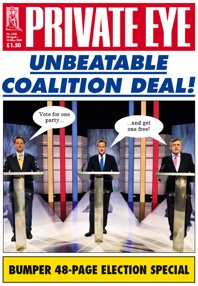
Private Eye, 2010, general election

Boy wonder: “Vote for one party…” Old lags: “… and get one free!”

This points up unique new aspects of generation gaps. Half the adult population who are entitled to vote – and this embraces the UK’s delayed Generation X – have known only one political sea-change, while everybody younger than 31 – the 11m that include Generation Y who reached voting age since Labour came to power – have experienced only one flavour of government. Consider the tensions that should be reverberating within this nation’s breasts.

During the 1980s the Thatcher administration shifted for ever the tectonic plates underpinning society (though the concept of “society” was one she as prime minister famously denied). Parallels with today are spookily similar: an unprecedented recession has toppled many supporting pillars of the economy, while unemployment is passing 2.5m just as it did in 1979. Currently one-fifth of all people of working age are “economically inactive”. Among today’s 18-24-year-olds the unemployment rate is 17%, even for graduates. And a decade of austerity is set to declare itself just after the election.
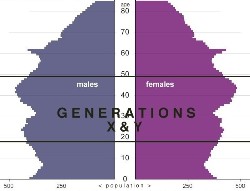
Gen X, Gen Y, UK population, 2008

UK population by age: 18-49 year-old clout (ONS)

By the dawn of the Swinging 80s, the young had grown very angry indeed with the grown-ups’ way of running things. Yet in the 20-tens, we find ourselves still unsure whether Generation Y are activists or slacktivists. Meanwhile those researchers at Pew already have a shrewd idea about the politics of online social networkers and whether they can be bovvered enough to stray offline and put an X on a ballot paper. Don’t hold your breath.
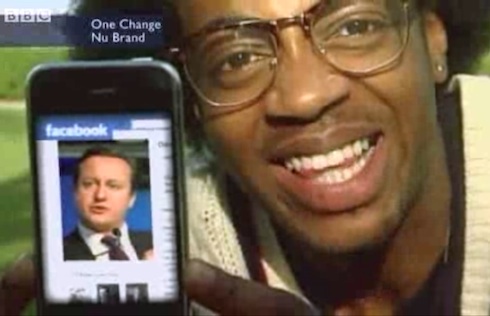
vote,, general election,Newsnight , rapping, Nu Brand, Generation Y ,anthem, politics,

Would these songs change your vote? Newsnight invites rappers Nu Brand to create an anthem for the Conservative Party (BBC)

➢ VIEW VIDEOS ♫ BBC Newsnight’s Danny Robins commissioned fab, bangin’ political party anthems from Haduken!, Right Said Fred and Nu Brand
Generation Jones stakes its claim between the Baby Boomers and Generation X in the UK
FRONT PAGE

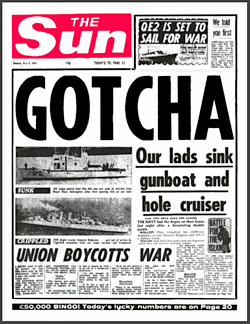
1982 ➤ Lest we forget, on this day Britain sank the Belgrano

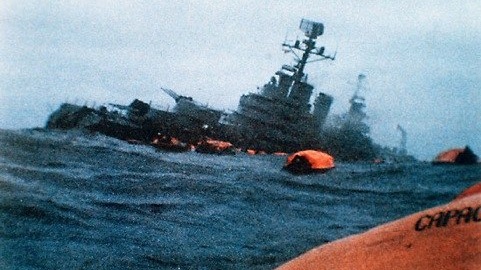
Belgrano, sinking, Falklands, 1982

May 2, 1982: ARA General Belgrano lists heavily to port in the Atlantic Ocean, while its crew abandon ship. Sailor’s picture via Press Association

❚ THE BRITISH WAR CABINET headed by Margaret Thatcher, met at Chequers, the prime minister’s weekend retreat, on this Sunday in 1982 and unanimously agreed to a naval order to sink the Argentine warship, General Belgrano, in the South Atlantic. Subsequently, to its eternal shame, Britain’s biggest selling daily paper The Sun boasted in its most notorious headline: “GOTCHA”.

The Sun, Gotcha, 1982, Belgrano, Falklands War,This rabid jingoism by middle-aged politicians and armchair media generals alike, as they relived memories of World War Two, drove a wedge into the generation gap that has never been equalled. Those of us under 40 — too young to remember WW2 — were appalled that a simmering 150-year-old squabble with Argentina over sovereignty of the Falkland Islands (population 1,800) should now warrant military action by Britain. We were even more appalled at the near-total, gung-ho media hype that blessed it. Neither nation formally declared war on the other, yet the 74-day conflict led to the deaths of 649 Argentine and 255 British servicemen. There were 1,188 Argentine non-fatal casualties and 777 British.

Britain initiated the first naval loss at 4pm that Sunday when the nuclear-powered submarine HMS Conqueror fired a pattern of torpedoes at the Belgrano which was patrolling south of the Falklands. Two struck the vintage light cruiser and within 20 minutes its captain ordered his men to abandon ship. It was more than a day before 770 were rescued from the open ocean. Meanwhile 323 crew had died.

In their superbly detailed chronicle The Battle for the Falklands (1983, republished 2010), journalists Max Hastings and Simon Jenkins report the reasoning of a senior British commander: “You have got to start something like this by showing that you’re bloody good and you’re determined to win.” After the sinking, a British destroyer captain said when he broke the news to his ship’s company: “There was a mixture of horror and disbelief. There certainly wasn’t any pride.” The legitimacy of this British action remains the subject of controversy today.

Retribution followed two days later, on May 4. An Argentine Exocet missile struck the British destroyer HMS Sheffield amidships, with devastating effect, ultimately killing 20 crew members and severely injuring 24 others. The ship sank six days later. In the Royal Navy, Hastings reported, officers and men were shocked at the ease with which a single enemy aircraft had destroyed a warship specifically designed for air defence.

FRONT PAGE

1980 ➤ Birth of The Face: magazine that launched a generation of stylists and style sections

❚ WHEN NICK LOGAN, A FORMER EDITOR OF THE NME, launched The Face in May 1980 little did he realise it would become the decade’s “style bible” and one of the six great postwar magazines to change the course of British journalism. The Face married music, popular culture, politics and street style with radical art direction and new fonts by Neville Brody. It paid peanuts to a select bunch of savvy and passionate writers, photographers and “stylists” who gave the word a fresh meaning (almost entirely lost today) and inspired an avalanche of imitators in mainstream media, retail, advertising and beyond.

The Face, magazine, 1984, men in skirtsItself dubbed “the world’s best-dressed magazine”, The Face broke with mainstream complacency by actively inventing or giving focus to entire movements that combined clothes, music and attitude. Many came to define the 80s – from The Cult With No Name which was eventually rechristened New Romantics, the Hard Times ripped Levi ensemble, the Burberry-loving Casuals, and the “bad boy” Buffalo silhouette created by Ray Petri and Jamie Morgan. This, if any, became the urban male uniform of the mid-80s, and was celebrated only last winter by an issue of Arena Homme + magazine, art directed by Brody who designed for the occasion two custom typefaces called Buffalo and Popaganda.
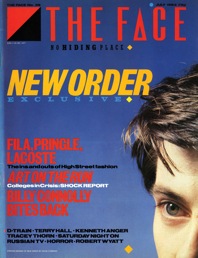
At its peak The Face sold 100,000 copies monthly. Brody moved on in 1986 and Logan in 1999, though the title endured until 2004. Logan launched Arena in 1986 as a men’s monthly, soon edited by Dylan Jones, who today edits GQ UK. The British edition of Arena endured until 2009.

➢➢ The birth of The Face — Read the first article introducing Nick Logan’s new magazine, in the Evening Standard on May 1, 1980

HOW THE TWO KEY SHAPERS BEHIND THE FACE SAW IT

The Face, magazines, July 1983, New Order, Art on the Run❚ NICK LOGAN, publisher of The Face, was a working-class journalist from East London “People said you couldn’t then call a magazine anything as obscure as just The Face… I didn’t see why Tatler should have good paper and good photography and it should be denied to people like me.”

❚ NEVILLE BRODY on art-directing the early Face “It was a big laboratory. The New Order cover was a picture of the lead singer, and it wasn’t that great, a bright blue background. I said to Nick this picture was so shit and he said, Why don’t you crop it off the corner of the page? All you saw was the top left-hand corner of his face – immediately so commercial, and no other commercial magazine would have done anything like it. Great courage is what set his magazine apart.”

➢➢ Launching the style decade Lively social analysis in BBC Radio 4’s anniversary documentary starring all the usual suspects: on iPlayer until May 13

FRONT PAGE

2010 ➤ Index of posts for March-April

McLaren, O'Dowd,Shapersofthe80s,Index March April 2010

McLaren departs this world ... O’Dowd demands a place in the spotlight

➢ Kemp sets a new standard for rock memoirs

➢ Grace Jones turns her back on London ;-)

➢ Rich List puts George Michael top of the popstars from the un-lucrative 80s

➢ In Australia, Spandau make Jason feel like a kid again: one true pop fan reviews their show

➢ What a tear-jerker! McLaren mashes up his own musical ‘Requiem to Myself’

➢ Punk glitterati see McLaren noisily to his grave

➢ Nnnnn-na-na-na, nnnnn-na-na, Nineteen

➢ Midge stakes his claim as the weathervane of synth-pop who helped shape the British New Wave

➢ Sci-fi’s coolest Number 6 finds Gandalf in charge and relocated to 93-6-2-oh!

➢ McLaren — Svengali of Pistols and punk remembered by those who knew him

++++++

➢ Uh-oh, A2A is back and we’re about to be Quattroed in HD!

➢ Ex-jailbird George takes his first trancey steps on the path to sainthood

➢ A giant dies: Charlie Gillett, the man who defined rock’n’roll and world music

➢ Barcelona: Spandau wow lifelong fans in their other spiritual home

➢ Albums that defined the new 80s funk

FRONT PAGE

➤ Kemp ‘sets a new standard for rock memoirs’

Gary Kemp, autobiography, I know this much, Bill Nighy,Steve Jansen,paperback❚ ONE LONDONER’S LIFE newly topped up in paperback today. . . Spandau Ballet songwriter Gary Kemp surprised many when last year’s autobiography, I Know This Much, proved exceedingly well written and frank, what’s more. Many of his contemporaries – such as top Amazon reviewer Steve Jansen — believe that his perceptive memories of a London now transformed make a “a touching testament to spiritual growth”. Jansen writes:

“The real value of I Know This Much, aside from its glistening prose, is in witnessing someone discovering themselves. Always something of an odd penny, the Spandau songwriter and arguably its spiritual leader was always wiser than his pop position called for, and his working class soulboy roots never really sat comfortably with his angular New Romantic entrance. This rendered him somewhat pretentious to many, and his flaunting of left-wing politics often grated when framed by his band’s timely, aspirational image.

“However, with the benefit of distance and maturity (and following his time in the wilderness, as Joe Strummer would say, when discussing that inevitable period between an artist’s fall and his redemption), Kemp is able to reflect with great poignancy on a young man’s journey into, and through the shining city of dreams. In Kemp’s case that city, metaphorically, but more often literally — and literary in its evocation — is unmistakably London, and the metropolis is ever present like a ghost, framing his actions and attitude . . .

“From the sheer and challenging poverty of his childhood, through to the sensitively handled, near tear-jerking account of his parents’ death within days of each other in 2009, money and success is always comes second to recollections of his brother, mother and father. Kemp is evidently, despite his aloof lone wolf image, a highly sensitive and lovingly loyal chap, but this is an identity that he has to arrive at; and time and the ravages of age are the consequential pain of his slow lesson.”

The new paperback edition from Fourth Estate brings us up to date with a postscript on the band’s reunion.Rock journalist Robert Sandall of The Sunday Times made Kemp’s his Book of the Year: “A sharply observed account by a quintessential London musician. Kemp exudes confidence, candour and a keen appreciation of the capital’s club culture” … “Sets a new standard for rock memoirs,” says rock writer Paul Du Noyer … “Deeply cool,” says the deeply cool actor Bill Nighy.

Barbara Ellen interviews Kemp in the Guardian on his autobiography: “a fascinating slice of social history”

FRONT PAGE