Category Archives: North America

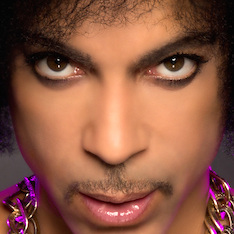
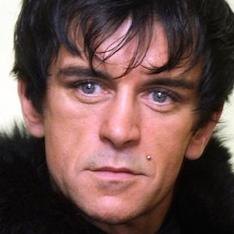
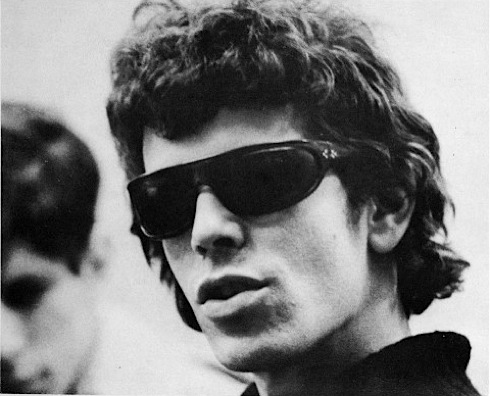
➤ RIP Lou Reed… Today we lost another legend

Lou Reed, Velvet Underground

Lou Reed on his bare-bones guitar style: “One chord is fine. Two chords are pushing it. Three chords and you’re into jazz”

“He was a master” – David Bowie today
on his old friend

➢ Lou Reed, Velvet Underground leader and rock pioneer
who helped shape nearly fifty years of rock music
– Rolling Stone tribute, Oct 27:

After splitting with the Velvets in 1970, Reed traveled to England and, in characteristically paradoxical fashion, recorded a solo debut backed by members of the progressive-rock band Yes. But it was his next album, 1972’s Transformer, produced by Reed-disciple David Bowie, that pushed him beyond cult status into genuine rock stardom. Walk On the Wild Side, a loving yet unsentimental evocation of Warhol’s Factory scene, became a radio hit (despite its allusions to oral sex) and Satellite of Love was covered by U2 and others. Reed spent the Seventies defying expectations almost as a kind of sport. 1973’s Berlin was brutal literary bombast while 1974’s Sally Can’t Dance had soul horns and flashy guitar. In 1975 he released Metal Machine Music, a seething all-noise experiment his label RCA marketed as avant-garde classic music, while 1978’s banter-heavy live album Take No Prisoners was a kind of comedy record in which Reed went on wild tangents and savaged rock critics by name… / Continued at Rolling Stone

“Lou Reed… said that the first Velvet Underground
record sold 30,000 copies in the first five years.
But that was such an important record for
so many people, I think everyone who bought one
started a band!” – Brian Eno, 1982

➢ Alexis Petridis says Reed was capable of writing perfect pop songs – in Monday’s Guardian:

Their 1967 debut The Velvet Underground And Nico is the single most influential album in rock history. Certainly, it’s hard to think of another record that altered the sound and vocabulary of rock so dramatically, that shifted its parameters so far at a stroke. Vast tranches of subsequent pop music exist entirely in its shadow: it’s possible that glam rock, punk, and everything that comes loosely bracketed under the terms indie and alt-rock might have happened without it, but it’s hard to see how…

… the four gruelling songs that make up side two of his 1973 concept album Berlin are quite astonishing expressions of coldness and cruelty… [but] he could write songs that were impossibly moving, that spoke of a tenderness and sensitivity: the lambent, peerless Pale Blue Eyes; Halloween Parade’s heartbreaking lament for New York’s gay community, devastated by Aids; his meditation on death, Magic And Loss… / Continued at Guardian Online

➢ Reed’s own website with his last portrait
taken earlier this month

Click any pic to launch carousel

➢ In this firey Telegraph interview from 2011, Reed and Metallica defended their controversial collaboration album Lulu to Neil McCormick

➢ “Lou Reed is to 1970s New York as the poet Baudelaire was to 1850s Paris” – ft.com

➢ Wide-ranging 1995 conversation between novelist Paul Auster and Lou Reed, who reveals his rarely seen good-humoured side – online at Dazed & Confused

➢ Punk old-timer Legs McNeil on how, despite acting like a grump, the Velvet Underground front man was beloved – The Daily Beast

➢ “Second only to Bob Dylan in his impact on rock and roll’s development” – Variety
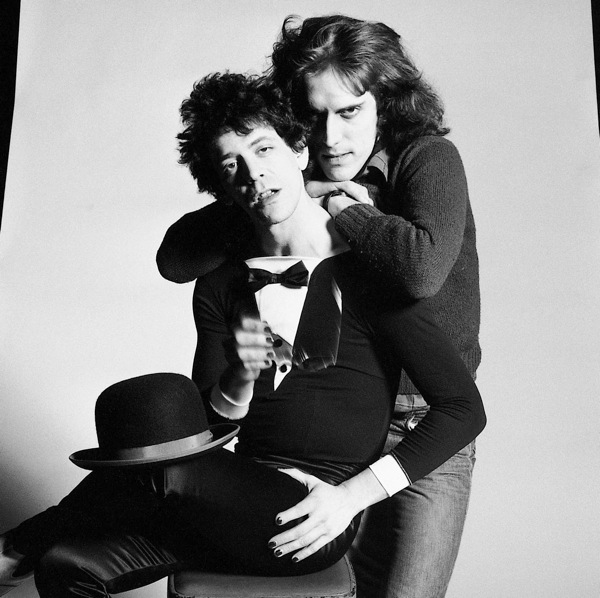
Lou Reed, Mick Rock,photography

Lou Reed and his favourite British photographer Mick Rock in 1975

➢ Lou Reed and Mick Rock were a great double act: The Quietus talks to them about their enduring relationship and a new book of photos, 2013

➢ Mick Rock talks to Galore magazine about the limited edition of Transformer, his photobook of Lou Reed pix from 1972 to 1980 (Genesis Publications)

FRONT PAGE

1983 ➤ A turning point in David Hockney’s vision of the world

rel="nofollow"

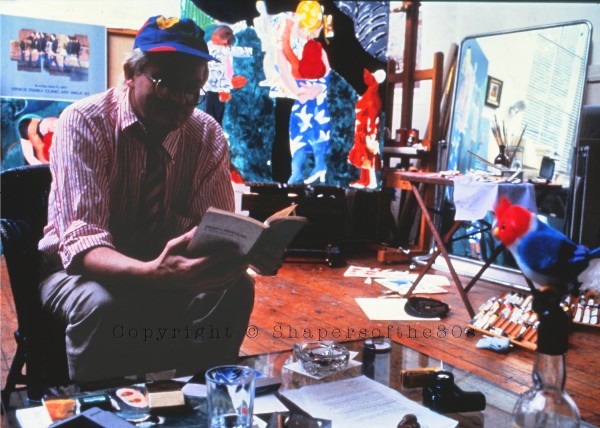
Hockney wielding his Pentax in London, July 10, 1983: having devoted two years to photography, in this his second week on a trip to Britain, a further new canvas in the studio confirms a return to painting. Photograph © by Shapersofthe80s

❚ 30 YEARS AGO THIS WEEK the British painter David Hockney made a discovery so monumental that he called it “a truer way of seeing”. I’d gone to interview him about the education cuts Margaret Thatcher was inflicting on British art schools and found myself receiving an exhilarating tutorial while the artist tested his new ideas.

“Have you been to the cubism exhibition at the Tate?” Hockney enthused during a trip to London from his home in Los Angeles. “I’ve been seven times! Suddenly I see cubism differently, more clearly… That’s what I’m only starting to grasp. Cubism is about another way of seeing the world, a truer way. But the moment you grasp it, you can’t give it up.”

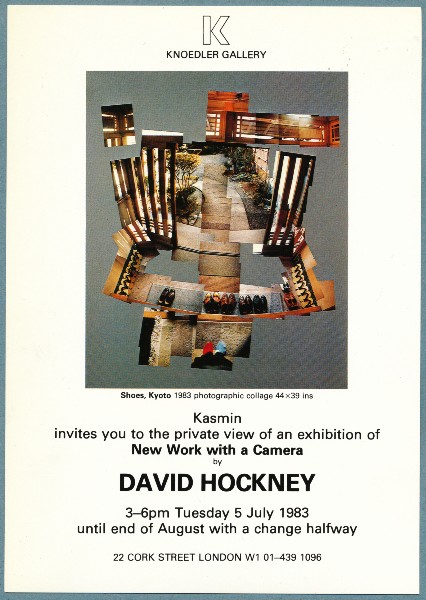
Photography had preoccupied Hockney for the previous couple of years and in the week of his 46th birthday, we’d met at a Cork Street gallery during the hanging of his show New Work With A Camera, fresh from its Los Angeles run. Yet on two visits to his Kensington studio that week, fresh canvases on the easel signalled that Hockney had returned to painting. He said: “I had to deal with the ideas that are bubbling away. Cubism is hard enough to grasp, but it’s even harder to do, which actually is why not many people have been able to do anything with it. Starting to paint again is very refreshing.”

Four days later when the resulting interview appeared in the London Evening Standard, he’d been again to the Tate and said on the telephone: “Your article is pretty much the first time I have talked about this – of course I’ve discussed these things with friends but the article does make it clear to people.”

rel="nofollow"

Hockney with fresh paintings in his London studio, July 3, 1983: so keen to deal with his new ideas, he reads aloud from a book about Marcel Proust’s theories of vision. Photographed © by Shapersofthe80s

He added: “You must go to the Tate retrospective [The Essential Cubism], it’s marvellous. You go from one cubist picture to another and another. In other galleries, like Moma, you might have one cubist room but go to the Tate show because you’ll never see so many cubist paintings together again. I found I began to develop this way of seeing them, it’s very rich. You do have to stand in front of the Picassos and spend time looking. When you’re physically in front of a cubist painting, once you start looking, especially the early analytical ones, it slowly reveals itself. It doesn’t pounce off the wall.”

The next day, when I returned to his studio with a camera, Hockney had begun yet another huge cubistic canvas which seriously took the breath away. It was a privilege to view the unfinished paintings with their images outlined in charcoal and he remarked that few people get to see inside the studio. I made sure to snap the 1,001 mementoes and influences scattered throughout the space suggestive of a restless imagination. The three substantial conversations I was fortunate to enjoy that week remain a turning point in my own appreciation of art. By a stroke of fate, my presence had provided the artist with a sounding board at the very moment when he urgently needed to kick around some bold new thoughts.

➢ Click through to read the full fascinating interview with Hockney, in an elision of two pieces first published in the Evening Standard, July 8, 1983, and The Face, Sept 1983

David Hockney,New Work With A Camera, photography, London, 1983

Fresh from its Los Angeles run: Invitation to Hockney’s latest show of three-dimensional photo collages in London, 1983

FRONT PAGE

➤ Book domino chain sets new world record

❚ THE SEATTLE PUBLIC LIBRARY launched the 2013 Summer Reading Program by setting a new world record for the longest book domino chain. The 2,131 books used by 27 volunteers to make this  chain were either donated or are out of date and no longer in the library’s collection. They are now being sold by the Friends of the library to help raise money for its programs and services. No books were harmed during the making of this video. Filmed by Playfish Media.

FRONT PAGE

➤ ‘Duck and cover’ translates as ‘Vanish and dazzle’ for 21st-century security

Stealth Wear,Joanna Bloomfield ,Dazed Digital, surveillance,Adam Harvey, fashion

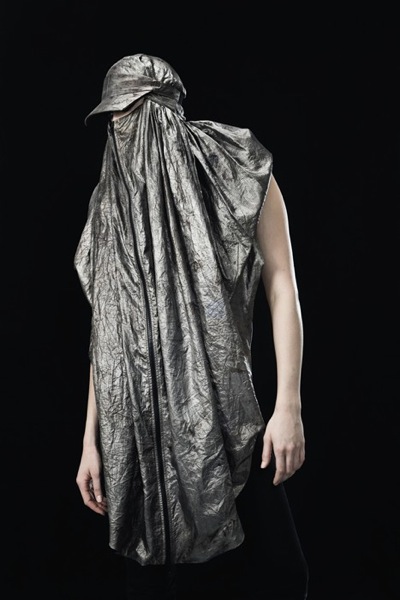
Stealth Wear: anti-drone garments by Joanna Bloomfield

➢ Disappear in an anti-drone hoodie – Dazed Digital on how a New York artist’s anti-drone stealth garments hide us from surveillance in style…

The battle of fashion vs drones starts here. New York artist Adam Harvey’s Stealth Wear anti-drone garments reclaim privacy for us. Designed with a lightweight, metallised fabric, his camouflage protects against the thermal-imaging surveillance technology used by drones to detect people by their body heat. The collection, a collaboration with fashion designer Joanna Bloomfield, explores “the potential for fashion to challenge authoritarian surveillance”.

“There is a lot of work to be done in reclaiming privacy,” Harvey told us. “In the last ten years we’ve become attuned to the attitude of the Bush administration that if you’re not doing anything wrong, you shouldn’t worry about giving up your privacy. The problem is that it’s already gone! We’re working to undo what was lost in the last decade… / More stealth zaniness at Dazed Digital

YOU ARE READING OUR 500TH POST!

Shapersofthe80s has received 633,597 views since it launched in 2009. To discover what you’ve missed, open the Archive Index at the foot of the right-hand column,
or CLICK HERE FOR A RANDOM ITEM – a different item every time you click

FRONT PAGE

➤ Teens as masters of the glottal fricative

teenage, speech,phonetics

Roll of the eyes: follows a life-threatening imposition or a request to take out the garbage

➢ How To Speak Teen – Three minutes of Canadian linguist James Harbeck on his phonetic translation of annoying teenage sounds

FRONT PAGE