
➤ These were our inspiration…
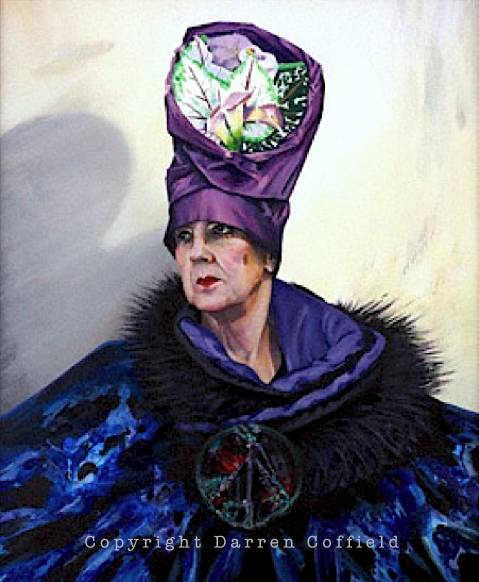
Molly Parkin, Welsh painter, journalist, novelist and turban-clad muse to generations of style-worshippers. Painted by Darren Coffield, she was besporting herself at the National Portrait Gallery during 2010
MOLLY THE INIMITABLE, SINCE 1965
❚ IN THE 50s MOLLY PARKIN PASSED THROUGH Goldsmiths and Brighton art colleges painting and teaching. From 1965, she became an arbiter of Swinging 60s style as fashion editor of the avant-garde Nova – one of the six postwar magazines that changed the face of British publishing. She liberated fashion journalism from the tyranny of high society, moving on through Harpers & Queen and The Sunday Times to create visionary images with a rising generation of photographers such as Peccinotti, Duffy, Sieff and Feurer. Simultaneously she was running her own Chelsea boutique and Belgravia restaurant while unwittingly inspiring the cub who set out as a trainee on Nova and would one day create Shapers of the 80s.
In the 1970s, as a chat-show celebrity and libidinous novelist, she wrote an uninhibited weekly interview in the Saturday Evening Standard, indulgently edited by Yours Truly, selecting candidates from her eccentric circle of hedonist friends, among whom Rose Lewis the Knightsbridge corsetiere was but typical.
In the 80s she became an honorary Blitz Kid, compered the Alternative Miss World contest, threw decadent parties every Saturday night in Chelsea and toured a solo stage show. In the 90s she had a facelift and wrote a sensational autobiography called Moll. In the Noughties she returned to extremely vibrant painting and hosted a clubnight at the Green Carnation as a Granny deejay.
In 2010, she was covergirl on the launch issue of Eulogy, a short-lived(!) magazine dedicated to dispelling the taboos surrounding death. Her memoirs Welcome To Mollywood were published that October. Meanwhile (June 24-Sept 19, 2010) she was exhibiting herself at the National Portrait Gallery, London, in the annual BP Portrait Award show on the noble canvas, above, by Darren Coffield, a painter and gallerist closely associated with the emergence of the Young British Artists (YBA) movement.
❏++++++❏++++++❏
ART DECO-DANCE AT BIBA, 1964-1975

Twiggy, the fashion model, relaxing in the landmark Rainbow Room at Biba in 1974: founded by fashion designer Barbara Hulanicki in 1964, the Biba boutique set a distinctively sexy and brave style for both the 60s and 70s. It grew from a modest shop in Abingdon Road, Kensington, that became a hangout for the popstars of the Swinging 60s, and in 1974 took over the seven storeys of the lavish art-deco department store in Kensington High Street which had opened as Derry & Toms in 1932. The black-and-gold Biba logo itself became a collectible, whether on price tags, carrier bags, wallpaper or cereal jars from the food hall. The three renowned Roof Gardens (Tudor, Spanish and woodland) with their strutting flamingos attracted record numbers of tourists, along with the ravishing Rainbow Room restaurant on the fifth floor, which as an entertainment venue showcased the decade’s most stylish performers, such as Bryan Ferry, New York Dolls, Bette Midler, the Pasadena Roof Orchestra and Manhattan Transfer. The store foundered financially and suddenly and closed in 1975 when the shop-fittings were subsequently auctioned, even furniture from the Rainbow Room. Hulanicki went on to design for Fiorucci and Cacharel. In 2012, the luxurious New York fitness club Equinox took over the Rainbow Room’s 40,000 sq ft, exclusively for members. In the Roof Gardens the flamingos still strut their stuff today. Photographed above © by Justin de Villeneuve (yes, Twiggy’s Justin).
❏++++++❏++++++❏
50TH ANNIVERSARY OF
NICE STYLE SATIRISING MODERN ART
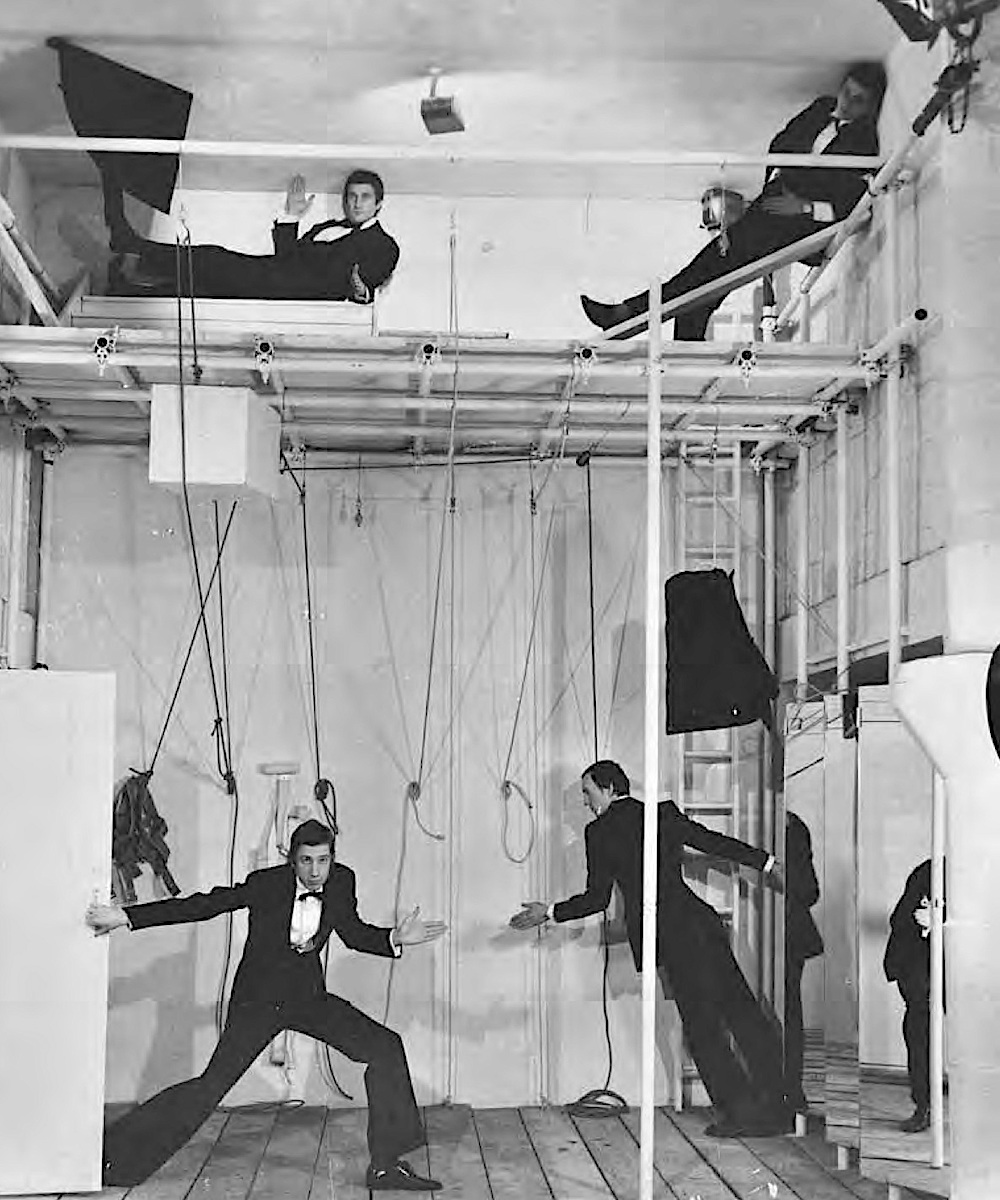
Nice Style posing at the Gallery, 1974: High up on a Baroque Palazzo. McLean himself is at top left. Photo by Craigie Horsfield
❚ BRUCE McLEAN IS A SCOTTISH SCULPTOR, performance artist and painter whose idiosyncratic career sprang from Glasgow’s radical School of Art, along with London’s St Martin’s in the Swinging Sixties. In 1974 I had just been appointed the London Evening Standard’s youngest features editor when Richard Cork was well into his own exceptional 15-year run as our respected art critic, whose weekly column enlightened the world about the ambitions of contemporary art. That year Cork had also curated an eye-opening show celebrating Britain’s modernist revolution called Vorticism, dating from 1914, at the Hayward Gallery.
In the autumn of ’74 Cork took me to the Gallery in Covent Garden to witness one of the most exciting live performances I can recall, staged in a largish space full of ropes and pulleys, ladders and flapping doors, by four animated artists calling themselves Nice Style, “the world’s first Pose Band”, led by Bruce McLean. Stopping, posing and re-starting in 3-D for a full hour, three days a week, they were electric, fascinating and hilarious. We were being invited to laugh in an art gallery!
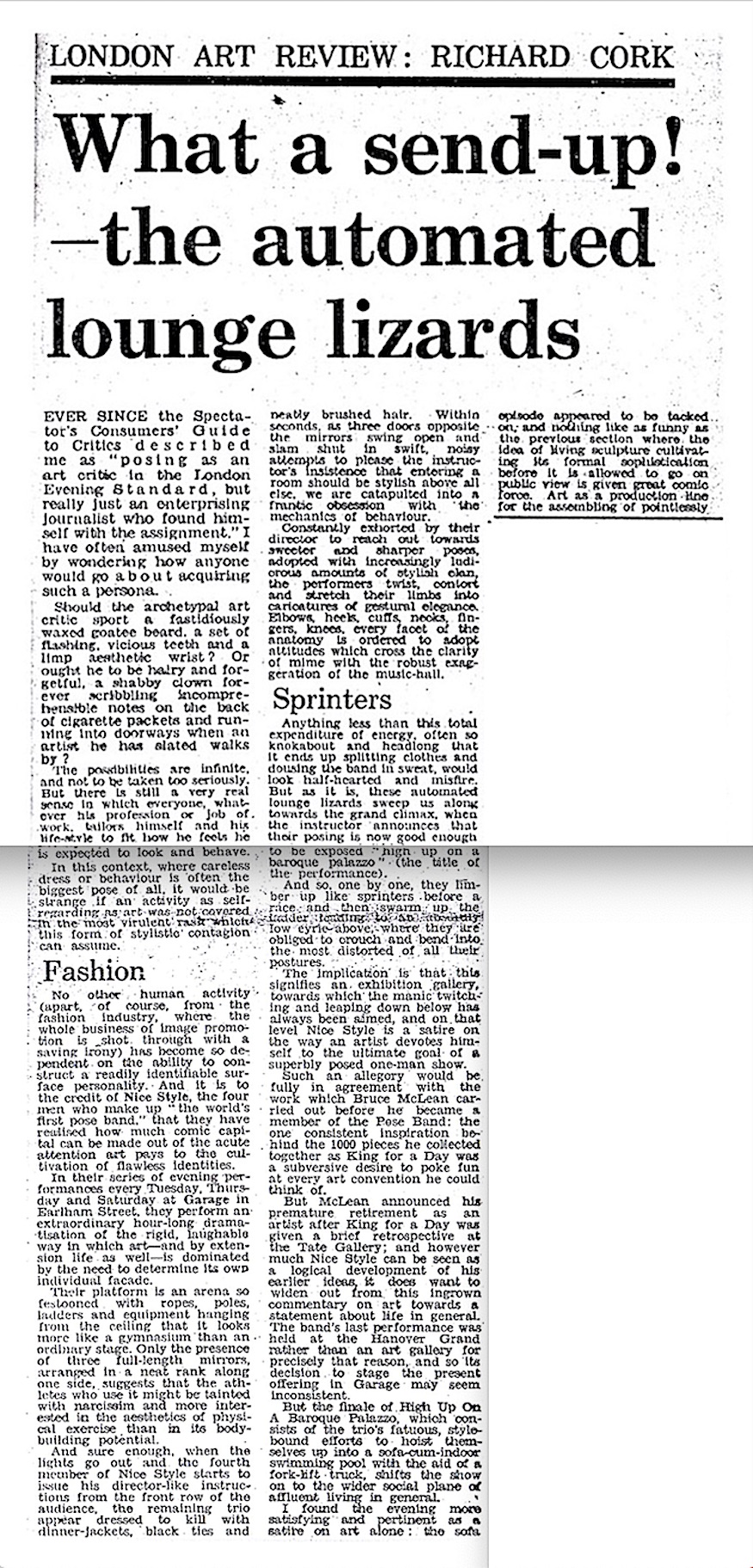
Cork’s riveting review part 1 – click to enlarge in a new window
Cork entered into the spirit of the event by opening his equally entertaining review considering how to pose as an art critic, whether with waxed goatee beard and limp aesthetic wrist, or as a hairy and forgetful clown scribbling notes on the back of cigarette packets.
Watching Nice Style, he wrote, “We are catapulted into a frantic obsession with the mechanics of behaviour… sweeping us along towards a grand climax… good enough to be exposed ‘High up on a Baroque Palazzo’ (the title of the performance)”. Nice Style, he wrote, was “a satire on the way an artist devotes himself to the ultimate goal of a superbly posed one-man show.”
McLean himself later said: “Nice Style is not mime, not theatre but live sculpture.”
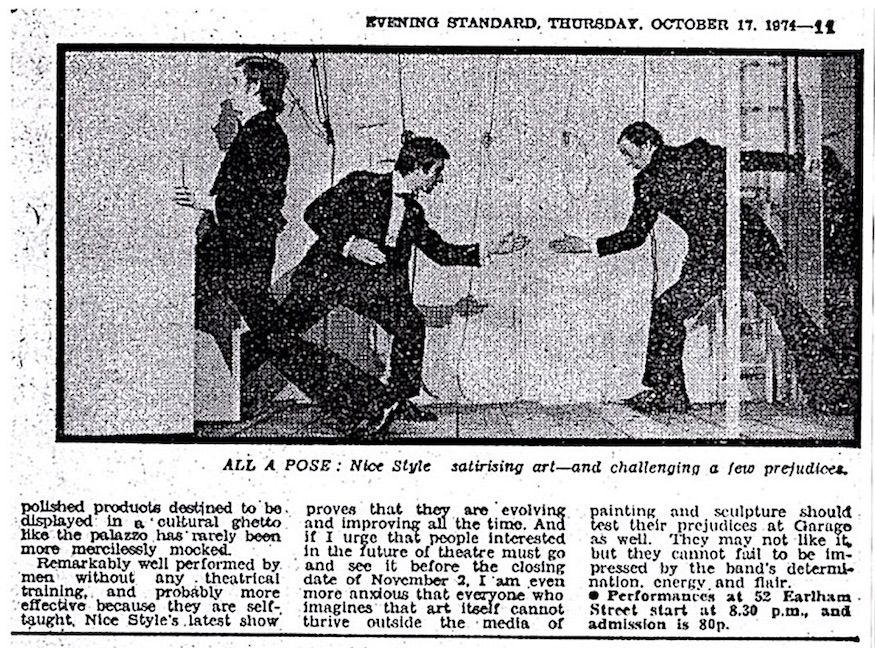
Part 2 of Cork’s review. Nice Style were Bruce McLean, Paul Richards, Gary Chitty and Robin Fletcher. Photo by Craigie Horsfield
At the age of 80, McLean’s own career has climaxed with a modest display at the Modern One gallery in Edinburgh EH4 3DR, open daily until Nov 2025.
❏++++++❏++++++❏
ANDREW LOGAN, A VERY BRITISH ARTIST, CREATOR OF THE Alternative Miss World Show 1972–2018
❏++++++❏++++++❏
BOLAN AND T.REX, INVENTING GLAM SINCE 1968
❚ MARC BOLAN’S OBSESSIVE EYE FOR STYLE was instilled as an image-conscious suburban Mod. But it wasn’t until July 1970 at the age of 23 that he toyed with sexual ambiguity and white-faced androgyny to record the first glam-rock single, Ride a White Swan. Even then it took till year’s end and Top of the Pops to boost it to No 2 on the UK chart in January 1971. Boom!
❏++++++❏++++++❏
$9m MOVIE CULT THAT NAMED A BAND 1968

41st-century pleasure-seekers: The wayward scientist Dr Durand-Durand has encased the lovely Barbarella in the orgasmatron he has dubbed the Excessive Machine, which he operates from a keyboard in the film Barbarella (1968), a tongue-in-cheek sex romp, directed by Roger Vadim and produced by Dino De Laurentiis. Packed with psychedelic special effects, the movie cost $9million but clawed back only a tiny fraction of that, thus guaranteeing it cult status for decades to come. Barbarella, originally a French comic-strip Queen of the Galaxy, donated her name to a Birmingham nightspot and Dr Durand-Durand donated his to the flashiest New Romantic band of 1980, from Birmingham
❏++++++❏++++++❏
BOWIE – POP’S THREE IN ONE TRINITY, 1962+
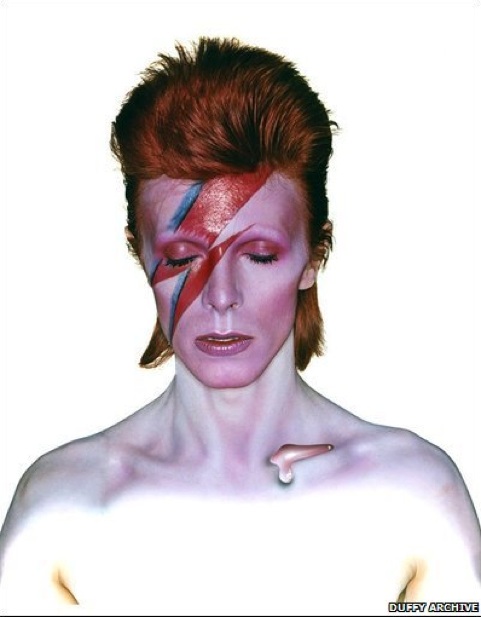
Bowie the god, the brand, the signifier: David Bowie was 15 when he formed his first band, the Konrads, in 1962… By 1973 his Ziggy Stardust morphed into Aladdin Sane, and Pierre La Roche painted the zigzag bolt of lightning across his face. British music and fashion tilted in their orbits. This most iconic of all 70s pop photographs was shot by Brian Duffy, one of a trio of lensmen who had already defined the Swinging 60s. He photographed three album covers for Bowie, here Aladdin Sane, artfully created by human hands long before Photoshop was invented. © The Duffy Archive Limited
❏++++++❏++++++❏
DRAGGED UP TO PERFECTION, 1959
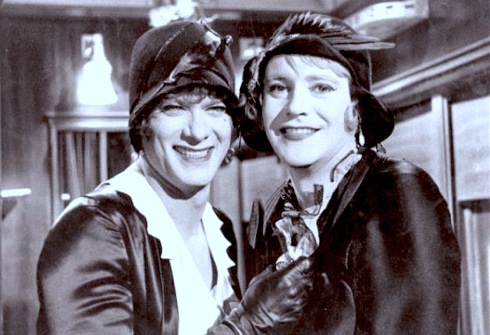
Benchmark for cross-dressers: Tony Curtis as Josephine and Jack Lemmon as Daphne in Some Like it Hot, 1959
❚ “THE PERFECT FILM COMEDY” — The Hollywood movie Some Like it Hot also created the perfect screen drag act in Tony Curtis and Jack Lemmon disguised as Josephine and Daphne, two jazz musicians on the run from the mob in the Roaring 20s, who pal up with blonde sex-bomb Marilyn Monroe as Sugar Kane. These are no desperate nightlife trannies but out-and-out comic performances in drag, Lemmon playing it for laughs and Curtis maintaining a straight face throughout. Clubland queens don’t even come close.
❏++++++❏++++++❏
FASHION MUSICAL PACKED WITH “BAZZAZZ”
❚ FUNNY FACE, 1957: Kay Thompson as the editor of Quality magazine decides the theme for her next issue and tells her staff to “Think Pink”, directed by Stanley Donen in VistaVision to lush romantic music by the Gershwins. Fred Astaire is cast as fashion photographer Dick Avery (a character based on Richard Avedon, the film’s “visual consultant”), who is sent out by editor Maggie Prescott to discover a “new face”. He promptly finds a dowdy Audrey Hepburn working in a bookshop, transforms her like Pygmalion into a top model and whisks us all off to nostalgic location shoots in Paris in its haute-couture heyday, starring Ms Hepburn’s costumes by Givenchy. The inspirational number Bonjour Paris should be on everybody’s lips whenever they arrive in the French capital.
❏++++++❏++++++❏
JAMES BROWN WITH BOOTSY COLLINS
GETTING ON UP SINCE 1953
❏++++++❏++++++❏
FATHER OF FOUNTAINEERING, 1917
❚ AS FONT OF THE 20th-CENTURY AVANT GARDE, the subversive tastemaker Marcel Duchamp (above) kick-started conceptualism in 1917 by exhibiting a ceramic urinal he titled Fountain. Recently 500 experts voted his readymade the most influential artwork of the 20th century. In the video above Joan Bakewell interviews him in 1966, two years before he died. His spoken English is eloquent. Below, critic Robert Hughes gathered several Duchamp interviews in The Mechanical Paradise, episode one of his landmark TV epic, The Shock of the New (1980).
❏++++++❏++++++❏
THE CABARET STARTS HERE, 1916

Europe’s first dressing-up one-nighter? Hugo Ball, the exiled German playwright is pictured at the Cabaret Voltaire, a Saturday club-night named after the French philosopher which he co-founded in Zürich on February 5, 1916, along with the poet Tristan Tzara and others. (Source: Ball, Briefe, September 15, 1916)
❚ THE CABARET VOLTAIRE WAS HELD in a back room of the Holländische Meierei tavern at No 1 Spiegelgasse in a seedy quarter of Zürich in neutral Switzerland during World War One. In this haven for disillusioned intellectuals from all over war-torn Europe, the cabaret ran for five months as refugee artists besieged the place. (Quite coincidentally, Lenin was living nearby at No 12 and plotting the Russian revolution.)
Here on June 23, 1916, Hugo Ball created “verses without words” dressed in a cubist cardboard suit – as the above inscription says: „Verse ohne Wörter“ in kubistischem Kostüm. The text of one of his “sound poems” titled Karawane was placed on music stands. His performance began “slowly and solemnly” but soon became a chant reminiscent of the Catholic liturgy as it climaxed: “Blago Bung Blago Bung Bosso Fataka!” With sound poems he hoped to do away with “the language devastated and made impossible by journalism”.
Weary of war, Ball, Tristan Tzara, Jean Arp and their followers endlessly disputed the “future society”. They wished to destroy accepted values and to prick bourgeois sensibilities. Their exhibits and performances grew more daring, pushing the limits of respectability. This was a movement without a name. How to agree one? In anarchic fashion — the poet Tzara stuck a knife randomly into a dictionary. Beneath the blade he found the word dada. It means “hobby-horse” in French, “Get off my back” in German and for the Romanian refugees, a sarcastic “Yeah, right”. Tzara saw it as the perfect word to signify meaningless babble.
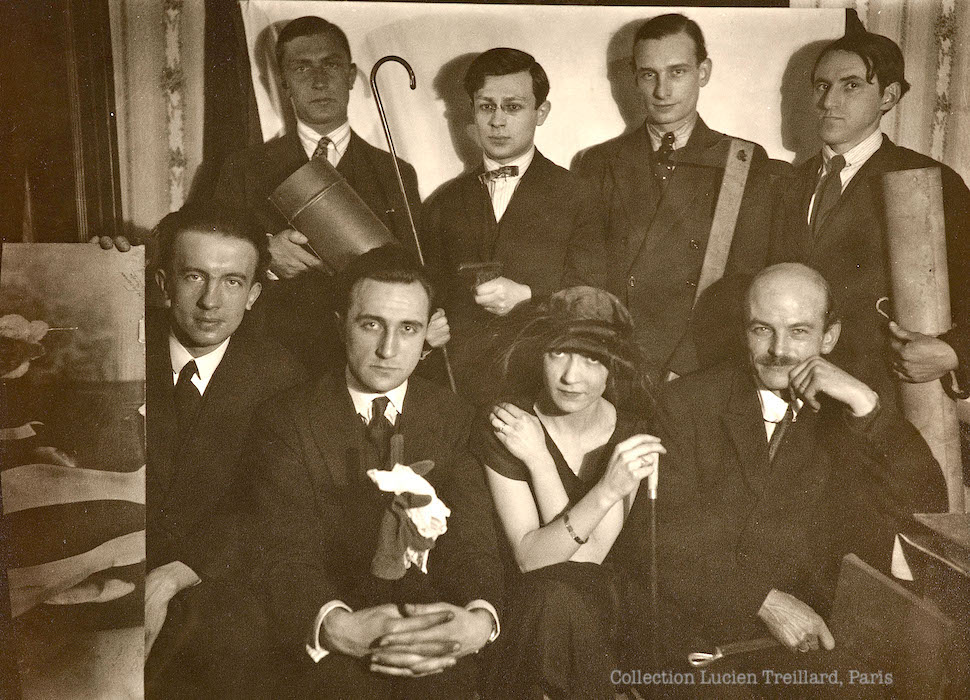
Photographed by Man Ray: Le groupe Dada – Serge Charchoune, Philippe Soupault, Tristan Tzara, Paul Chadourne, Mme Soupault, Georges Ribemont-Dessaignes, Jacques Rigaut, Paul Eluard, c. 1922
Dada had hardly been born when the owner of the Meierei could take the mayhem no more and evicted the Cabaret Voltaire. The Dadaists determined to launch their manifesto with a soiree which would go down in history. On July 14, 1916, they rented the Waag Hall, for one night only. Ball read out his own version of the Dada Manifesto amid wild antics, “multi-media” displays and much absurdist chaos. Every gesture and every move was calculated to maximise its impact upon the audience. Tzara’s own manifesto nailed the name: “Dada dada dada, the howl of clashing colours, the intertwining of all contradictions, grotesqueries, trivialities: LIFE.”
Thus, Dada was officially launched as the anarchic anti-art movement which sought through unorthodox techniques, performances and provocations to shock society into self-awareness . . . In 1980, Dada was alive and well among the art students of London who were to shape the new decade.
❏++++++❏++++++❏
OTHERS INSPIRED BY THE SWINGING EIGHTIES

Old Romantics: Boy Georgy-Porgy and Kid Creoley-Poly (The Two Ronnies, BBC TV, November 1983)

Mad magazine April 1984: Alfred E Neuman thinks he’s Boy George
❏++++++❏++++++❏
TAGS – New Romantics, Blitz Kids, Blitz Club, London, posers, Roaring 20s, Swinging 60s, Swinging 80s, Molly Parkin, Darren Coffield, Biba, Twiggy, Barbara Hulanicki, Rainbow Room, Justin de Villeneuve, Andrew Logan, Alternative Miss World contest, Nice Style, pose band, Bruce McLean, Craigie Horsfield, Richard Cork, Baroque Palazzo, David Bowie, Ziggy Stardust, Aladdin Sane, Pierre La Roche, Brian Duffy, Barbarella, Roger Vadim, Duran Duran, Tony Curtis, Jack Lemmon, Some Like it Hot, Funny Face, Stanley Donen, Kay Thompson, Quality magazine, Think Pink, Ira Gershwin, George Gershwin, Fred Astaire, Audrey Hepburn, Richard Avedon, Givenchy, James Brown, Bootsy Collins, Marcel Duchamp, conceptualism, Fountain, Joan Bakewell, Robert Hughes, Shock of the New, Hugo Ball, Cabaret Voltaire, Spiegelgasse, sound poems, Tristan Tzara, Jean Arp, dada, Man Ray, Two Ronnies, Mad magazine, Alfred E Neuman.




 ➢➢ Shapers of the 80s ➣➣